October 1986
[I did not take any memorable photographs this month, so will look back to the slides marked September, among them the many images that I made in Greece.]
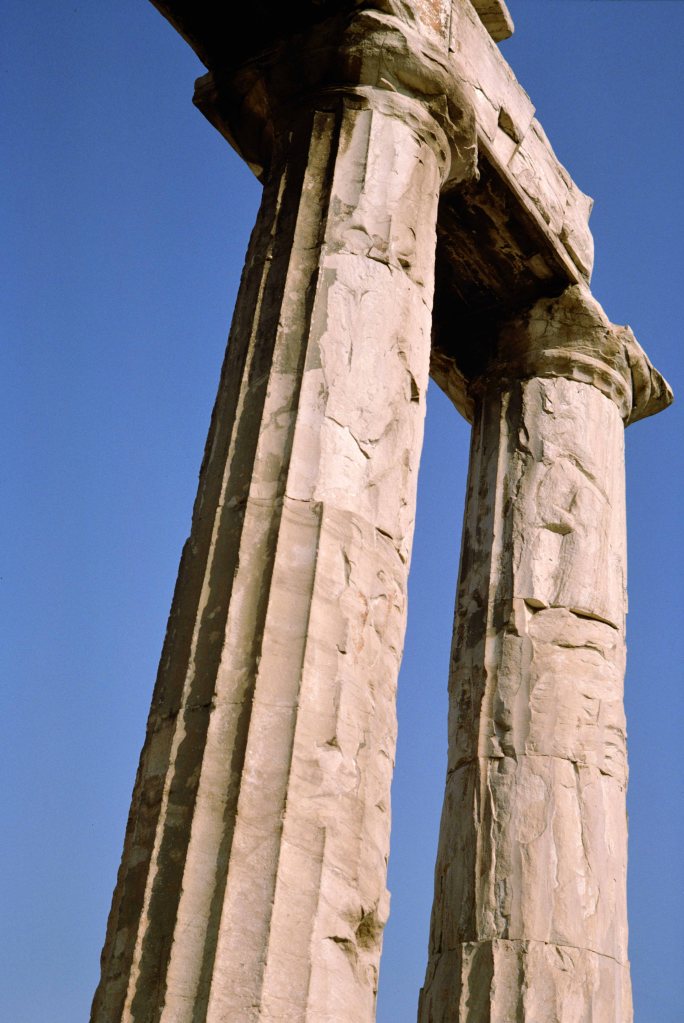
Roman Agora, Athens
From childhood, the allure of the classical world was for me a love of its stories, first through Roger Lancelyn Green, and later Robert Graves, and then in Latin lessons of a broader view of its histories, literature and art. None of it prepared me for the experience of standing before its physical remnants, which over millennia had become scarred and polished into something alien both to the grand neatness of neoclassicism and the faux antiquity of picturesque follies.
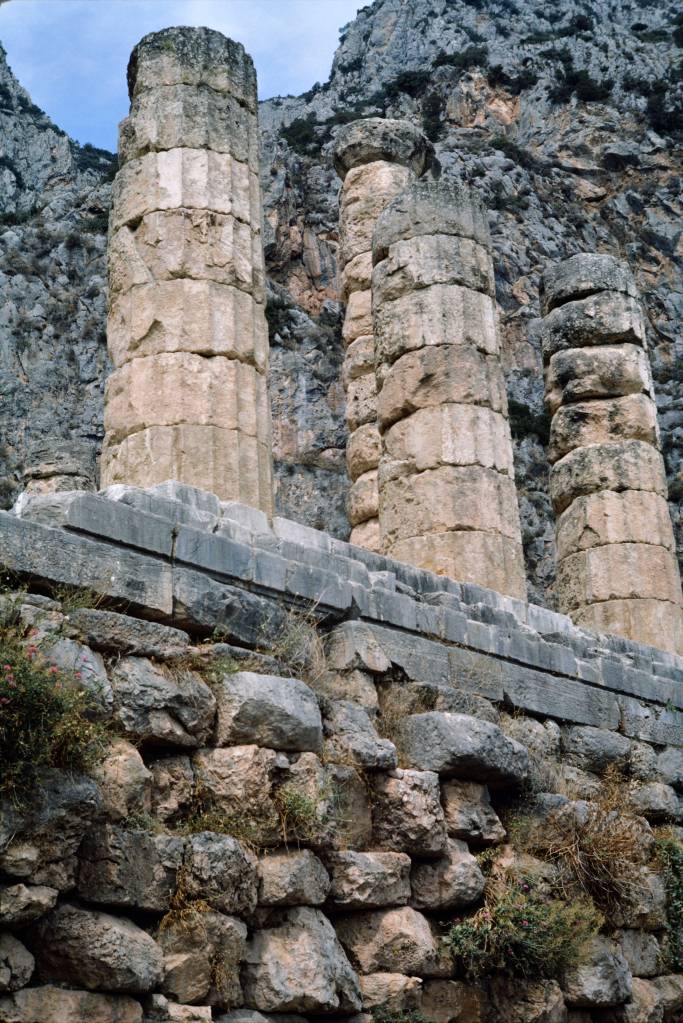
Temple of Apollo, Delphi
Sometimes, when seen against the apparently unchanging landscape, the ruins appeared in their extreme old age to be returning to it.
The study of classics had such a large role in British education because it was meant to train its future soldiers and bureaucrats with moral and practical lessons in imperial dominance, and to burnish cruel and extractive acts with the sanction of antiquity. I went to a Quaker school, which was less keen than the traditional church-army schools on empire, hierarchy and violence, but nevertheless taught Latin.
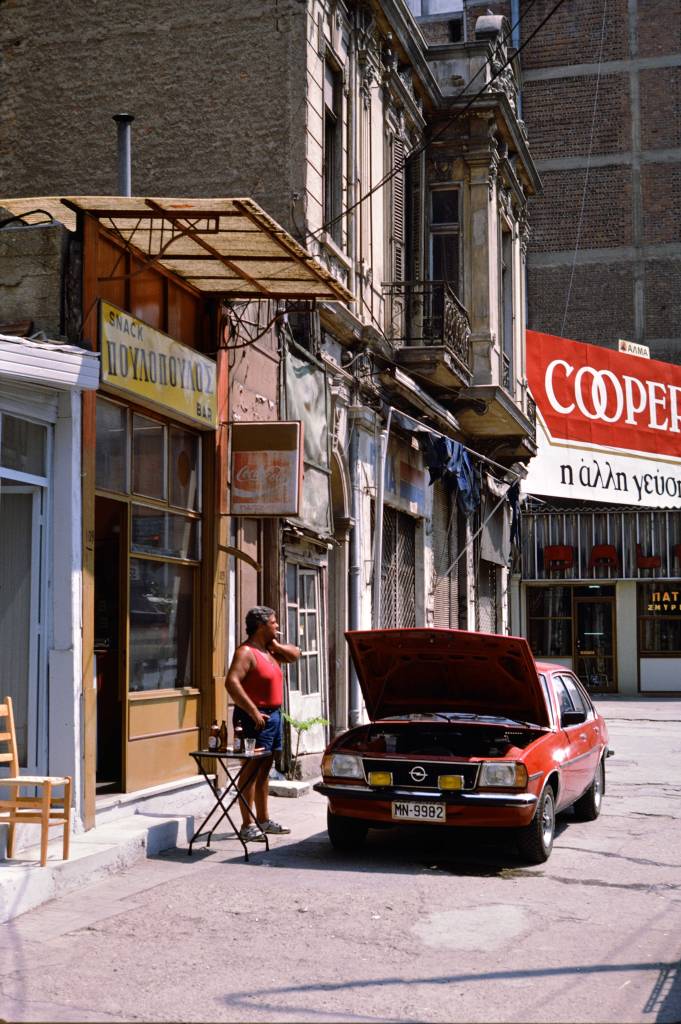
Egnatia Street, Thessaloniki
The deep divide between the ancient world and the modern one is evoked in Virginia Woolf’s tragic and slyly comic novel, Jacob’s Room, published in 1922. While the protagonist has embraced the classical world, on visiting Greece, he finds it continually rubbing up against a tawdry, commercial and undignified environment, full of minor irritants.
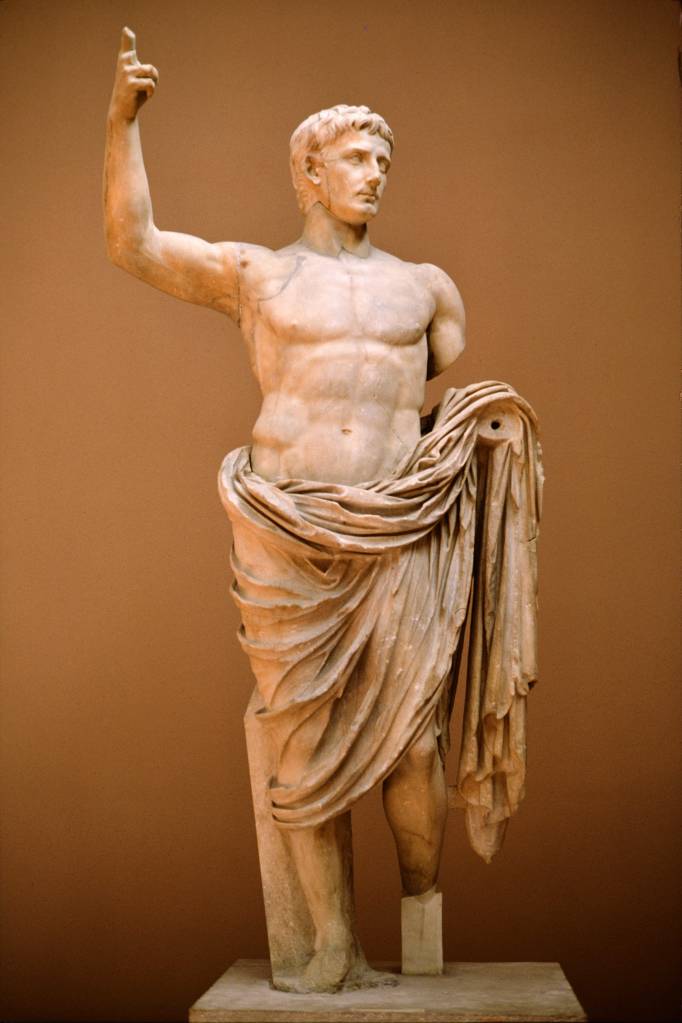
Statue of Augustus, Thessaloniki Archaeological Museum
Conveying Jacob’s thoughts, Woolf writes:
[…] it is the governesses who start the Greek myth. Look at that for a head (they say)—nose, you see, straight as a dart, curls, eyebrows—everything appropriate to manly beauty; while his legs and arms have lines on them which indicate a perfect degree of development—the Greeks caring for the body as much for the face. And the Greeks could paint fruit so that birds pecked at it. First you read Xenophon; then Euripides. One day—that was an occasion, by God—what people have said appears to have sense in it; ‘the Greek spirit; the Greek this, that, and the other […] The point is, however, that we have been brought up in an illusion.
My own education had decidedly comic elements. I chose to do a new A-level subject, Classical Civilisation, and since I was the only pupil to do so, I was sat alone in a classroom with a new Latin teacher, who plainly had no idea how to approach the subject and little inclination to find out. Strangely, his name was a close but absurd echo of the Greek mythical character I most admired, Odysseus. He sat on his dais, I at his knees, and produced a yellowing typescript—his MA thesis—which he would read aloud while I took notes. A restless man of simian appearance, continually in uneasy movement (like an uncharismatic Jerry Lewis), after ten minutes or so he would announce that he was going to the chemist to get some ‘pep pills’, would hand me the hallowed manuscript, and leave. Shortly before the end of the lesson, he would reappear, take the thesis back and continue to dictate. (After a few lessons like this, we agreed that I would take myself off to the university library to study independently.)
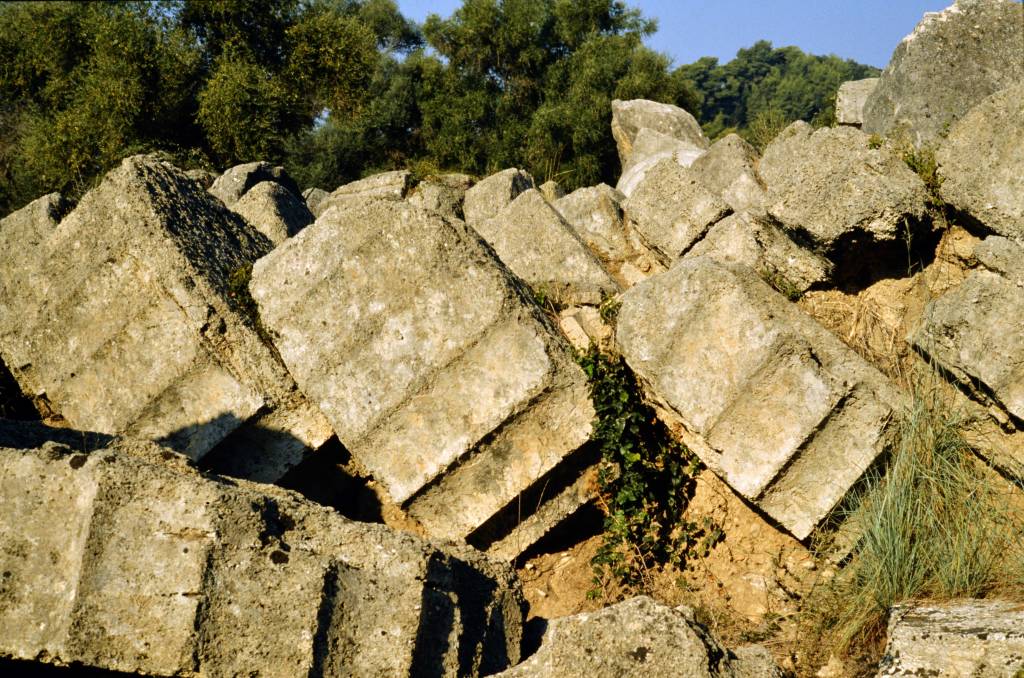
Temple of Zeus, Olympia
Woolf’s novel is a sardonic take on the Bildungsroman genre which follows the development of the central character from childhood to maturity, delineating the process by which identity, achievement and knowledge of the world come into realisation and resolution. In Jacob’s Room, we see Jacob grow, and we hear his thoughts and impressions in a series of fragmentary scenes, and also especially those of the women who raise him and care for him. Yet the inner life of this boy and man—who is as physically beautiful as the Greek ideal—seems disjointed, and his personality curiously blank. One attraction of the classics was for the vision of an overall sense that actuality seemed to lack, particularly in the world that Woolf describes, as Europe arms itself for the global conflict that will kill Jacob.
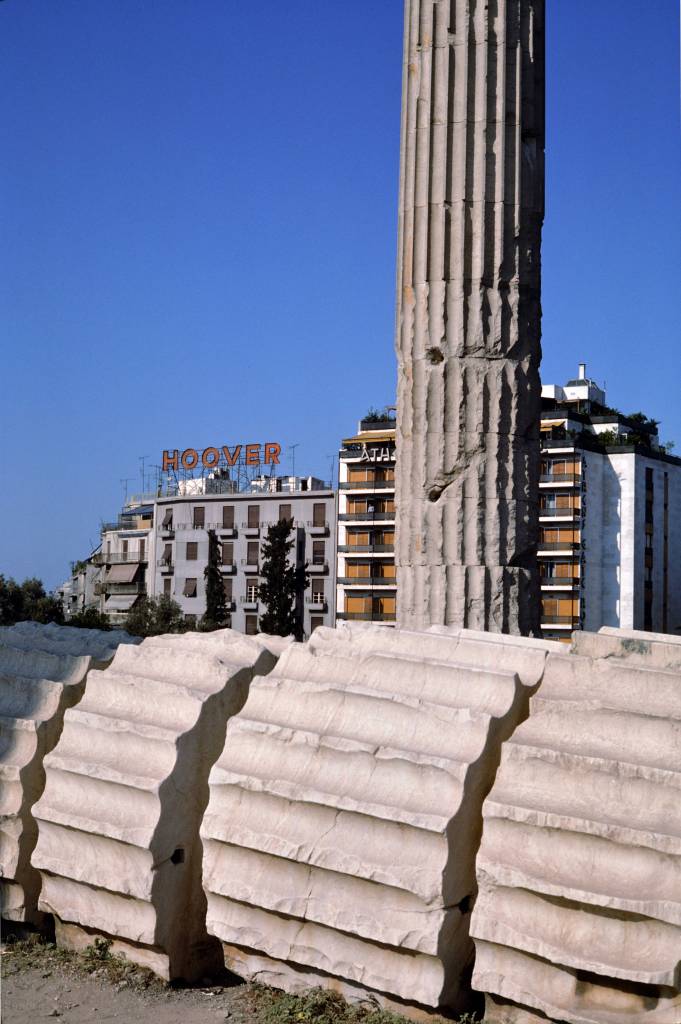
Temple of Olympian Zeus, Athens
In 1986, the disjunctions were naturally very different. The ruins were set against mundane office and residential blocks, and against advertising hoardings, so that the reign of money stood in opposition to the leavings of long-dead ritual.
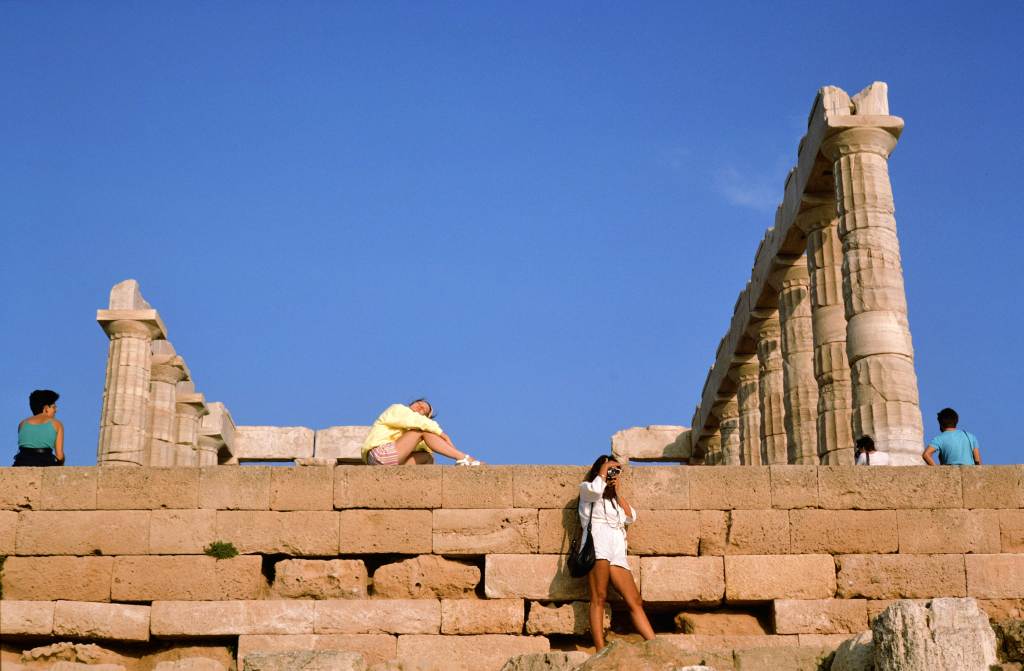
Temple of Poseidon, Cape Sounion
They stood, too, against mass tourism, of course, as the ruins served to attract visitors and extract their drachmas.
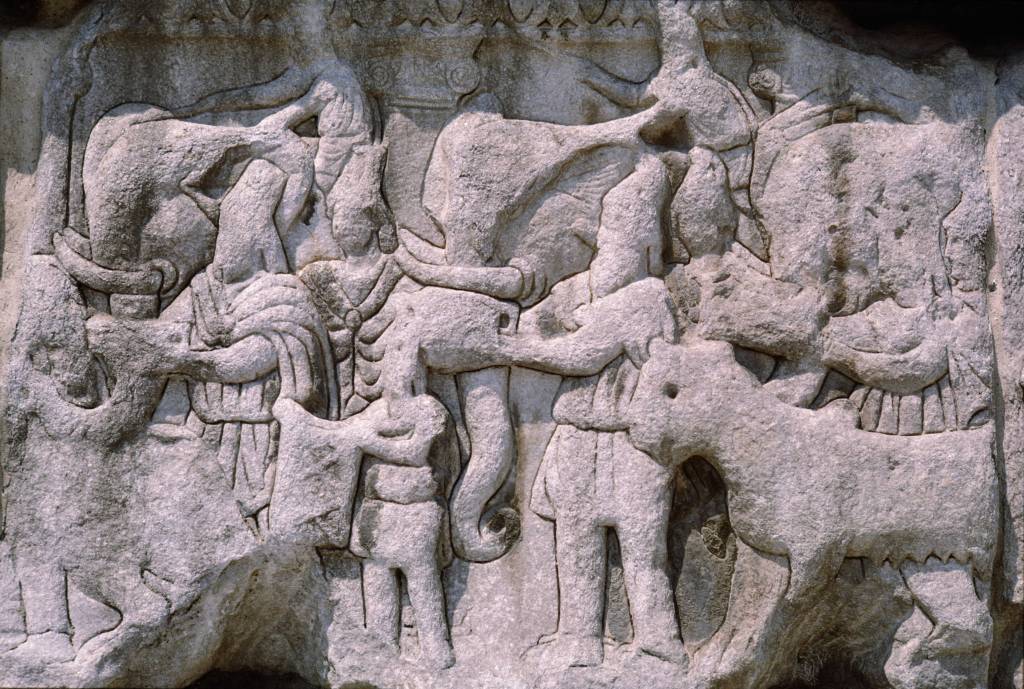
Arch of Galerius, Thessaloniki
And against traffic, its din, threat and the tang of acidic air, which swiftly raised the thought that the ruins’ erosion was not only due to natural weathering.
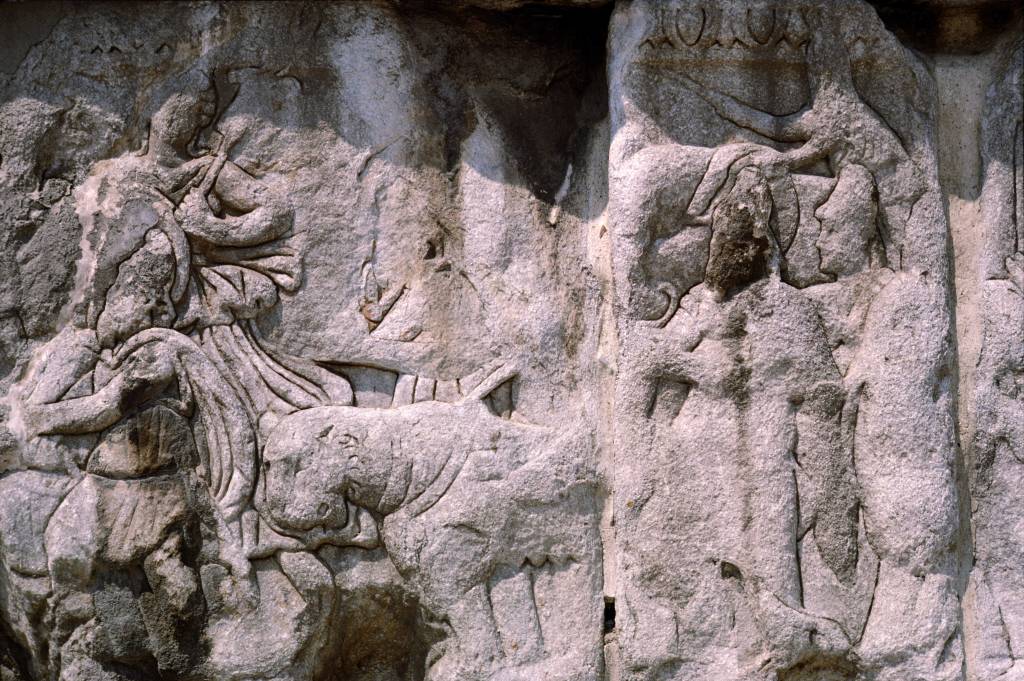
Arch of Galerius, Thessaloniki
In the severely polluted city of Thessaloniki, the Arch of Galerius—a Roman imperial monument celebrating military victory—sits hard by a major road junction with incessant heavy traffic clattering by, honking and noisily exhaling. While the Arch had long been damaged by weathering and iconoclasm, modern pollution made its own contribution. In a process strangely akin to solarisation, the soot deposits and acid rain had deepened the lines carved into the stone while gentler passages were smoothed out. A dream, it seemed, of an overly linear hyper-classicism was summoned into being, as if in compensation for the damage, sickness and entropic degradation that the fumes spread. (The Arch has since been restored—repaired, cleaned and coated with a veneer meant to protect the marble from further harm.)
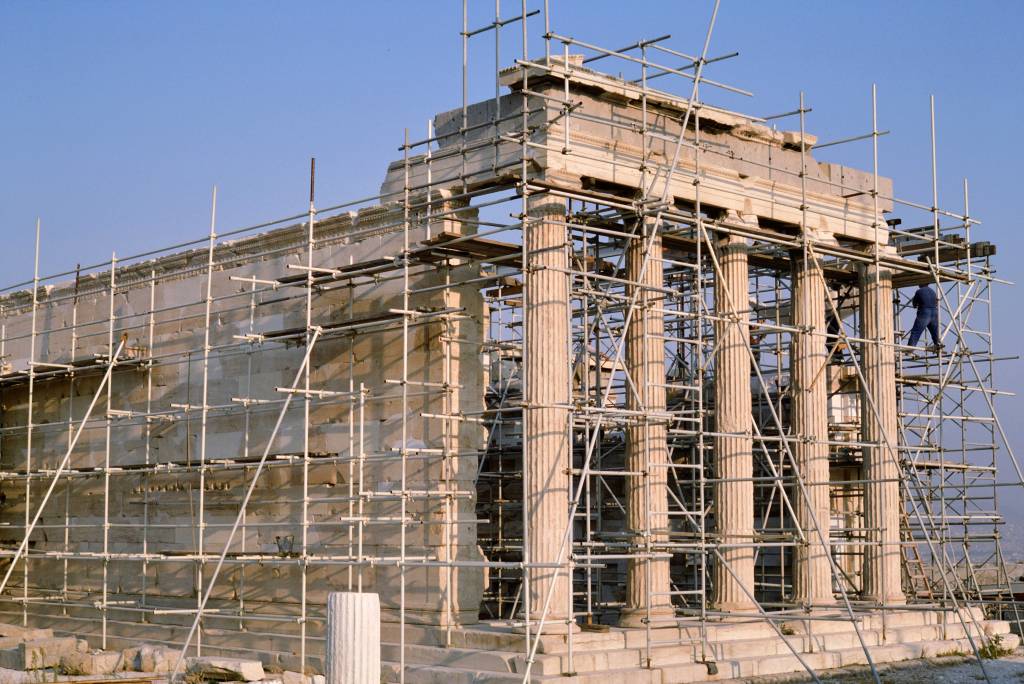
Temple of Athena Nike, Acropolis, Athens
Yet, because of and in spite of such damage, when Jacob views the buildings of the Acropolis, he feels the strong draw of permanence, to set against the fripperies and distractions of the present:
The extreme definiteness with which they stand, now a brilliant white, again yellow, and in some lights red, imposes ideas of durability, of the emergence through the earth of some spiritual energy elsewhere dissipated in elegant trifles. But this durability exists quite independently of our admiration. Although the beauty is sufficiently humane to weaken us, to stir the deep deposit of mud—memories, abandonments, regrets, sentimental devices—the Parthenon is separate from all that; and if you consider how it has stood out all night, for centuries, you begin to connect the blaze (at midday the glare is dazzling and the frieze almost invisible) with the idea that perhaps it is beauty alone that is immortal.
Added to this, compared with the blistered stucco, the new love songs rasped out to the strum of guitar and gramophone, and the mobile yet insignificant faces of the street, the Parthenon is really astonishing in its silent composure; which is so vigorous that, far from being decayed, the Parthenon appear, on the contrary, likely to outlast the world.
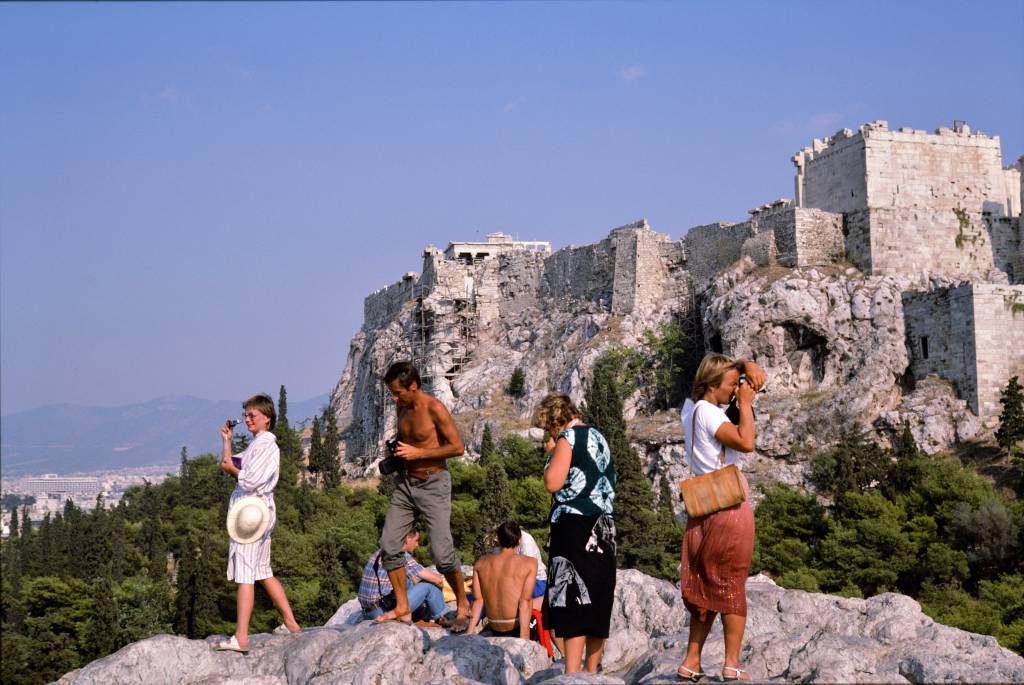
The Acropolis seen from the Aeropagus
There were moments, at least in the frozen realm of photography, when the two worlds appeared to come into conjunction—in a frieze of tourists situated on their own plinth and set against the Acropolis, or a similar group seen near the Temple of Poseidon on Cape Sounion.
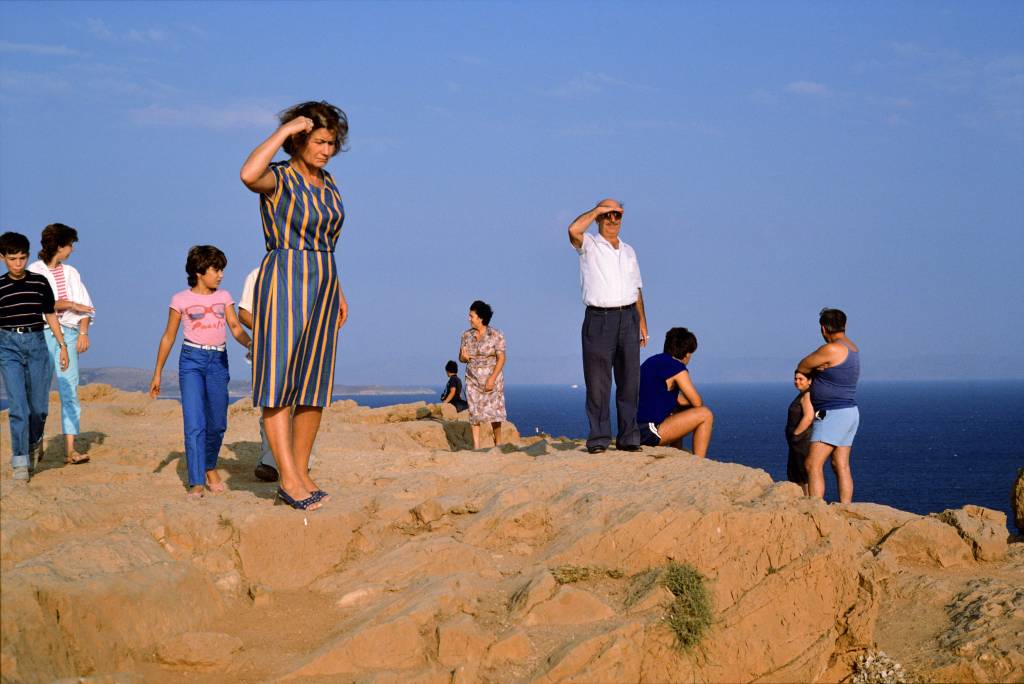
Cape Sounion
Some of this was doubtless my own classical education at work in a chasing of illusory sense. Yet, in photography and intellectual life, it may be that the scattered pieces could be made to join up, that the forces that produced adverts and traffic accidents and pollution and coach-party tourism could be made clearly apparent. And equally, by contrast, that the appeal of an ancient humanity—with all its violence, elitism, slavery, mystery, and collective vitality—does allow a glimpse of the possibility in the present of an utterly different way of life. One which is glimpsed back beyond the advent of all reproducible media (except cast sculpture), beyond capitalism, and beyond Christianity. (The attractions of the last are compellingly laid out in Gore Vidal’s historical novel, Julian, which dramatises the attempts of one Roman emperor to overturn that monotheistic religion and reinstall the old gods.) So, as if in a condensed dream image, a sense of the past overlays and estranges the present, raising the distinct, hyper-linear spectacle of its particular malformation.


Leave a Reply