September 1986
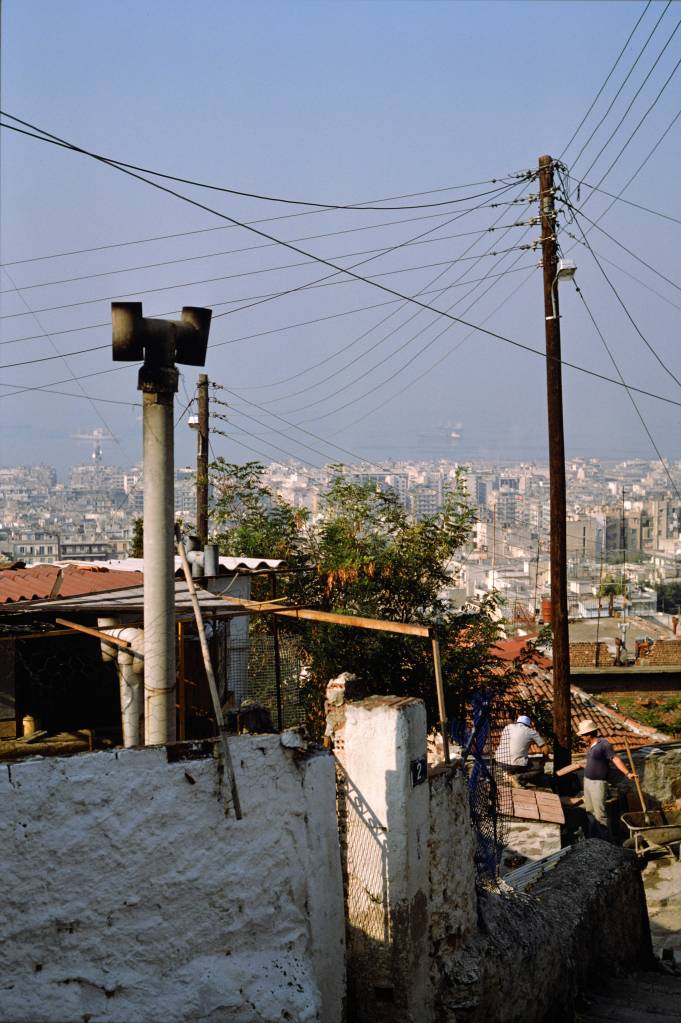
View of Thessaloniki from Kassianes Road
On my first trip to Greece with a head full of legends, I encountered a reality which, especially in the big cities, corroded mythological fantasy. Mark Mazower’s brilliant history of Thessaloniki shows how that ancient and diverse city suffered, not just from successive bouts of ethnic cleansing and devastating fire, but under Greek rule corrupt speculative building which bulldozed its old fabric of markets, mansions and mosques. Its remaining jewels are now set in a diadem of concrete, gimcrack construction and gridlocked traffic. Embarking from the city’s port on a long voyage to Chios, and poisoned by a cheap bistro meal, I ignominiously threw up over the side of the ship before it left.
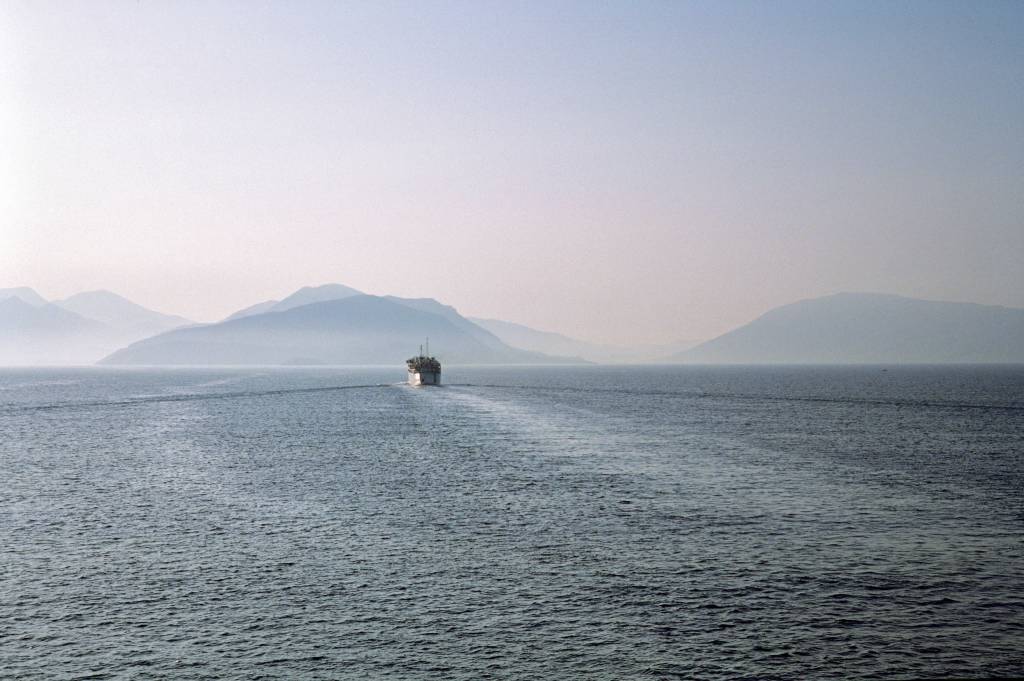
Once at sea, on the deck, I huddled with my girlfriend in our coats through that cold night, sipping ouzo in the illusion of the warmth that it gave, until the coming of a gently luminous dawn. In the slow progress of that old steel ship, as the sun brought its heat through the sea mist, as islands and ports paraded by, a vision of the old epics revived. I was reading the last books of Proust’s Remembrance of Things Past, so that the captive time of the voyage was layered with the narrator’s strange temporality. Long passages move with an extreme slowness which matched that of the ship but in others, time proceeds with a disconcerting abruptness—and, of course, loops back on itself. On reaching the last book, I was struck by how the narrator and his main characters had suddenly leapt into frail old age.
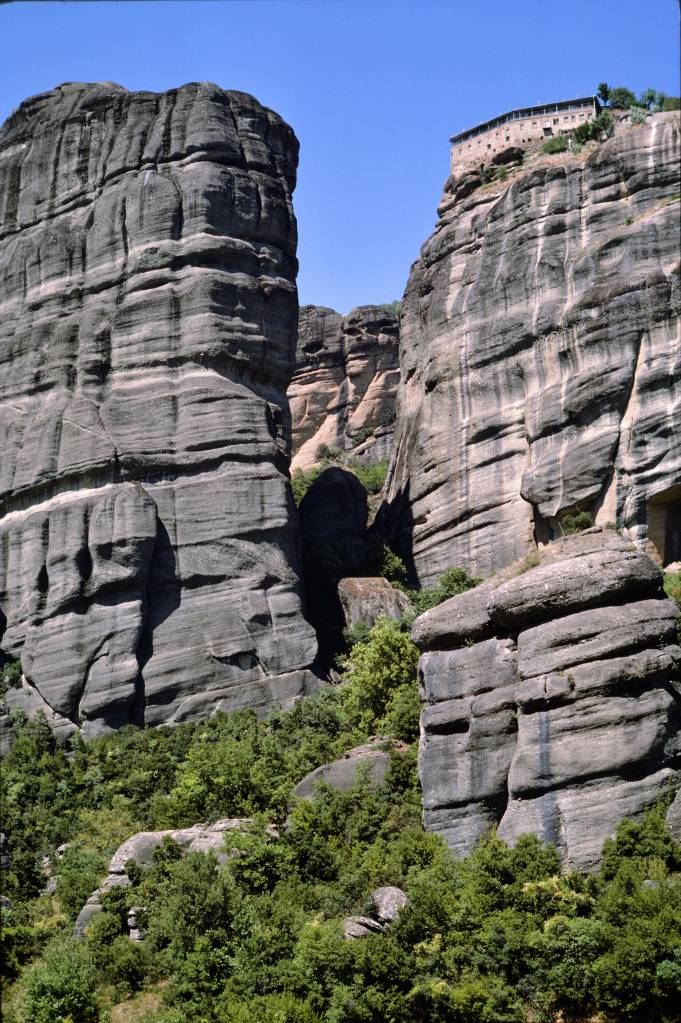
Meteora monastery
Thoughts of aging had been imposed by the touring of ruins, with their stones toppled by earthquakes, or removed for use in other buildings so that fragments of ancient temples would end up in city walls. In the Meteora, Christians had built monasteries atop the steep striated monoliths of the area, seeking refuge from the violence of unquiet times. While steps had since been cut into the rock, access was previously by ladders, which could be drawn up when needed, or by baskets winched up on ropes.
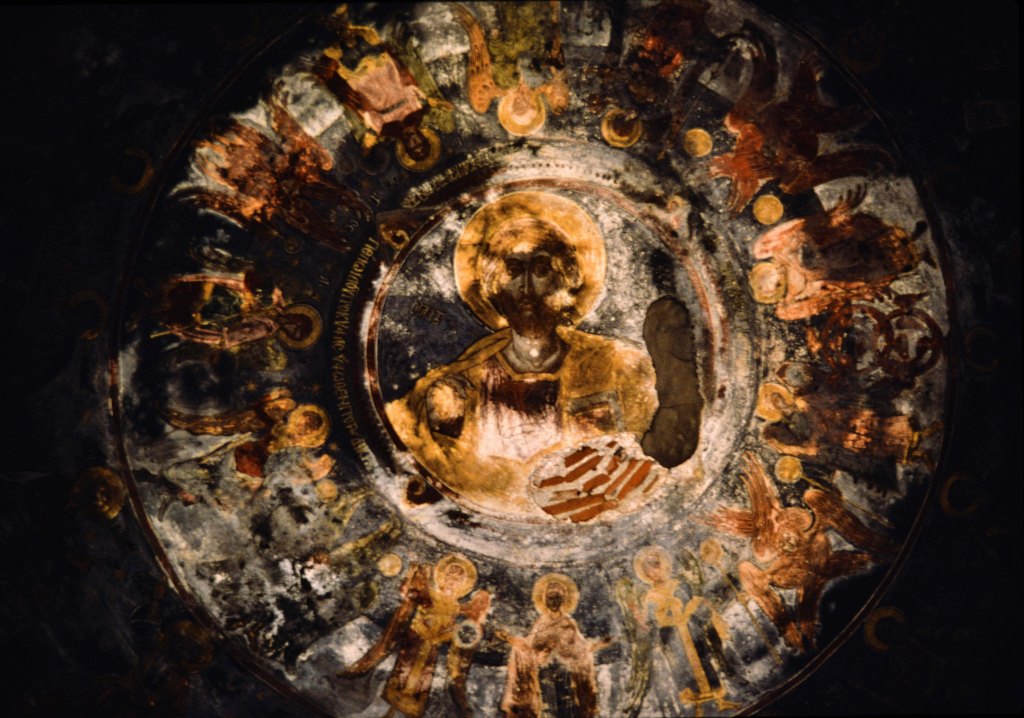
Monastery of St Stephen, Meteora
In the small, dark, deeply silent chambers above the plain, delicate frescos clung to the ancient structures. I would try to record them, leaning against wall or pillar to steady the camera over long exposures. After a hard climb, we would sometimes have the rooms to ourselves for a while, before the arrival of large coach-tour groups of older people who, breathing heavily after the ascent, would fill the air with their exhalations, so much so that you could see the condensation stand out from the frescoes, as if the saviours and saints, long sunk in their hieratic calm, had become fearful of their future.
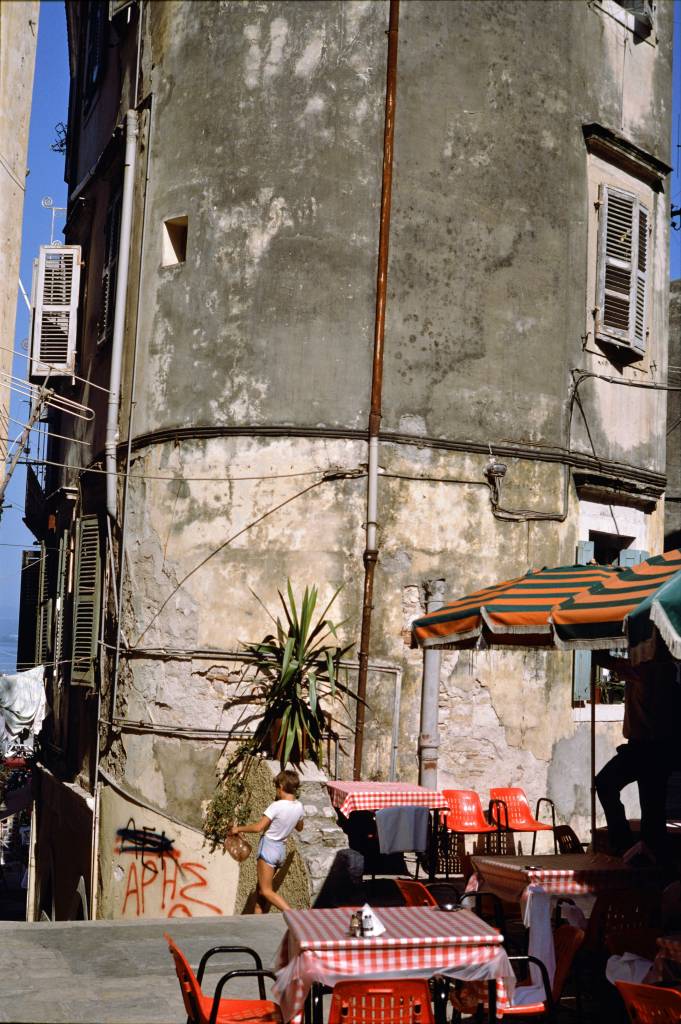
Philellinon Road, Corfu
A scene taken in Corfu contains, as many photographs do, the frozen traces of different time frames—the quick movement of the boy on an errand (if he survives, he will now be well into middle age), the slower progress of the morning sun through that street, the gradual accretion of pipes, wires and TV aerials across the faces of old buildings, as they are stained by weathering and their plaster crumbles. Beyond, in the glimpse of hills and sea, the geological time over which the shape of the land itself is in flux, and settles, like an immensely slow-moving and viscous fluid, into the shapes we take to be permanent. There is an echo of Proust here in his Bergsonian view of the world in constant transformation, and in his fascination with the deceptive powers of photography: ‘Our mistake lies in our supposing that things present themselves ordinarily as they are in reality, names as they are written, people as photography and psychology give an unalterable idea of them.’
Adding to the sense of instability, it had been a season of earth tremors. They would wrench us out the depths of youthful sleep in panic, still sticky with the residue of dreams, staring out of the window, to see whether anyone else thought the movement severe enough to run outside, onto the empty lamp-lit street.
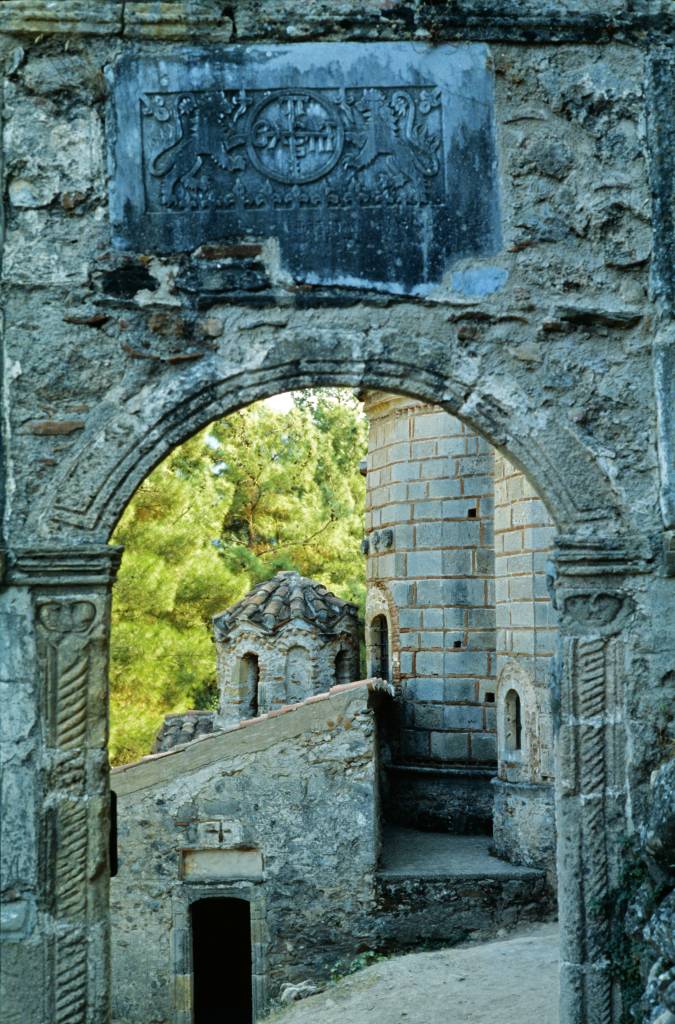
Monastery of Peribleptos at Mistra
In the medieval town of Mistra, after a long and arduous clime up its hillside, we sat eating lunch on a wall overlooking a very steep drop, our legs dangling over the precipice. The earth suddenly rocked and in terror we fled down the hill, falling exhausted at its foot, our legs trembling. Flesh then seemed so fragile and fleeting against the solidity of stone, and stone itself the same against the flux of the earth.
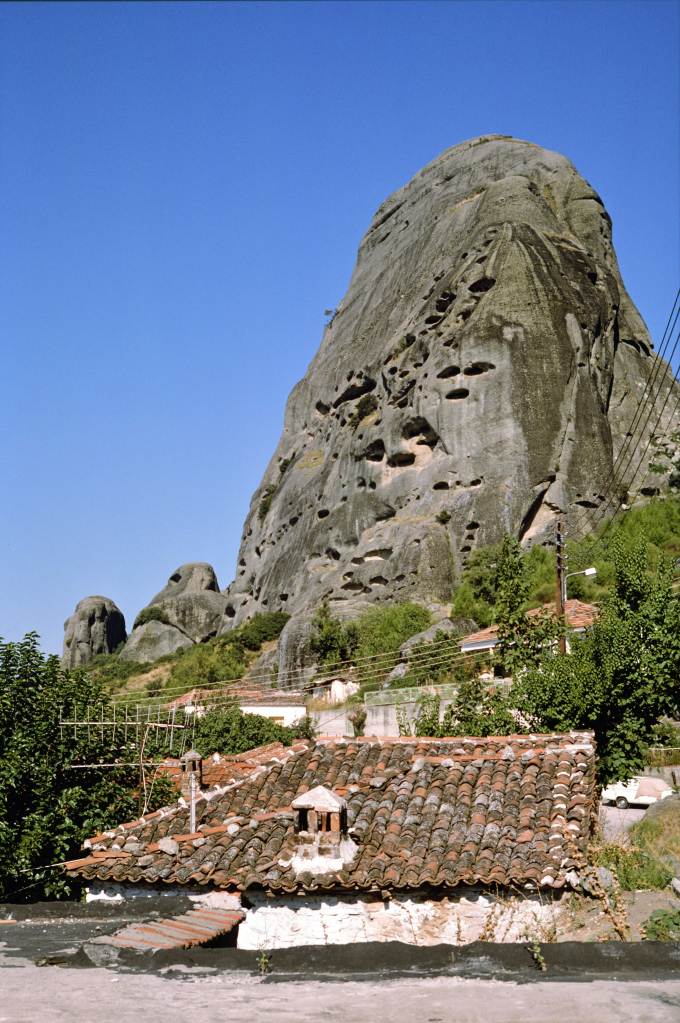
Kalambaka
In a back room near the Meteora, rented from an elderly woman who lived alone, we lay down to rest on a very warm night, wearing little. We had told her that we were planning to leave the next morning on a very early bus. So, at the turn of every hour throughout the night, the door would swing open and she would appear, clad entirely in black, holding up by its handle a gigantic and ominously ticking alarm clock, with her other hand pointing to its face.


Leave a Reply