August 1986
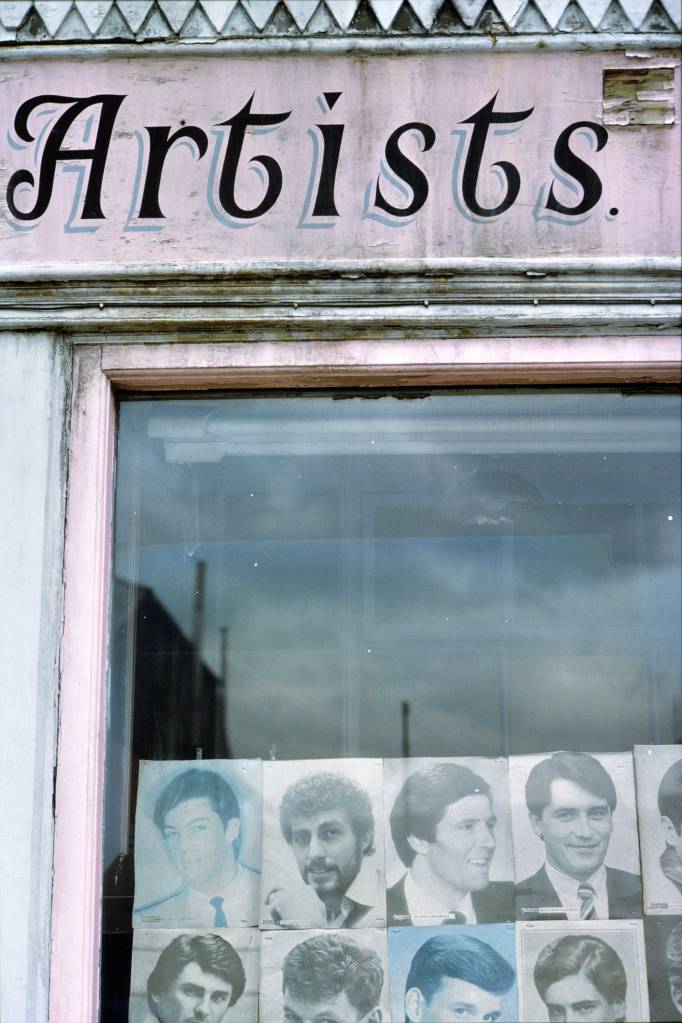
The photograph shows a barber’s shop in Aberdare, an impoverished valley town dealing with the consequences of the closure of the coal mines. I had lived there for a year doing voluntary work, and was revisiting to meet old friends.
A brilliantly double-edged joke, written by Barry Cryer, runs like this:
A man and his wife are out walking one day when they spot a lone fellow on the other side of the road. “That looks like the Archbishop of Canterbury over there,” says the woman. “Go and see if it is.” The husband crosses the road and asks the man if he is indeed the Archbishop of Canterbury. “F— off,” says the man. The husband crosses back to his wife, who asks, “What did he say? Is he the Archbishop of Canterbury?” “He told me to f— off,” says the husband.
“Oh no,” replies the wife, “Now we’ll never know.”
The double edge is that there is the tiniest possibility that the wife is right—that the Archbishop had decided to take the day off without his regalia and, being discovered, tetchily delivered a rebuff calculated to sow maximum doubt in the mind of the husband.
For me, this photograph also has a double edge. The barber’s shop makes a claim to artistry, which is undercut by the cheesy character of the portraits in its window, even as they have been estranged by the passing of the years. At the same time, by the false association through juxtaposition in which photography is so rich, and which is often used humorously, the claim extends to the men depicted, whoever made the sketches, and the photographer who took and retouched the portraits.
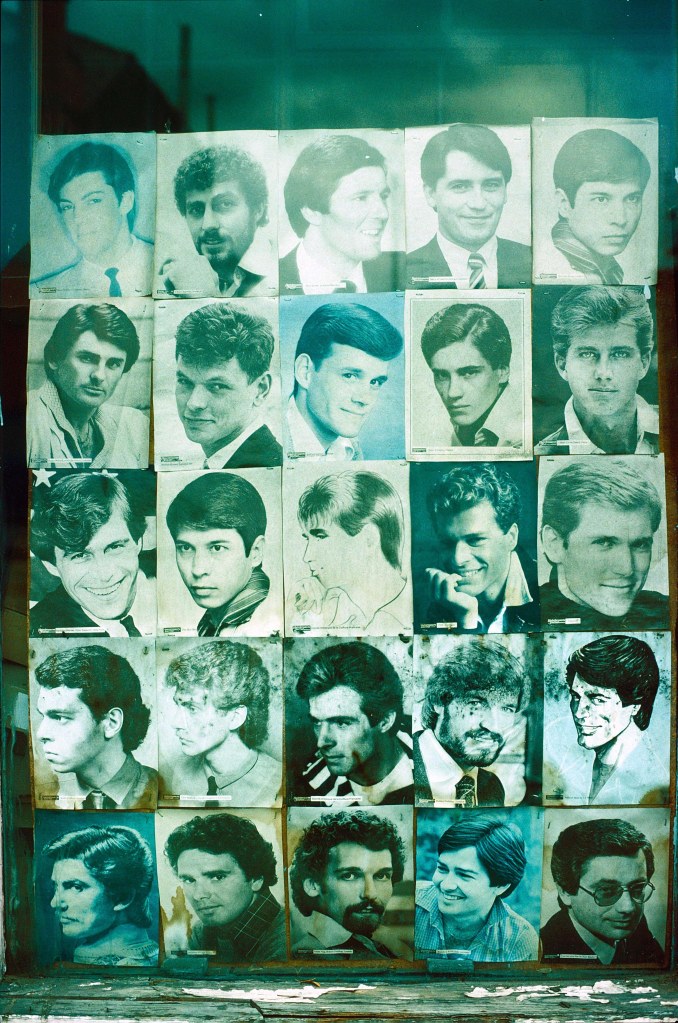
In 1986, the only slightly archaic character of the window portraits—and you can tell which ones are older as they have faded in the light—was a little misleading. I remember clearly in its gloomy interior the stench of burning hair as an elderly man was attended to, not with scissors, but comb and taper.
This is Walker Evans territory, of course, and I was by this time well aware of his book, American Photographs, and its opening with photographs about commercial photography, including grids of conventional portraits on display in a photographic studio. Like his literary model, Gustave Flaubert, Evans sought to command the most sophisticated and elevated artistic means to render everyday life in its full banality, conformity and absurdity.
My ‘artists’ are a little different. The resources of the valleys to counter the recession were of a type not easy for me as an outsider to photograph: strong social networks that were sustained despite the destruction of so many jobs, humour, solidarity, and a deep loyalty to the area, so that even the teenagers I had come to know would say that, while they might have to move away for work, it would always be to return.
The double edge behind the leading blade in this photograph lies in the tiniest possibility that in a world more equal and less out of kilter, where the power of money is weakened, and the monopolies’ sway over culture diminished, artistry could flourish everywhere.


Leave a Reply