July 1986
That July, I took three photographs of graffiti along the same stretch of black-painted wall in Finsbury Park. They may serve as a temporal triangulation onto today’s much-changed street art scene. Over my long London wanderings, paying close attention to how kids had decorated walls, it was then rare to come upon elaborate figure pieces like these, styled as personifications.
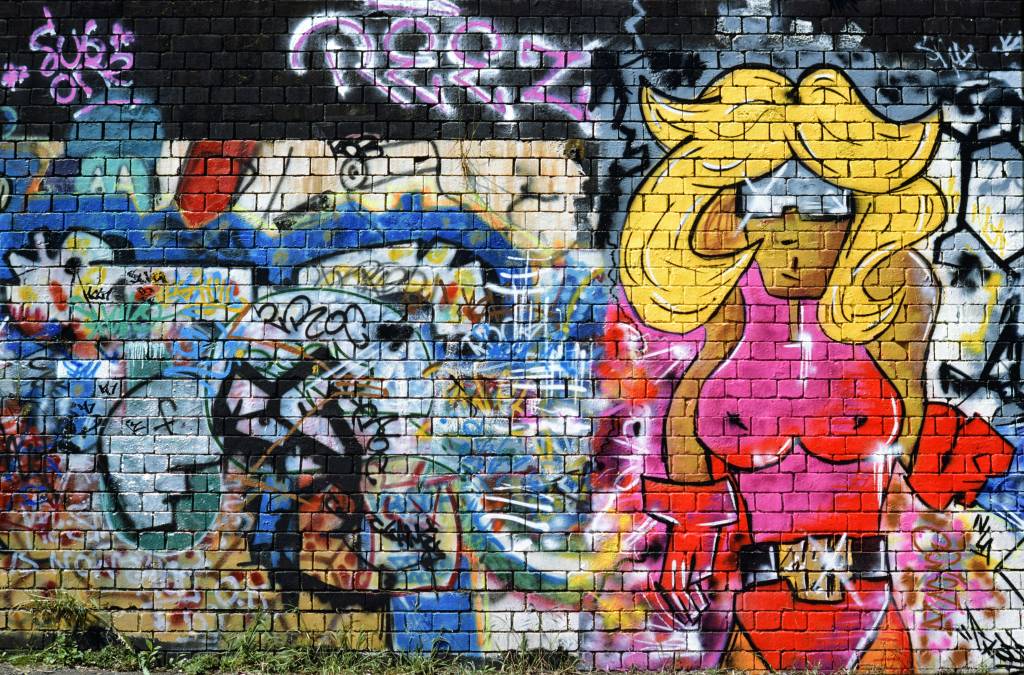
The first was an adolescent sci-fi fantasy of a blonde bombshell, materialising out of the familiar chaos of writing and over-writing as a dazzling vision of saturated colour and reflection, belt buckle and visor flashing, and a costume that reveals more than it conceals.
Graffiti was then pursued by a distinct group who were diverse in their race and class but were predominantly young and almost all male. Young women were rarely involved, so much so that a few of those who were, such as Lady Pink, have since become celebrated. Many of the depictions of women in graffiti were primarily driven by a conventional idea of sexual allure.
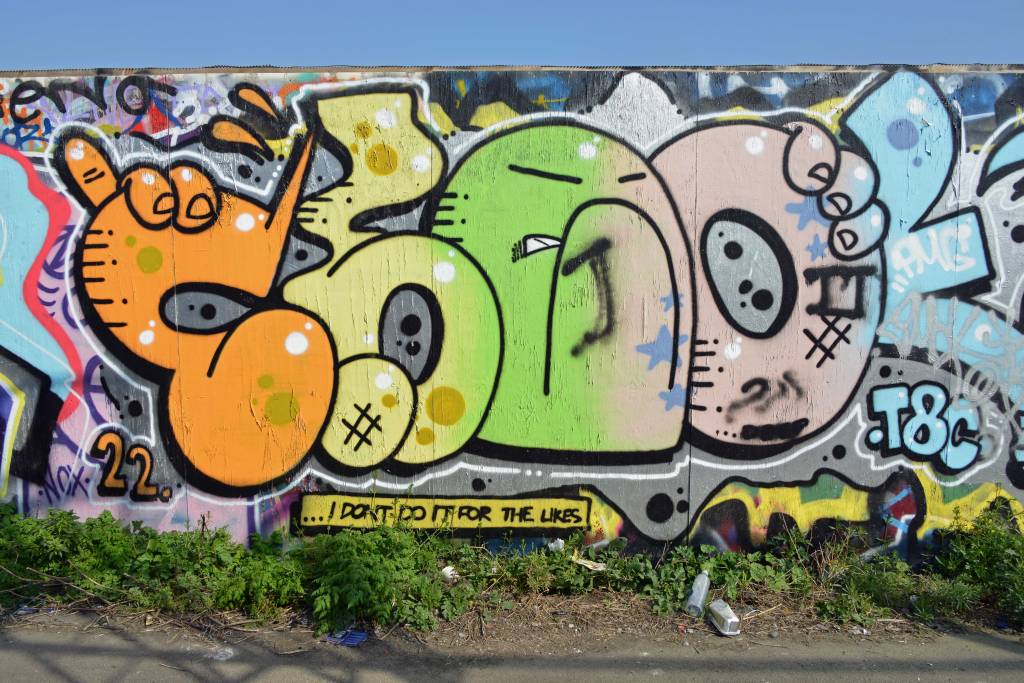
Shoreditch, 2022
In a remarkable piece of participant ethnography, The Graffiti Subculture, Nancy Macdonald interviewed numerous writers in London and New York to analyse this intensively competitive world in which reputation was gained by sustained and unremitting work—by writing and painting all night and every night. Strict hierarchies governed a writer’s reputation and the progression of their career from tagging to the making of increasingly elaborate works. The identities publicized, Macdonald wrote, usually centred upon a hyper-masculine display of adolescent bravado, often rendered in sharp and aggressive forms which may evoke weapons or armour. It was not meant to be liked or understood by most of those who saw it.
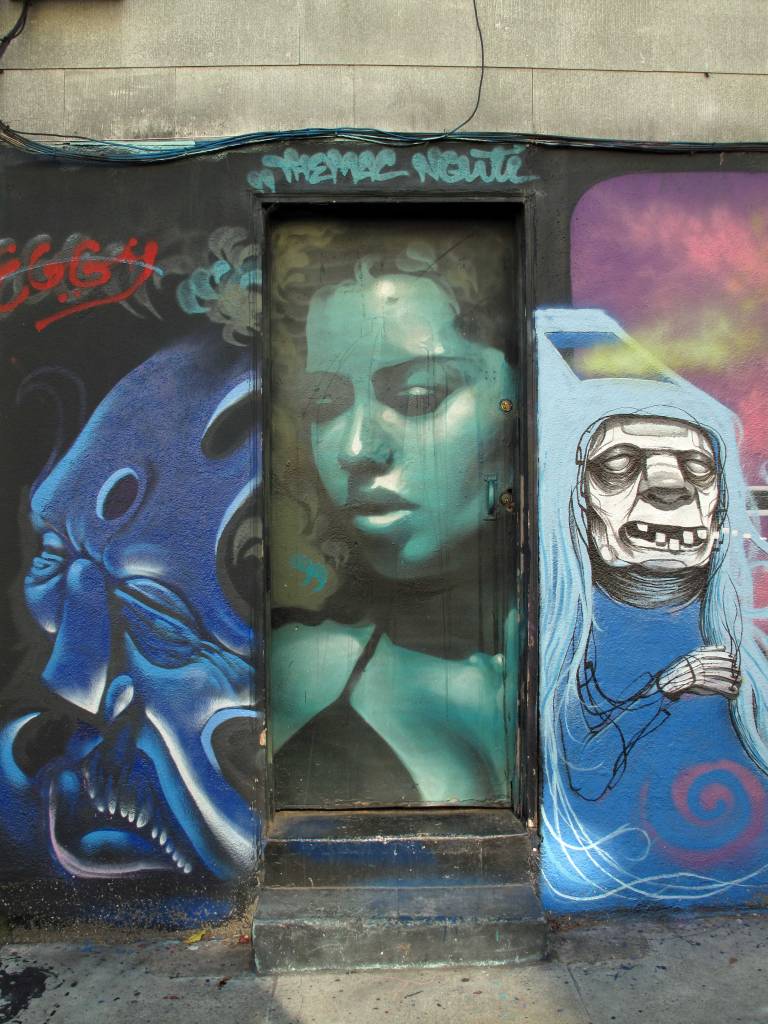
San-Francisco, 2016
The current scene is far more diverse. As street art came to coexist uneasily with graffiti, the branding of the locally notorious writer gave way to something wider and potentially also more conventional—mediatized fame and public appeal. In his book, Street Art, Cedar Lewisohn expressed the change as a move from ‘elitist’ graffiti to ‘populist’ street art. And street art is openly populist, being simple, engaged with mass culture, delivered through branded persona, and often defending itself with statements about ‘the people’. Like graffiti, it is a gift, but one that seeks to please everybody. In street art, the struggle over who has the right to control the urban environment moves from being implicit—in vandalism, and in an often obdurately illegible protest at the cold functionalism of the city and the propaganda of advertisers—to explicit, with clear messaging and overt spectacle.
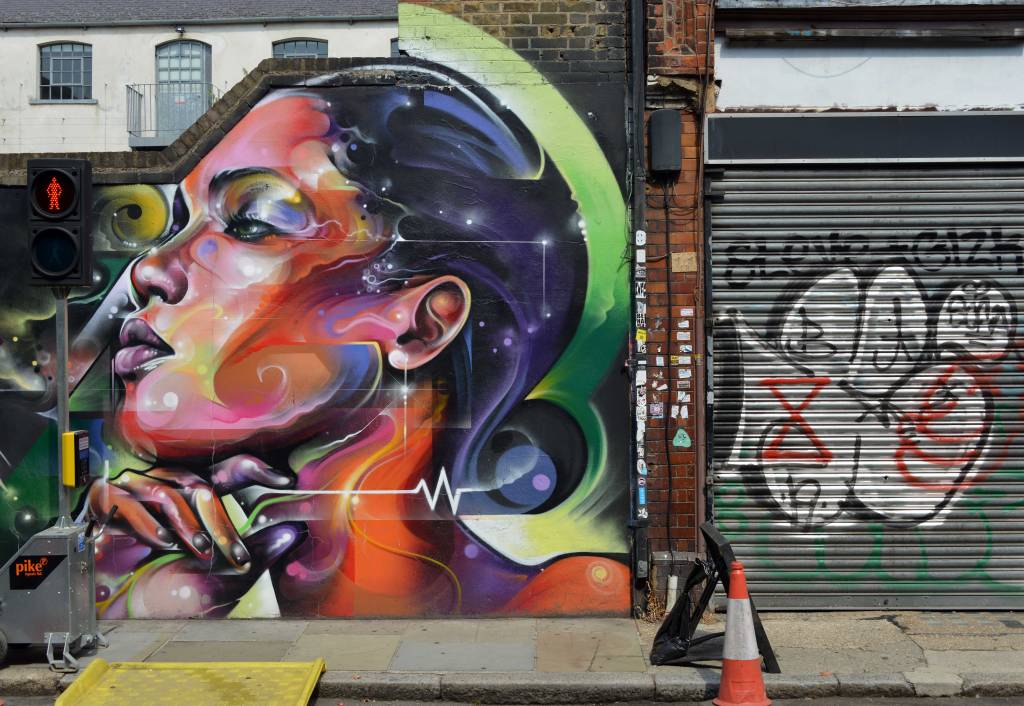
Mr Cenz, Fashion Street, London, 2020
Figures are far more often seen. One prominent strand in street art is the idealising depiction of ordinary people who are at once individual and emblematic. The paintings often show young people, stylish but not overtly wealthy, more often female than male, and often Black or mixed race. These figures tend not to be doing anything but are simply present; sometimes they lift their heads as if to proudly greet a coming dawn (in a soft echo of Socialist Realism), but more often they seem quietly introspective or even melancholy. The transience of the painted work is matched with that of youth, summoning up a precarity that is at once social, economic and existential.
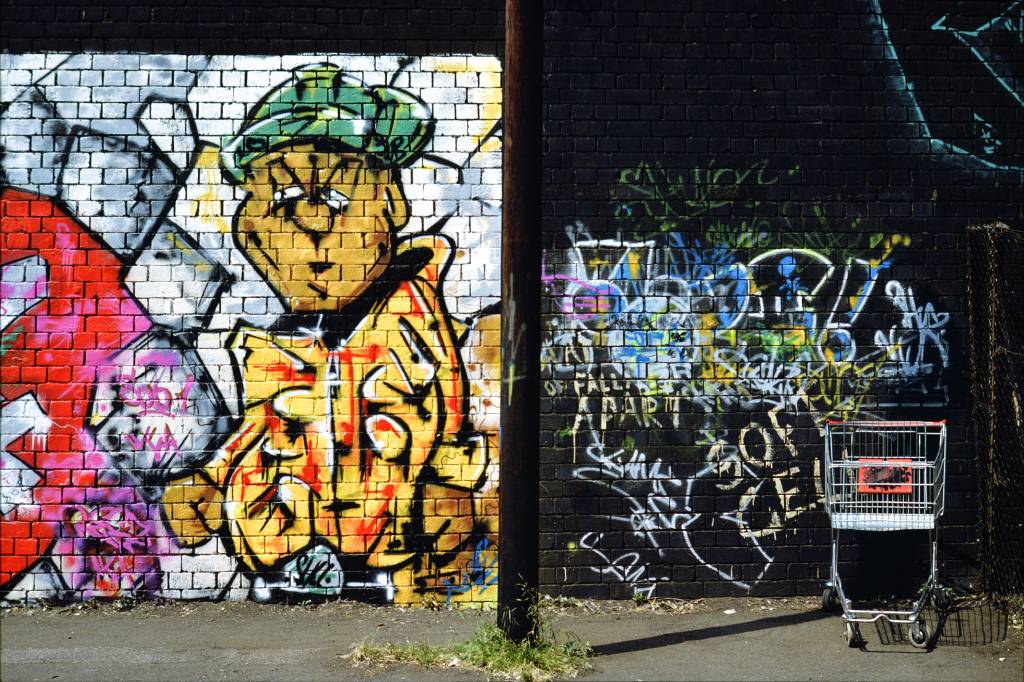
In the second Finsbury Park photo, the young male artist appears as a persona, as conventional as the last. The discarded shopping trolley (which may have been used to transport paint, and the usual fuel for the night hours needed to make an elaborate piece, beer) points to the refusal of any contact with commerce or the establishment. Stealing paint was a point of honour.
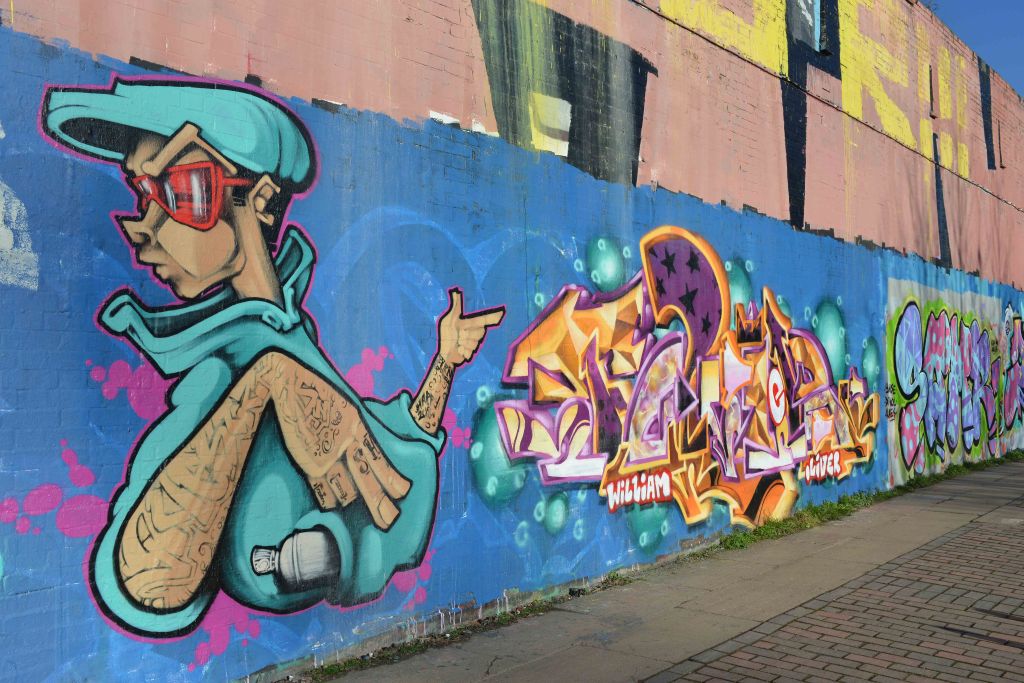
Hertford Union Canal, 2018
Now such figures are once again more often seen, wearing similar clothing, and depicting personae of the same bearing—hyper-alert, wiry and wary, ready to bolt at the first sign of danger. Given the great improvement in the technology of paints and nozzles, they are more detailed, cleaner and more vivid renderings. And while the conventions remain similar, such elaborate pieces take much longer to make, which brings us to the issue of illegality, for in the 1980s, graffiti was seen by the authorities solely as a criminal matter, and writers who were arrested could expect their homes to be raided, and their materials and sketchbooks seized, while repeat offenders were sentenced to long stretches in jail.
Naturally, then, unless you were active as a writer on the scene, it was extremely difficult to know who had done what. Writers were hostile to a media which usually condemned them out of hand, and were fearful that any media exposure would lead to arrest. The magazine Graphotism, which came to shed a little light on the scene and reproduced new pieces of work, would not begin publication until 1992. As for the pieces shown here, reverse-image searches produce only similar looking bits of street art made in the last few years. Such works almost never long survived the attentions of other writers or council cleaners, and were rarely photographed.
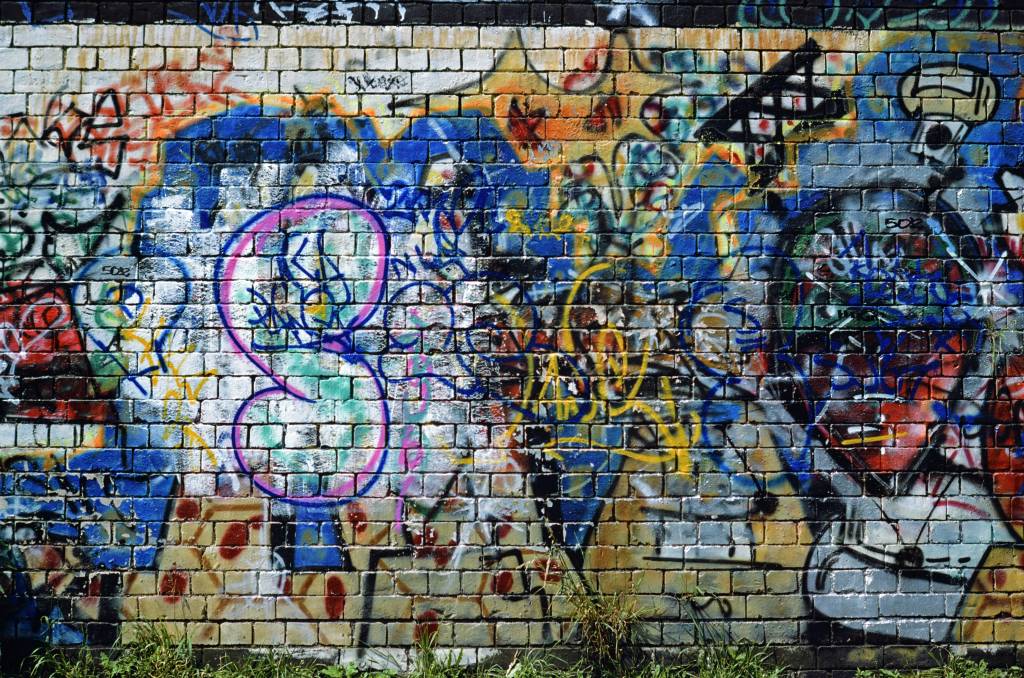
More familiar, and little changed, although overlain by publicity-friendly street art, is the palimpsest of chaotic writing and over-writing, and the partially effaced figure of another artist to the right, topped with—in a nice witticism—a flying nozzle cap. As in cartoons, this hat has shot off the head in surprise or shock.
As opposed to street art, graffiti maintains an exclusive, subcultural elitism in which there is a poignant collision between the urge to ubiquity (to emulate the advertising industry that spreads its images, slogans and logos to every corner of the environment) and the Quixotic attempt to do this as an individual and by hand. In Felix ‘FLX’ Braun’s book, Children of the Can, the writer Seza describes how the dynamic leaning of graffiti lettering, as if ‘crouching or ready to pounce’ relates to the vulnerable body of the artist. The urge to walk, tag, paint and repeat is dependent upon a precarious physical performance, characterized by the interplay of obsession and fatigue, daring and danger, mark and surface, meaning and site. When complete, the work is subject to all the contingent changes in its environment—over-writing, weathering, cleansing and even demolition. Advertising—another of its enemies—is mostly free of this, or at least strives to be, holding itself aloof in billboards, replacing posters when they become aged or defaced, so that signal is heard loudly over noise. In graffiti—still more harshly viewed than street art by the police and the courts—the two are inextricable.
(This piece of writing draws on passages from my book, Art in the Age of Populism, which will appear in the autumn.)
 Julian Stallabrass
Leave a comment