May 1986
In pursuing this memory and photography project, strange iterations echo through the mind and across images, both within the past and in its distorted parallels with the present.
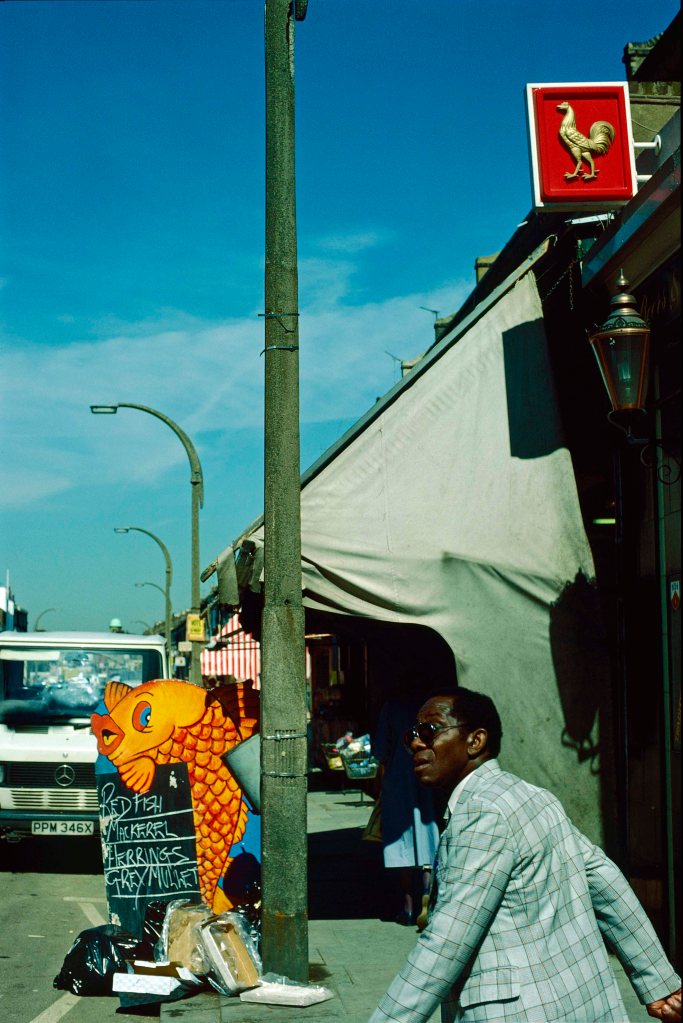
A photograph that I took on the Blackstock Road in Hackney struck me as a success, and I sometimes showed it in exhibitions. A record of light reflecting from a combination of objects and figures at one moment, it is paradoxically opaque. It could be thought to say something about the wary alertness with which many Black people navigated those streets; or about the dress sense of that time and place; or the bricolaged, out-of-kilter character of the area.
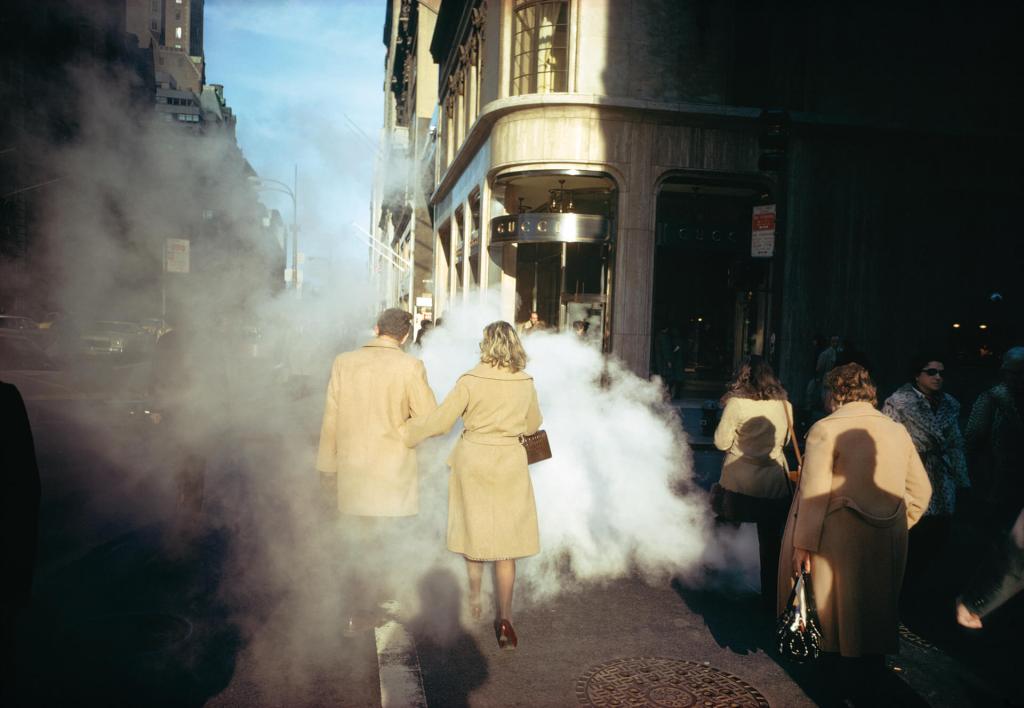
Joel Meyerowitz, New York City, 1975
Perhaps, though, as Joel Meyerowitz wrote of a far more accomplished coming together of people, street and light with a marked internal echo: ‘None of it means anything, but it happened, and maybe that’s enough.’ (See the caption to the photo in Colin Westerbeck, Joel Meyerowitz, Phaidon 2001).
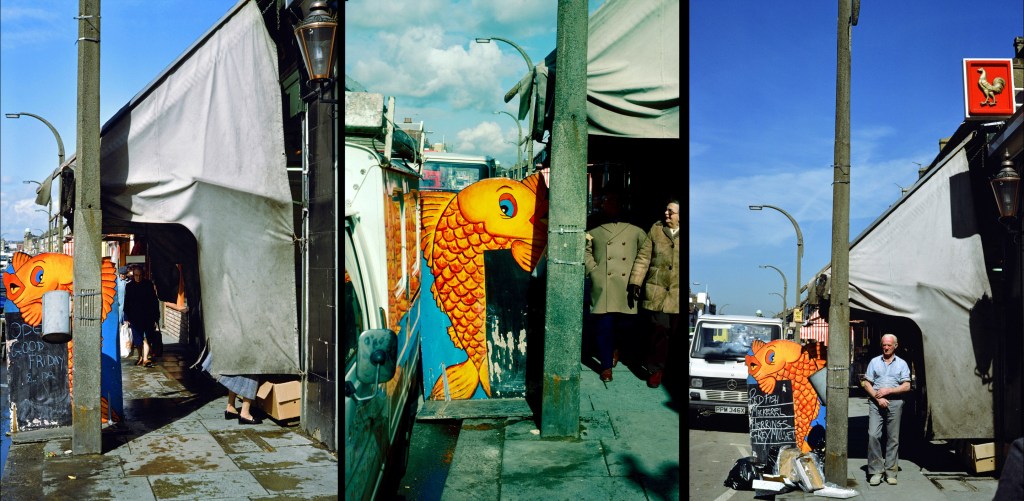
Blackstock Road, April-May 1986
Looking back over the photographs that I made around that time, I am struck by how often I went back to the Blackstock Road at times when behind me the sun cut straight down the street, and to that particular portion of the street with its hand-painted fish sign. Since I was photographing strangers without their permission, there was an advantage to having the sun shining in their eyes. Not that I was skilled enough to remain unobserved.
These returns were partly to follow Cartier-Bresson’s famous advice to find an environment of some compositional order and social significance, and to wait there for something to happen. It was also to do with a stubborn faith (contra Meyerowitz) that a meaning that was not merely photographic could be wrung from the continual flux of that impoverished fragment of North London.
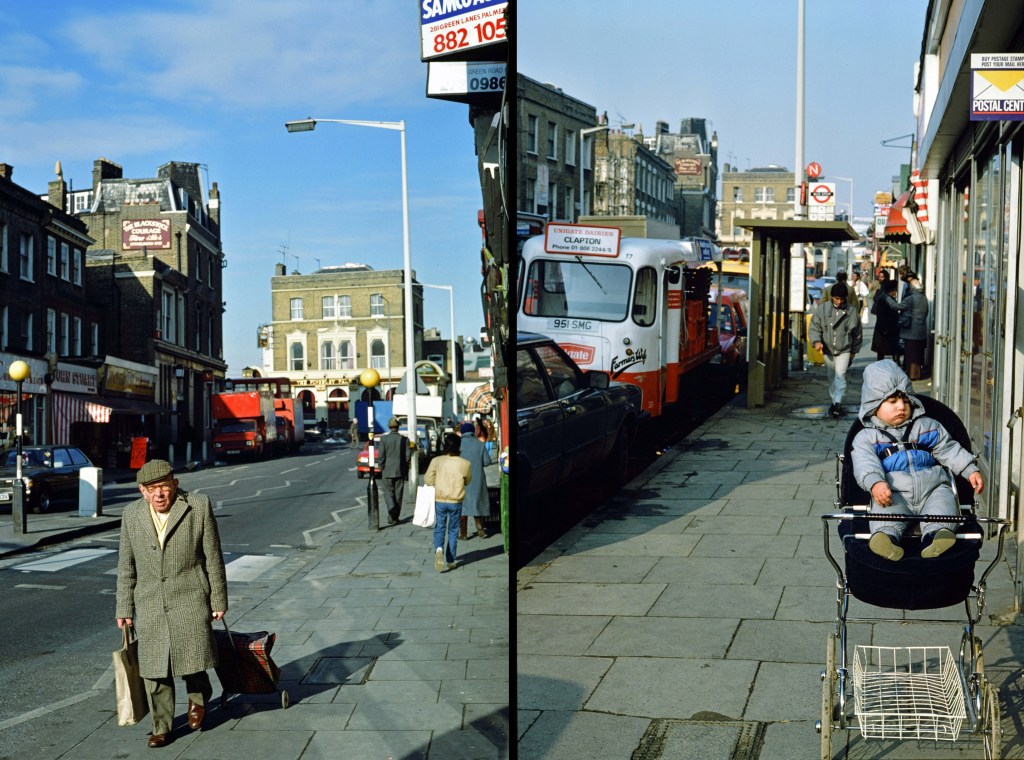
Blackstock Road, February 1986
The process of selecting, copying and editing photographs taken forty years on, month by month, following the seasons, produces other odd iterations. If the sun is shining, I view the slides with a loupe against the reflected light from a white sheet of paper. When the sun is hidden by cloud, I have to wait before it reappears and the slide leaps back into full life. In a strange echo, sometimes I am looking at a series of photographs made as the sun came and went, as I tried to judge what would look best—the scene under full sun or full shade or somewhere in-between.
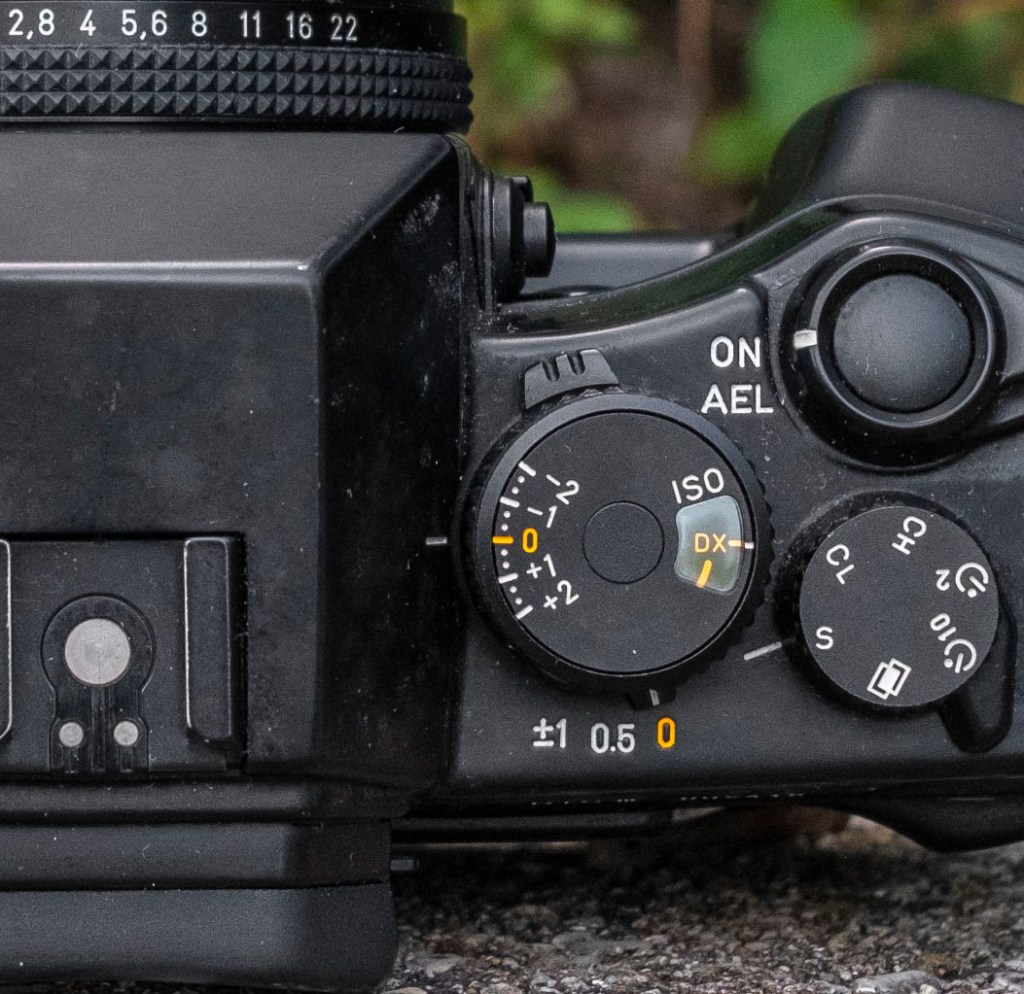
Since I now copy slides with a camera rather than a scanner, the exposure decisions I made when taking the photos are echoed in setting the exposure for their being rephotographed. Not precisely, though, since the technology of metering and exposure has become far more sophisticated and algorithmically driven in the intervening decades.
In other aspects, the times have fallen far out of synch. It is truly disturbing to see, for example, that forty years ago daffodils bloomed in April or May, while they now do so in March or even February. Trees come into leaf far earlier. Here is a photographic register of the slow and deliberate vandalism of the ecosphere by the oil and gas companies and their political servants.
At primary school, an English teacher once asked me why there was a shadow behind my writing. Being a literal-minded eight- or nine-year-old boy, I replied that sometimes I would erase a pencilled passage and then write over it. I have since wondered if that was what he meant, and also related that shadow behind writing, photography and life alike to my adoption and the need to think about who I was in a field of almost-complete darkness.
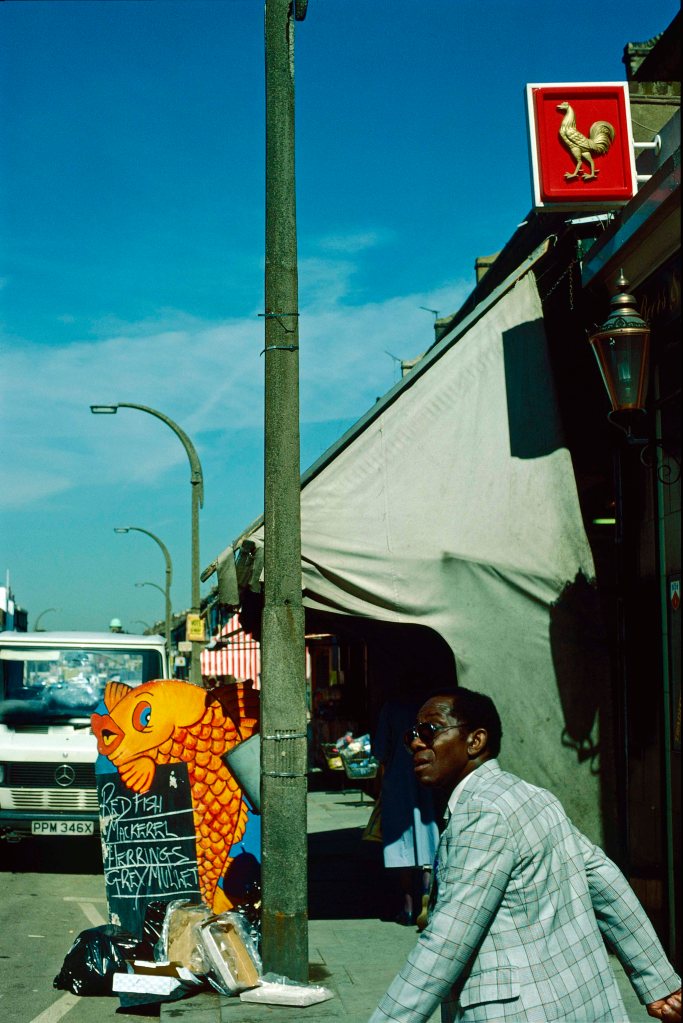
The original photograph, as we have seen, was a transparency of deep opacity. Does its re-rehearsal here, bringing past and present into imperfect alignment, do anything to lift the shadow? Through a parallax effect, perhaps it does. The present attitudes to street photography and the circulation of images cast light back on a past in which very few people took pictures daily, and almost never of themselves, and had no expectation of managing their photographic self-images. The destination of neoliberalism as an intensifying cancer of the state, and in its dangerous rousing of war, racism, the climate crisis and far-right authoritarian politics reflects back on its impetus and ideology then. Even so, given street photography’s inveterate contingency, along with the gravitational power of ideology to shape thought and sight alike, the unlit lantern and deep shadow beneath the Courage logo may stand as symbols for all that still remains obscure.
 Julian Stallabrass
Leave a comment