May 1983
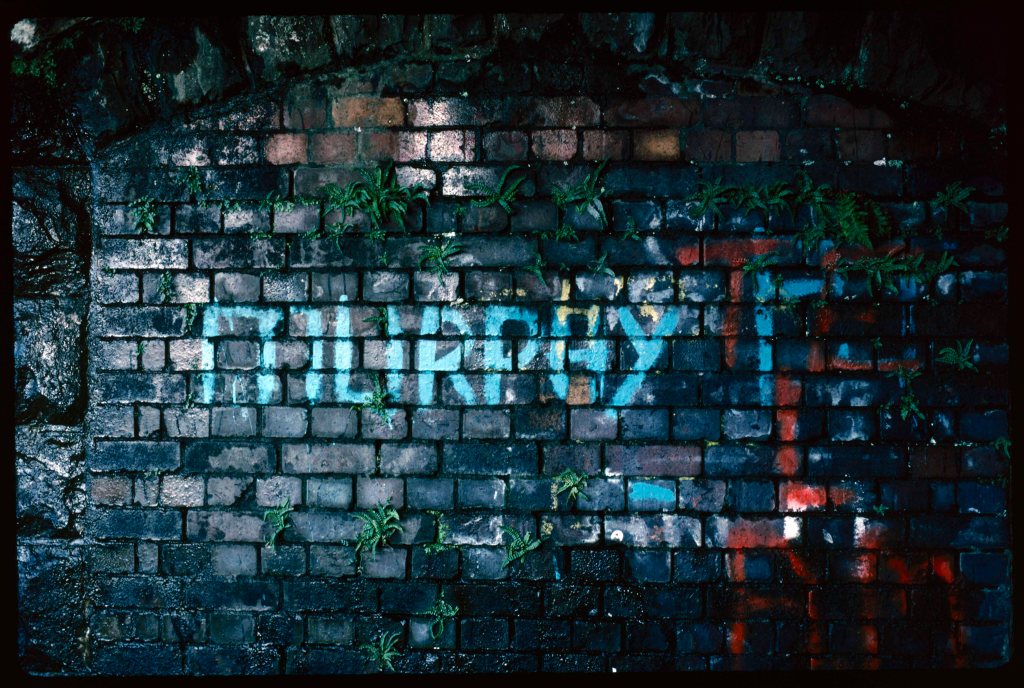
Llwyndcoed railway bridge, December 1982
It had rained that autumn in Wales for sixty days following one upon the other, a consistent heavy rain. After a few weeks, everything, tree bark, the soil, the stones themselves it seemed, were swollen with liquid. Under the leaden light, colours darkened, losing themselves beneath the black sheen of water.
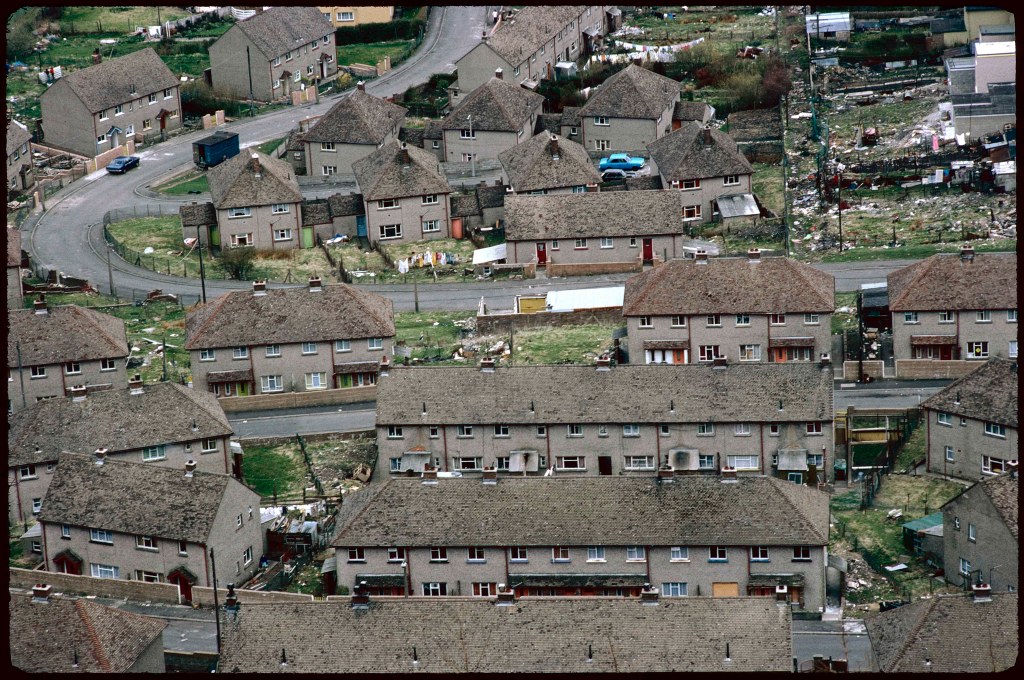
Maerdy village
The mining valleys at the time of Thatcher’s first recession were despoiled as much as anywhere. As with the rain, after a time, no one believed that it would ever stop, as workplace after workplace closed, and the money people had gathered about themselves drained from the valley, taking with it first luxuries, then necessities, then hope. The government, remote and unyielding, claimed that the prolonged drenching was a cure, and its meagre ameliorative measures only seemed to make the climate worse. A girl at the children’s home who had just left school was employed on one of the government schemes. She was paid very poorly, a few pounds a week more than benefit, to work forty hours a week in a chicken factory. For six months she worked, while the government paid part of her wage, and while her employer assured her that at the end of this training period she would have a real job. For six full months she did nothing but fold up cardboard boxes, and at the end of that time, her subsidised replacement at the door, he ‘let her go’.
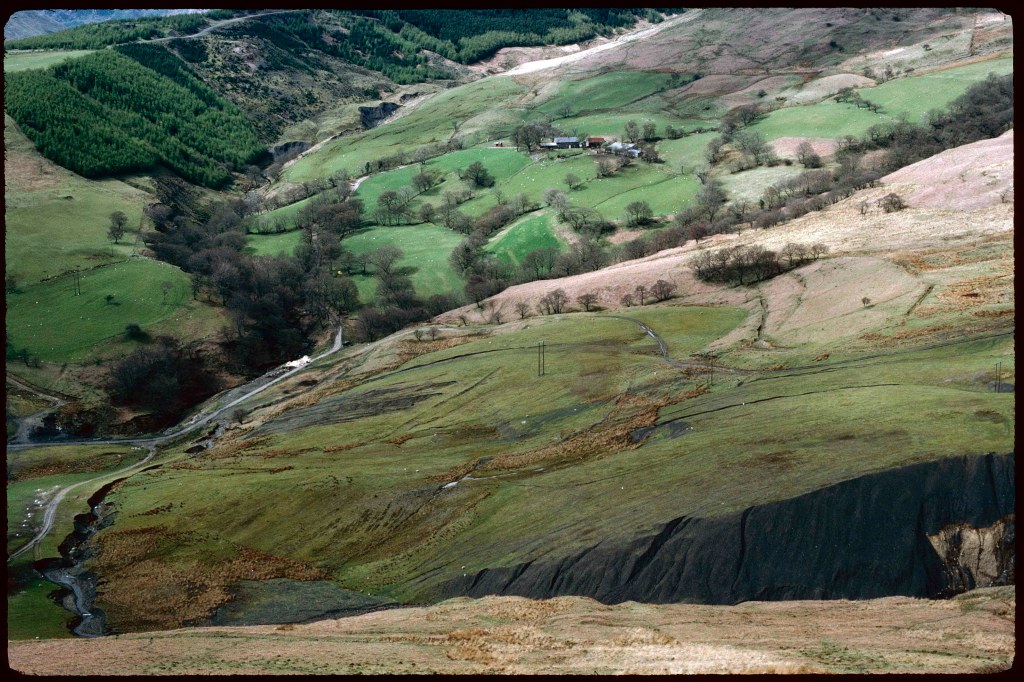
Near Trearchy, Rhondda Valley
In the (drier) May, I walked over the mountains from Aberdare to the Rhondda valley, along empty tracks and forest trails, startling sheep. With the last industry receding, when the valley first revealed itself, I looked from high up on the mountainside down onto a pastoral fabric of many greens, not the black of old renown, under an animated pattern of sunlit patches. After a long walk down, I entered a high street. It was Saturday, but there was no one much about. As I walked down the street, I began to realise why, as I passed out of one long town strung along the main road and into another, there stood boarded-up shop after boarded-up shop. A story was being told here, eloquently enough, a story of surfaces which cameras could narrate, of the sudden and disastrous withdrawal of work and money from a place, so that only a few shops—mostly those selling food—survived.
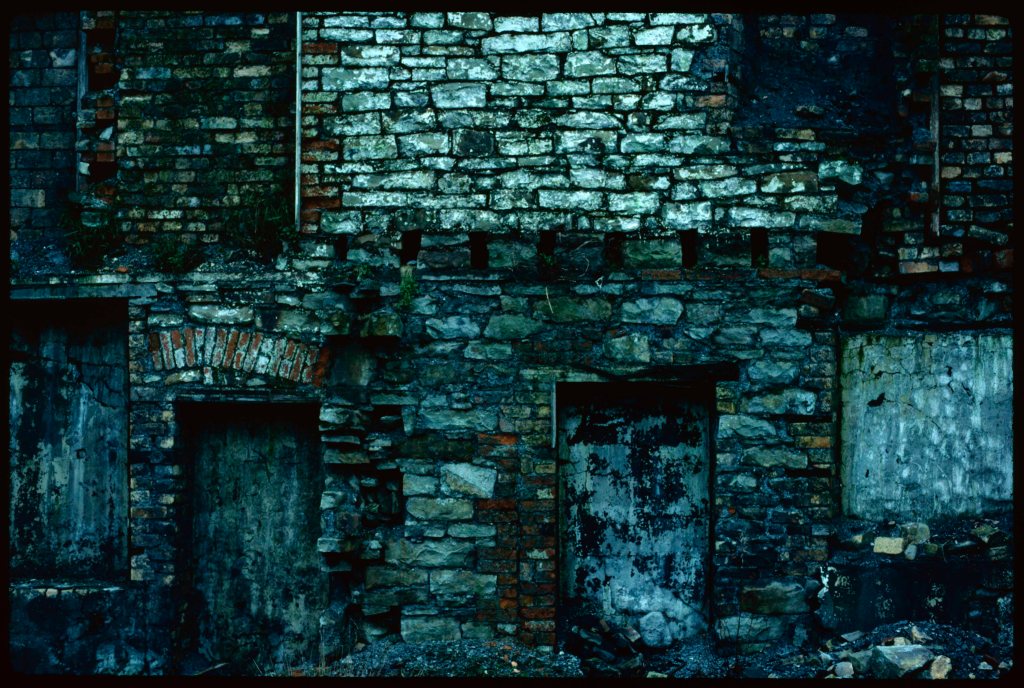
Aberdare town centre, January 1983
Different stories were written into the frontages of the buildings. On the face of it, they were about depredation and decline, about a rising and unstoppable tide of filth, which people had stopped having the time, energy, money, eventually perhaps even the inclination to wash away. So it grew thicker year on year, encrusting the obsolete buildings ever more heavily, until their windows, doors and roofs gave way, letting in the weather and bored kids, and—short work in that climate—the story would soon be over. They seemed saturated with character, those buildings, and it was not just that you could see people’s labours and lives in their fabric, but that their decay and their final points of breaking were like those of the people who lived around them; after a certain moment, when the things that they care about are removed from them one by one, they let the vandals and the thieves and the weather in.
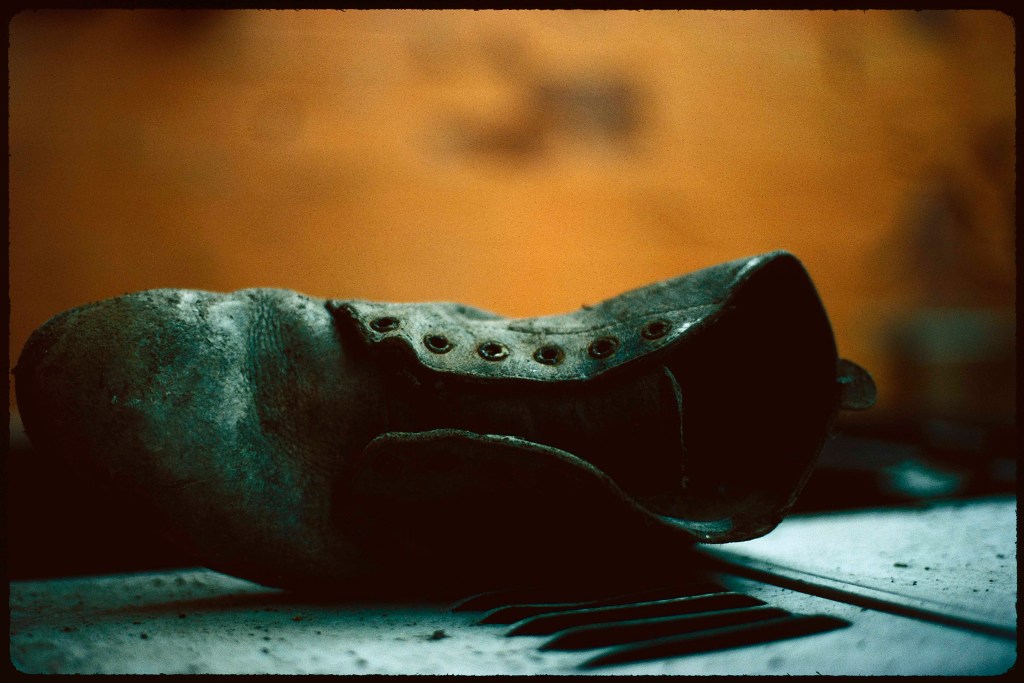
Aberdare Brick Factory
But the other story was about the people who had made and cared for those places—factories, shops, chapels, working men’s clubs—and made them as an expression of themselves, decorated them and made them distinct emanations of a place, a way of living, a class. All this lurked in the details of those structures in every crevice and protrusion, whether designed or the product of decay.
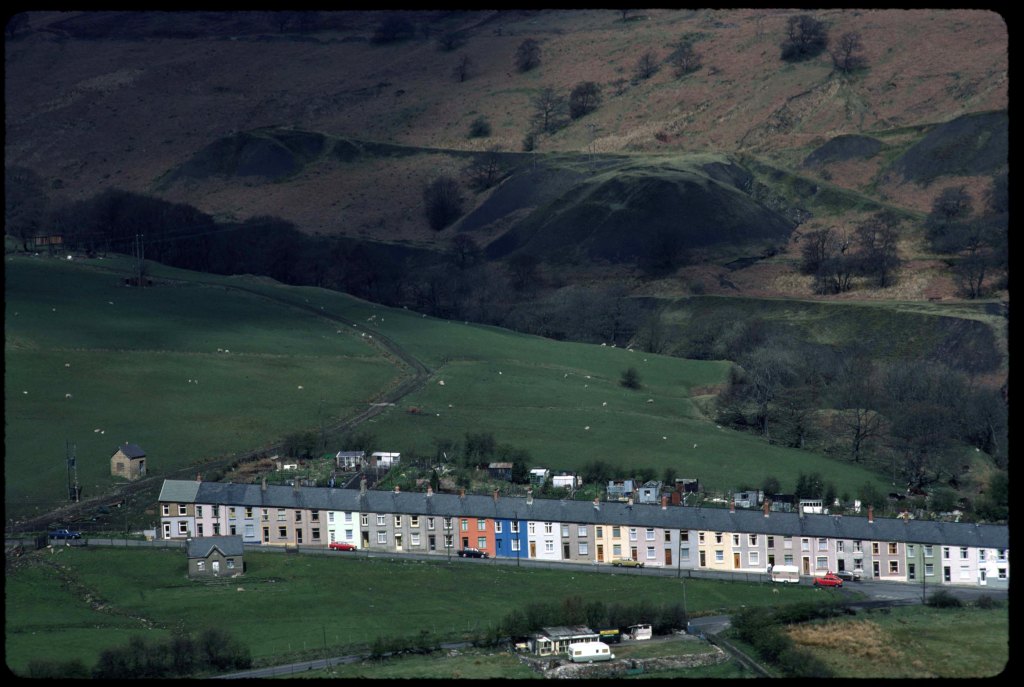
Bwlfa-Dare
Perhaps in the right conditions, I thought then—at a moment when light, a particular stage in the structure’s history and decay, a fitting arrangement of objects around it and the photographer’s presence coincide—those stories with all their wealth would arrange themselves for the camera in a single picture.
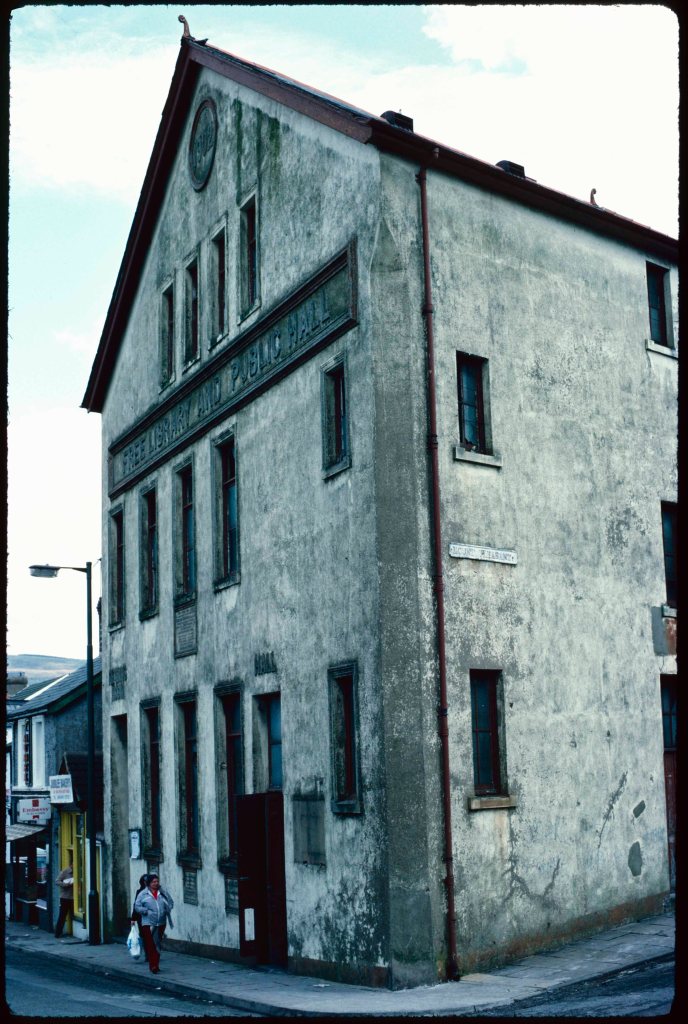
Aberdare
Walker Evans’ photographs, formed by the Great Depression, were not just about the ruins of modern society gone bad but also about the popular resources which survive in spite of it, which rise above and beyond the circumstances of their making. For all their ordered resolution, his images take as their subject something a good deal older than themselves, and do so to force open a chink the door to the future, and snatch a glimpse of the beyond. Yet the question I didn’t ask myself then—for this was near the beginning of that seemingly endless downpour, and no one knew just how long it would continue—was whether I was photographing past and future, or just past.

 Julian Stallabrass
Leave a reply to Silke Zimmermann Cancel reply