February 1983
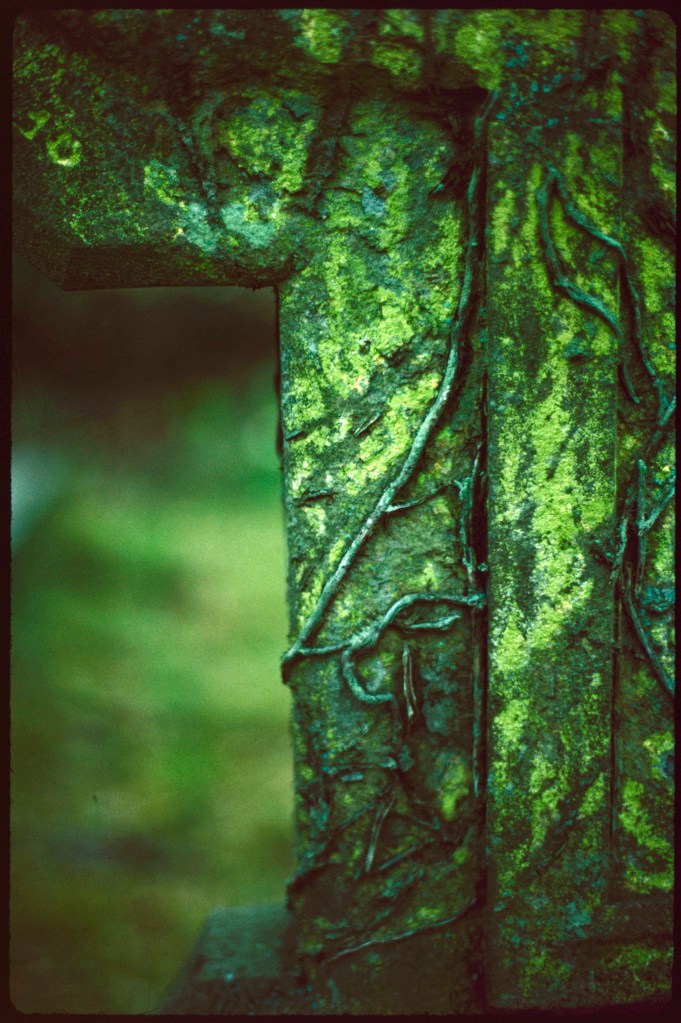
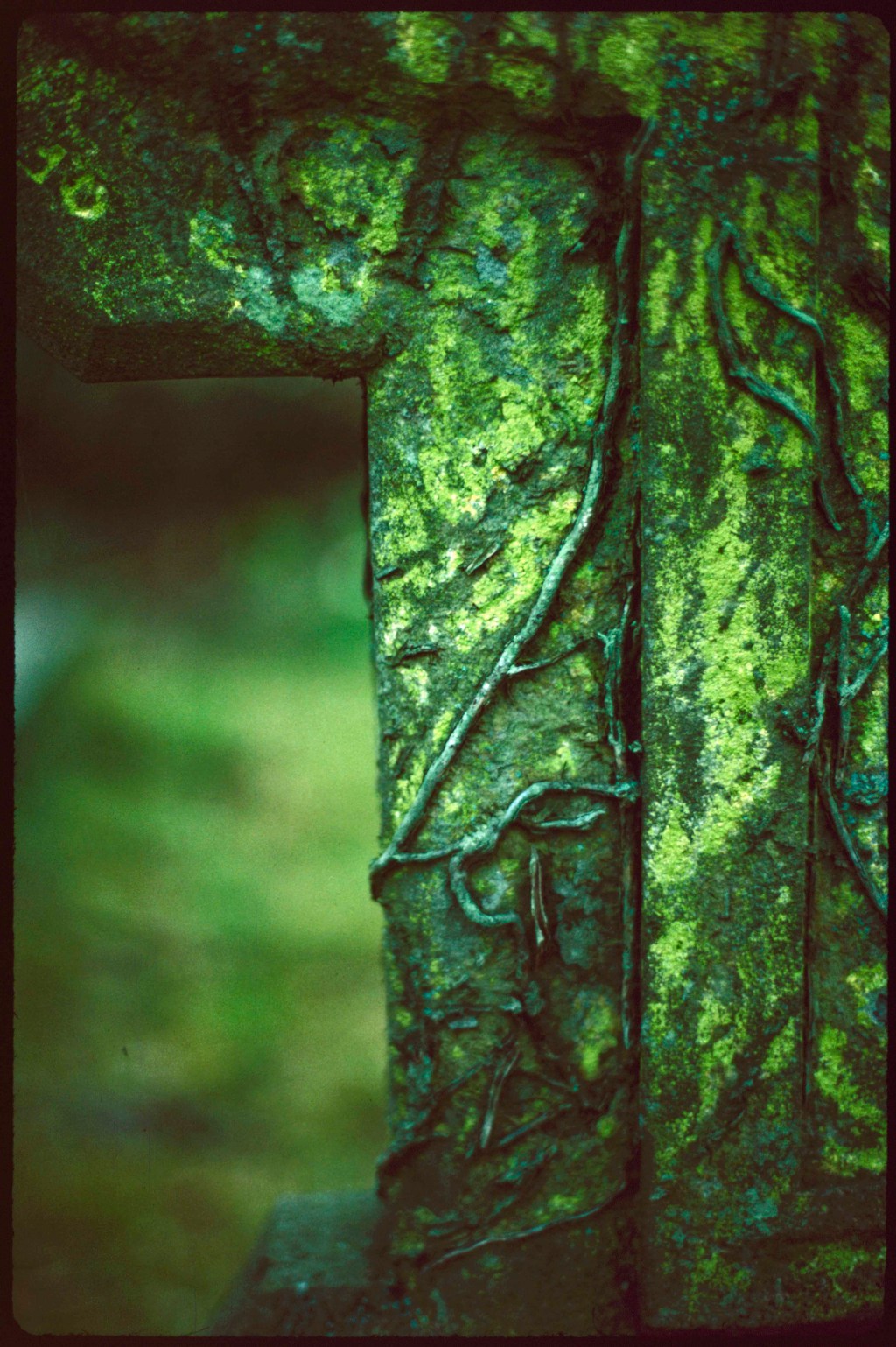
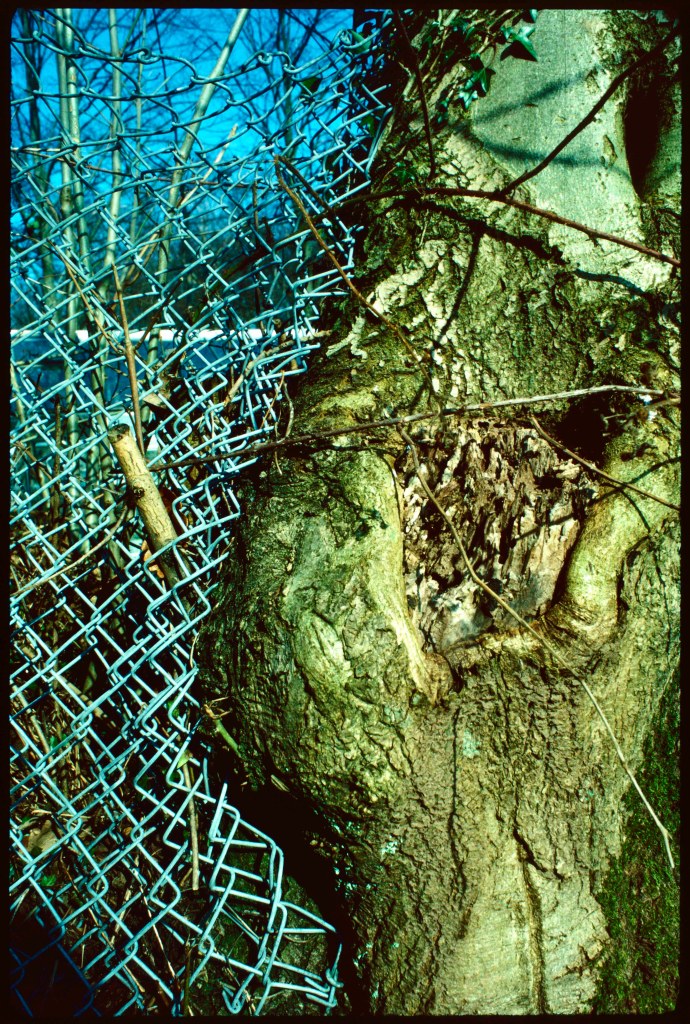
Looking back on some of the colour slides I was taking at this time, now they seem to me to be inching towards an awareness of a simultaneous aging and binding, the slow solidification of social fetters, in a play of growth and entropy. It is there in the ivy stalks gripping an old cross in Aberdare Cemetery which, along with the weather, will eventually break it apart; and in the way a crudely marked property boundary meets the creeping growth of a mutilated tree.
This thinking through and in photographs was set against the social atmosphere of the Aberdare Camera Club, which brought home to me—long before I read Pierre Bourdieu—the petit-bourgeois character of amateur photography. Working-class people in the valleys rarely went in for this kind of picture-taking, in part because of the expense, but also because aspects of its ideology were alien to them, including the way expense was exacerbated by a fetishisation of photographic ‘gear’ in which price conferred distinction. Bourdieu’s cultural elite shunned it too, since amateur photography trailed with it a musty air of provincial naffness, often in ‘vulgar’ colour (to use Walker Evans’ famous 1969 condemnation), along with a creaking masculinity and—as we have touched on before—a wilful urge to idealise the world, at least through the viewfinder.
The economic aspect of this nexus forced itself on my attention. As a volunteer in the children’s home, I was given an allowance of £14 a week, although I had bed and board for free. It seemed paradoxical that the cheapest way of making colour photography—buying Kodachrome at around £6 a roll, which included processing—gave you the finest film to work with. It was relatively affordable, then, but only if I didn’t print anything.
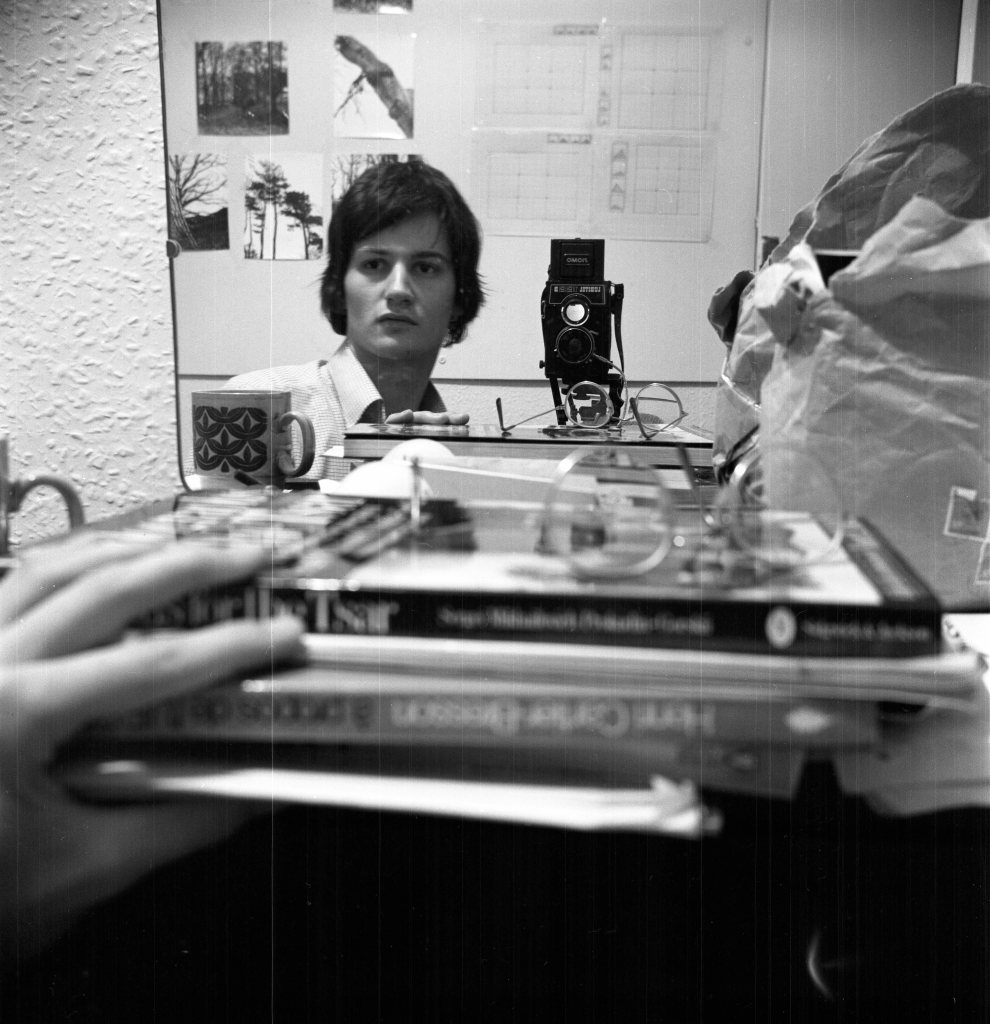
My interests were different from most of those at the Aberdare Camera Club, and can be glimpsed in the books seen in this very self-conscious and retrospectively amusing self portrait, which include Henri Cartier-Bresson’s album of Soviet life, À Propos de l’URSS. It was taken on a Soviet-made Lubitel camera, a medium-format twin-lens reflex. This camera was unusual for its lightness, lack of automation, lens quality and above all its price. It cost, if I remember rightly, about the same as two rolls of Kodachrome. If 35mm photography was pricey, medium format was generally much more expensive, and was mostly the preserve of professionals. The nearest equivalent to the Lubitel, a Mamiya twin-lens reflex, cost something like twenty times as much.
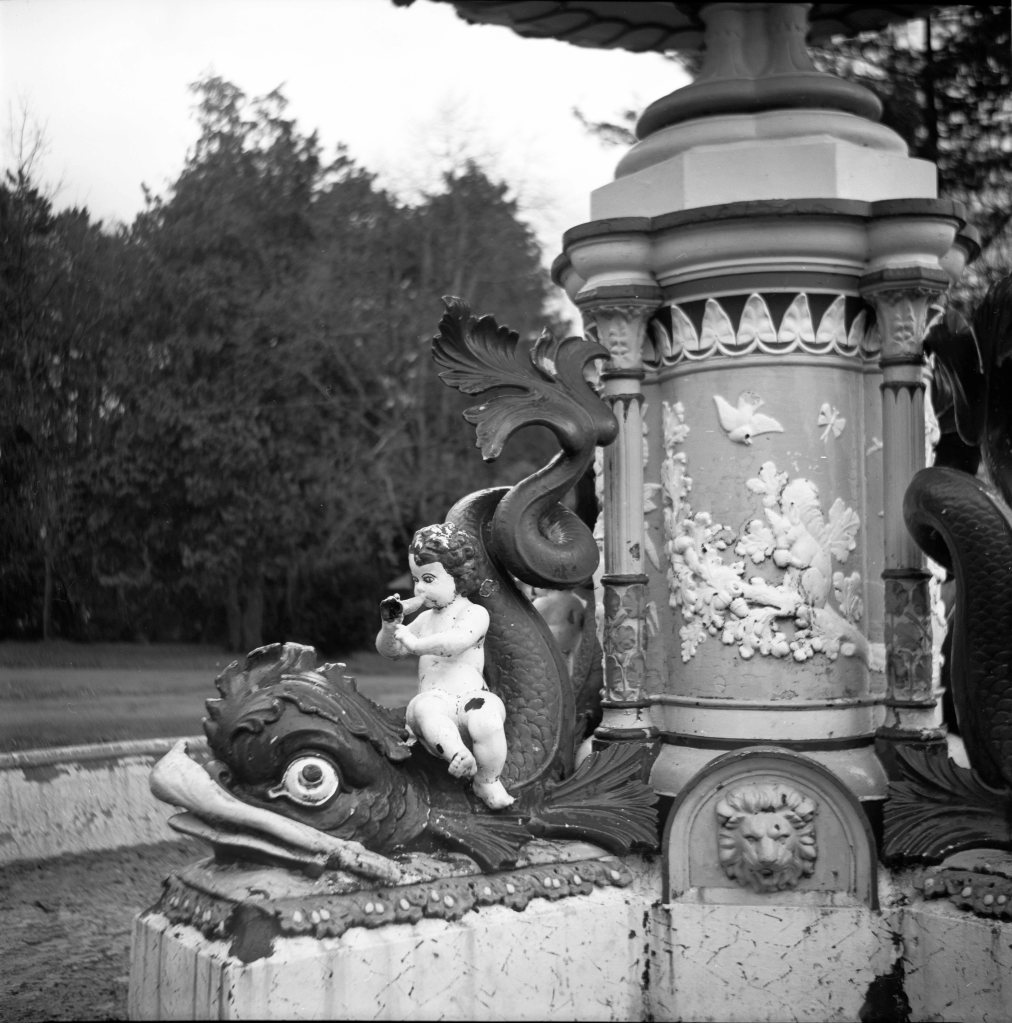
The Lubitel gave little assurance of weight or solidity. I still clearly remember the tinny noise of the hood as it slid open; the clockwork whirring of its shutter, which had to be manually cocked for each shot; and the fold-down magnifying glass needed for fine focusing on its dull screen. It was slow to operate, not least because you had to use a separate meter, but it bound up in its technology an education in photographic principles, and its fine lens gave good results.
‘Lubitel’ means ‘amateur’, and the camera seemed to open onto a very different view of photography and its social sphere, one in which automation and technological fetishism were mere phatoms, and in which the mass production of cheap, high-quality cameras, demanding and slow to use, might indicate another amateur culture, less bound by photographic snobbery and the artificial divisions of market differentiation.
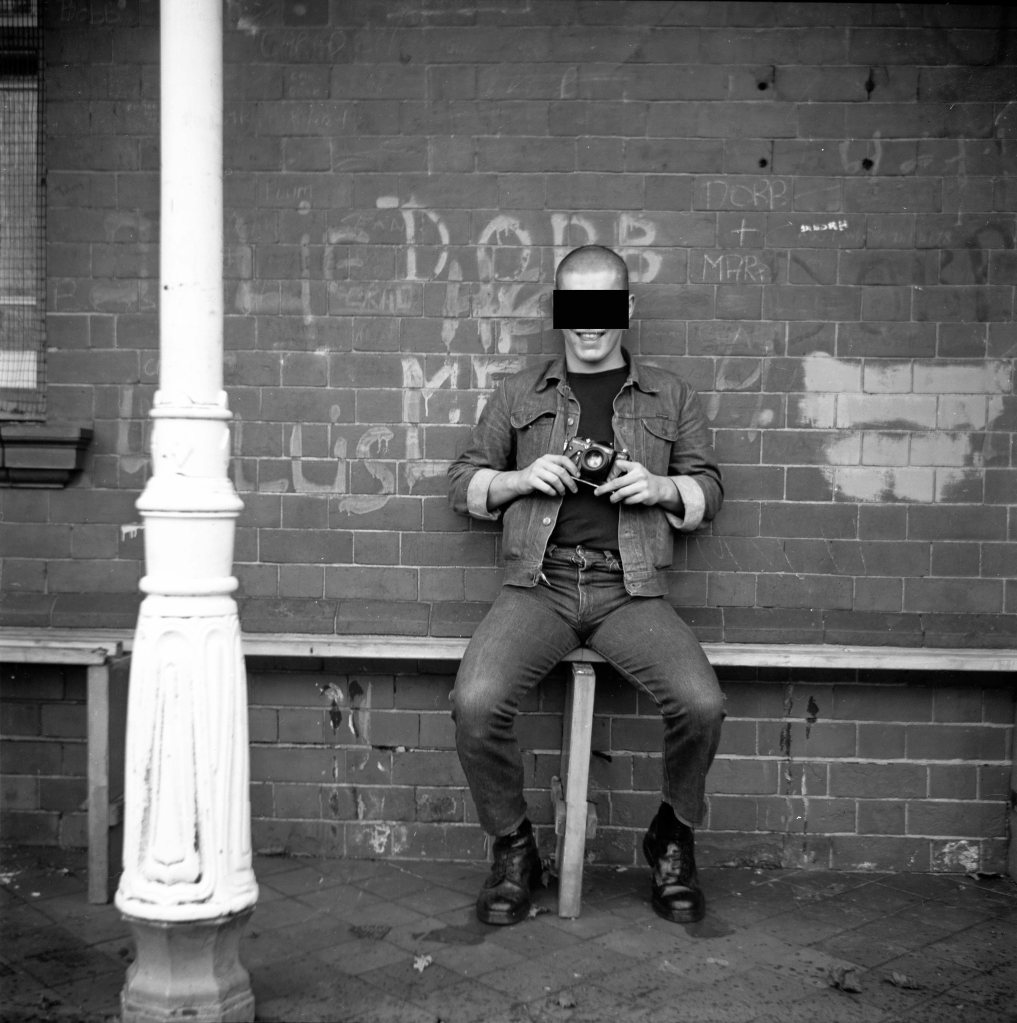
I was teaching photography to those kids in the home who wanted to learn. We would walk out together, they would search for those subjects that interested them, and we would develop and print the results in a darkroom temporarily rigged up in the home’s laundry. Allowing working-class adolescents access to cameras—also Soviet-made ones, due to the social services’ low budget for such matters—and to what teaching I could provide, though hardly novel, had a radical aspect to it, and what and how they chose to photograph would often surprise me: theirs was, above all, a photography of social performance, a way to play with and cement relationships. Photographic quality was not high among their priorities. Their photography existed poles apart from the alienated, nostalgic and often lonely world of the amateurs, and also from my own. One of these children, as we shall see, was to go on to make images that whether judged socially, technically or aesthetically, were exceptional.

 Julian Stallabrass
Leave a reply to The Sublime in Miniature – Julian Stallabrass Cancel reply