Single-Authored Books
The updated and rewritten edition of Contemporary Art: A Very Short Introduction has just been published. I have rewritten about half the text, and it contains a lot of new material about recent developments in the art world, and a completely new last chapter.
There is a Turkish translation of the new edition: Çağdaş Sanat Bir Tarichçe, Iletişim, Istanbul 2021.
And a Spanish one: Arte contemporáneo: Una brevísima introducción, trans. Jordi Ainaud i Escudero, Editorial Elba, Barcelona 2025.
Killing for Show: Photography, War and the Media in Vietnam and Iraq, Rowman and Littlefield, 2020.
This book offers a sustained analysis of the role of images, particularly photography, in current warfare, placing it in historical and theoretical perspective. The core of the book is a contrast between the Vietnam and Iraq wars, each for their time the most mediatised conflicts ever fought. There is a causal link between the two, since the Pentagon revised both its military and media-management strategies following the debacle in Vietnam, and fought both wars in the Gulf as negative images of its defeat. These changes were accompanied by profound changes in the technology, ownership and function of the media. In the Vietnam era, the illustrated magazines were still important sources of news, and photojournalism could show things which television, with its cumbersome equipment, could not. The media landscape of the Iraq War with its giant media conglomerates, websites and blogs, satellite transmission and digital cameras was an utterly changed one: it led photographers to new ways of working, and in the mainstream press their work was subject to many restrictions. A remarkable range of material was available online—from the videos and photographs of freedom fighters and terrorist groups, to soldiers’ photographs, amateur pictures, phone-camera photographs and the considered work of artists—for those with the will to search and to look. The chapters cover the PR, photographic and military speed, the prison system, depictions of killing, amateur photography, photography and collective memory, and the role of photojournalism in democracy.
Part Four of the book, ‘Murder’, an account of how to commit genocide in a media wars, can be read here:
An extract from the chapter on memory can be found here
And also see: Mignon Nixon, ‘“Killing for Show”: A Conversation with Julian Stallabrass’, October, no. 177 Summer 2021, pp. 3–23.
I did an audio interview with Pierre d’Alancaisez about the book for the New Books Network.
And another with Nicholas Pritchard for The Gateway.
And another with Mohammad Hadi for his rhizastance interview site.
Hito Steyerl reviewed Killing for Show in New Left Review.
Janina Struk’s review for Source magazine.
Radical Realities: Photography as Political Practice, University Studio Press, Thessaloniki 2018.
A book in Greek translation of my substantial essays on photography, including pieces about Paris street photography, Sebastiao Salgado, radical art forms, the ethnographic strand in art photography, Jeff Wall and museum prose, Broomberg and Chanarin, Richard Mosse and Lisa Barnard.
I am looking to get a version published in English.
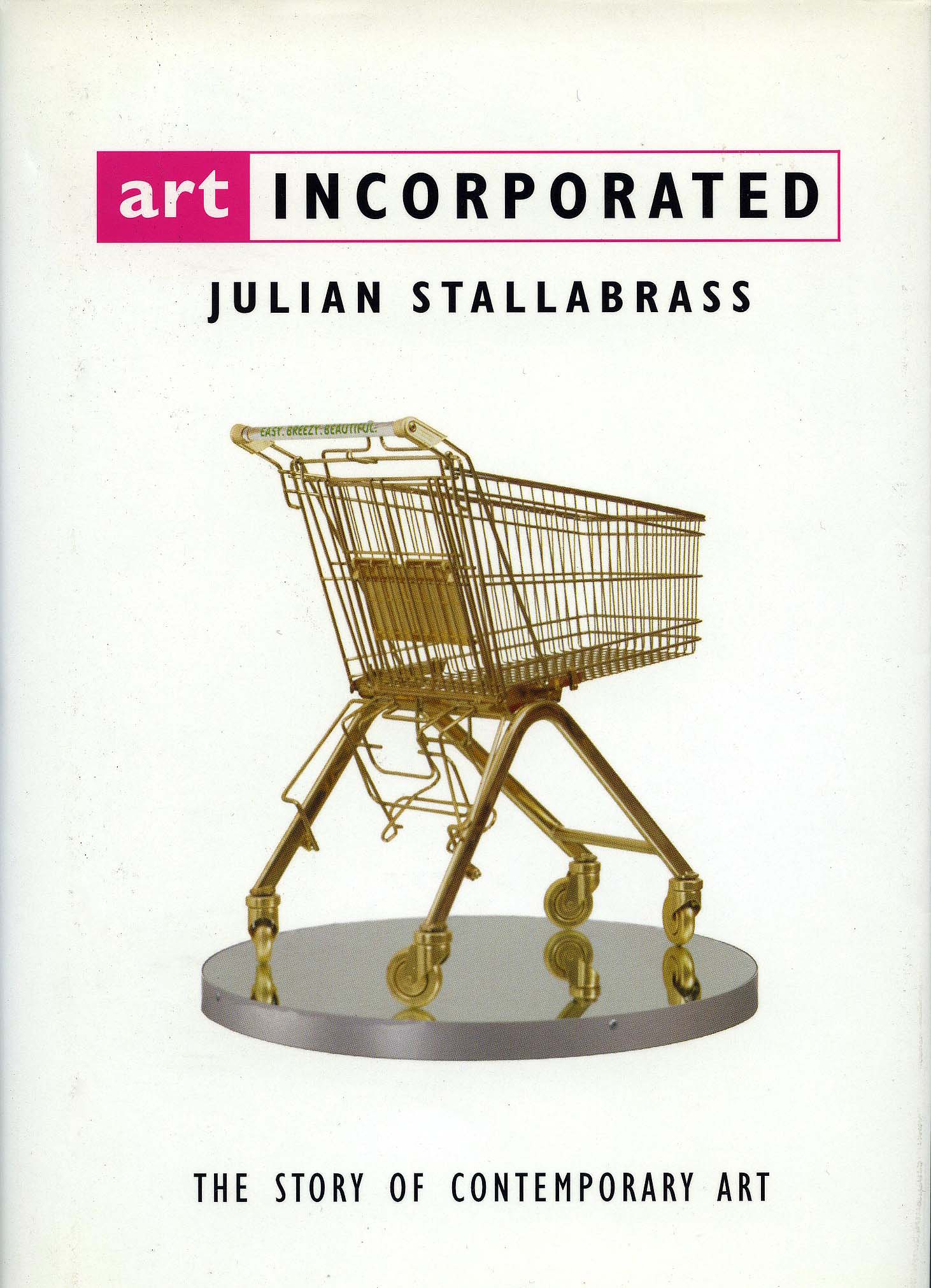
Art Incorporated: The Story of Contemporary Art, Oxford University Press, 2004.
Republished in a modified form as Contemporary Art: A Very Short Introduction, Oxford University Press, 2006; and then in a major update in 2020 (see above).
This is my attempt to encapsulate the global contemporary art world, examining its unspoken rules and its relation to the neoliberal system. More information here.
Translations: Slovenian edition: Sobodna Umetnost: Zelo Kratek Uvod, Krtina Publishing House, Ljubljana 2007. Greek edition: TO BHMA Publishers, Athens 2007. Turkish edition: Sanat A.Ş.: Çağdaş Sanat Ve Bienaller, Iletişim, Istanbul 2009. Bilingual English and Chinese edition: Foreign Language Teaching and Research Press, Beijing 2010. Persian edition: Nashre Cheshmeh Publication House, Tehran, n.d. Arabic edition: Hindawi Foundation for Education and Culture, Cairo 2014. Editions to appear in French (Macula) and Korean (April Books Publishing Company, Seoul), Japanese (Koyo Shobo).
Internet Art: The Online Clash of Culture and Commerce, Tate Gallery Publishing, London 2003.
The first book-length account of the subject, written at the time of net.art’s rise to prominence and avant-garde moment. It can be bought here.
Internet art has moved from being the concern of a few brilliant amateurs to a position of prominence in the art world. The rapidly evolving technology of the Internet drives the art along with it, bringing in its train strange revivals of avant-gardism and modernism long since thought dead. While much material art seen in conventional galleries feels disengaged with the world, caught up in weary variations of conventional art-world concerns, Internet art is often humorous, socially aware and politically active.
Internet Art explores the character of this new, dematerialised online art and the environment in which it exists. It also shows how artists have responded to the rapid and profound changes that have swept across the Internet since the mid-1990s, above all its transformation into an arena for consumerism. In an analysis of the sometimes hostile relations between the art world and online art, the book suggests that this new art may have radical implications for the way in which we conceive of art’s authorship, ownership, and more fundamentally of how we draw the borders between what is art and what is not.
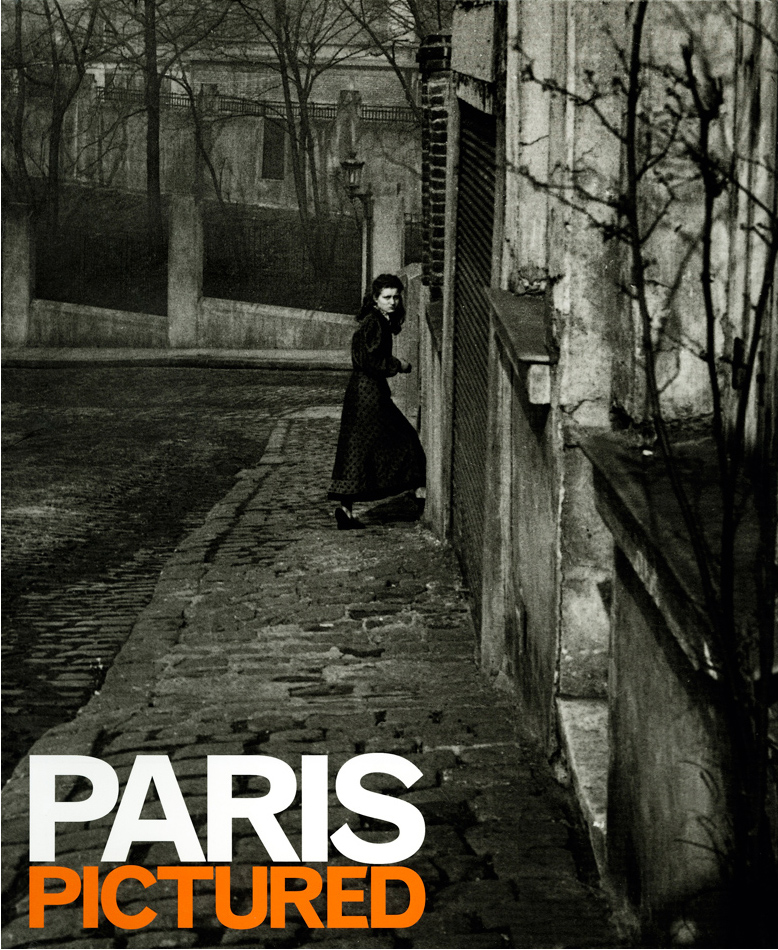
Paris Pictured, Royal Academy of Arts, London 2002.
Editions also in French and German: Paris Photographié 1900-1968, Hazan, Paris 2002; Paris in Bildern 1900-1968, Dumont, Cologne 2002. The book is now out of print but second-hand copies can be bought online.
The rise and fall of street photography in Paris from the moment of the portable camera to the ‘assassination of Paris’ by gentrification and traffic.
Paris Pictured was published to coincide with the exhibition ‘Paris: Capital of the Arts 1900-1968’ at the Royal Academy of Arts, London. This beautifully produced book examines the growth and development of photography in these remarkable decades, through the changing character of Paris. During these years photography became a mass medium, particularly in urban centres, with cheap reproductions appearing in newspapers, magazines and advertisements. Technical advances in film and lenses made it possible to capture rapid movement, and street photography flourished, continually confronting Parisians with images of themselves. Photography changed the image of Paris, while Paris itself, an important centre for documentary photography, affected the medium of photography. Atget, Cartier-Bresson, Brassai, Freund, Doisneau, Ronis and many others made in Parisian streets and interiors some of the finest images of documentary photography. Through these images, the histories and trials of Paris can be glimpsed, from the end of building of the grand boulevards and the demolition of the medieval city, through both Wars and the Occupation to the carnivalesque street protests of 1968.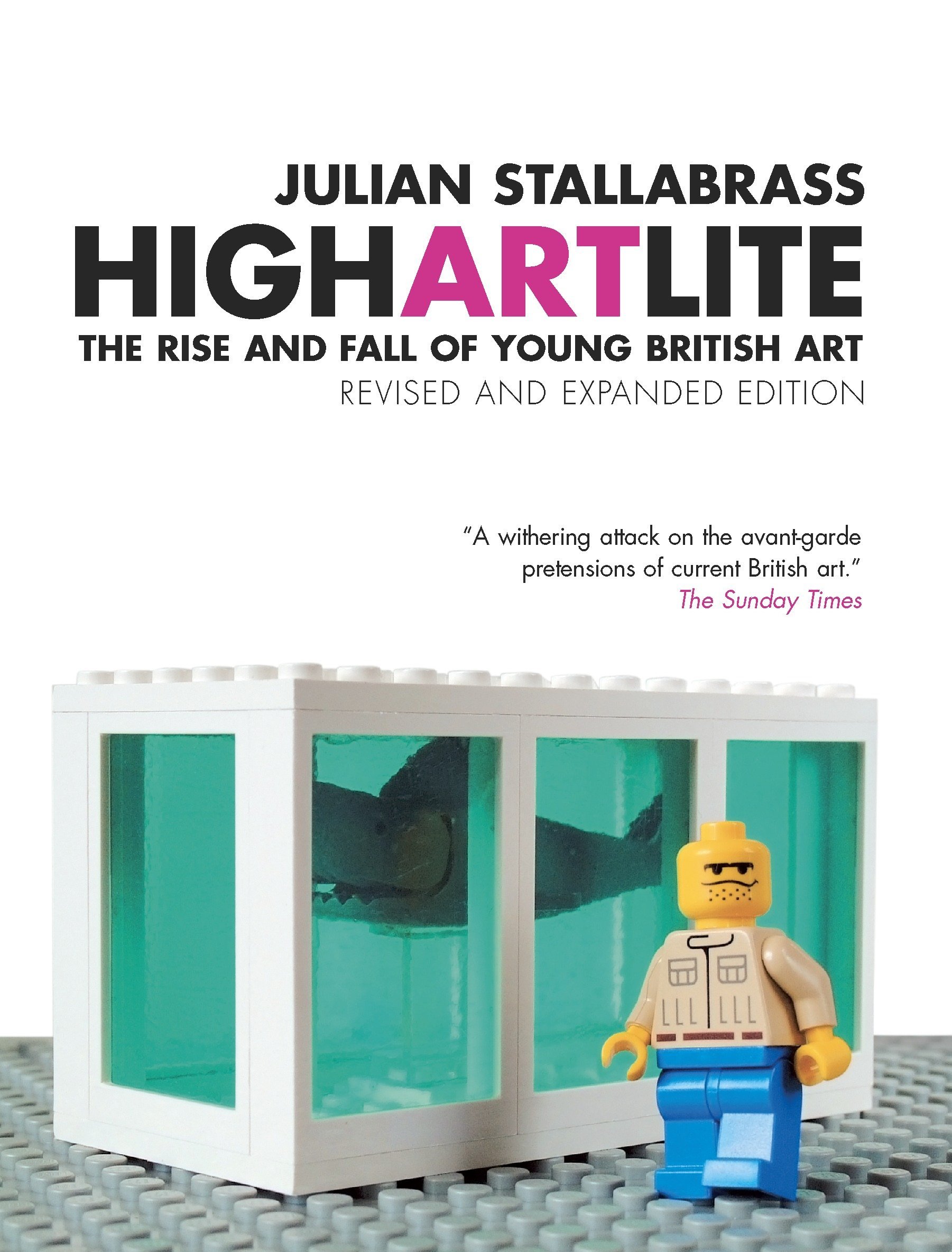
High Art Lite: British Art in the 1990s, Verso Books, London 1999.
Revised and updated edition: High Art Lite: The Rise and Fall of Young British Art, published by Verso in 2006. It can be bought here.
High Art Lite takes a cool and critical look at a much-hyped subject—British art of the 1990s. With artists like Damien Hirst, Sarah Lucas, Jake & Dinos Chapman, and Tracey Emin acquiring a media profile similar to pop stars, British art has reinvented itself and successfully courted a wider popularity than it has ever enjoyed before. On the face of it, much of their art has looked like simple bad behaviour—using chopped up animals, pornography and sexually explicit dolls as its material, or building up the features of a child murderer using tiny hand-prints. Yet their art has been both accessible and sophisticated, appealing to the mass media and to the elite art world alike.
But has it done so at the price of dumbing art down, reducing it to the level of any other consumer enterprise, and losing what it distinctive about it? Other than as publicity-fodder, how seriously does it take the new audience that it has so effectively courted? This is a sustained analysis of the British art scene, exploring the reasons for its popularity, the altered structure of the art world, and examining in detail the work of the leading figures. Previous books on this subject have been either collections of essays or fan books, which try to aid acolytes hoping to navigate the scene. High Art Lite is the first sustained analysis of British art of the 1990s, which shows that, whatever we might think of the art itself, it raises fascinating questions about the relation of art to mass culture, the role of art in a consumer society, the character of a national art, and the end of postmodernism.
Translations: Spanish edition: High Art Lite: Esplendor y ruina del Young British Art, Brumaria, Madrid 2010. Russian edition: GARAGE Center for Contemporary Culture/ Ad Marginem, Moscow 2015.
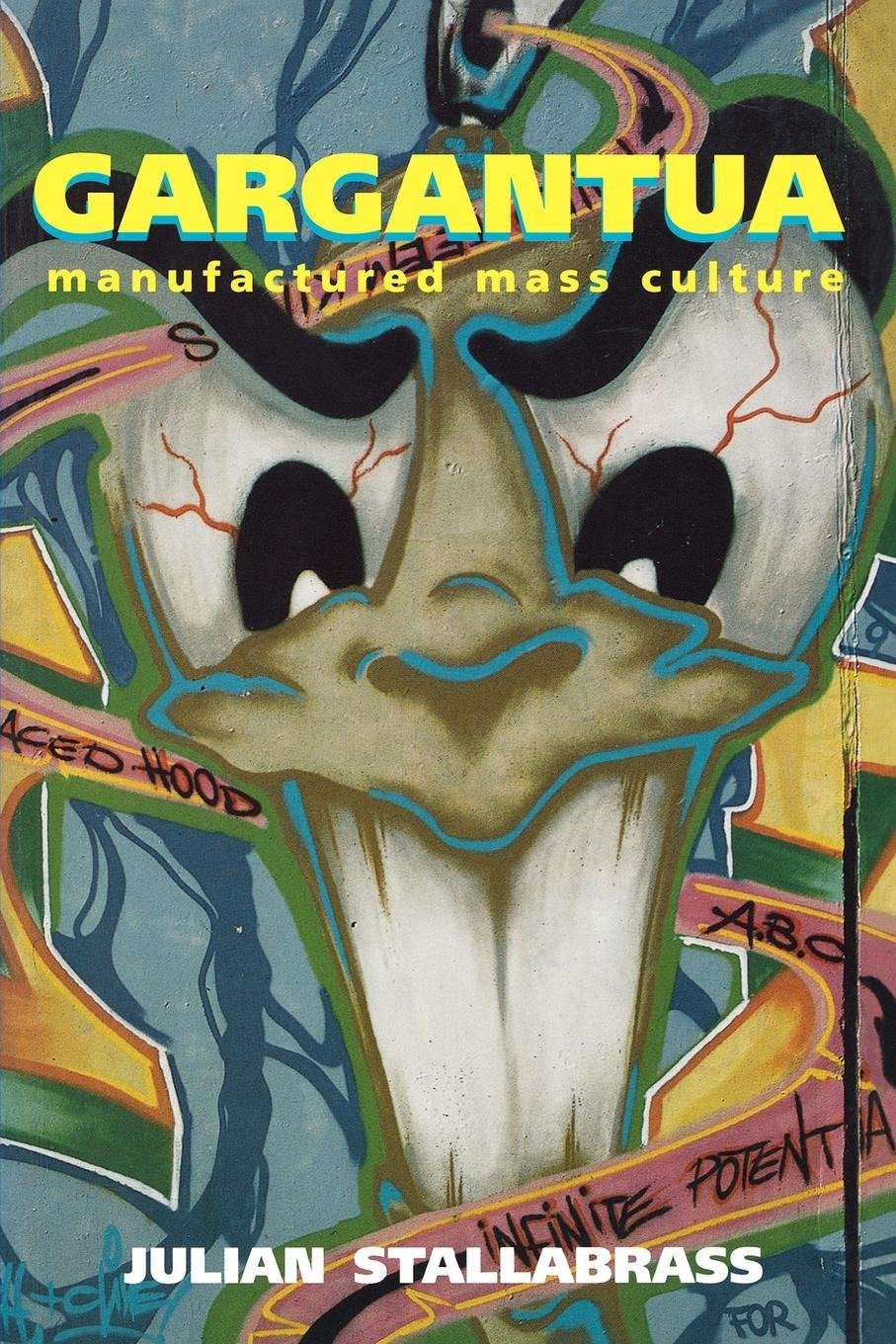
Gargantua: Manufactured Mass Culture, Verso, London 1996.
My first single-authored book about aspects of mass culture including amateur photography, computer games, street art, cars, trash, TV and shopping. It is illustrated with my own photographs which interrelate with the text.
Gargantua is about visual mass culture, and its basic argument is that the most important thing about this culture is that it is bought and sold. This affects its character even at the level of detail. It argues that much postmodern theory does not account very well for the specific character of mass culture, and (despite predating computers or even TV) some of the work of Adorno and Benjamin can be applied precisely in such a way that many aspects of contemporary culture can be illuminated. For instance, Benjamin’s writings can be used to give a refreshing and original take on the Internet. Gargantua (the title is borrowed from Rabelais, who used it as the name of his fictional giant prince who threatened to drain the kingdom of food and drink with his appetite, and defecated over everything) is a book which engages with many of the recent debates about mass culture in academia. Even so, I have tried to write it in as clear a style as possible, and I hope that it is accessible to a general reader.
The chapter on computer games was published earlier (1993) in New Left Review: Just Gaming
Copies are available here.
Photographs published in and associated with the book can be found on Flickr.
With David Mitchinson, Henry Moore, Ediciones Polígrafa, Barcelona, 1992/ Academy Editions, London 1992.
This is an introductory book on the work of Henry Moore, with good and extensive illustrations. David Mitchinson wrote about Moore’s pre-war work, while my section dealt with the post-war period.
It appeared in different editions in many European languages. It is out of print but still available second-hand.
 Julian Stallabrass