I have curated the following exhibitions:
The Spectre of the People
Thessaloniki Photobiennale 2023
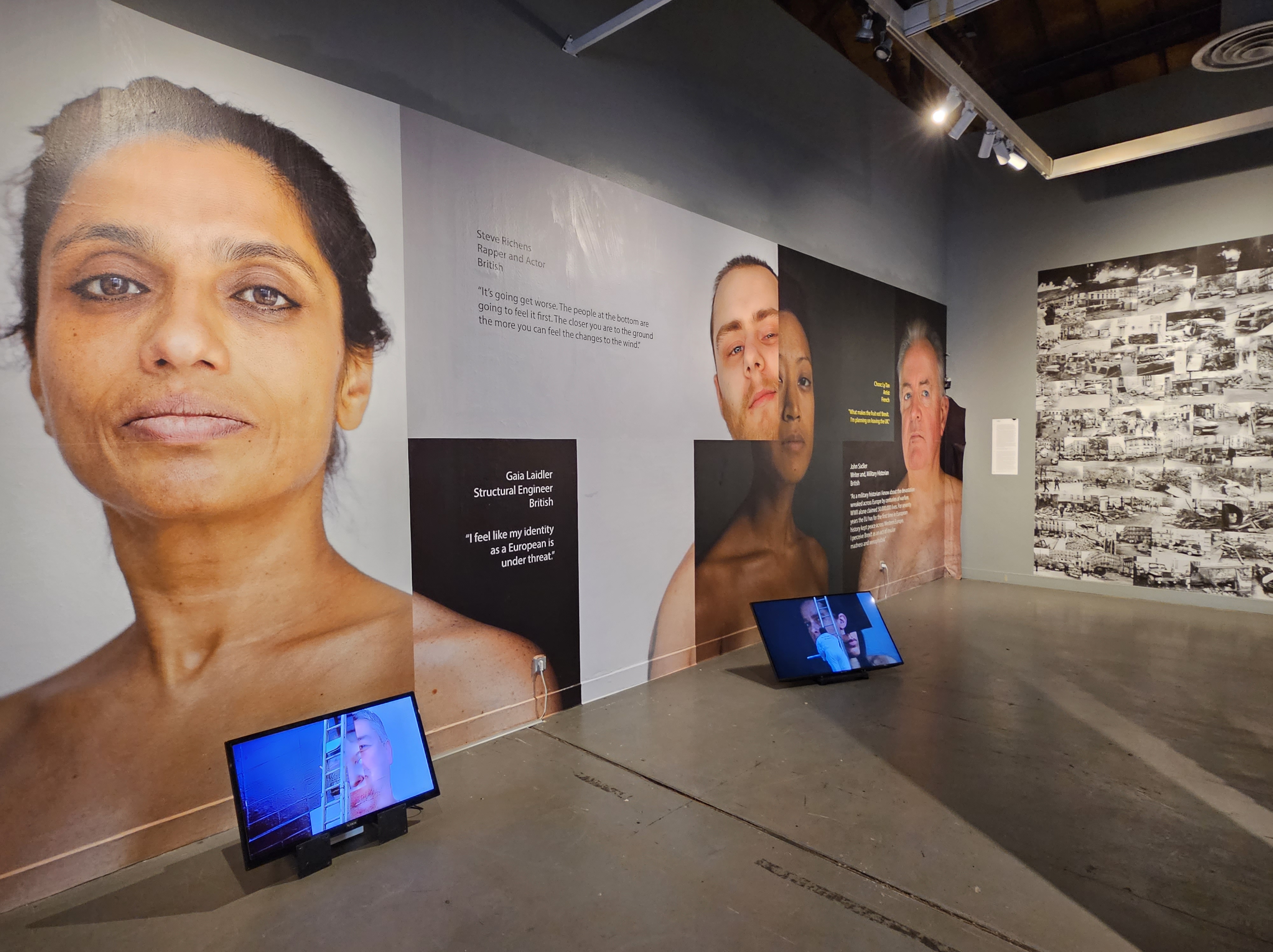
If once the spectre of communism haunted Europe, now the spectre of populism stalks the Earth. Artists have grappled with its myriad dimensions: how and if to represent ‘the people’, how to represent democratic power, the nature of charismatic leaders, and popular protest and insurgency. The media of the lens, long woven tightly around the history of mass politics, have been a natural field for this artistic exploration.
The main exhibition of the 2023 Thessaloniki Photobiennale, The Spectre of the People, explores populism through photography and video: who are ‘the people’, can they be grasped visually, are they the source of hope or dread, how are they condensed in the figures of their would-be leaders, and how do they assemble and act in political protest?
The artists shown here approach these issues in widely contrasting, if sometimes overlapping, ways: some document populist leaders and their followers, and by contrast those people declared enemies by populist movements; some offer satirical takes on the absurdities of authoritarian leaders and the political delirium that they create; others perform as populists or make activist work in solidarity with protest movements; others again offer conceptual works on populism, and the deep economic crisis from which it drew strength.
The exhibition is divided into four main parts. The first two are shown at the MOMus-Thessaloniki Museum of Photography: part one explores artistic responses to the fraught dilemma of how to represent mainstream democratic politics, especially as it falls into crisis. Part two looks at populist leaders and followers, along with the deadly consequences of their actions. The next two parts are shown at the MOMus-Experimental Center for the Arts: part three envisions those who are excluded from ‘the people’ by populist movements, set alongside the very rich who do all they can to insulate themselves from the rest of us, and the means used to police the boundaries. Part four tracks the performative culture of insurgent protest movements of both the left and the right.
Like the phenomenon of populism, the exhibition has a global ambit. This scope makes the elusive concepts of ‘the people’ and of populism harder to tie down, as they span continents, the left-right divide, and often tie together mass participation and authoritarian rule. Yet from the very diverse works on display, there emerges an image of the populist field as it oscillates between the poles of political antagonism and solidarity.
The PhotoBiennale site with all the featured artists.
My catalogue essay.
You can find installation photos here.
English versions of the interviews I made about the exhibition with Kathimerini newpaper and OW.GR
And the Kathimerini interview in Greek.
And the OW.GR interview in Greek.
Failing Leviathan: Magnum and Civil War
Inaugural exhibition at the National Civil War Centre, Newark, May-November 2015.
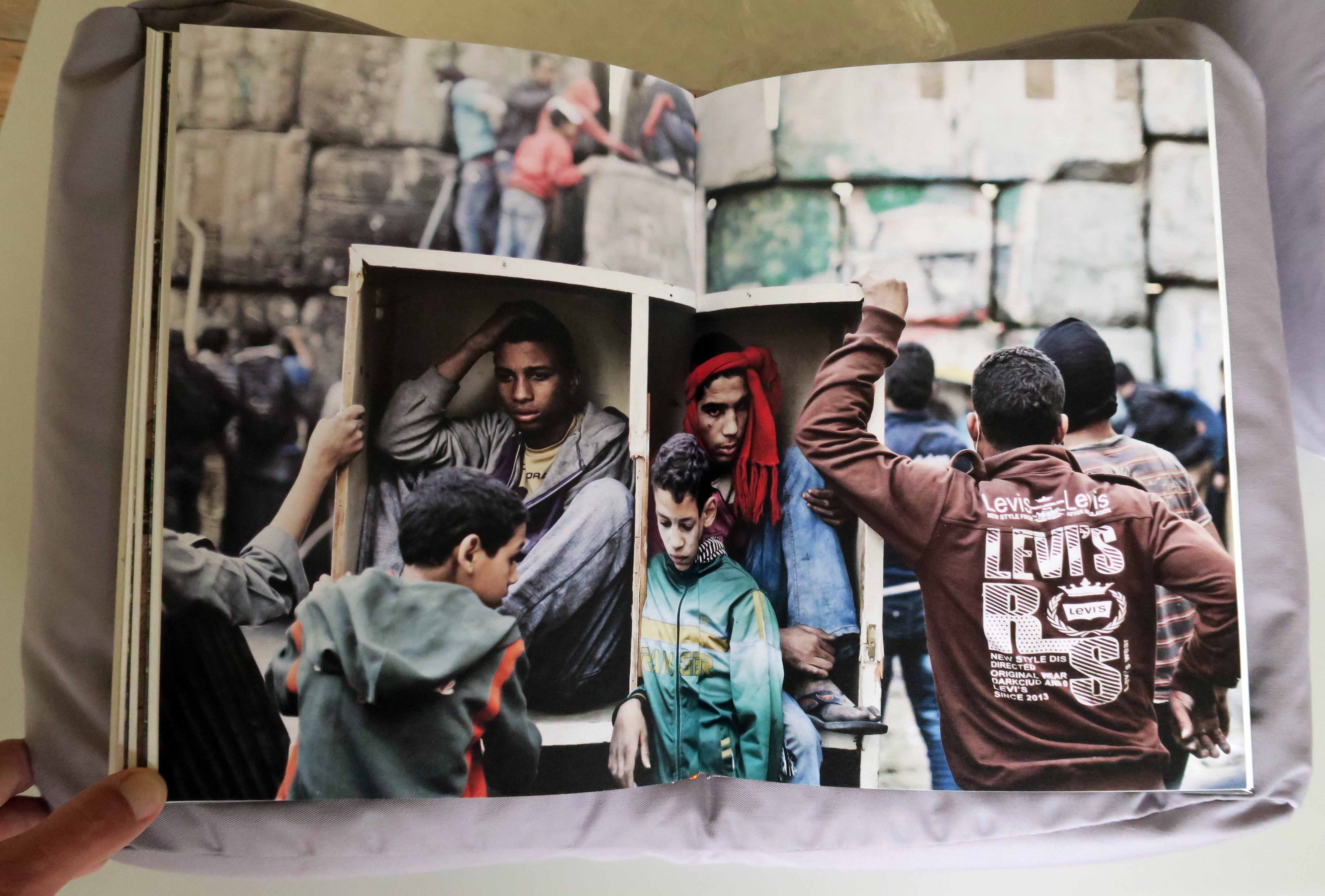
This exhibition traced episodes of the way in which civil conflict and its photographic depiction have co-evolved. Thomas Hobbes’ famous image of the state was the Leviathan, a giant that collected and encompassed the strengths of many people to gain a monopoly over violence, and ensure peace for all those who were content to let the colossus govern them. The overarching theme of the exhibition is the way in which civil war and photojournalism have changed together; from civil war as a proxy for major ideological struggles backed by world powers and often involving battles between large conventional armies, to much smaller-scale, local struggles in nations with weak or failed states, in which informal militia forces target civilians. Looking at issues of siege and occupation, exemplary violence, old and new media, and routes to peace, the exhibition maps out the work of eleven photographers and eleven conflicts; from Robert Capa’s coverage of the Spanish Civil War in 1936 to Thomas Dworzak’s Magnum Instagram Scrapbooks probing current events in Ukraine. The work of Jerome Sessini, Werner Bischof, Ian Berry, David Seymour, Michael Christopher Brown, Moises Saman, Thomas Dworzak, Susan Meiselas, Tim Hetherington and Philip Jones Griffiths is featured in the exhibit. The exhibition premieres three book commissions by Thomas Dworzak, and showcases vintage resin distributions prints from David Seymour’s Children of Europe. The Magnum site for the exhibition is down as the agency revises its site.
Associated texts and images:
A catalogue was planned but not published, but here is the Failing Leviathan text and associated images.
Feature about the exhibition on Slate
Brighton Photo Biennial:
Memory of Fire: Images of War and the War of Images, 2008
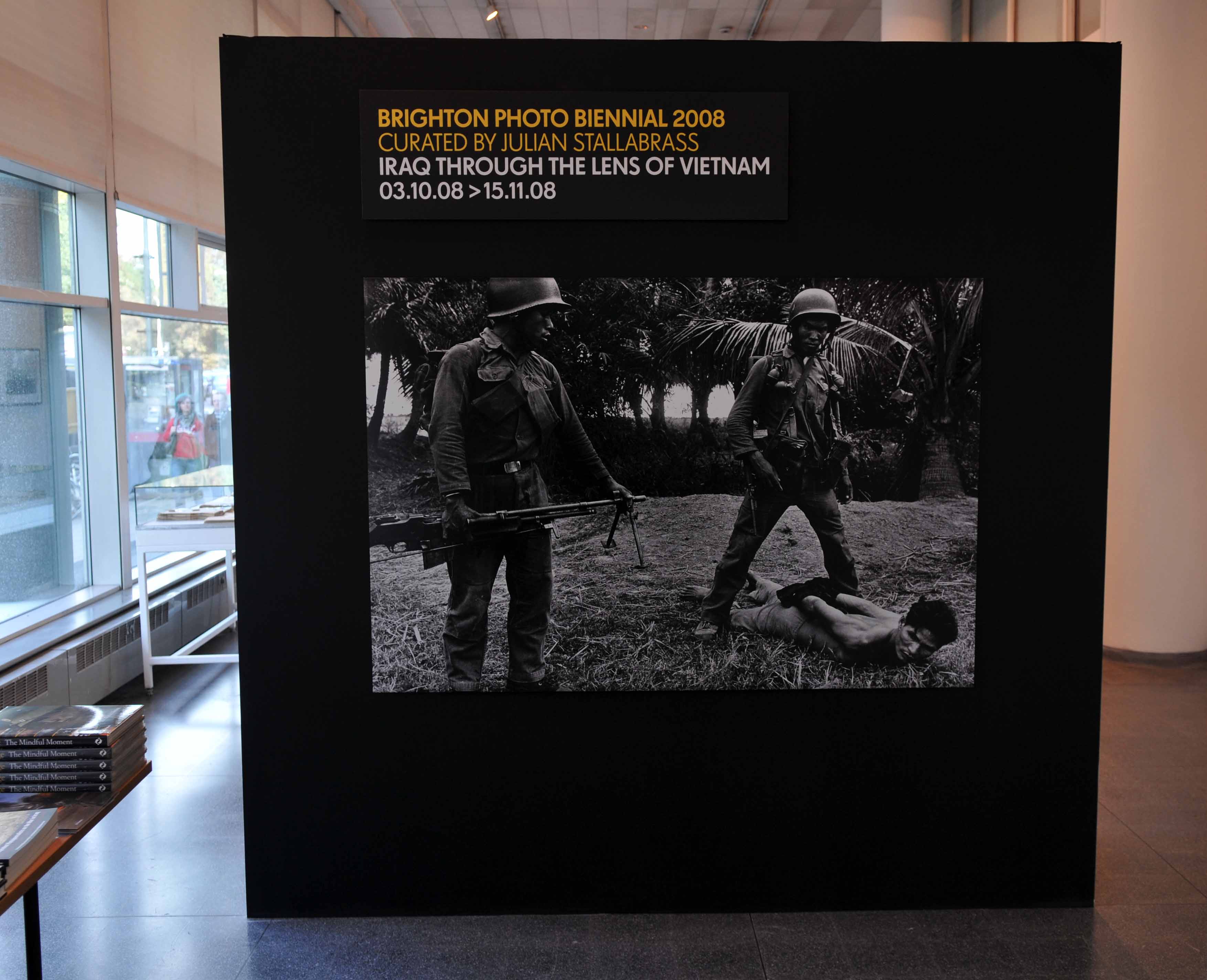
The title is borrowed from Eduardo Galeano’s extraordinary book, Memory of Fire, an epic literary account of 500 years of Latin American resistance to imperialism. The book consists of numerous self-contained episodes which can be read in isolation but also combine with their neighbours to produce a larger picture of the book’s subject. Similarly, BPB 2008, which covers a long stretch of the South East England coastline, comprises many exhibitions and events, each of which stands alone, but which may be enriched when other elements are seen.
Memory of Fire takes on crucial issues as its main themes: first, the production and dissemination of images in time of war, especially the changing conditions from the Vietnam era to the present. Images made by photojournalists, both as prints and as published in magazines and newspapers, are shown alongside presentations of online image displays, either on screen or made into wall-bound objects. Memory of Fire also illumines through an examination of the media the conditions of conflict, imperialism and expropriation, historically and into the present. By taking in views of the different sides of the various conflicts, radically different perspectives will emerge. The biennale seeks to frame and inform new imagery with old, and vice versa. In looking at historical imagery alongside the photography of current wars, the Biennial elicits intimations of the collective and individual memory of such images, their forgetting and revision, and their rebirth at times of crisis and war. Finally, it looks at the place of the art world in the making of conflict images, particularly large-scale images of destruction on the scale of the history painting of old (and sometimes, like them, commissioned by the state).
Associated texts and images:
Mini-Catalogue for Memory of Fire
Subsequent book: Memory of Fire: Images of War and the War of Images, Photoworks, Brighton, 2013. My essay was entitled, ‘The Power and Impotence of Images’. More information, and you can buy the book second-hand, or new from me at a discount (just send me a message).
‘Rearranging Corpses, Curatorially’, Photoworks, October-April 2008-9, pp. 4-9.
‘Interview: Gilane Tawadros: Brighton Photo Biennial’, Photoworks, Autumn/ Winter 2006/7, pp. 18-23.
Art Now: Art and Money Online
Tate Britain, 6 March-3 June 2001
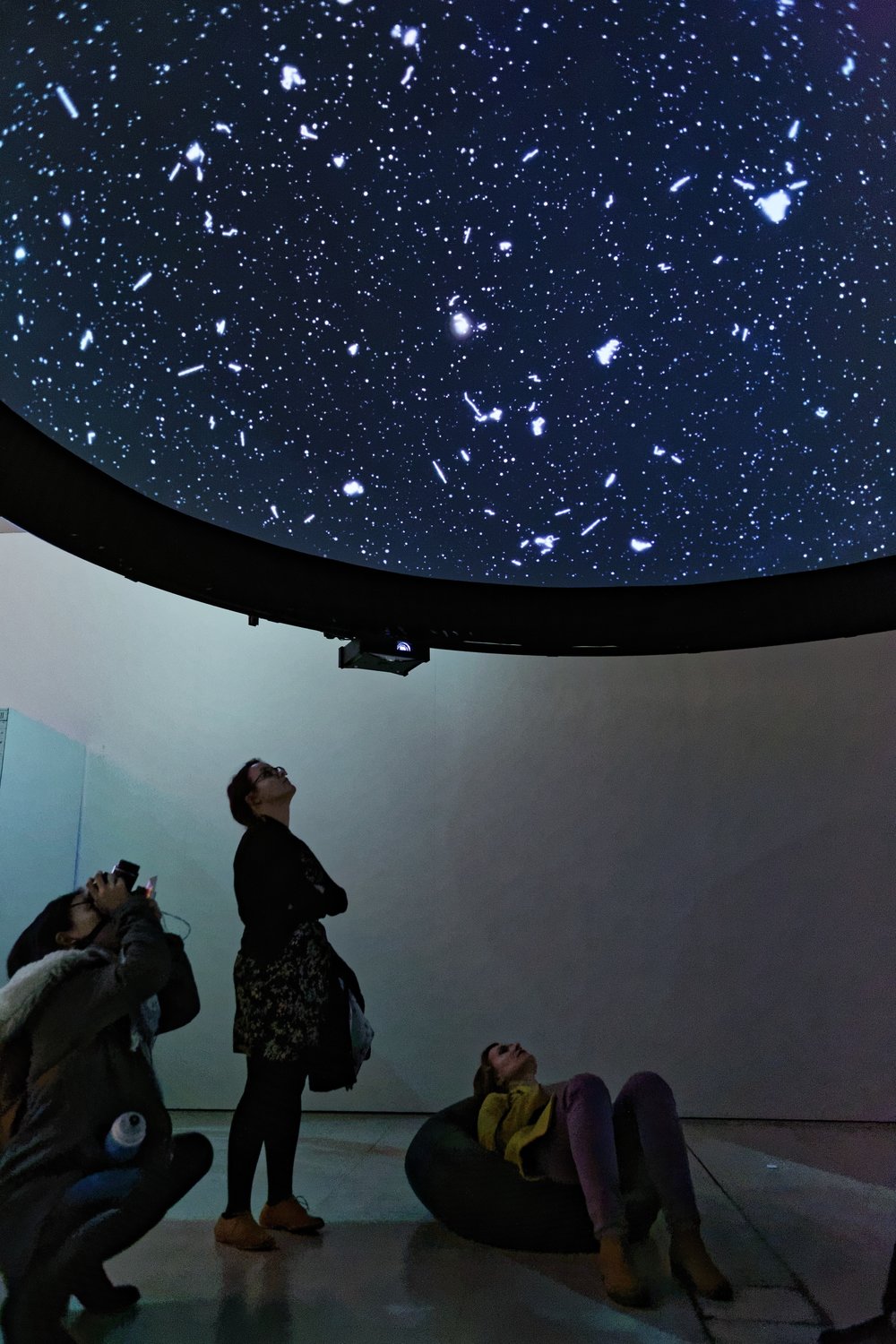
The exhibition explored the impact of commercialisation on the Internet. The rapid growth in the use of the Net — partly business, and particularly finance-led, and partly brought about by the unified interface of the World Wide Web — has not only given artists a large potential audience for their work, but has also profoundly changed the character of the online community. The show juxtaposed the work of three groups of collaborators, Thomson and Craighead, Redundant Technology Initiative, and a commissioned work from Lise Autogena and Joshua Portway. See the Tate page here.
And the Tate leaflet for the exhibition.
 Julian Stallabrass