February 1986
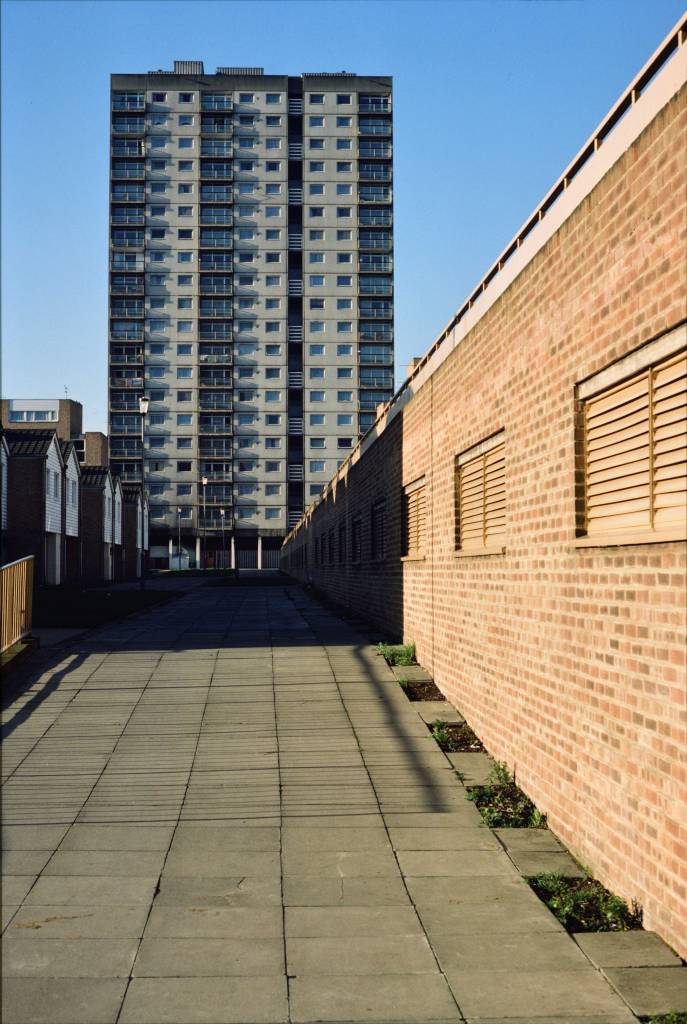
Barkway Court, King’s Crescent Estate, December 1985
Needing a cheap place to stay, I had rented a council-flat bedroom in a Hackney tower block. Nineteen storeys high, it was built on modernist principles in 1971, as part of the King’s Crescent Estate.
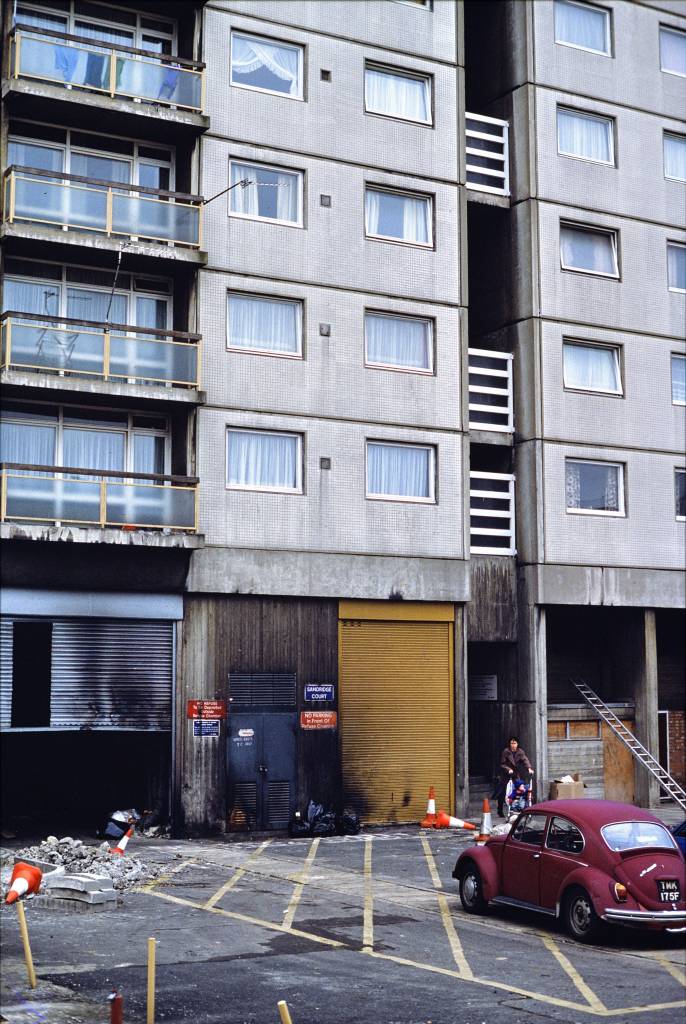
December 1985
An immediate revelation was living with a view onto London from above, and onto a wide expanse of sky otherwise little seen but away from the picture windows, aspects of existence in the tower clearly told its inhabitants where they fell in the social hierarchy. An embattled borough council did little to maintain it, so that the block was grimy and infested. The heating ducts were reputed to be infested with Pharoah ants, and I marvelled at the size of the cockroaches I would catch in jam jars. The dimly lit lifts, lined with a grubby striated metallic veneer, were not to be trusted. Narrow and deep, they were designed to accommodate a coffin. Walking down the stairwell one day, I slowly followed a policeman who was noting down the particulars of gang graffiti. Outside, an unkempt playground was imprisoned behind a tall, grim chain-link fence. Residents walked out of the building onto a scorched and debris-strewn car park.
The general miasma extended to the mental state of at least some of those obliged to live there. When I first met my landlord, he was drinking a yellow liquid from a full pint glass. I assumed that it was lager but, when he offered me a glass, it turned out to be whiskey. He told me, alarmingly enough, that he worked as a minicab driver. Emerging from the light and air of a flat suspended in the sky into a stark corridor with no windows and a sequence of doors which seemed forever closed, may encourage strange imaginings. Convinced that his next-door neighbour was out to get him (she seemed like a harmless old lady to me, but who’s to tell?), whenever he went out, he would place the speaker of an ancient radio to face the wall separating their flats, and turn it up as loud as it would go.
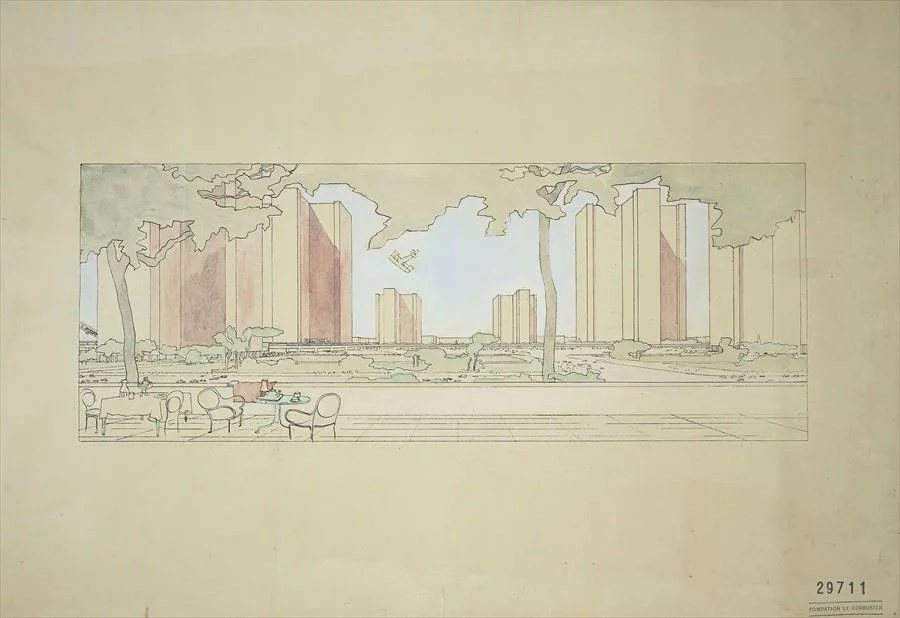
Le Corbusier, Ville contemporaine de trois millions d’habitants, sans lieu, 1922
These circumstances were thrown into dramatic relief because I was studying Le Corbusier’s 1920s utopian city plans, which included influential designs for such tall residential blocks. Addressing the housing crisis that followed the First World War, Le Corbusier imagined a radical cleansing in which from their dark, dank and encrusted slums ordinary folk would be elevated into a rational, clean, healthy, sunlit life that would meet their basic and universal needs. The blocks would be set in expansive parkland, and pedestrians and motor traffic kept strictly separate.
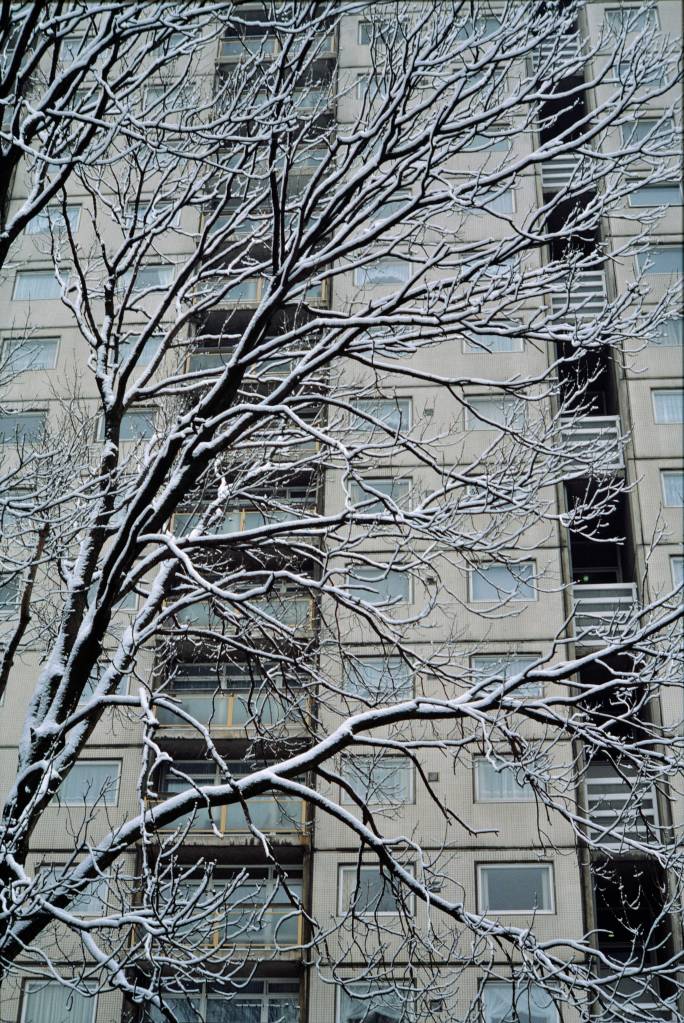
While a few trees were found near the blocks, and Clissold Park was close by, the setting was far from sylvan. The pedestrian areas were stark and unkempt, and otherwise the stink, noise and danger of cars was ever-present.
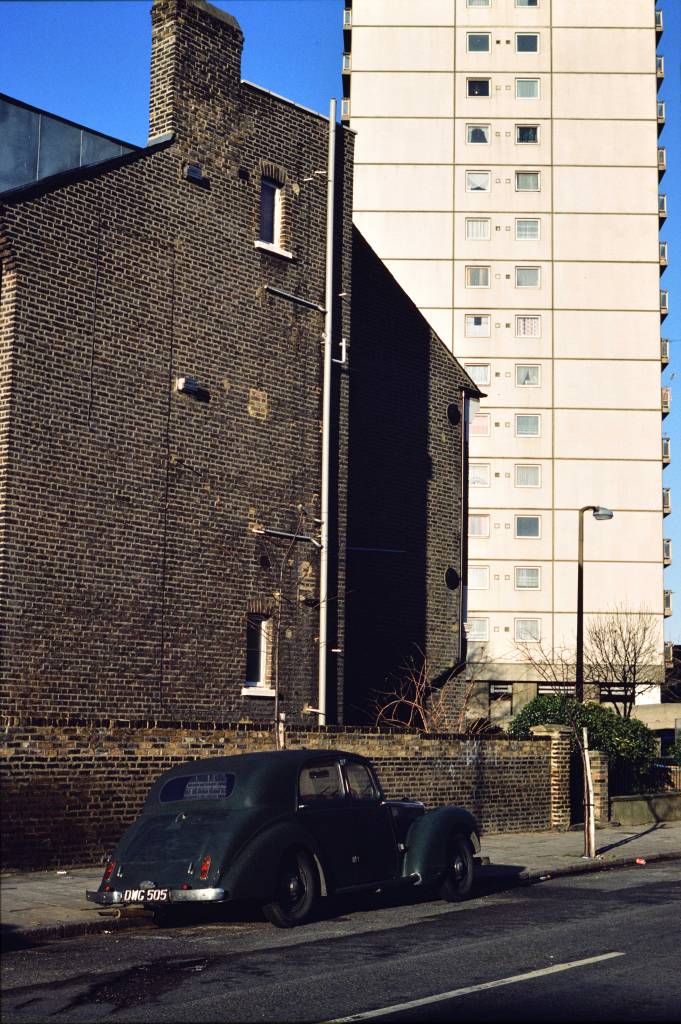
December 1985
Even so, and in a common response to new council housing, when the blocks were first inhabited in the early 1970s, most residents liked the flats’ generous rooms, the modern amenities, the views, and the light. When seen against the remnants of its older setting, the block’s already dated modernity could be fleetingly grasped.

Some of the social depredations I witnessed (and to a small extent experienced) could be laid at the door of utopian male architects who did not think enough about domestic life or the needs of children. Nor did they anticipate how even two tall blocks set in an estate of lower buildings could channel the wind with ferocious force. I once saw an old woman lifted right off her feet by a gust, and dumped onto the concrete paving.
Yet many of those ills had other origins. Any poorly maintained building will accrete problems that blight the lives of its residents. All the more so, as with many council blocks, because it was hastily and shoddily constructed in the first place (Owen Hatherley’s fine book, A Guide to the New Ruins of Great Britain, contains a defence of the principles of such building, and also of the regular corruption among councillors and contractors that led to the demolition of good older housing to exploit the opportunities for political grandstanding and graft that came with the construction of huge estates).
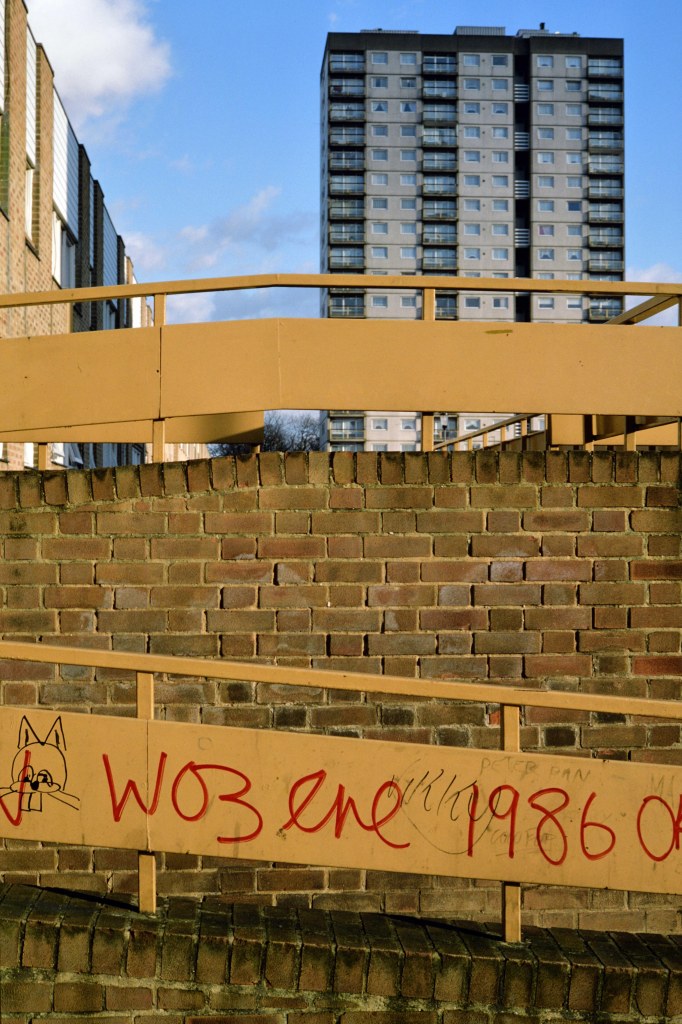
January 1986
Of as much force was an infamous piece of Thatcherite social engineering. A friend who was a borough-council housing officer explained the effects. When council housing was first built—say, in the pioneering work of Berthold Lubetkin for Finsbury in the 1940s—it housed skilled and respectable working-class people. Anyone who caused trouble for their neighbours was promptly ejected. It later became a more widespread provision, housing many types of people, and at its height composing nearly 30 per cent of all households. Councils later became obliged to house the homeless so that difficult tenants were almost impossible to remove.
Two calculations lay behind the Conservative scheme to encourage council tenants to buy their homes at steeply discounted prices. The first was that homeowners, bound to conformity by mortgage debt, were more likely to vote Tory. The second was to permanently shrink the supply of council homes by preventing councils from using the money from their sale to build new ones. So, their number steadily diminished, and council housing increasingly became a refuge of last resort.
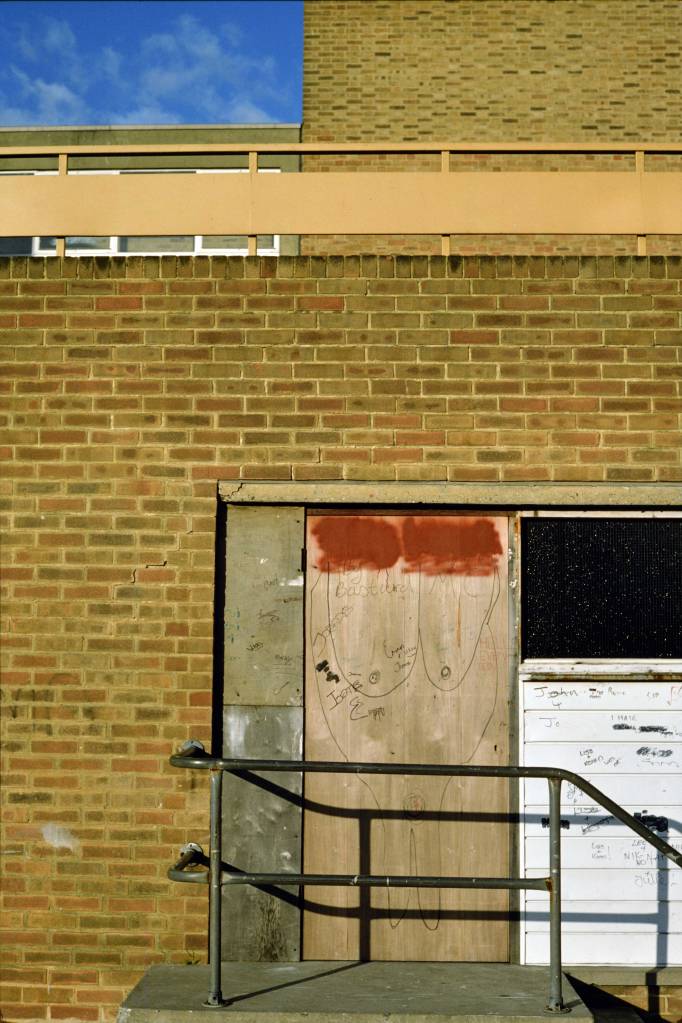
January 1986
It was allocated on a points system with the worthy aim of housing those most in need. Points were awarded for homelessness, disability, being a victim of abuse, the number of dependents, drug addiction, and living in poor housing conditions. Far from the Finsbury model, it was a sure way of throwing together all those people with the most acute problems. The effects were predictable.
For the engineers of this effect, it had another major advantage. Those people so concentrated and segregated became easier to demonise as shirkers, idlers, criminal and losers. For such hopeless recidivists—often in the media and political imagination people of colour—it was then claimed that the only answer was stern policing, welfare cuts and harsh social discipline. Sometimes, especially when these strictures caused deaths—as at Broadwater Farm—they made a reply.
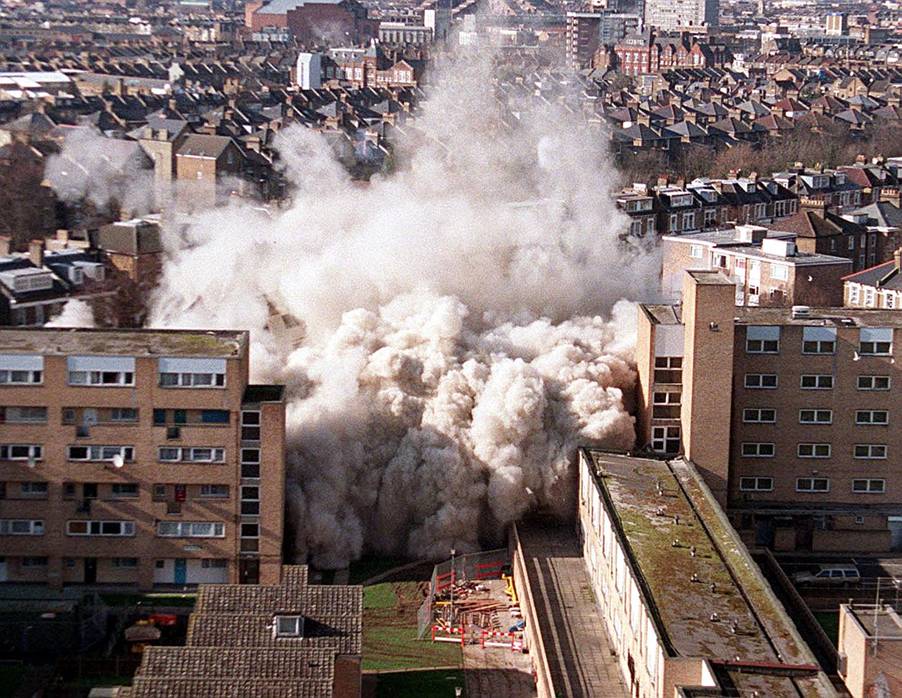
In another narrative—which has at least some justification, as we have seen—the buildings themselves were blamed for the social ills that pooled within them. In 2000, a great public spectacle was laid on at King’s Crescent Estate, in which they were ‘solved’ by using dynamite to fell the block in a colossal cloud of dust and debris.
 Julian Stallabrass
Leave a comment