January 1986
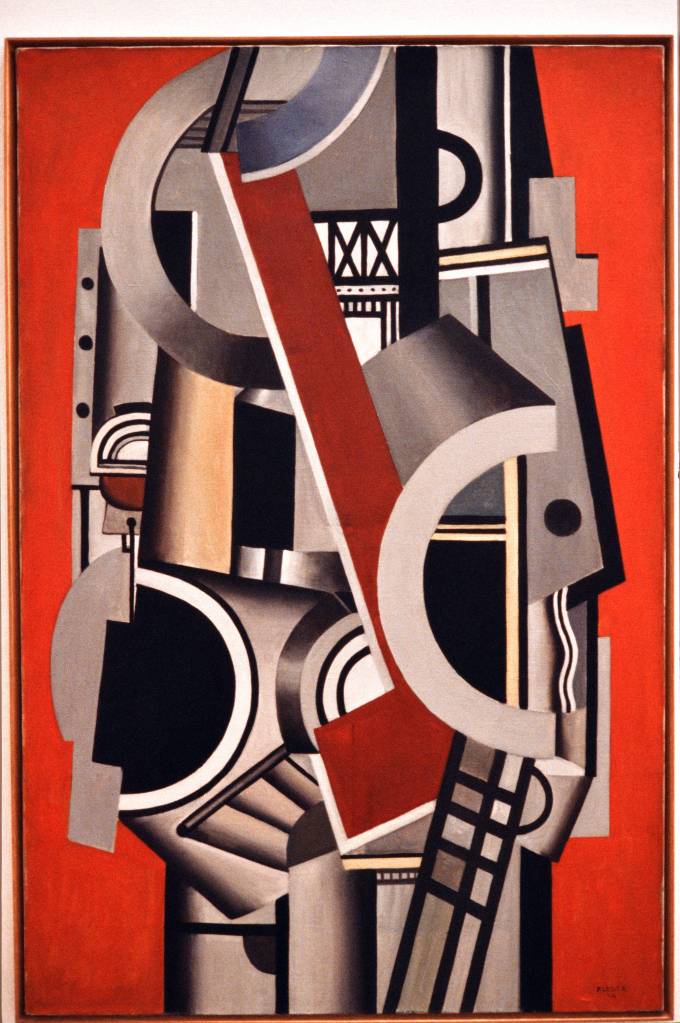
Fernand Léger, Eléments Méchanique, 1924, Musée National d’Art Moderne, Pompidou Centre, Paris
Studying art history, I would often photograph paintings in museums and galleries. Being merely a student—and a shy one at that—I would do this with a hand-held camera in available light (while some places then allowed photography, they rightly banned flash which is damaging to art works).
Holding a camera at exactly the right height straight on to a painting so that its sides align with those of the resulting photograph is harder than it sounds. Looking back on these photographs now, I am surprised at just how accurate I could be. In a familiar effect of technological deskilling, my ability to do this has slowly faded, spoilt by the perspective-correction tools on phones and in Photoshop.
Shooting in available light would often mean holding the camera steady over longish exposures. Using a film balanced for tungsten light, the photographs did not have the lurid orange cast of daylight film shot under artificial lighting. Yet it was far from an exact way to deal with galleries that used lights of varying colour temperatures, and sometimes also let in daylight.
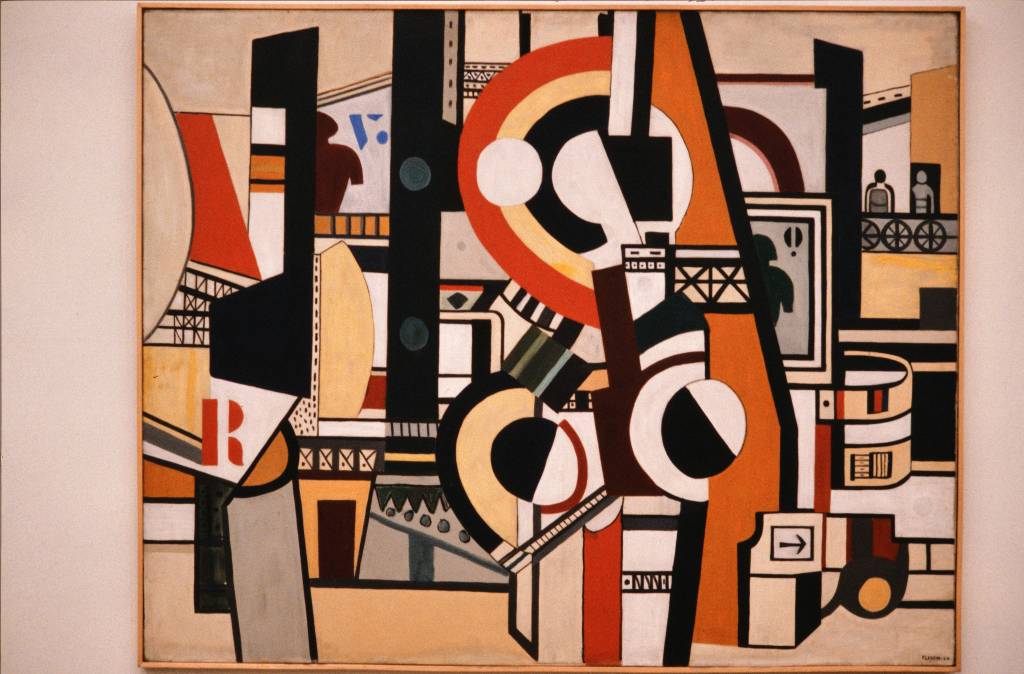
Fernand Léger, Les Disques dans la Ville, 1920-1
So this image is seen as taken in the Pompidou Centre.
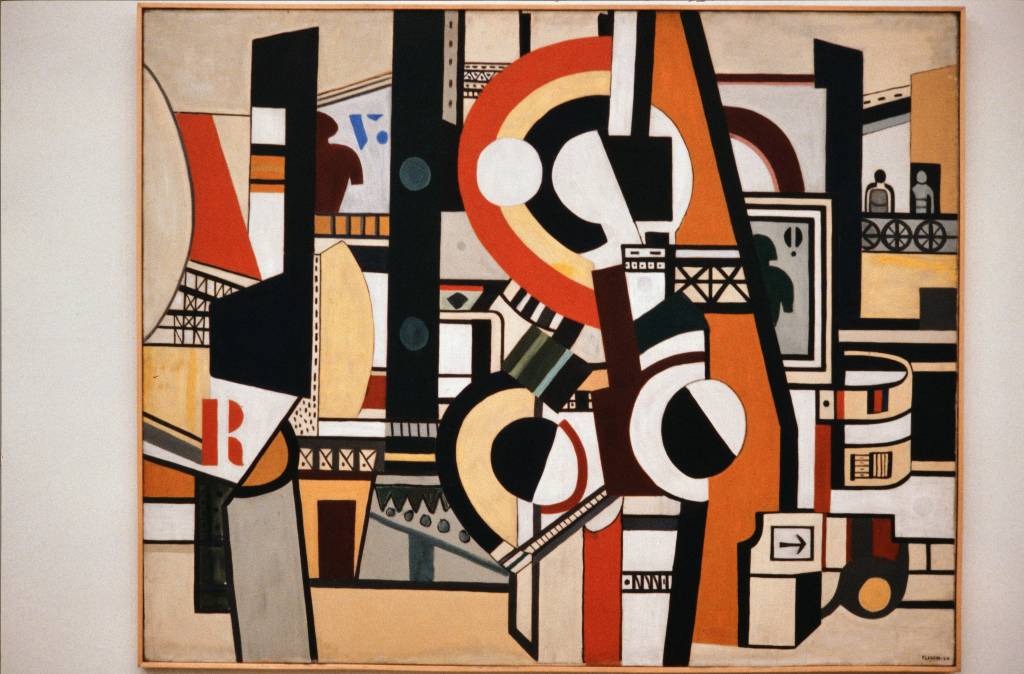
And here, it is colour-corrected on the assumption that the gallery wall was a pure white. There was no doing that then.
Bob Ratcliffe, a teacher at my college, the Courtauld Institute, was obsessed with making the most accurate and highest quality slides of paintings as they hung in galleries, and did it properly. He used a tripod, of course, but also measured the light falling on a painting with a colour-temperature meter, and then screwed onto the lens a combination of filters to match that light to the film he was using (often Kodachrome). He was highly methodical in his approach, photographing the whole painting and then details at standard sizes—roughly at the width of a hand and of a head, he would tell us. Having gone to all that trouble, he would make several duplicates of each particular view.
I still vividly remember the richness, clarity, vibrancy and subtlety of these slides—especially of works by his beloved Cézanne—when projected in the lecture theatre. The analogue technology of beaming light through film emulsion gave an effective resolution equivalent to something like 30 million pixels. Even today’s 4k projectors provide only about a quarter of that.
Ratcliffe was one of the Courtauld’s eccentrics. Appointed on the strength of a brilliant PhD thesis about Cézanne, he had published little research since. His supposedly two-hour teaching sessions rarely run beyond 40 minutes which he claimed, perhaps rightly, was the maximum amount of time that one could look really closely at works of art.
His gallery teaching was, though, quite extraordinary. First, because he would always get students to attend to the light—looking upwards to gauge its quality and mix of sources—and to realise that it might change from room to room, and that you should let your eyes adjust. Then to be aware of all those things that might weaken the effect of a painting—from the brightness of a gilded frame to the colour of a wall. In Elton John’s collection of photographs at Tate, I thought of Ratcliffe when seeing an early print by André Kertész, a tiny, dark image, encased in layer upon layer of bright gilt framing. The arrangement clearly signalled that the ownership of this miniature work was more important than seeing it.
One gift that Ratcliffe gave us—and which in time I would pass onto students—was the trick, when frame or wall overbore the effect of a work, to simply use both hands to make a rough rectangle to screen out the glare. When you do this, seemingly gloomy paintings often leap into life. A painter himself, Ratcliffe was extremely attentive to technique, and especially in post-impressionism, of the use of colour to represent light reflected off objects and into shadows. Apparently, he had acquired a Belisha Beacon which he had painted a pure white. Setting it up in his garden, he would photograph the changing colours it would take up throughout the course of an entire day.
Aware that many of the slides in the college library had faded—and that indeed the oldest ones had become pale pink ghosts of their former selves, I once asked Ratcliffe how to preserve them. He said three things: keep them in the dark (of course). Never smoke around them (he was outraged at chain-smoking slide librarians in the workplace). And lastly—the main reason for making duplicates so that he could keep a precious slide for himself—never project them.
 Julian Stallabrass
Leave a comment