November 1985
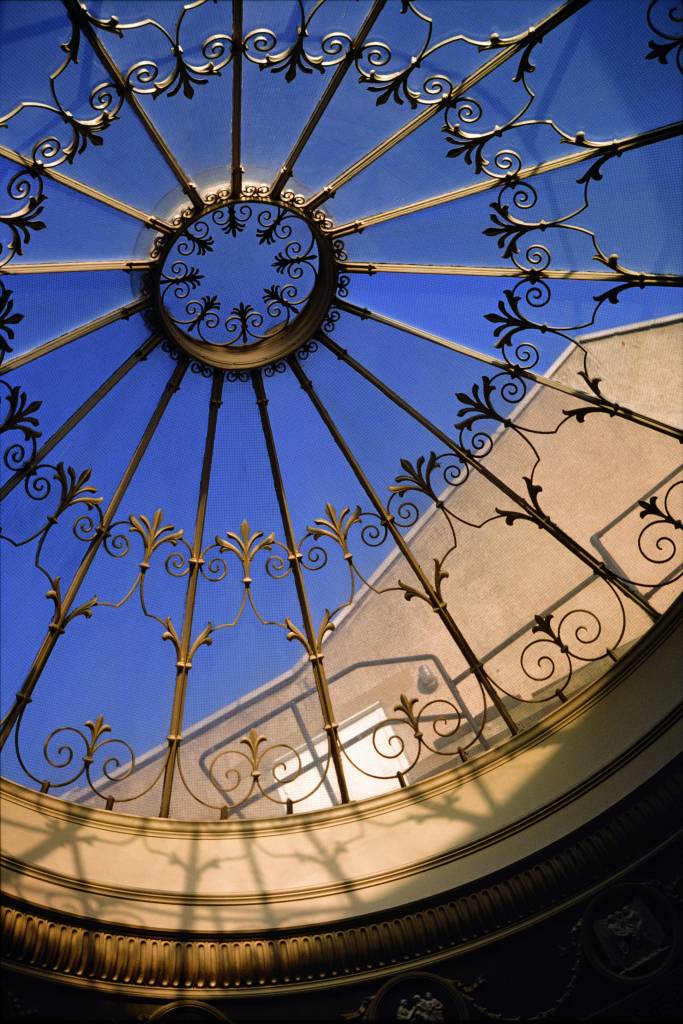
When I went to study at the Courtauld Institute, I was new to art history and extremely insecure about my abilities and the extent of my ignorance. Given the reputation of the place as a small, specialist academic centre, I naively expected an atmosphere of intense intellectual exchange—and did in fact find it among a small group of students, although not immediately. Rather, especially among the undergraduates, the Courtauld had the exclusive air of a ladies’ finishing school. I came close to leaving when, in the tea-room queue, I heard two students having a prolonged discussion about the correct way to address a duke.
There was then a jarring mismatch between my art-historical interests, my photography (indeed, the medium was not even recognised as an art at the Courtauld), and the Institute’s social milieu and conservatism. One box of slides from this time contains copies I made of images from books about the Soviet avant garde. I wanted to give a class presentation on the topic, but the slide library barely touched it, beyond material on Naum Gabo, a formalist artist who had fled to England. A while later, when interviewing for a grant, the director of the Institute, fixing me with an incredulous stare, said: ‘It seems to me, young man, that you want to smuggle into art history everything but the kitchen sink.’
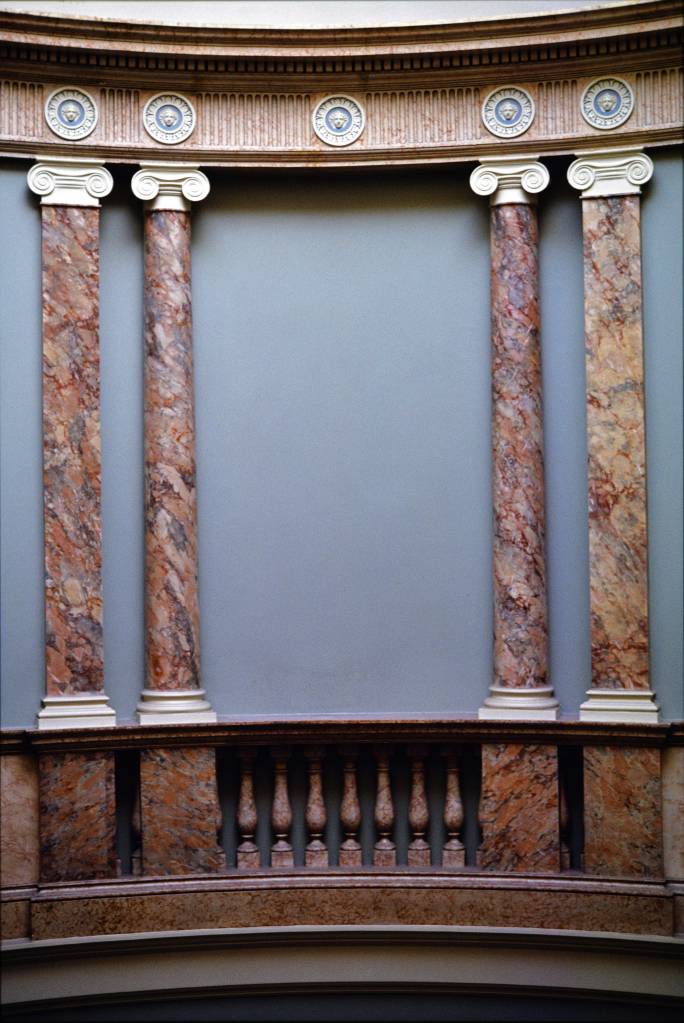
The Courtauld then occupied Home House, a Georgian building designed by Robert Adam on Portman Square for Elizabeth, Countess of Home, whose wealth was produced by slaves on her extensive estates in Jamaica. Adam was renowned for his skilled, ornate, delicate neo-classicism (which later detractors would sometimes compare to the art of a pastry cook) of which Home House was a fairly restrained example. As Robert Adam and his brother James put it in a book advertising their practice:
‘This classical style of ornament, by far the most perfect that has ever appeared for inside decorations, and which has withstood the test of many ages, like other works of genius, requires not only fancy and imagination in the composition, but taste and judgement in the application; and when these are happily combined, this gay and elegant mode is capable of inimitable benefits.’
This interplay granted its aristocratic clients a decorative, showy and manifestly costly neo-classicism, which allowed for entertainment in rooms that also vaunted the current empire, from which so much of the riches thrown into such extravagances had been extracted, by association with the glories of the ancient world.
The main reception rooms and circulation spaces, including the reading room off the largest section of the library, had a grand domestic air. The sense of inhabiting an aristocratic town house from another age was accentuated by the occasional sound of horses’ hooves on the road, as the Horse Guards paraded by. The libraries and teaching rooms were however scattered across conjoined houses. To read books about, say, German painting you had to go up to a modest room on the third floor, which overlooked the garden and was decorated with William Morris wallpaper. So certain subjects took on the tone of their distinctive spaces.
Beyond what had been the grand areas of the house, there was a maze of odd rooms, corners, alcoves, staircases and corridors which took much time to learn to navigate. Some of the students may have felt secure in their place in the world, sealed by the prestige of the institution and the grandeur of bits of its physical setting, but the staff—especially the librarians of books and images—had their considerable expertise and occasional eccentricity highlighted by the labyrinth in which they laboured, especially those confined to the extensive basements, which were lined with tens of thousands of heavy boxes containing millions of photographic reproductions and the occasional print (though the last had been systematically looted by unscrupulous dealers over the years).
A few of the academic staff were eccentric too. I remember the austere manner of a stern-faced Anita Brookner as she lectured on Baudelaire, offering a brilliant set of reflections which would certainly have had me in awe had I not recently read Walter Benjamin’s essays on the poet, from which many insights had been quietly borrowed. When she won the Booker Prize for Hotel du Lac, every student visiting the tea-room the next day was offered, courtesy of the novelist, a two-fingered Kit Kat.
In the same lecture theatre, after asking a hard question of Thatcher’s culture minister, Richard Luce—who had otherwise been given a respectful reception despite his government’s savaging of arts funding—as he left, complimented me on the question with a literal pat on the head. This was a place, then, in which the establishment felt secure.
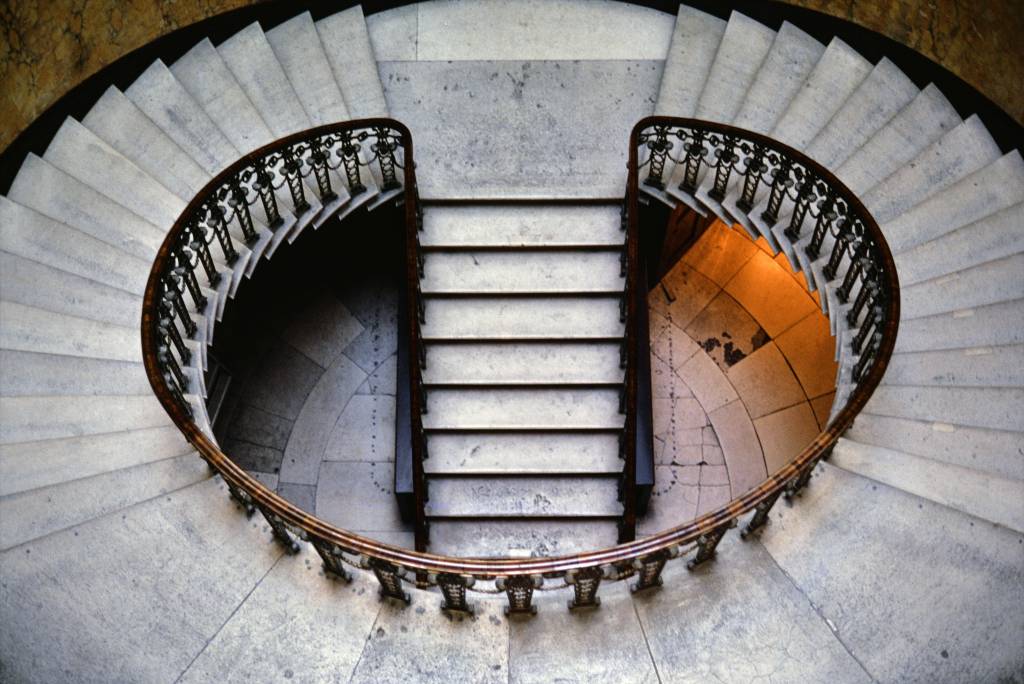
The grand ‘imperial’ style staircase shown here was off-limits to students who were expected to use the dusty servants’ stairs. These photographs record, then, a very mild form of dissent.


 Julian Stallabrass
Leave a comment