October 1985
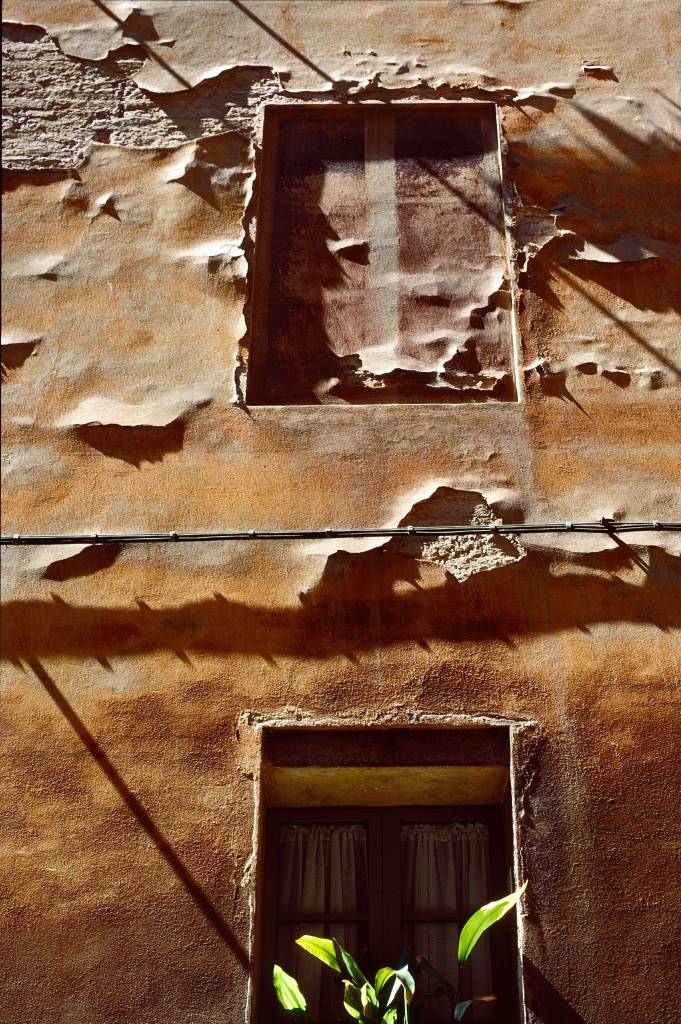
Via dei Baroncelli, Siena, August 1985
It is a cliché but my journey from Italy—with its high-colour facades on which age had been etched by centuries of bright and burning sun—to return to a largely Victorian London, much of it sunk in deep decline, pointed up sharply the character of each. Adrian Stokes’ ancient glowing stones, which at dusk seemed lit as if from within, like a slide held up to the window, were replaced by a darker senescence.
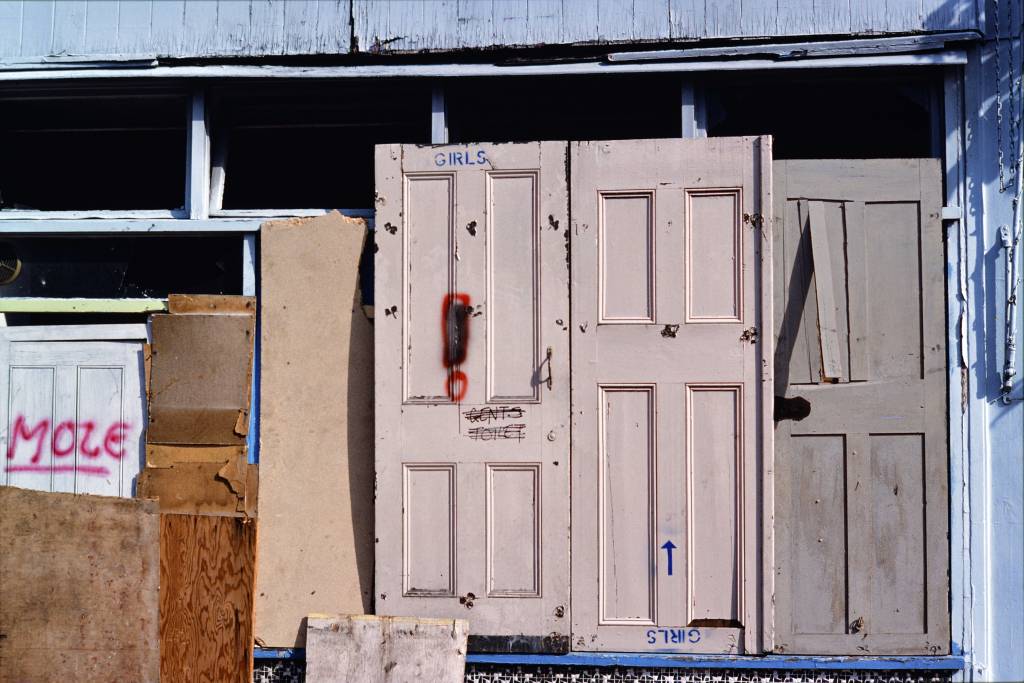
Horsell Road, Islington
In dereliction and social disaffection, the barriers that so demarcate and form the capitalist environment—walls, railings, gates, fences and security grilles—were often makeshift and flimsy, as vacant properties were defended to meet the distant day when they would once again become valuable. Often broken into for the free and private satisfaction of various bodily urges, their facades were covered in scatological and sexualized scrawling.
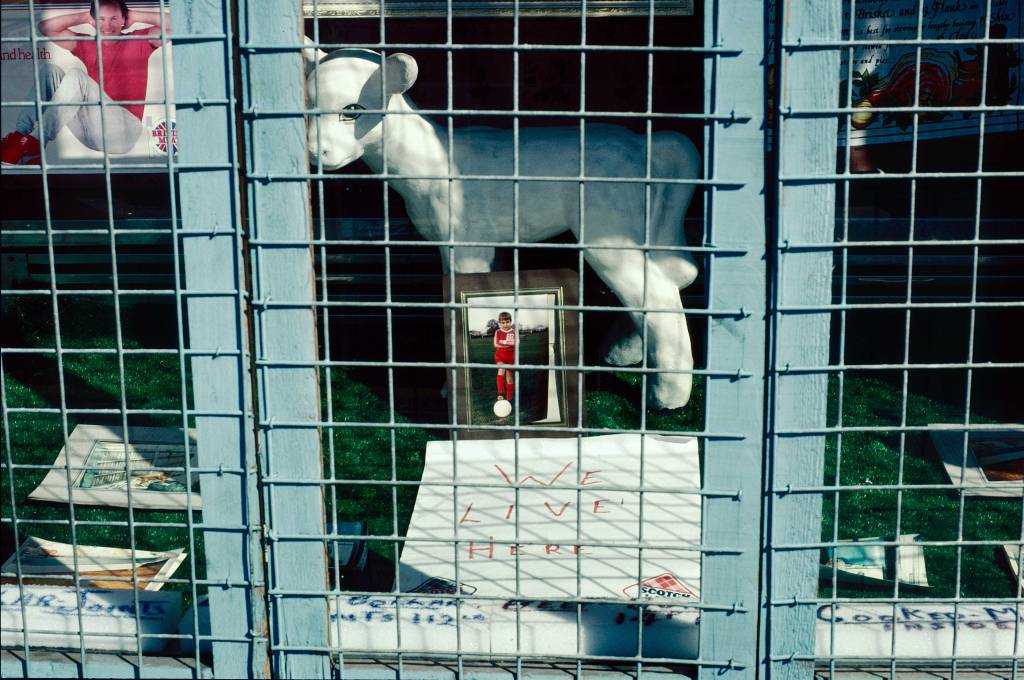
Holloway Road, Islington
As the cruel social discipline of the Tory regime bit deeper, and the city became steadily poorer, more unequal and crime-ridden, those who had a little and lived amongst those who had less, were most exposed to the effects. Behind a grille, in the window of a butcher’s shop, was this plea against burglary.
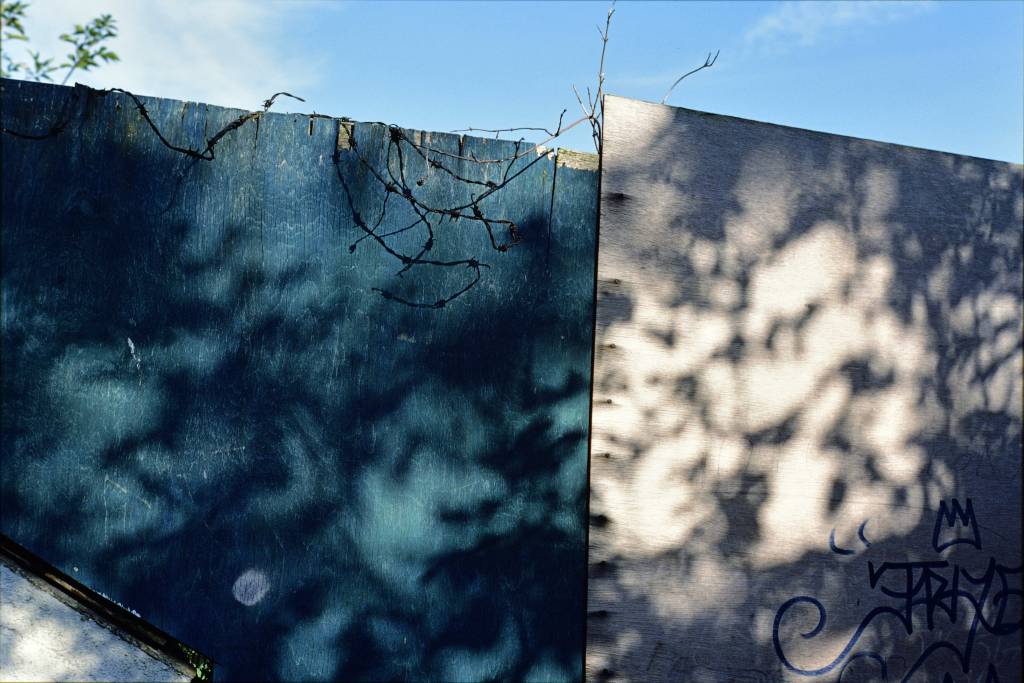
Off Whistler Street, Islington
The look of those improvised barriers in the autumn sun, marked by writing and weathering alike, had an affinity with photographic recording on film, which is also the marking (by light) of a surface. In a meeting of shadow and writing, the sun casts on a hoarding the cursive script of barbed wire, echoing the graffiti below. Perhaps, since at night a street lamp may have cast similar shadows, that echo was a deliberate artistic choice. Among such decay and neglect, trespass temporarily produced common spaces, which opened opportunities for social connection, destruction and creative expression, as well as violence and theft.
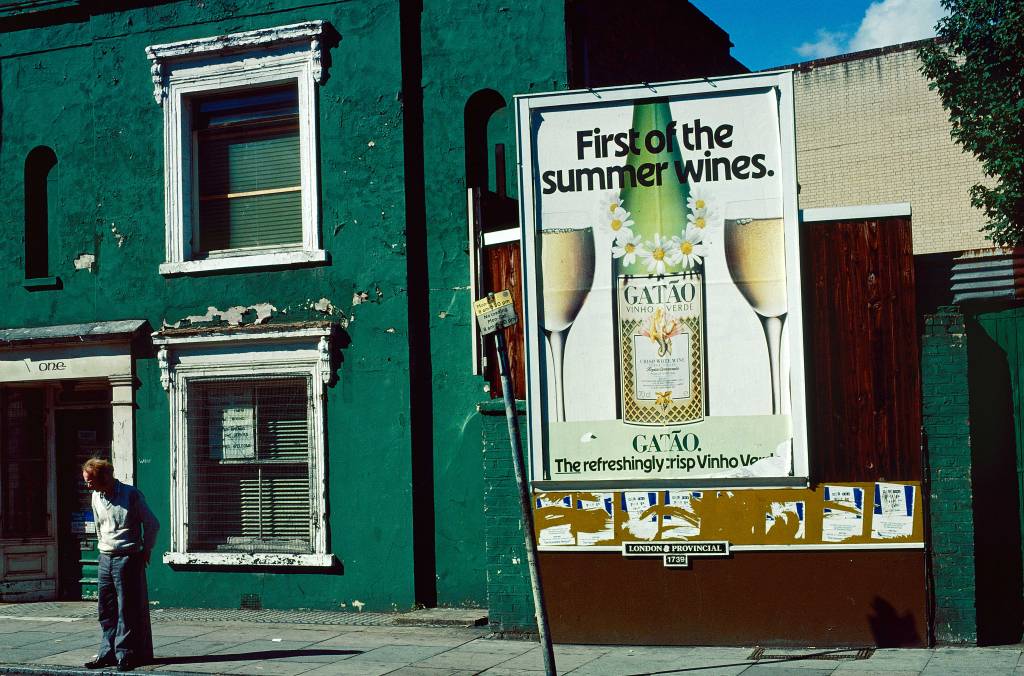
Drayton Park, Islington
Opening onto the wider street, adverts mocked the human and physical dereliction around them. This one parasitically fed off a well-known sitcom of the time, Last of the Summer Wine, in which three elderly characters found solace in their companionship as they rambled about the Yorkshire countryside. Old age here is less appealing, in the shabby figure that steadies himself on a bollard, and in this the marketing of alcohol may well have played its part.
If the ruination of the physical environment, the social fabric and the psyche parallel and reinforce each other, for me at that time, those besieged barriers when rendered in film also spoke of the manufacture, by government and commerce, of fear, alienation and loneliness as social connections were eroded, along with capitalist facades.
 Julian Stallabrass
Leave a comment