September 1985
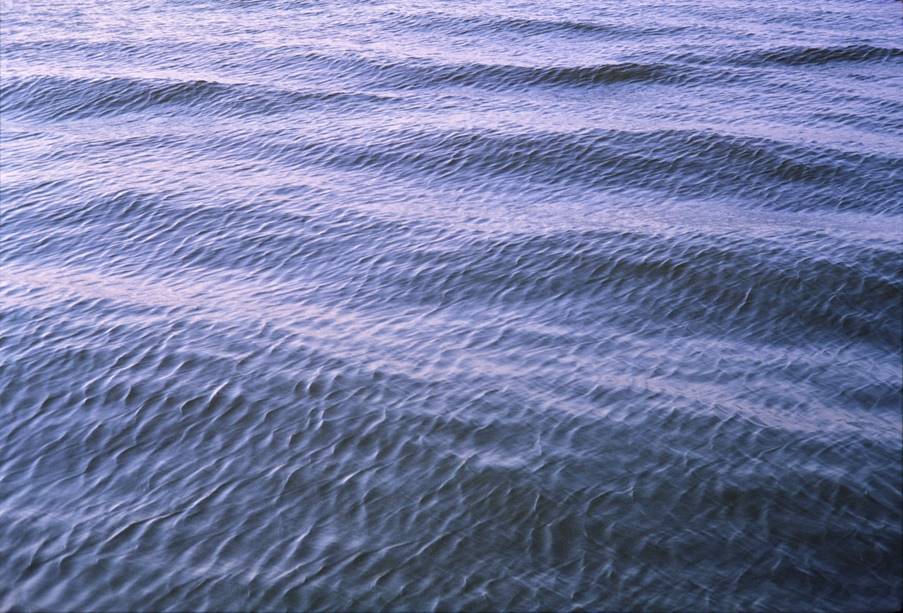
Visiting Italy with a headful of legends, the mundane and disjointed character of its landscape sometimes seemed layered, translucently, over ancient stories. I did not come to know the photographs of Luigi Ghirri until many years later, but his work precisely portrayed a simultaneous crisis of the environment and the image world. In Italy’s post-war industrialisation, the land had been rapidly transformed by roads, traffic, heavy industry and industrial farming, leaving isolated fragments of the past, standing amidst the wider desolation.
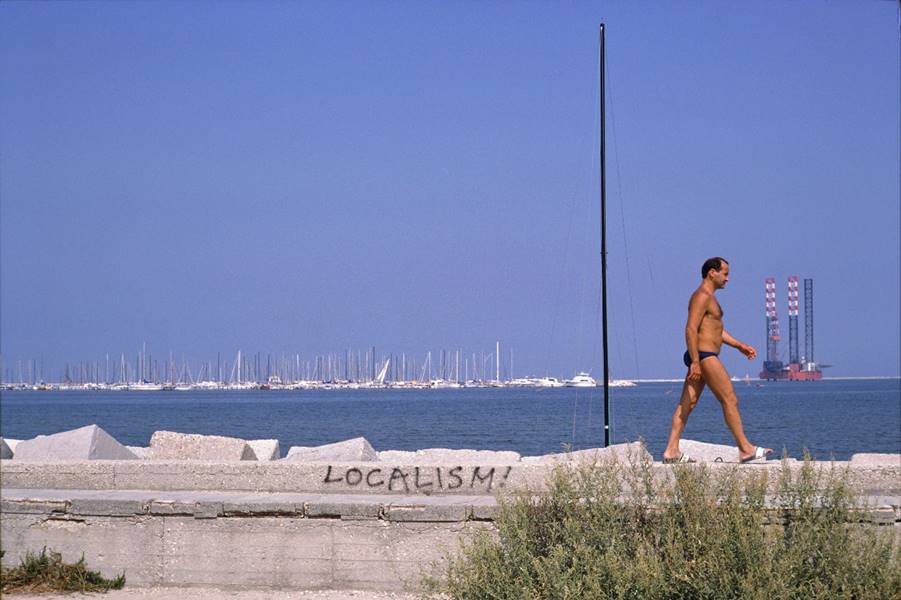
Old affective connections with the landscape had been broken. As in the fiction of Italo Calvino and Gianni Celati, in Ghirri’s images characters stumble about a world stripped of significance, exiles as much at home as abroad.
In Marina di Ravenna, a few kilometres from the famed ancient city where pollution from nearby industrial plants steadily corrodes its monuments and the lungs of its inhabitants, Italians wander the bleak foreshore. A boy—Telemachus, I wonder?—appears lost in dreams, perhaps of Odysseys, as he treads the line of sand dampened by the sea. (I won’t put this image online since it may be misused.)
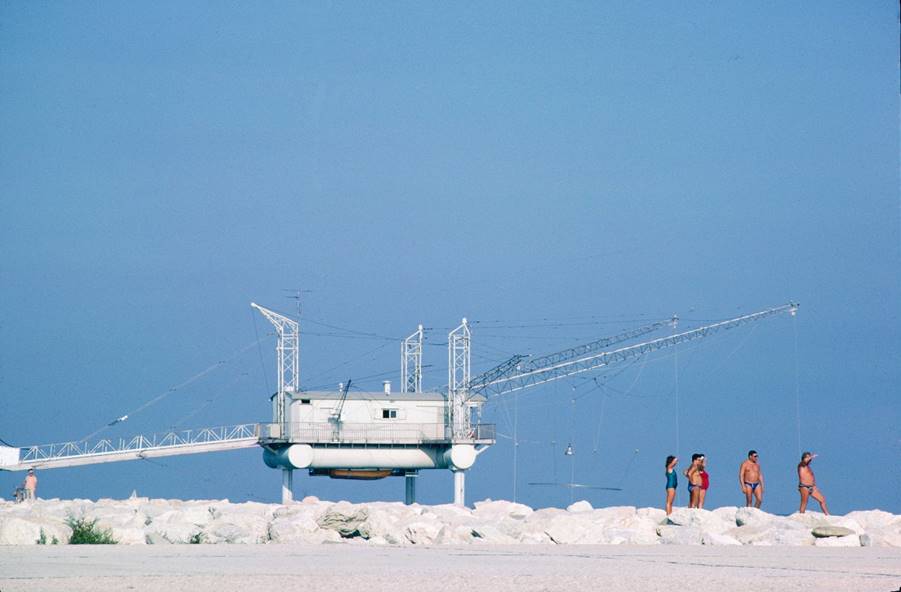
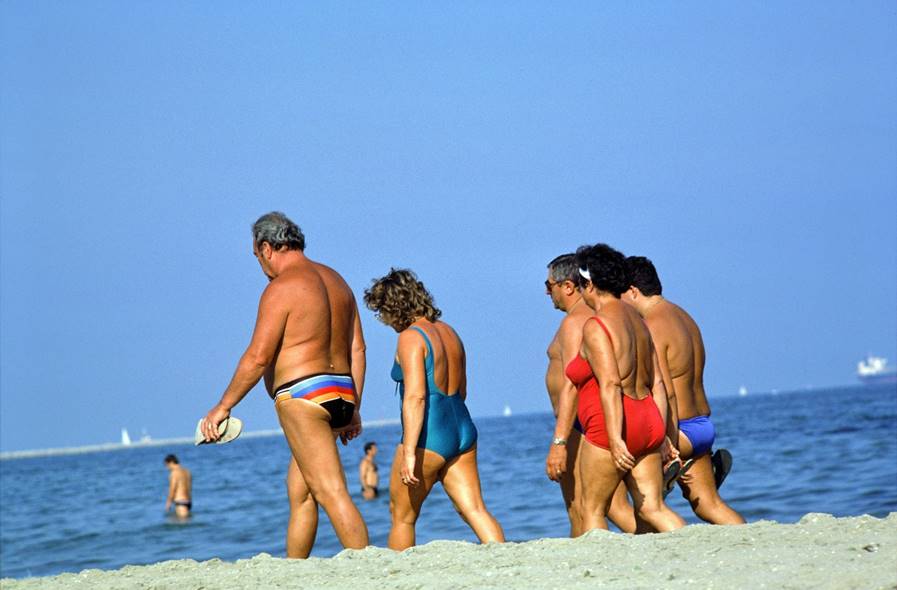
Yet there seemed to be something epic in the stride and pose of a group of bathers as they traverse the shore, and gaze out to sea while standing against an industrial version of the old padelloni, which at night lure fish into their nets by shining lights onto the water. In this environment, over which ordinary people have such little say, heroism is an illusion—as is shown by the powerless plea for ‘localism’.
 Julian Stallabrass
Leave a comment