July 1985
Dead and inanimate things, when photographed, often appear to live a little. Sculptures twist their stone limbs; a gull crashed lifeless in the sand still shows the graceful curves of mobile flight.
Since everything is frozen in photography, everything is also cast into implied movement. The psychologist Jean Piaget wrote poetically of how children understand the movement of inanimate things, ascribing volition to clouds, bicycles and clockwork toys. In a simultaneous current and counter-current, photography may animate the inanimate and deaden the living.
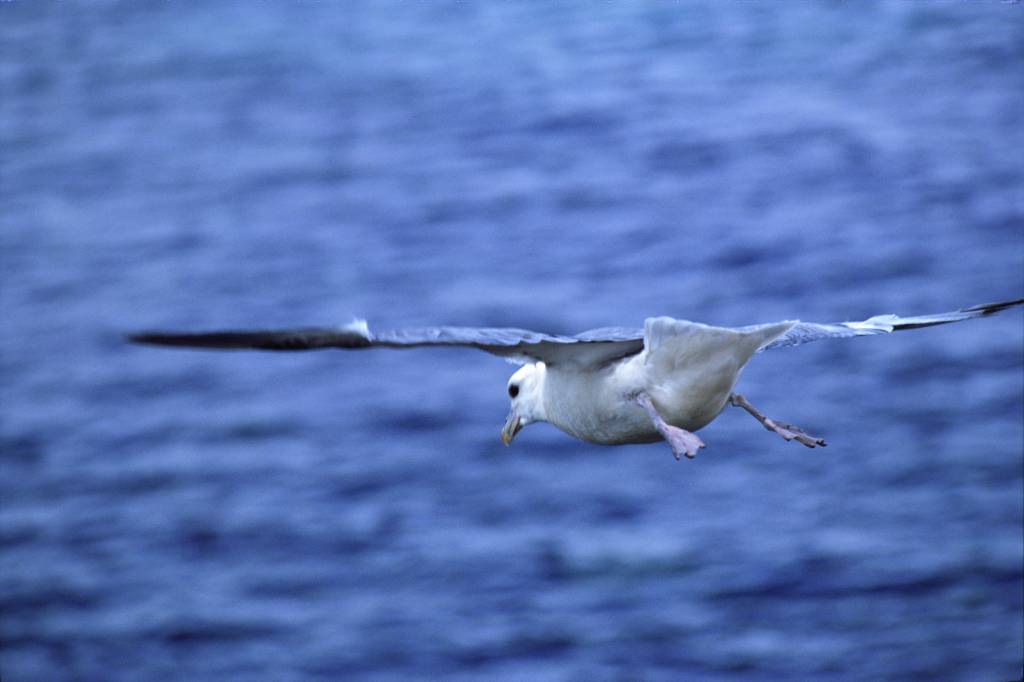
Returning to Northumberland for the last time to work on Katrina Porteous’ project on Dunstanburgh Castle, I turned to photographing animals, farmed and wild, living and dead. A fulmar, which spends most of its life on the wing, is caught in a slightly ungainly moment shortly after launching itself from a cliff.
Frozen in an attitude that it is very difficult not to read as a pathetic gesture, a dead gull, leaning back on its finely patterned stone bier, raises its beak.
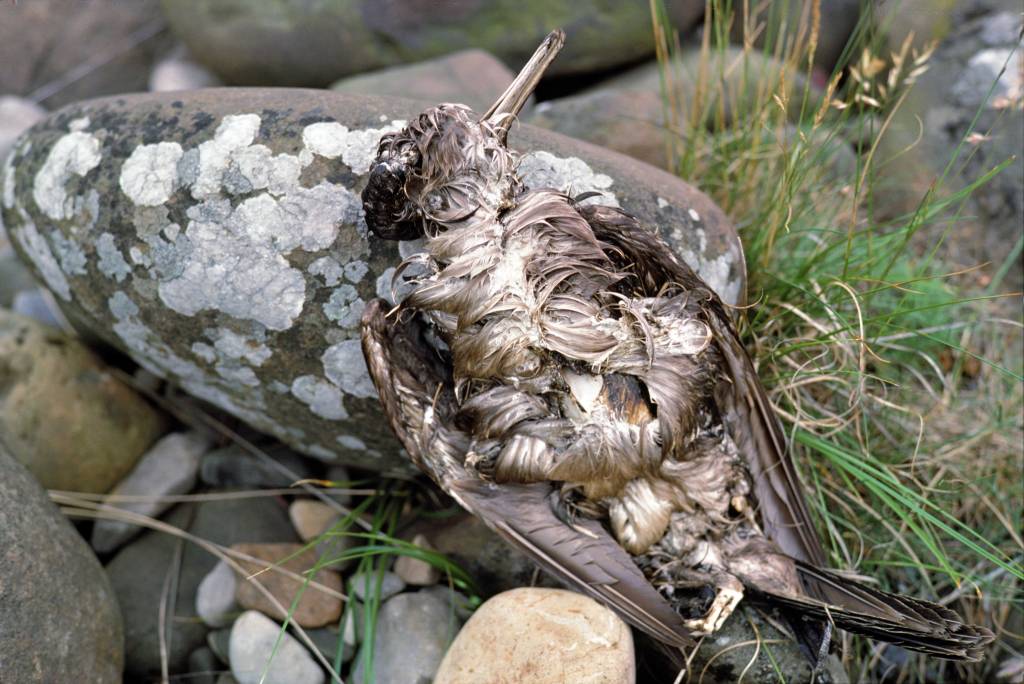
Since these photographs are four decades old, they trail behind them the shade of passing time. The living creatures that I photographed around the castle that July no longer live. The corpses have long since lost their identifiable form.
Film photography registers the physical impress of light on a surface, of photons on a chemical coating, and so has an affinity with a footprint on a beach, and a closer one (if we think of longer exposures) of skin tanned in the sun, or over the years aged by it.
However, since, photographs are images as well as impresses, and (as Jeff Wall points out in a dialogue with Craig Burnett) depiction causes things to resemble each other, analogies insistently layer the analogue.
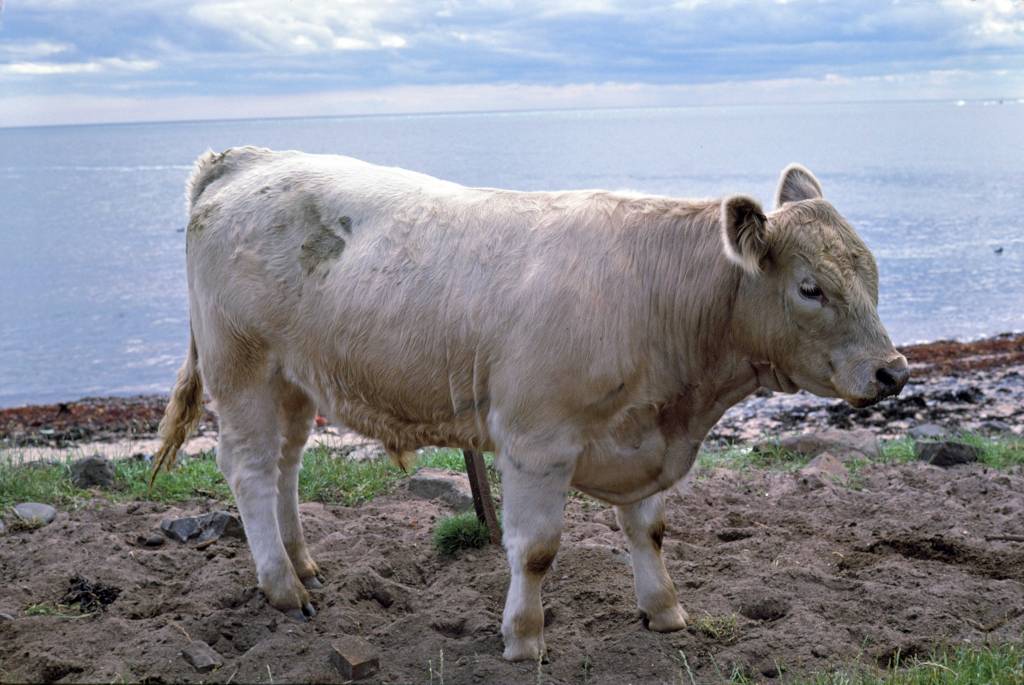
Even as I photographed this melancholic looking calf on a bare stretch of shore, its hooves partially sunk into the ground, I thought of Holman Hunt’s Biblical painting The Scapegoat, and that this animal’s sacrifice, far from being redemptive, would be made for nutrition—and money.
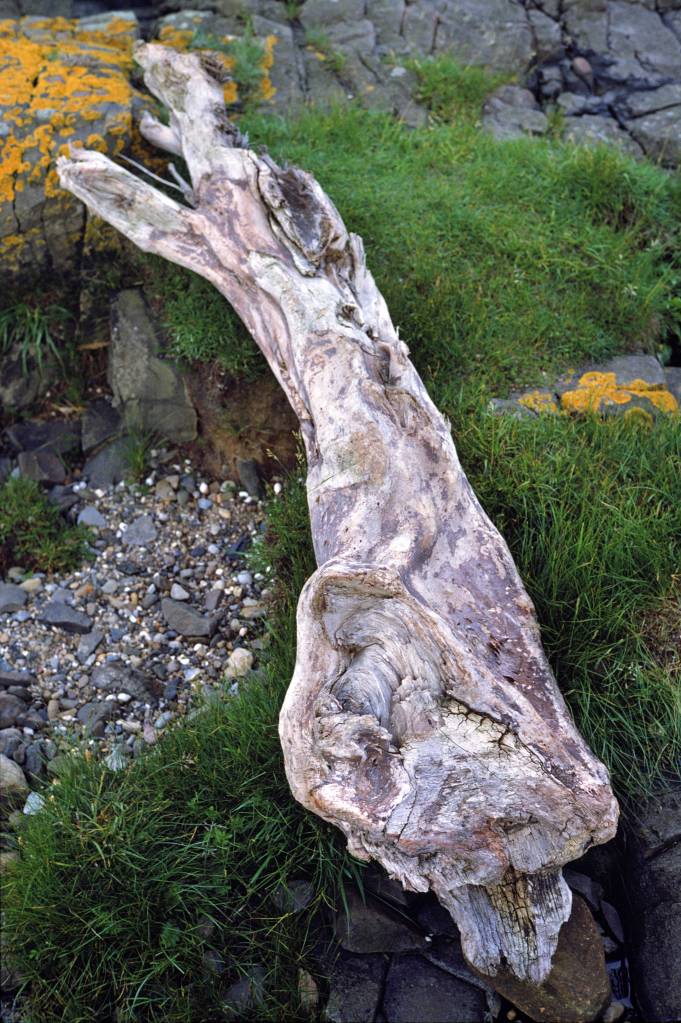
Other analogies are less resemblances to other images than to the deep structural affinities, the fractal similarities, between materials as they are formed under the pressure of physical forces, some of them natural. A bleached log, long in the sea, while it may bring to mind many modernist photographs of objects in the landscape, also appears as bone.
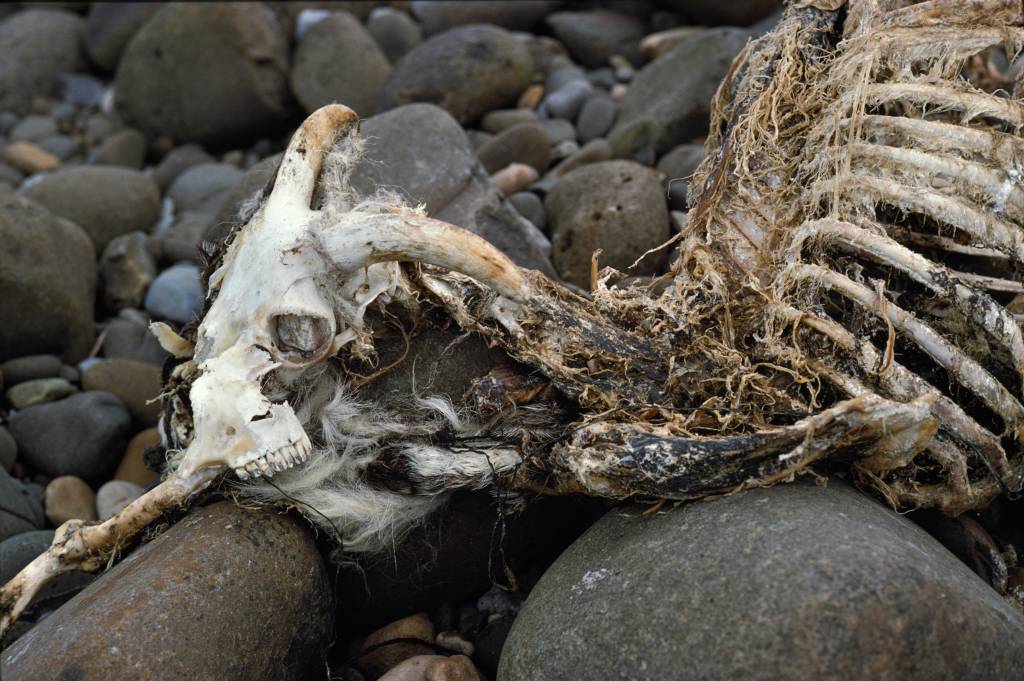
Katrina, steeped in the history of the castle and its landscape, found and had me photograph these skeletal remains. Years later in her radio poem, they became the framework for an extraordinary play of analogy:
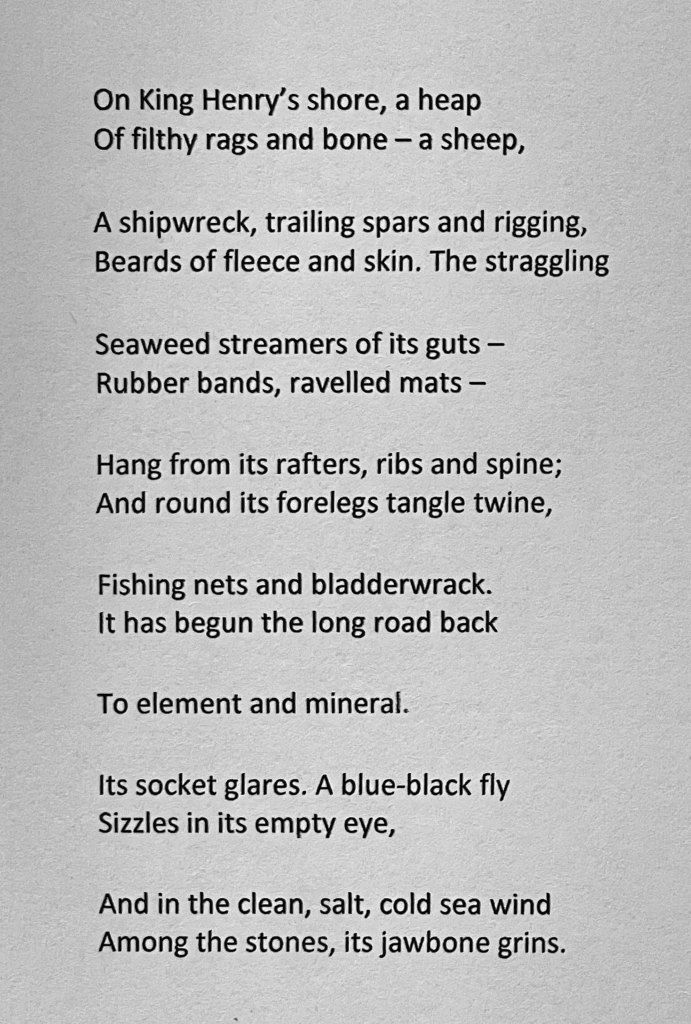
(from ‘Dunstanburgh’, in Two Countries, Bloodaxe Books 2014)
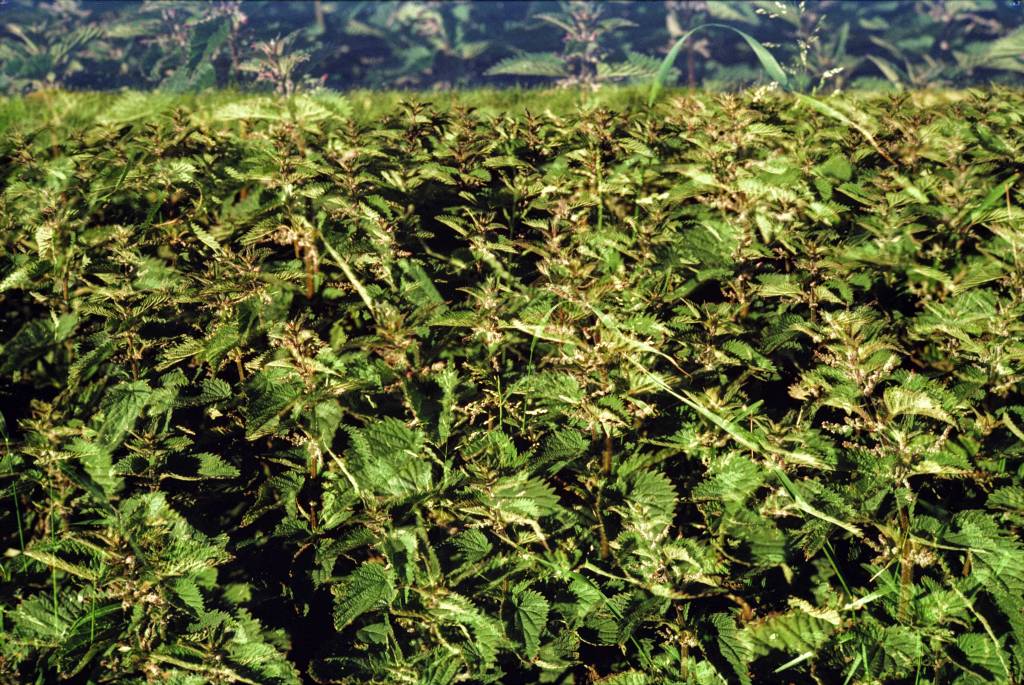
In photography, the life-giving and corrosive force of light is analogous to that dual aspect in which the still is animated and the animated stilled. The nettles, here put in motion by the wind, and partly frozen and partly blurred, are also held in the bright sun, and—in an effect I now do not fully remember or understand—appear echoed in shadow above a starkly drawn horizon.
In a foreshadowing of its role as a cue to memory, a darker analogous image was set behind the bright and immediate light that in that moment gave life to the nettles. In its binding up of analogue (an accurate ratio of object to image) and analogy, the slide held up to the light, a cue both literal and strange, reproduces the prospect once seen through the viewfinder. A light which over a short period did its part to form a mind, is seen again decades on as the slide is illuminated by a new day, but now mired and loamed in the vast succession of sights over the passing years, as light simultaneously shapes and decomposes, animates and erodes.
 Julian Stallabrass
Leave a comment