June 1985
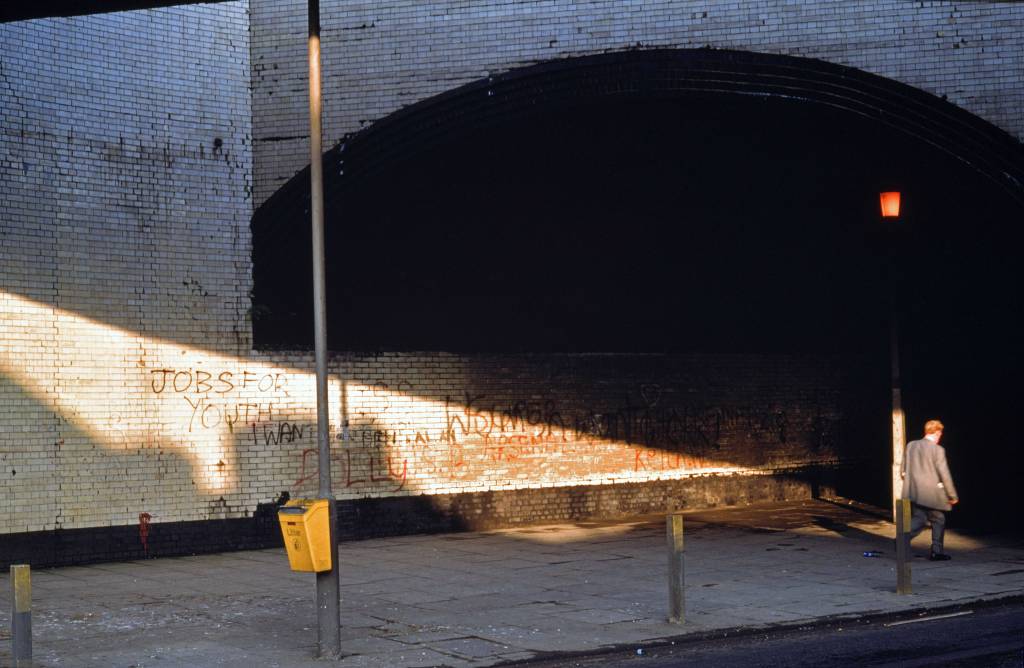
Hornsey Road, Islington, June 1985
[With exams looming, I made few photographs in June, and those, by the evidence of the slides, in a state of some distraction, so here I will look back a month to those I took near Dunstanburgh Castle.]
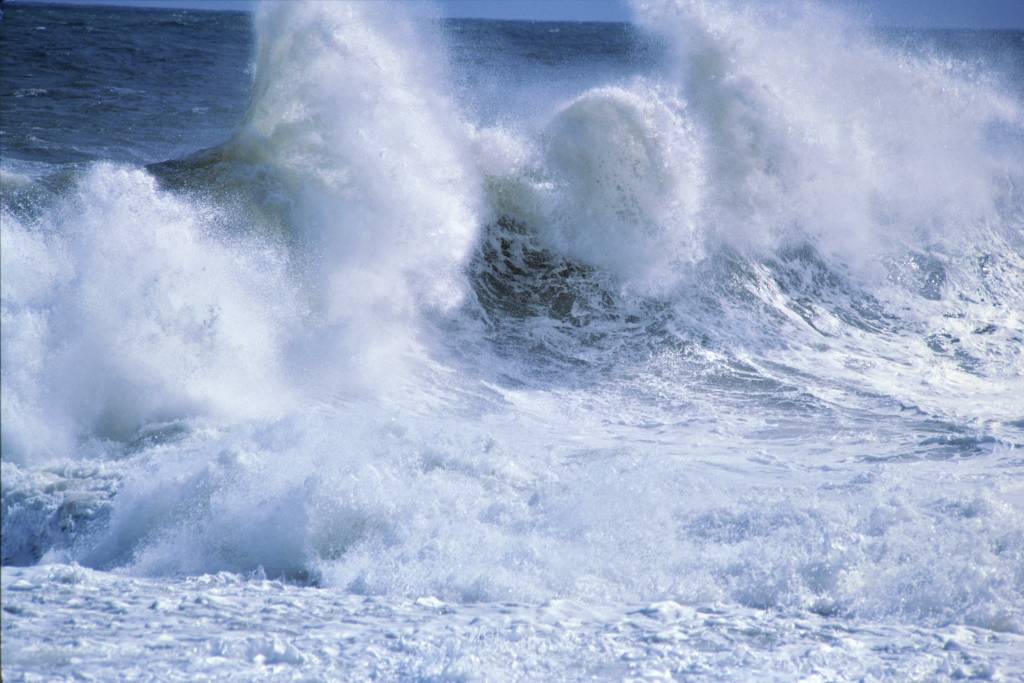
The sea was wild that late spring month, and I took photographs by standing as close to its edge as I could, on beaches or high rocks. The resulting images could be seen through a conventional Burkean idea of the sublime, in which the viewing of something dangerous from a position of comparative safety offers a feeling of ‘delightful horror’ but also a reminder of one’s place in the natural hierarchical order. Here—and I felt this at the time, awed by the sight and sound of the waves, and the buffeting of the wind, although all that had to be temporarily put aside in making calculations of framing, shutter speed and exposure—of the faint and fragile power of a scrap of flesh when set against the force of the sea.
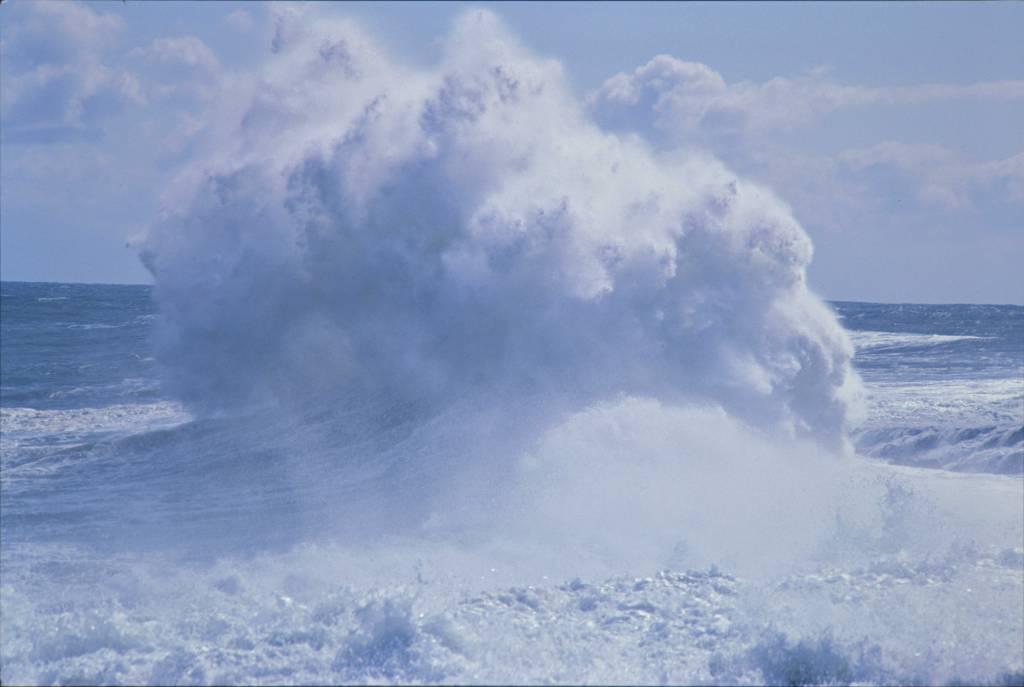
Furthermore, though not while there on the shore but only later when viewing the more or less successful attempts at confining, freezing and capturing that magnitude and dynamic flux, I may have been tempted into a false assurance on the lines of the Kantian understanding of the sublime, in the comfort that the human mind could encompass such apparently overwhelming processes.
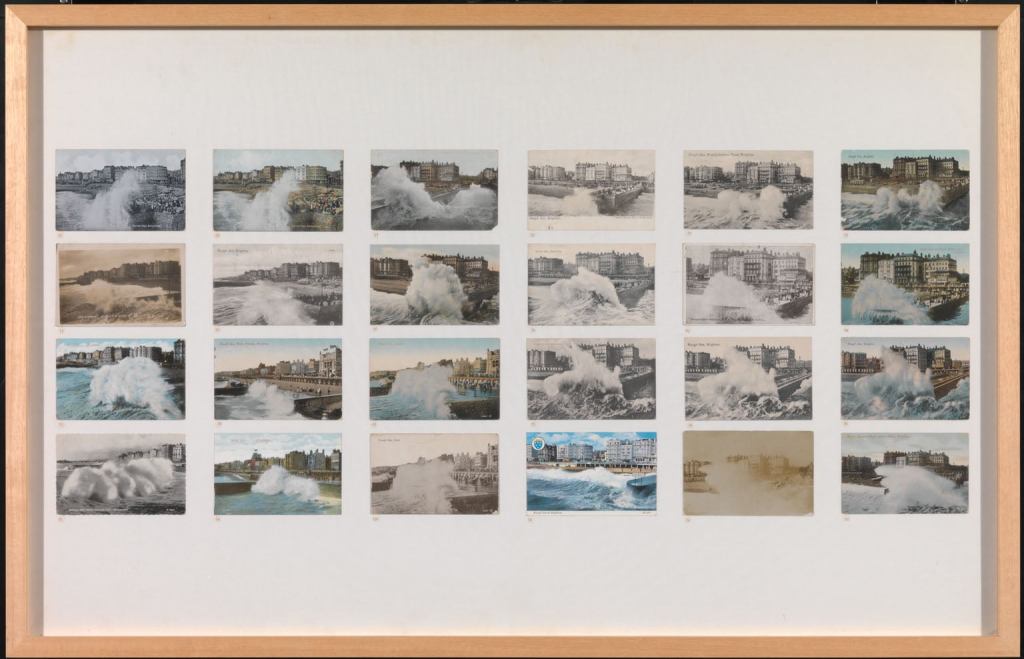
Susan Hiller, single grid from Dedicated to the Unknown Artists, 1972–6
Years later, I saw a work by Susan Hiller, hanging in a seminar room at the Courtauld Institute, in which she had arranged postcards in a grid, each with the caption ‘A Rough Sea’. Hiller, born in the US and trained in anthropology, viewed the cultural habits of the British with a detached, wry humour, and here cast her eye on the miniaturised tourist sublime. The force of the sea, already shrunken, framed and composed—and perhaps made kitsch—was further tamed by typological repetition. Yet there is a two-way process here, as indicated in Hiller’s title, in which the singular moments of photographic capture are placed in a series to highlight their uniformity, while the artistry contained in each is recognised and even elevated. The renditions and the sentiments that they are meant to arouse may be standardised and commercialised, and also point to the contemporary fading and fraying of the sublime as explored so acutely by Sianne Ngai, but they do also take artistry to make, and may have exposed their artists to risk, and may point beyond their transactional character to forces far beyond human control.
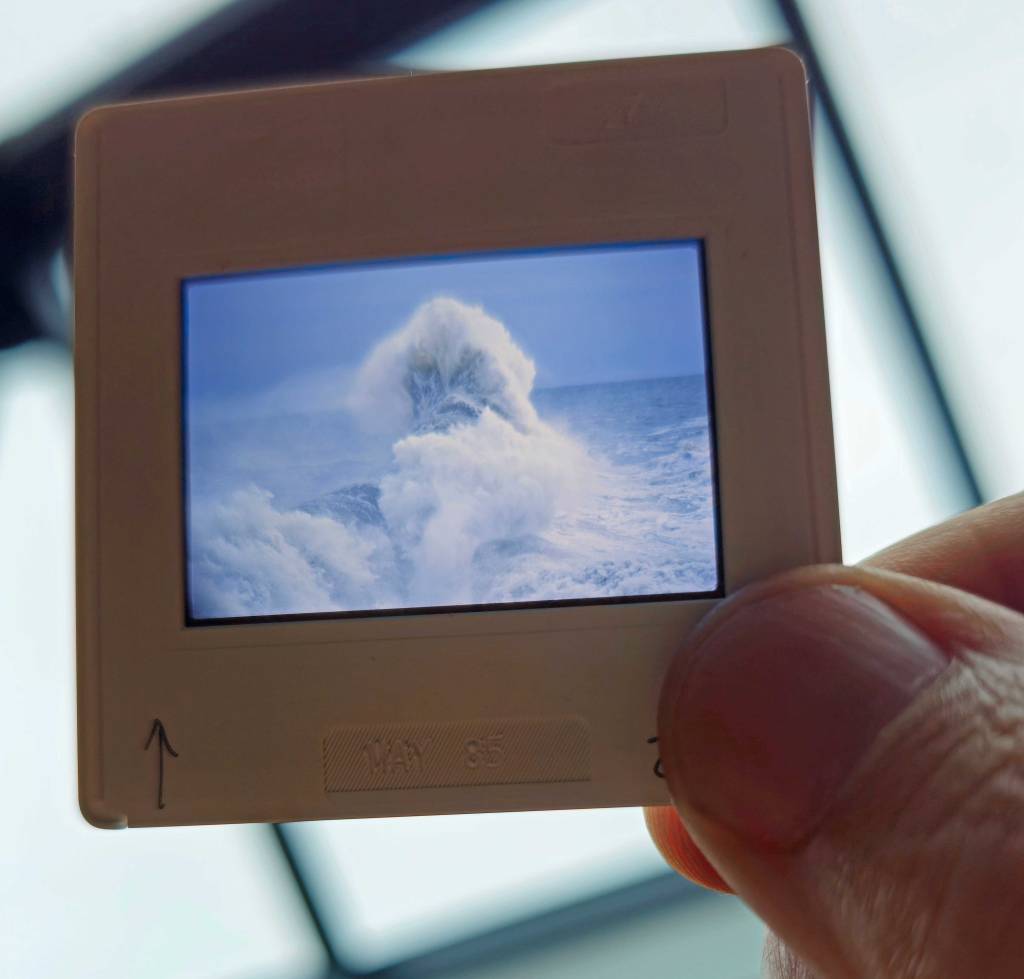
Postcards confine the sea within a small span, and the 35mm slide in even smaller dimensions, to the extent that dealing with the sublime in such a tiny format brings content and medium into a paradoxical tension.
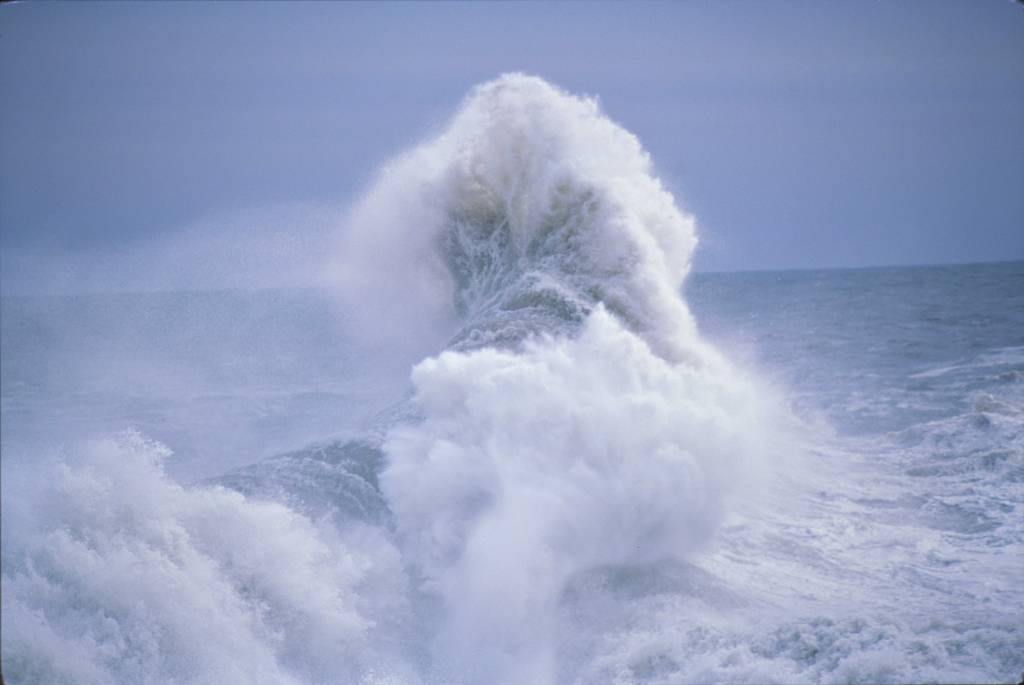
In another entry, I have written of the cost of photography, and why I almost always worked with 35mm. The positives could of course be enlarged in printing or projection (or even, at least perceptually, just by raising loupe and slide to the eye) but only to a point before resolution would dissolve in grain.
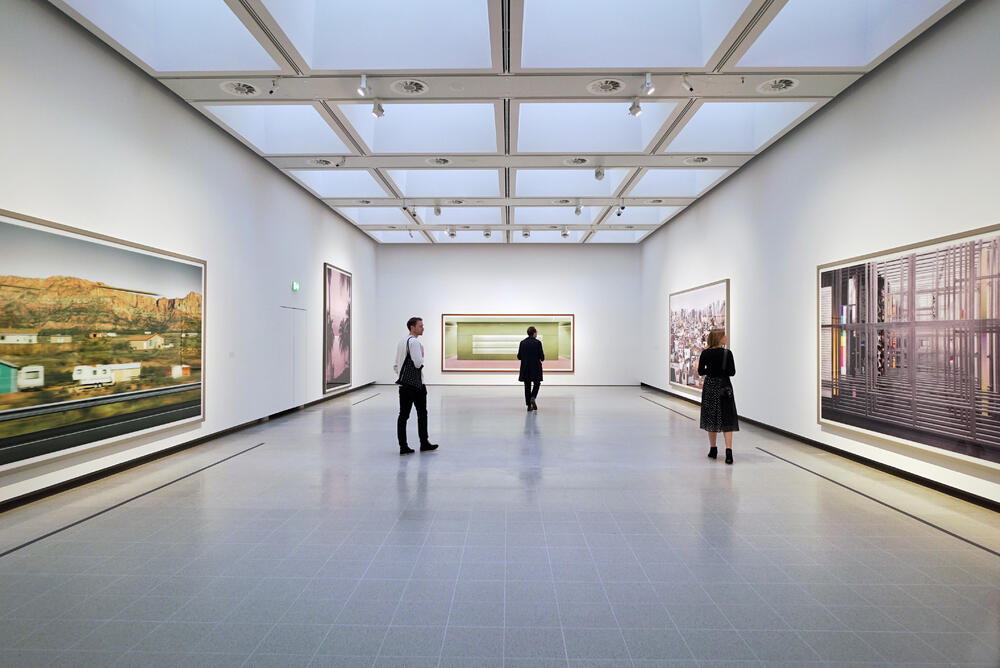
Andreas Gursky exhibition, Hayward Gallery, London, 2018
Sublime effects for the wealthy were and are writ at large scale, as much in history paintings as in the massive prints of museum photography. Following the ideology of the class that buys them, Burke is an abiding presence in them. If the sublime at small scale—in the postcard, for instance—is condemned as kitsch, this is to preserve the exclusive alignment of the sublime in art with giant proportions, grandeur and expense.
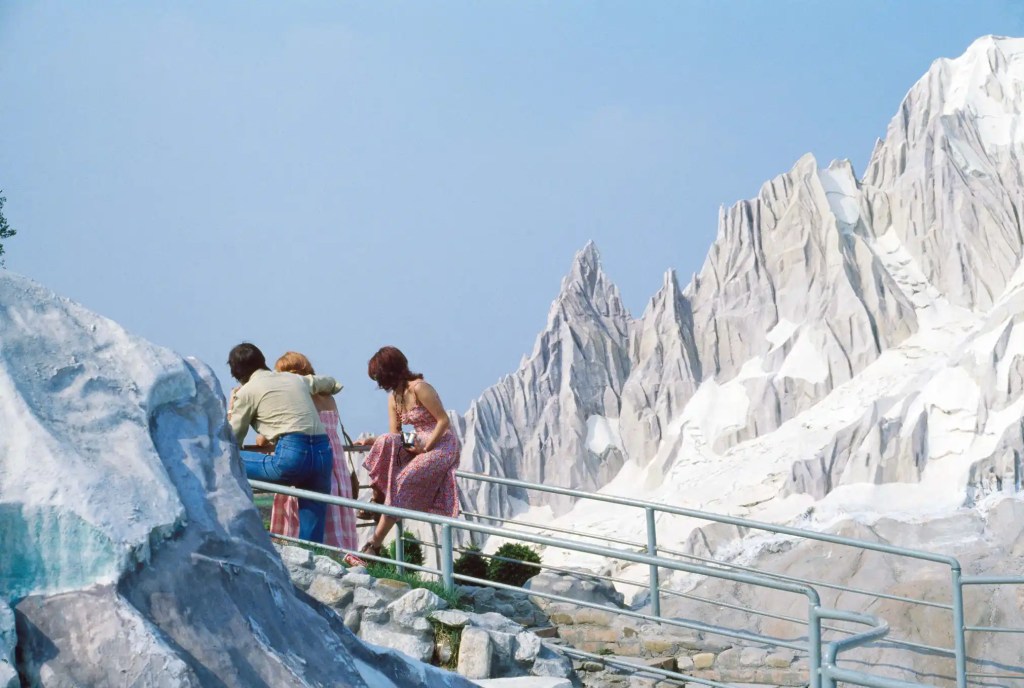
Luigi Ghirri, Rimini, 1977
Using 35mm Kodachrome, Luigi Ghirri mined the opposite effect, especially in depicting tourist scenes which included postcard racks and miniature dioramas of grandiose spectacles. Here is a shrunken sublime that Ngai would recognise. The photographs were printed to modest dimensions, respecting both the medium and the viewer, who was not expected to be over-awed.
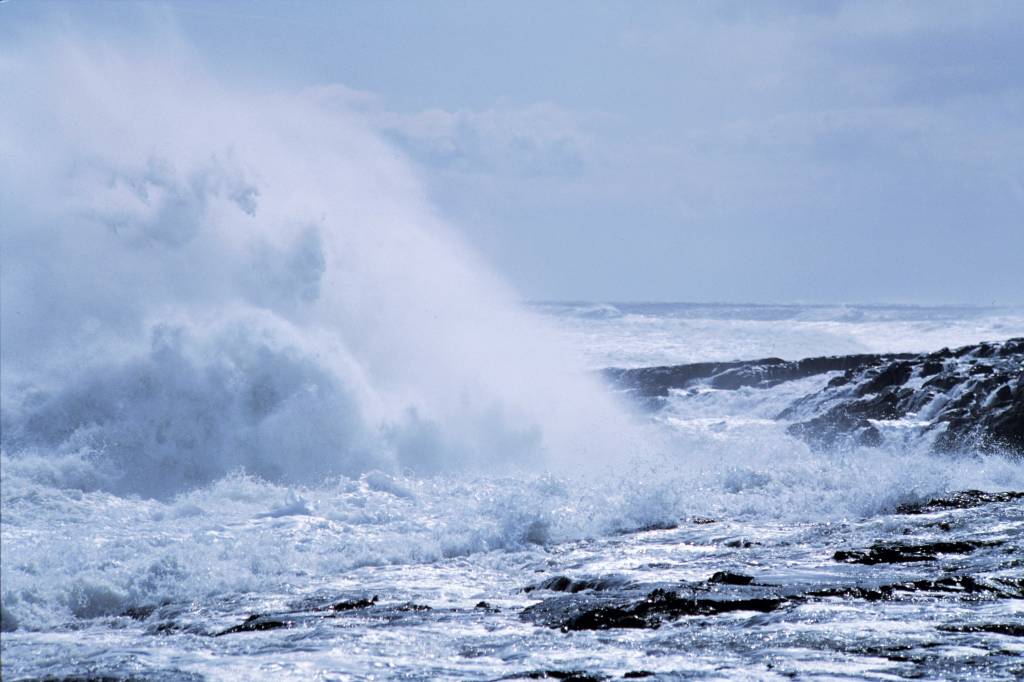
Such work points to the qualities of the sublime in miniature as it risks being condemned as kitsch, and condescended to as simple, conventional and sentimental. Slides of rough seas may be thought of as individualised miniatures, D-I-Y postcards. They cannot escape the endless commercial exploitation of the sublime, and its continual lapsing into a tame uniformity. Yet, unlike the gigantic art made for the billionaire class, perhaps they have no pretence to do so. Also, perhaps, in their small scale, they point to the delusions of natural hierarchy, and of control over the catastrophic forces that the elite have summoned.
 Julian Stallabrass
Leave a comment