May 1985
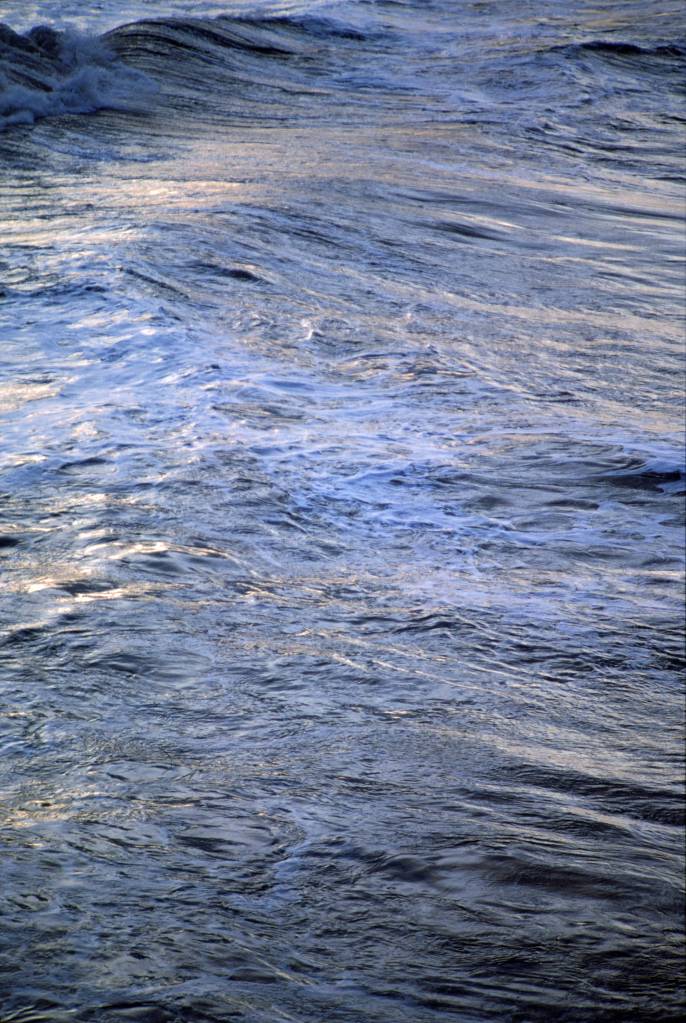
Returning to the Northumberland coast to photograph Dunstanburgh Castle for Katrina Porteous , we would be out from frosty early morning until after dusk in that wild May of sunshine, high winds and tempestuous seas. On the day I took these photographs, when evening came on, the wind dropped.
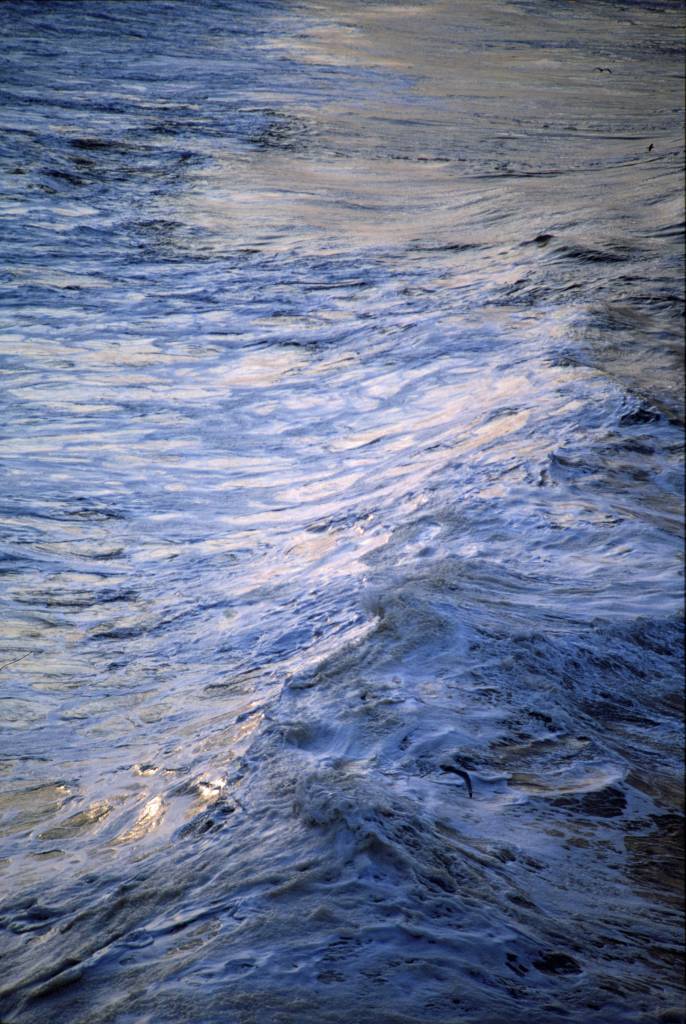
As the sun lowered, the warming colours of the sky were cast upon the water, and gulls flew low over the waves, while camera and film fixed the ever-shifting sea.
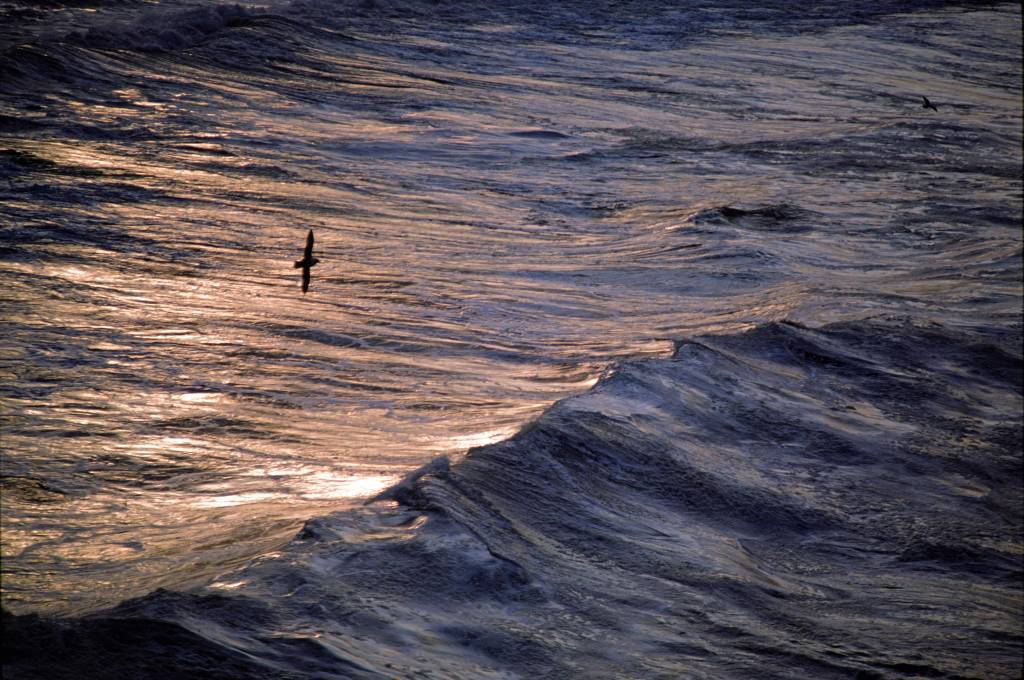
Back then, light meters would record an average reading from the scene, no matter how light or dark the subject was, turning snow and the night sky to an even grey. So photographers would have to gauge the tonality of the subject, and compensate by turning a dial to alter the exposure. Here, as the light faded, I dialled the exposure down in small steps, in what was both an informed guess and an aesthetic decision about how the scene should look.
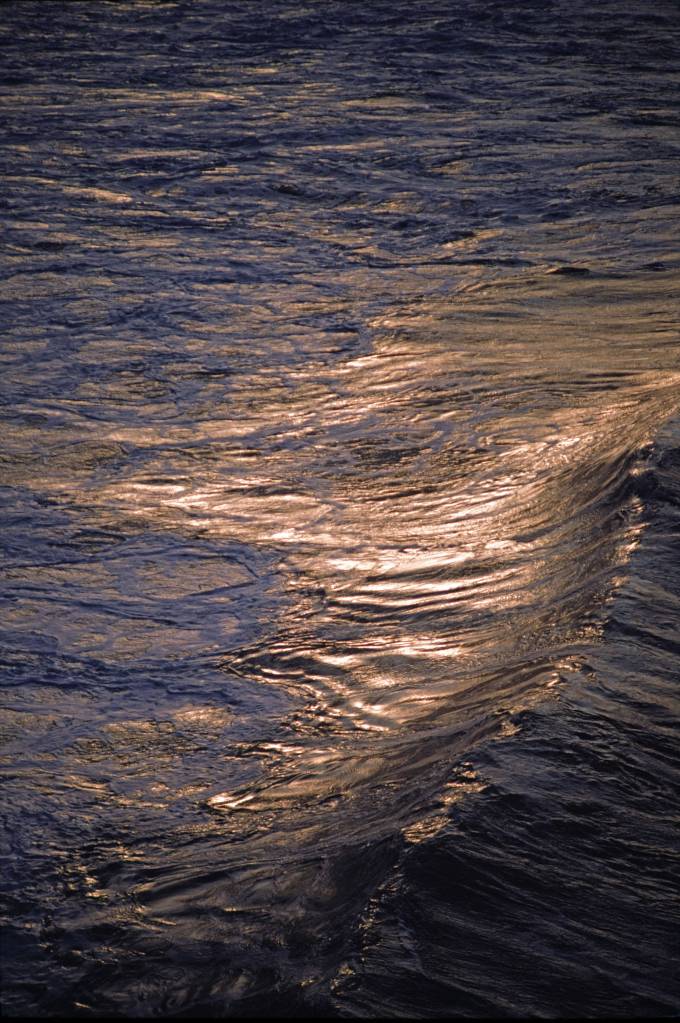
The light dies, like memory fading. I have mental half-images of Katrina and I walking back the mile or so from castle to village long after the sun had set, and seeing these photographs has brought them to mind for the first time in many years. Memories prompted by photography, yes, but also constructed, as all recall does as it works on memory, and the mind tries to build a cogent narrative and a cogent sense of self from the scattered reflections. The photographs, kept in the dark, retain their sharpness and saturation, unlike mental imagery, yet the process of recall and fabrication seems akin to the play of twilight colours frozen on the water.


 Julian Stallabrass
Leave a comment