February 1985
[This entry and the next two will be shorter than usual, as I complete the writing for my book, Art in the Age of Populism]
Studying modernism at the Courtauld, then situated in a Robert Adam house near Marble Arch, while living in a room not far from the Arsenal Stadium, and after paying rent eking out what was left, life was split between exposure to a range of artistic ideals, and photographic wanderings through the less salubrious parts of London. Where might those parallel worlds meet?
Travelling to Paris on the over-night ferry, the cheapest way to go, and a way to save on a night’s accommodation, I sometimes viewed art in a bleary-eyed or even semi-oneiric state. On one trip to the Pompidou Centre, dream fragments repeatedly interspersed themselves with what I was seeing until, as full sleep took hold, I felt my legs give way.
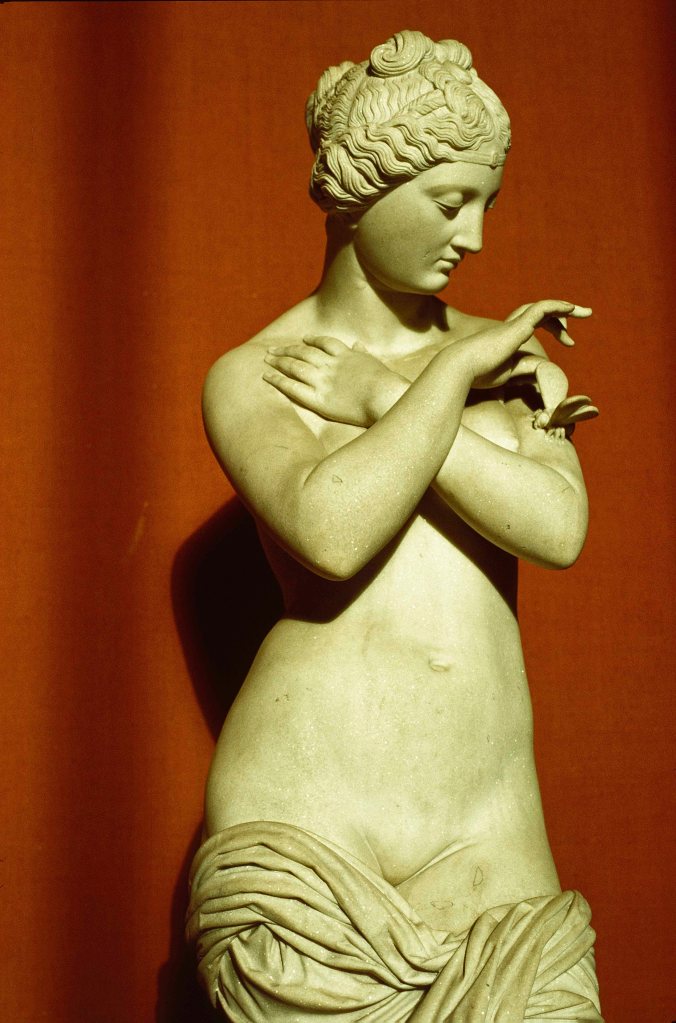
James Pradier, Psyche, 1824, Louvre
Here, James Pradier, a sculptor known for pushing the symbiosis of classicism and eroticism to a controversial extreme, shows Psyche, image of the soul, and embattled victim of the jealous gods. This sculpture was then seen against a deep red, and was struck by direct sun, so that my sleep-deprived state met both the chromatic richness of Kodachrome, and a curatorial decision to emphasise the sensual features of the sculpture against the red, letting the marble softly sparkle in strong light.
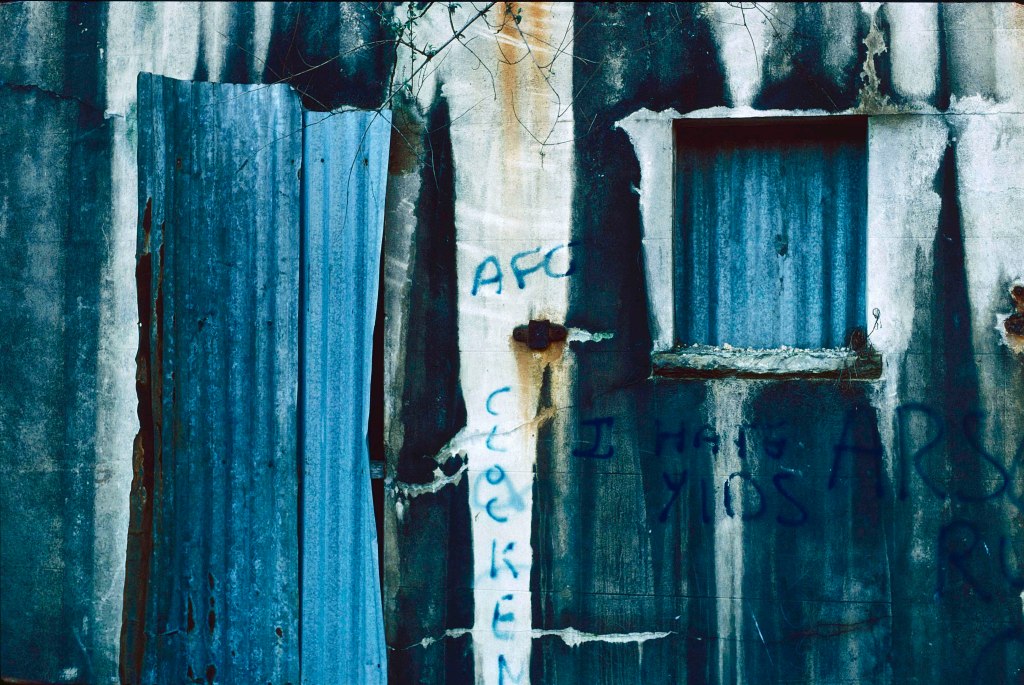
Mitchell Street, Finsbury
In contrast, London offered, as on the barricaded walls of this old church, obstruction, the stains of damp and rust, and messages of tribal fandom and hate. London, I wrote to a friend at this time, ‘is a dark, damp, seething, dangerous mass’.
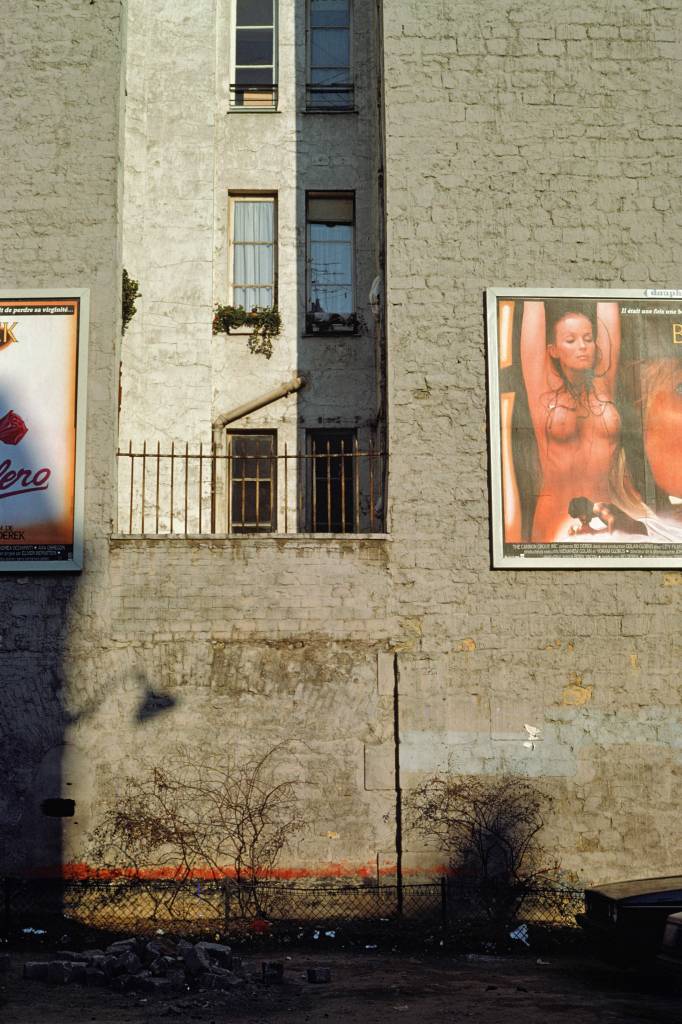
Near the Pompidou Centre, Paris
Near the Pompidou Centre, on the back wall of a block of flats, the two had a meeting point in the appearance of posters for the Bo Derek film Bolero—notorious for the cheesy exploitation of the body of its star. Beyond the contrast between a commercial ideal—the super-rich at lubricious play—and the dowdy, trash-strewn circumstances of its display, an element of Surrealism appears with the matching angles of the drainpipe and the shadow of a lamp, and in the hairy bushes below the poster, which are a simile for what the poster coyly masks.
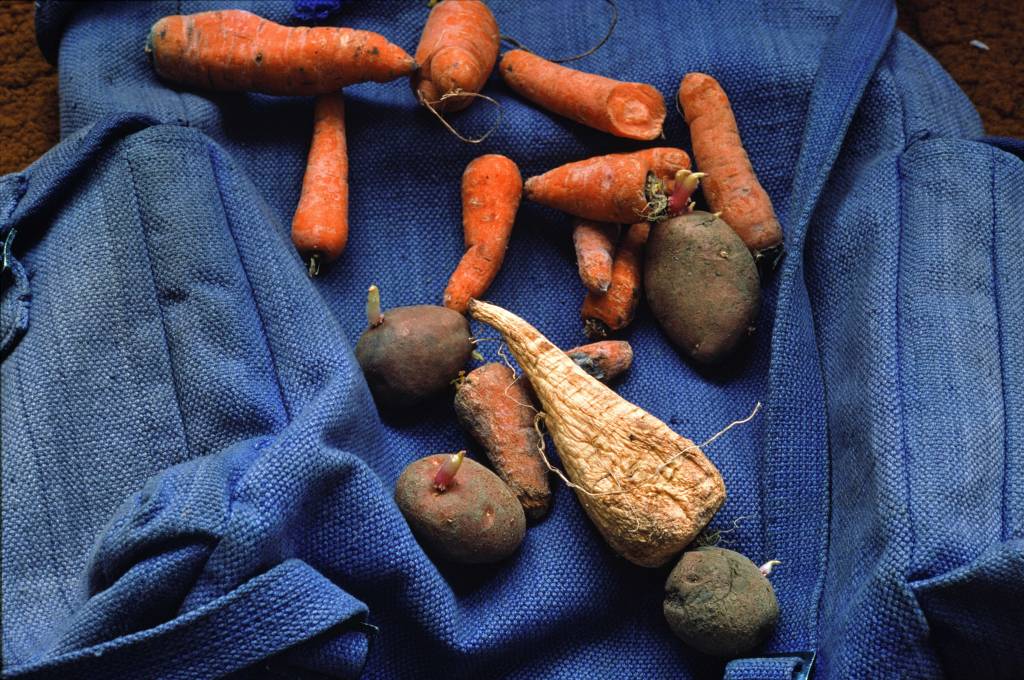
And again, back in London, with more than a dash of Surrealism, sprouting root vegetables are laid on an old haversack. The city was not so much a repository of the marvellous—as Paris was for its surrealist-influenced photographers—as of a rotting and even abject poverty and threat.
I remember talking with Hal Foster, years later, who brought up the repressed character of English sexual life when seen from the US, as if (as I remarked) there was no middle ground between the Carry On films and The Remains of the Day. More accurate, I thought, was Austin Powers’ pointed encapsulation of arousal as set in a shabby, banal environment: ‘me spuds are boiling’.
 Julian Stallabrass
Leave a comment