December 1984
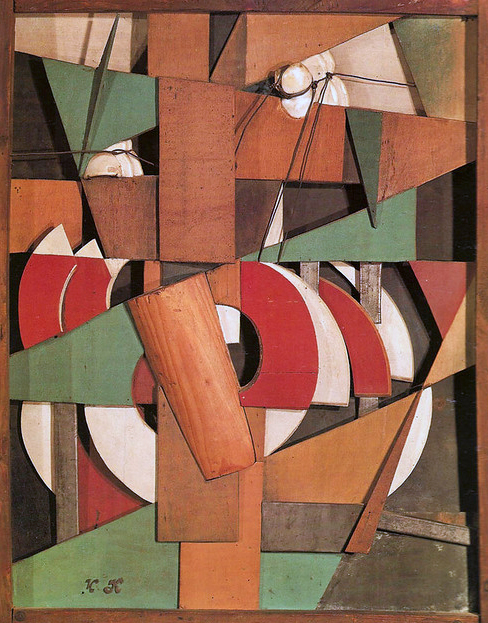
Ivan Kliun, Landscape Rushing By, 1914-15
As I started to study art history, I took photographs of pictures—in galleries when it was allowed, or from books. Since I had only one camera body, and as it was difficult to change film mid-way through a roll, these photographs became interspersed with my own. So, among the photographs I had taken in Islington or Camden Market that month, there appear images copied from the pages of a Royal Academy catalogue of the Costakis collection, Russian Avant-Garde. (I took them to illustrate a class talk, because the college slide library was weak in this area).
In the 1950s, when that avant garde had long been suppressed, and was barely remembered in mainstream Soviet culture, a remarkable collector and dealer, George Costakis, had become obsessed with gathering and salvaging its best works. He came to amass thousands of them, so when the Royal Academy exhibited his collection in 1981, it came as a revelation of the extraordinarily rich and diverse forms that radical art could take. A few of the most prominent figures were known about from the scant literature on the subject, but here a fascinating array of equally significant artists—among them, Klucis, Popova and Stepanova—stepped out of the historical shadows. As the introduction to the catalogue put it: ‘The avant-grade as a group were profoundly revolutionary, viscerally committed to overturning the entire cultural legacy of the past.’[1] For some of us, in the midst of the Thatcherite morass—which was not just an economic and political pall, over which narrow, stentorian voices urged order and submission, but also an attempt to impose intellectual uniformity and a Gradgrindian culture—this radical era and its art seemed both extremely remote and potentially liberating.
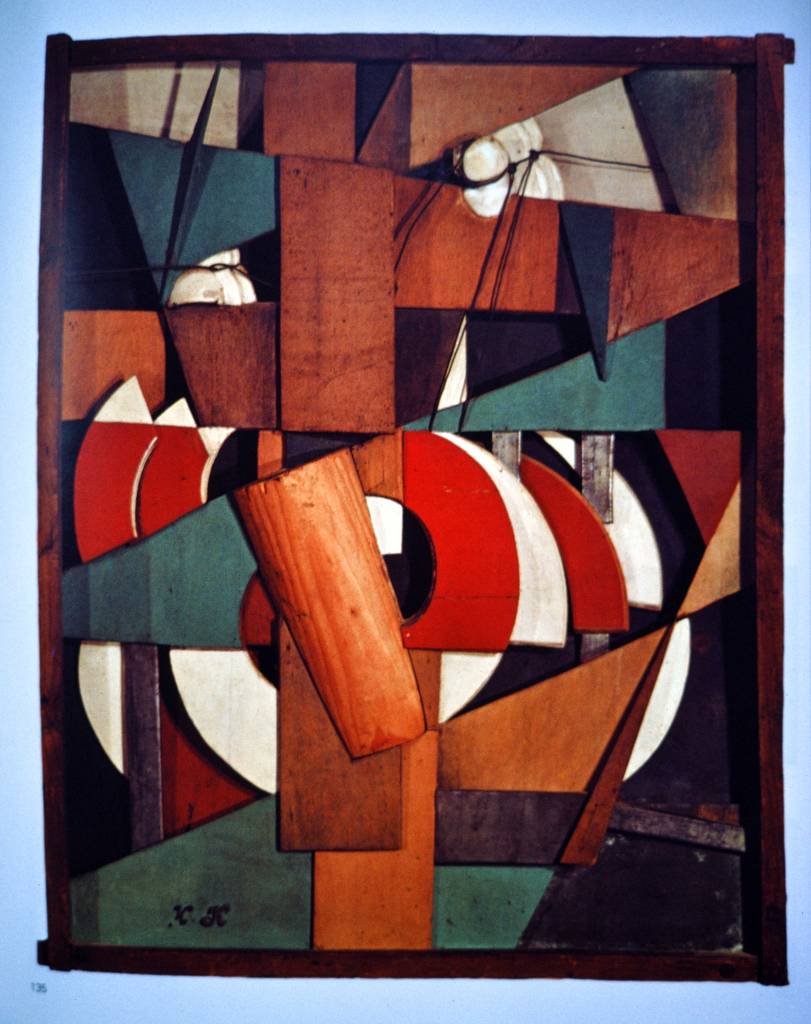
Among these illustrations that I remember photographing on Kodachrome 25 by a window that let in dull December daylight, is this construction by Ivan Kliun, Landscape Rushing By. In a composition that fuses Cubism and Futurism, Kliun uses wooden pieces alongside porcelain and wire fragments taken from telegraph poles. The subject—the landscape seen at speed, from a train or car—was typical of Futurism. In Russia (as in Italy) where modern industry had a weak and highly localised hold, such a celebration of the perceptual novelties of speed seemed to offer radical possibilities. It would have had, for some viewers at least, a neophiliac allure in that massive, backwards nation which had been driven by its Tsarist masters into the modern world (at least in discrete areas of a few major cities), and then forced into a catastrophic modern war. Wood is used for telegraph poles, sure, but here the way in which that ancient material has been cut up into geometric elements, suggests the discomposing and recomposing of the landscape into a new and as yet unknowable order. At that moment—and into the early Soviet period with its propaganda trains and free pleasure flights given to incredulous peasants—such experiences were seen as incubators of transformative ways of perceiving the world. Wyndham Lewis’ jibe at the Futurists’ childish excitement over mechanical inventions (above all, the automobile) comes to mind: ‘[…] England practically invented this civilization that Signor Marinetti has come to preach to us about. While Italy was still a Borgia-haunted swamp of intrigue, England was buckling on the brilliant and electric armour of the modern world […].’[2]
From the London of the 1980s, though, in which modernity, long exhausted, appeared to go into reactionary reverse as the infrastructure crumbled, and as poverty denied so many people even long-established technological conveniences (telephones, central heating, washing machines), brilliant armour was in short supply. Where was the romance of the automobile, now the product of a resistant, stagnant and monopolistic industry? Sunk in the actuality of sluggish or stuttering traffic flows, the depressing drone and growl of engines heard en masse, and the dense, poisoned air.
Even so, there was something in that Kluin construction and others like it that struck a chord: taking elements from the real world and arranging them to make a formal sense that was also a social one.
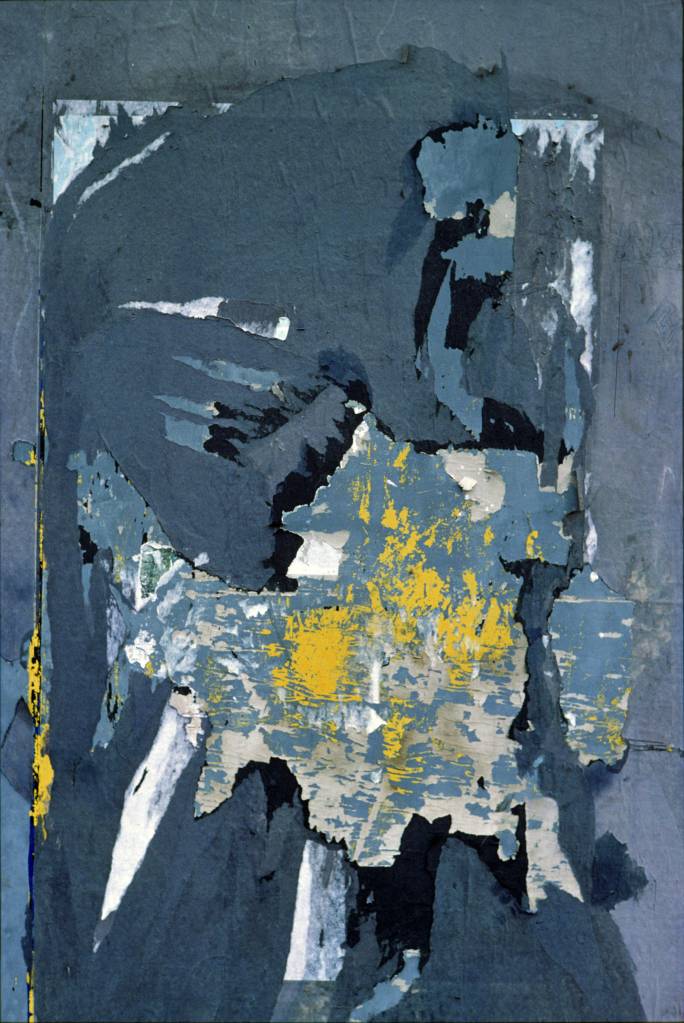
Drayton Park Station, Islington
Why, I remember thinking, shouldn’t photography do something similar, arranging the light traces of actual elements within the bounds of the image, without interference with the elements themselves, to bring into alignment a formal and social sense? And, more literally, to search for some utopian abstraction, inadvertently created by the ‘invisible hand’ in the mid-winter landscape of Thatcherite London. Despite the deep-seated hatred that the regime had stimulated in many—even most—of its citizens, that hatred knew of its powerlessness, and revolutionary possibilities seemed vastly remote. To search out avant-garde analogues, then, was an ironic practice that set the abstract forces of capital—depersonalising, governing, inhuman, relentless—alongside the utopian abstraction of its one-time enemies. It was also to imply that there could come a time when the one would once again produce the other.
[1] S. Frederick Starr, ‘Introduction’, in Angelica Zander Rudenstine, ed., Russian Avant-Garde: The George Costakis Collection, Thames and Hudson, London 1981, p. 20. The ‘Russian’ of the title is used an imperial sense, taking in the different Tsarist and then Soviet incorporation of many cultures and languages. When he left the Soviet Union, Costakis was obliged to give much of his collection to the state (the Kliun is now held by the Tretyakov Gallery). The rest can be seen in the MOMus Costakis Collection in Thessaloniki.
[2] ‘Automobilism’ (1914), in Wyndham Lewis, Creatures of Habit and Creatures of Change: Essays on Art, Literature and Society, 1914-1956, Paul Edwards, ed., Santa Rosa, Black Sparrow Press 1989 p. 33.


 Julian Stallabrass
Leave a comment