October 1984

Spider monkeys, London Zoo
Looking back on the slides taken in this month, although they depict quite different places, there appear at regular intervals images of grids, cages and barriers. In each, I have tried to align the geometry of the subject with that of the photographic frame.
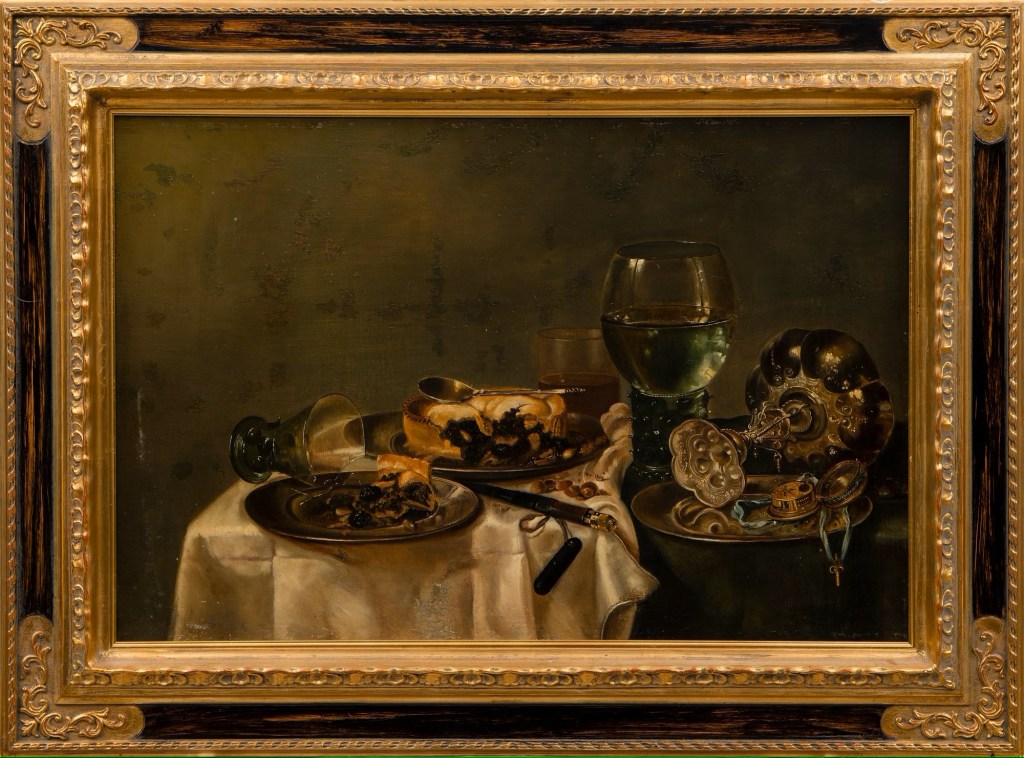
Willem Claesz Heda, still life, 1631
As we have touched on before, in a well-known analogy, John Berger compared paintings to wall safes so that, for instance, in a still-life displaying luxurious foods on fine dishes, the frame becomes a demarcation of exclusive property, and the pictorial space is implicitly bound with iron. The painting, which is an asset itself, makes palpable and permanent the luxurious living that assets afford.
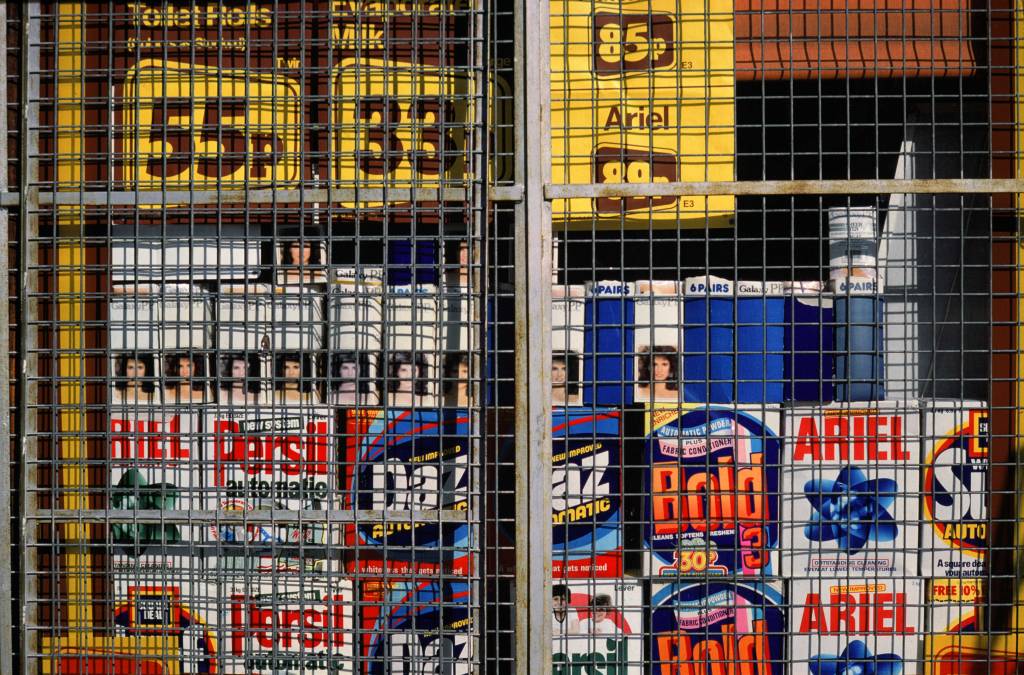
Woodberry Down Road, Hackney
What is seen in many paintings is also seen, over and again, in the street as the grid appears in turn as barrier, cage, the marker of property boundaries, and the geometric sign of regulation. That imposition and repetition of the grid, which casts a pall over the life that it seeks to control, is the visual embodiment of what Max Weber described as the ‘iron cage’ of the modern economic order (at least in Talcott Parsons’s translation, which made the phrase famous). As it is pressed down upon everyone, some—naturally enough—kick back.
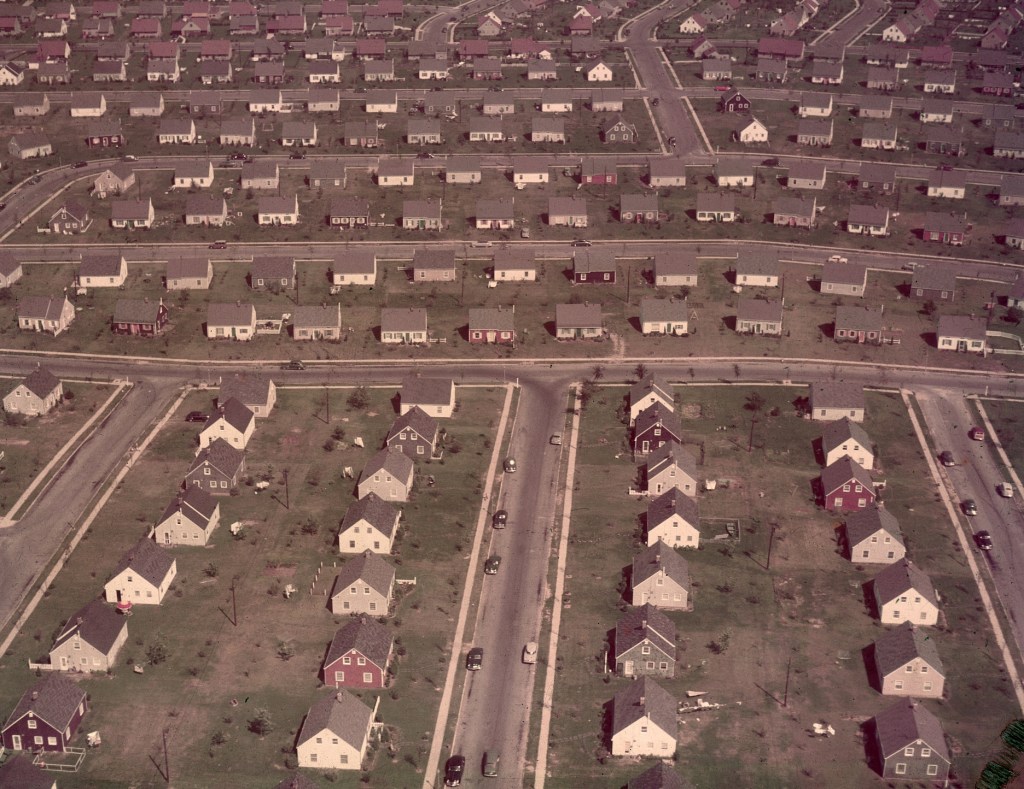
Tract housing, Levittown, NY
Walter Benjamin developed the notion of aura to describe the way in which certain incidents and memories were inextricably bound to a particular time and place. In this ‘strange tissue’, episodic memory (say, of an image) and source memory (how and when we first saw it) are fused, casting a unique aura around those experiences in which they have become inseparable.[1] Photography weakened aura with mechanical reproduction—for instance, by throwing up the same advertisement that we see over and over again at different times and places, vitiating unique experience with uniformity. And that reproduction is merely part of a much more general effect in which the mass production of standardised objects—from tract housing to clothing to detergents—continually corrode auratic experience.
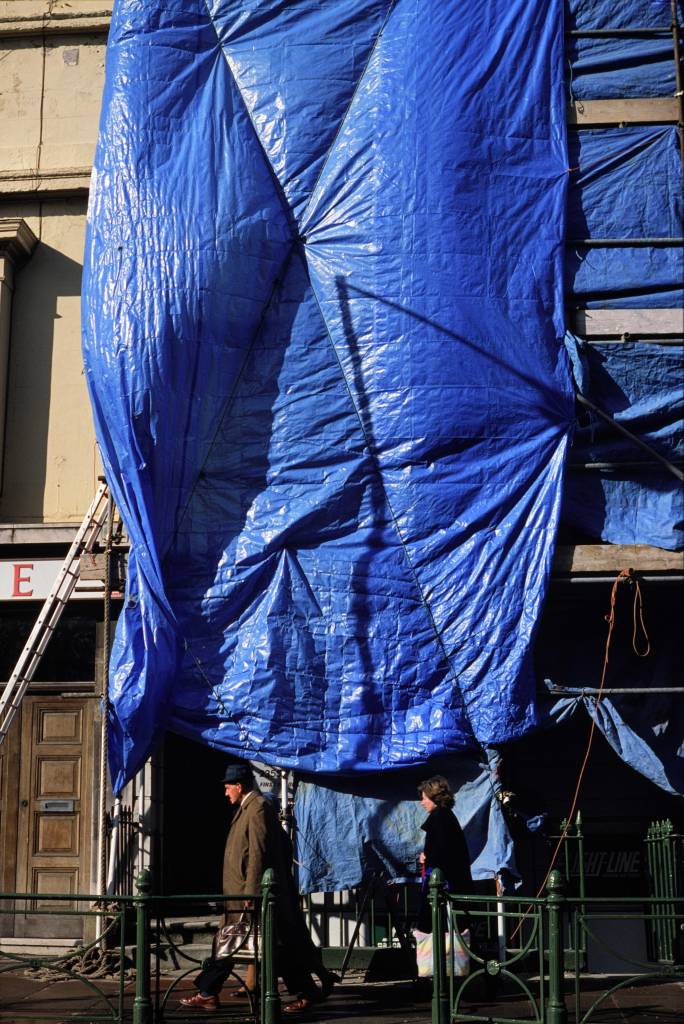
Queen’s Road, Brighton
The effect is inescapable and, I have to admit, when looking back upon these images, that mechanical reproduction has done its work, and that episodic memory, as cued by the slides, and source memory have mostly fallen apart, leaving these visual scraps mnemonically adrift.

Near the railway station, Reading
Photography’s role in the reproduction of commercial propaganda and keepsakes alike is connected with the confining social geometry of the grid, with which its rectangular frame has a close affinity. In framing, the photographer is aided by the geometric divisions of the constructed world as they mark out the boundaries of property and propriety.
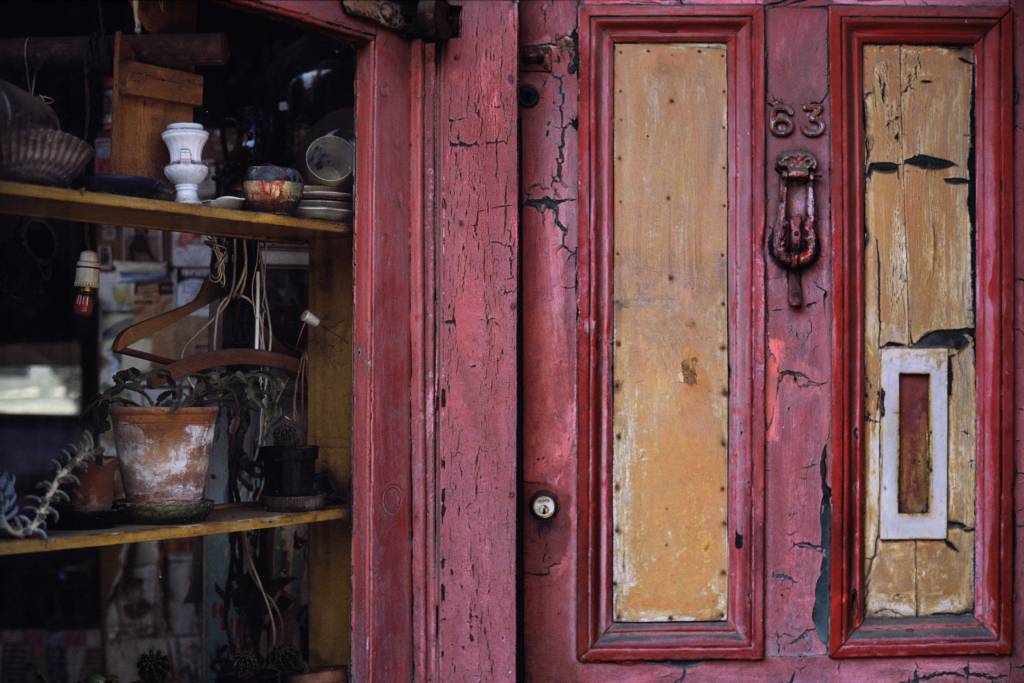
Hornsey Road, Highbury
Why did I make the effort to bring the photographic frame and the subject’s geometry into congruence? Using a 35mm SLR, I could not always do so perfectly, but I often tried.
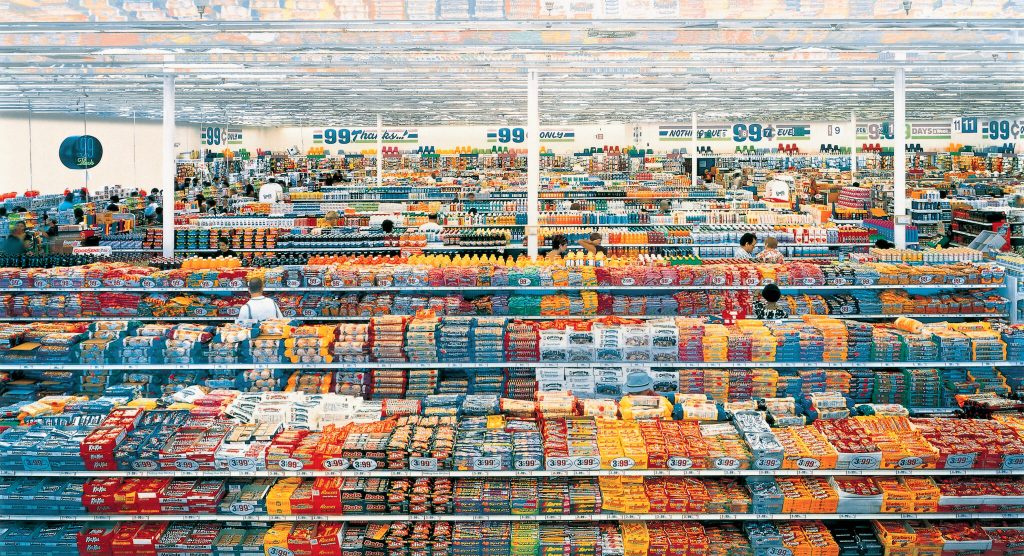
Andreas Gursky, 99 Cent, 1999
And why is it such a common technique in photography bound for the museum, in huge prints made with view cameras so that the position of the lens can be adjusted to make that alignment absolutely precise (and, when needed, may be augmented digitally)?
After all, many photographers work against that congruence. Think, for example, of Laura Grace Ford, whose attraction to the disorder of the urban environment, against the authorities’ concerted efforts to regulate it, is reflected in her pictorial style.
For me, it was partly the seduction of the apparatus itself, of the precision of Zeiss allied with Contax, which seemed, as the camera was handled, to demand a like precision from its user. It was also an attempt to let photography be transparent, so that it did not disrupt the subject with misalignment, allowing it to speak clearly in all its contingency.
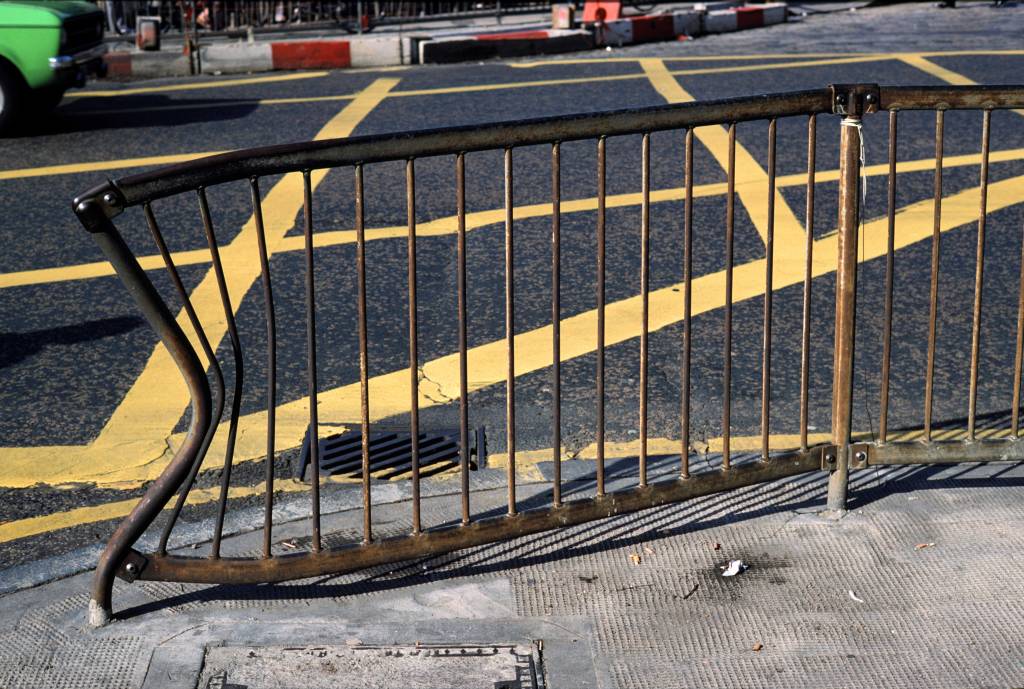
Seven Sisters Road, Finsbury Park
I was attracted to colour photography because it was such a prominent language of commerce, advertising and state regulation, and I sought to use its means to describe what they did to the environment. All those constant impositions of order and regulation—intrinsically ugly and alienating—were just as constantly met with accidents, with unintended clashes between the efforts of different regulators and propagandists, and a myriad of alienated acts of rule-breaking—graffiti, littering, vandalism, trespass and theft. The precise alignment of the subject with the frame was one way to cast mockery on the results.
[1] Walter Benjamin, ‘The Work of Art in the Age of its Technological Reproducibility’, in Selected Writings. Volume 3. 1935-1938, Howard Eiland/ Michael W. Jenning, eds., The Belknap Press of Harvard University Press, Cambridge, Mass. 2002, pp. 104-5.


 Julian Stallabrass
Leave a comment