September 1984
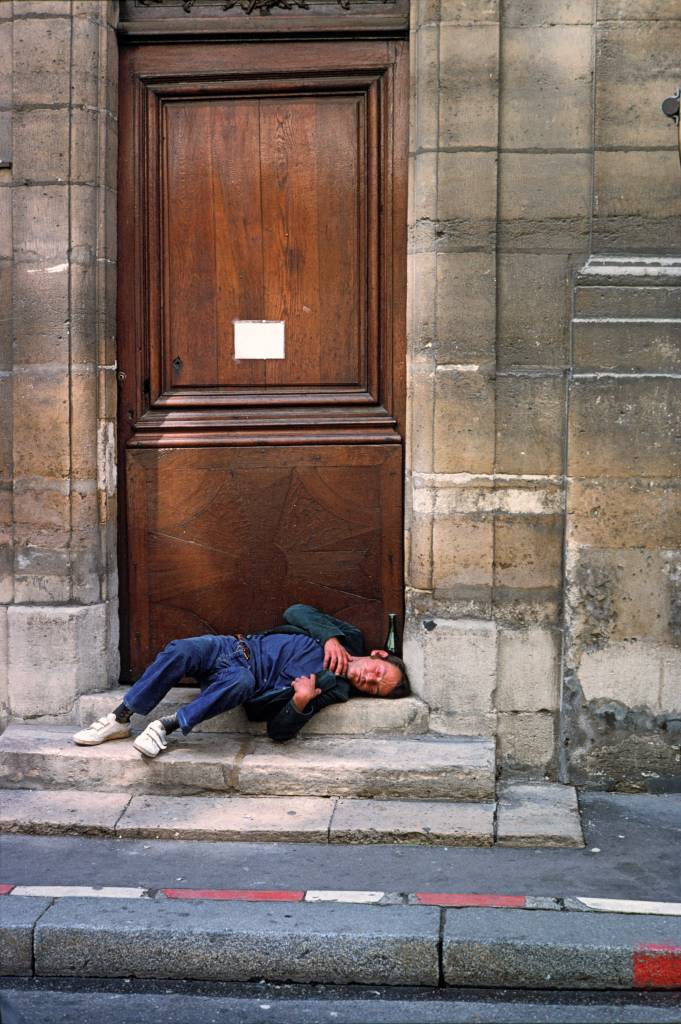
Rue St Louis en l’Île
The renowned photojournalist Philip Jones Griffiths was fond of jokes, and he once told me this one: two photographers are talking:
‘I saw a wretched-looking tramp in the street yesterday.’
‘Oh really, what did you give him?’
‘1/125th of a second at f8.’
It gets, of course, at the sometimes grubby ethics of street photography. Hopefully apocryphal stories circulated in the US after the war of scrappy image-hunters who would stick a needle into babies to get a more dramatic picture.
Ethics was one stumbling block to my tentative steps towards taking photographs of strangers—how to do so unobtrusively and sympathetically? Extreme shyness was another. Yet it also seemed to me—even then, with my scant knowledge of the history of street photography and documentary—that one set of ethics could be set against another. Especially so in Paris, the city which had helped to form documentary and which had in turn partially formed it, through the work of Brassaï, Cartier-Bresson, Robert Doisneau, Willy Ronis, Sabine Weiss and many others. Such images had for a number of decades celebrated and defended the lively and richly varied social life of the place against the elites, whose eyes were turned only on the value of property. This image of a rough sleeper in an old doorway in the very wealthy area of the Île St Louis, was taken under the sway of that ethos.
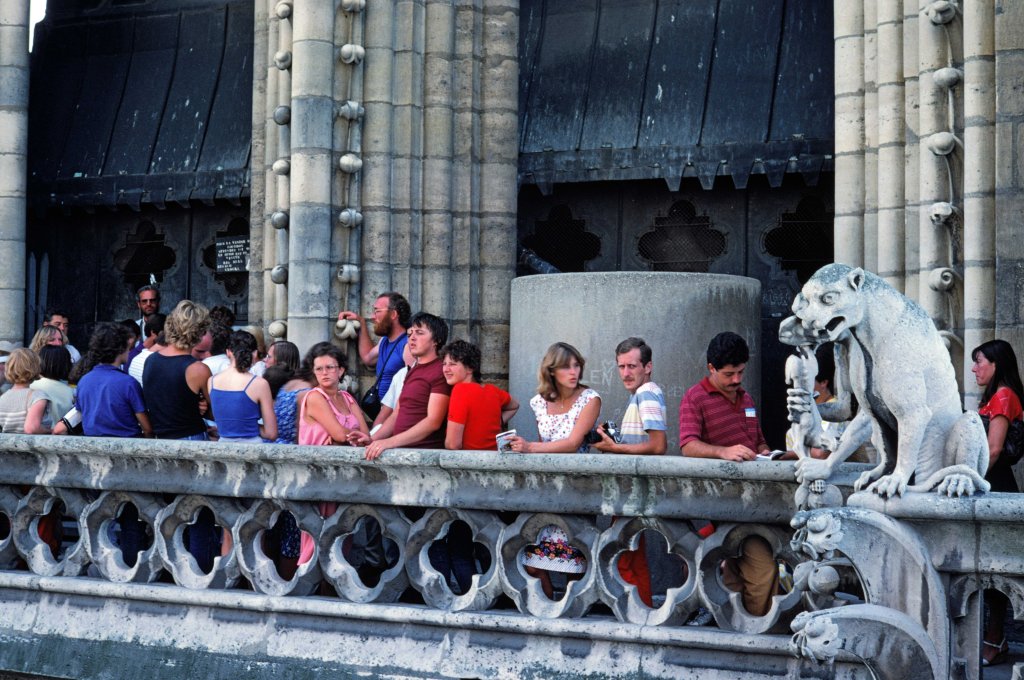
Notre-Dame de Paris
An easy step was to photograph tourists—easy because there are so many cameras around that one more makes no difference, and you may be thought to be focusing on the site rather than the people. Although contrasts can be made between grand buildings or art, and the dress and mien of tourists, the problem with the subject is that such people do mostly boring and conventional things, as they move through the rituals of commercial sight-seeing, and they are often bored themselves. (For a critique of the whole industry, see Marco d’Eramo’s book, The World in a Selfie.)
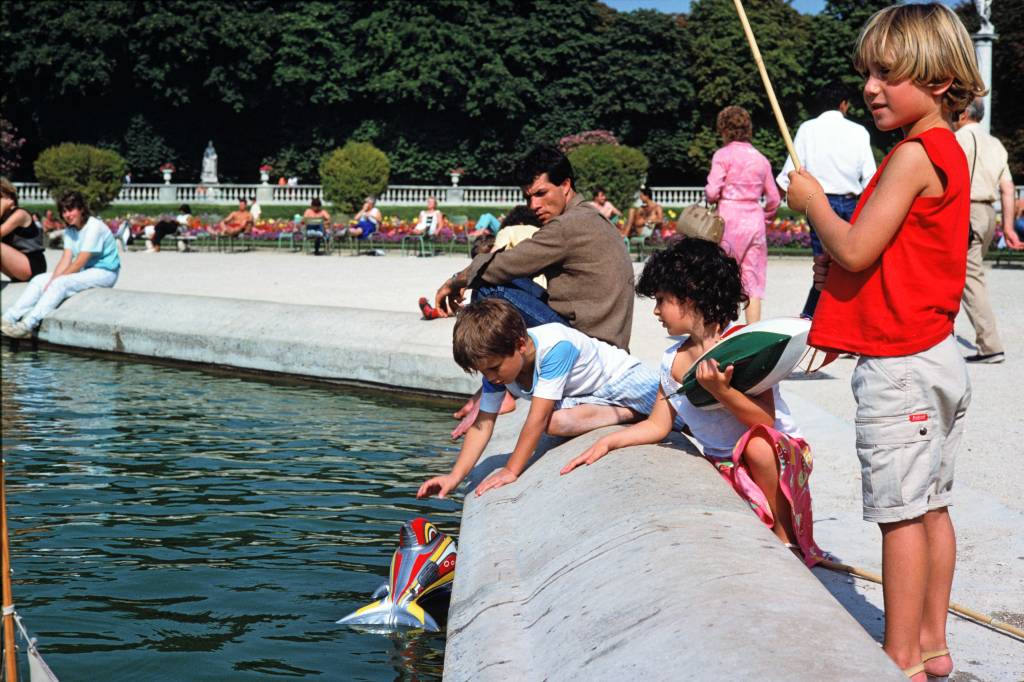
Jardins de Luxembourg
My attitude to the blanket dismissal of any photography of strangers as unethical, which was not uncommon even then, ran as follows: you always and without volition reflect light. Why should you mind if it happens to fall into someone’s lens? In a plea for the continued life of street photography, documentarian Giannis Angelakis marks out all that has changed to make its practice more difficult. Ironically, in a world of near-universal surveillance, and of widespread self-surveillance and display, for the very reason that people are used to finely controlling the way that they look in photographs, they are more likely to object strongly to their depiction by others. It was extremely unlikely that the people in these old photographs would be identified by viewers, but that was long before social-media profiles and effective face-recognition software, let alone the possibility that some image may go viral.
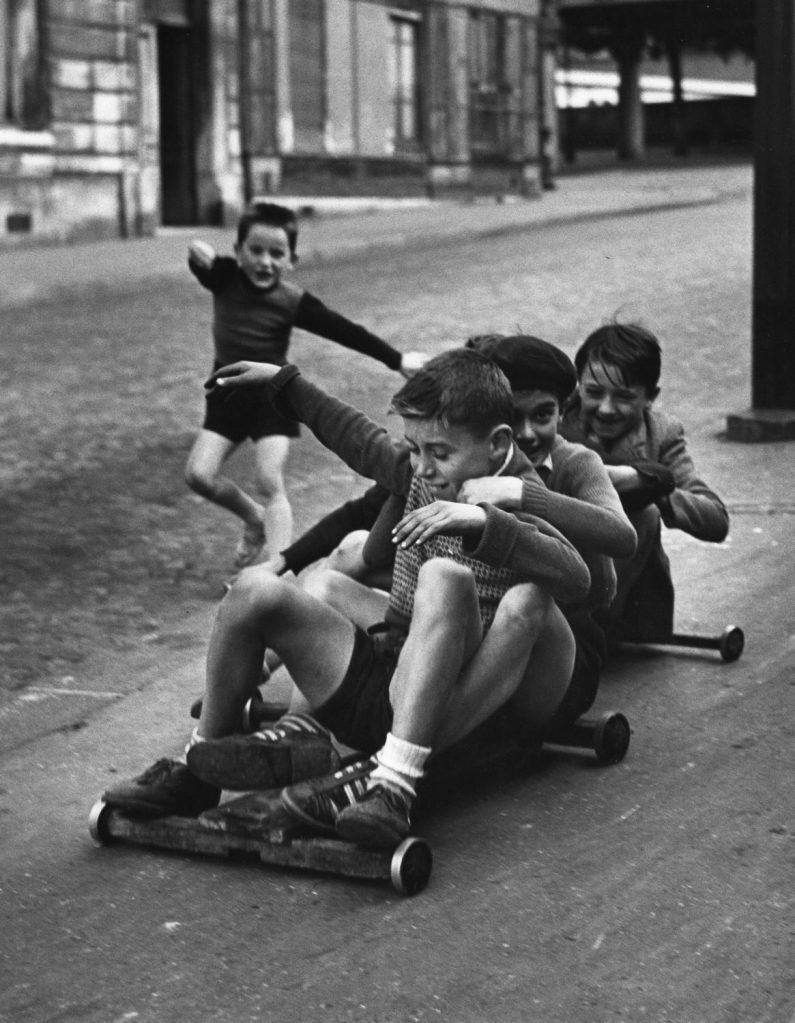
Sabine Weiss, Garçons sur Planche à Routlettes, Rue Flamand, 1952
Now, in a far more atomised, divided and suspicious urban realm than that onto which the inter-war and post-war photographers of Paris turned their lenses, even photographing as innocent a scene as the sailing of model boats across the pond in the Luxembourg Gardens has become a fraught activity.
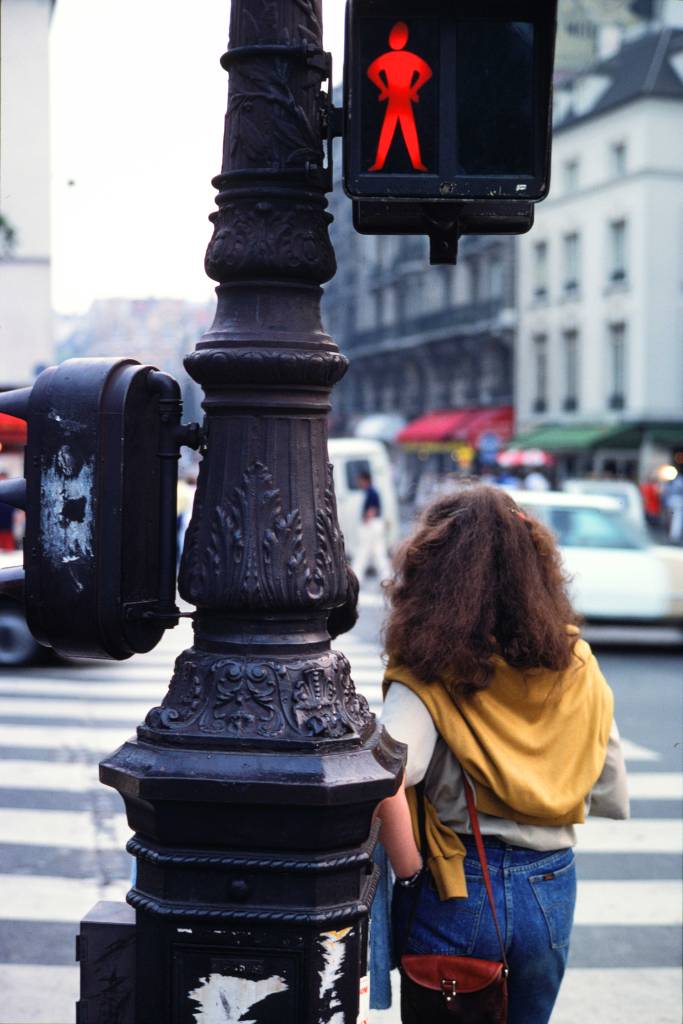
Quai Saint-Michel
In France, the law is now firmly on the side of the objectors. Article 9 of the Civil Code says that everyone has an exclusive and absolute right to their image, and to the use that is made of it. While general street scenes that contain many people are excluded, anything that focuses on a few individuals may not be, and some of the court cases have had a chilling effect on documentary photography. Even Willy Ronis, a photographer who always depicted his subjects with respect and empathy, was sued by a florist who he had photographed, decades afterwards, and even though in 1947 she had plainly collaborated in the making of her portrait.
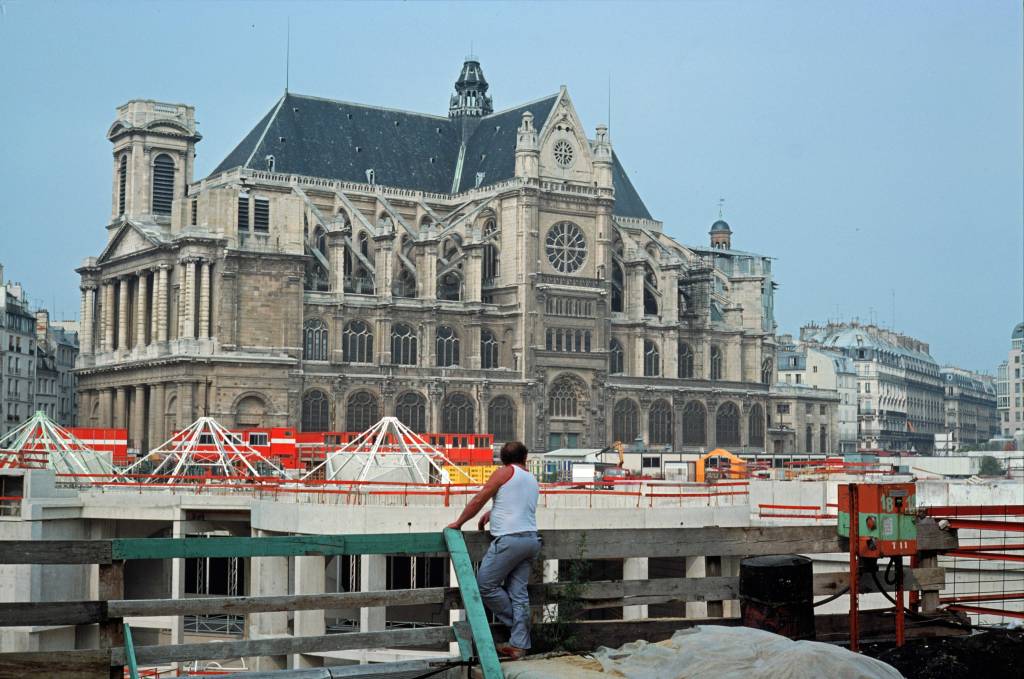
The area of Les Halles and Saint-Eustache
Another shy photograph of a worker’s back as he surveys the scene across the site of Les Halles market towards the church of Saint-Eustache. A multi-level shopping centre is being built in place of the historic market, which with its striking nineteenth-century pavilions had been demolished despite a major battle to save it. The attack on street photography came more from ‘development’ than from the law, as Paris was given over to traffic, rent controls were lifted and speculators moved in, driving ordinary folk to the outskirts, so destroying the vivid and intimate street life of the city.[1] Only recently—at least to do with the unchallenged reign of cars—is that life beginning to be reclaimed.
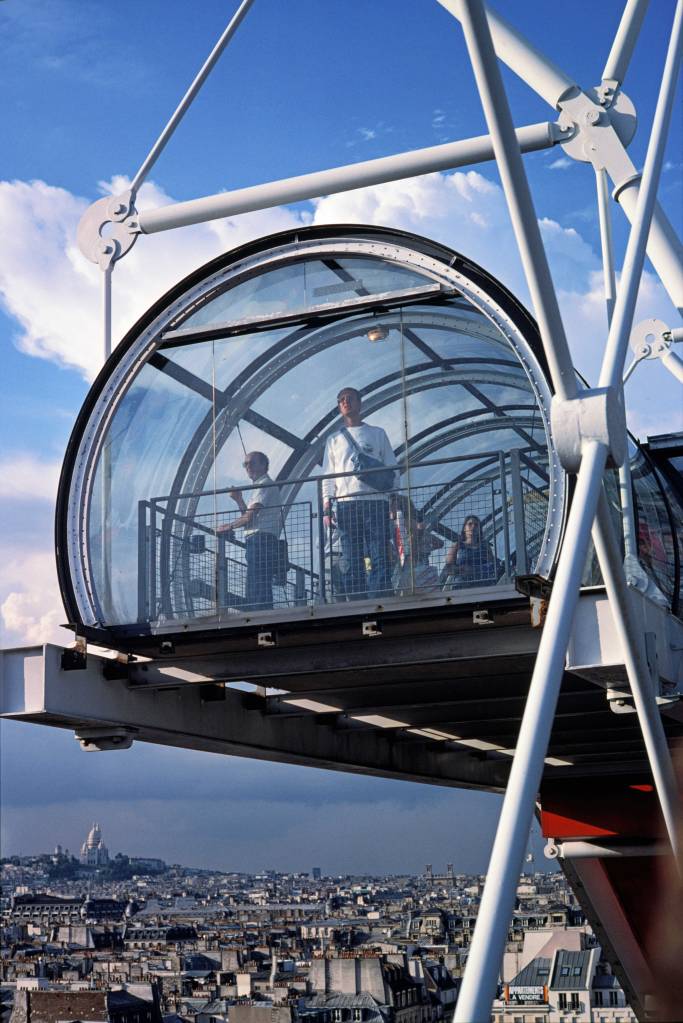
Centre Pompidou
Back in 1984, the plaza in front of the Centre Pompidou was a traffic-free place where people could collect, and sit or lie down without paying for something. The area, which had been encased by Haussmann’s boulevards and cleared of slum housing in the 1930s had then become, predictably enough, a car park before the Centre Pompidou was built. Young people especially would gather there, rebels and latter-day hippies mixing with the tourists and shoppers, in part because the building itself seemed to be an optimistic symbol of the new, and because much of it could then be visited for free without long queues and security checks. The homeless would keep warm in its library.
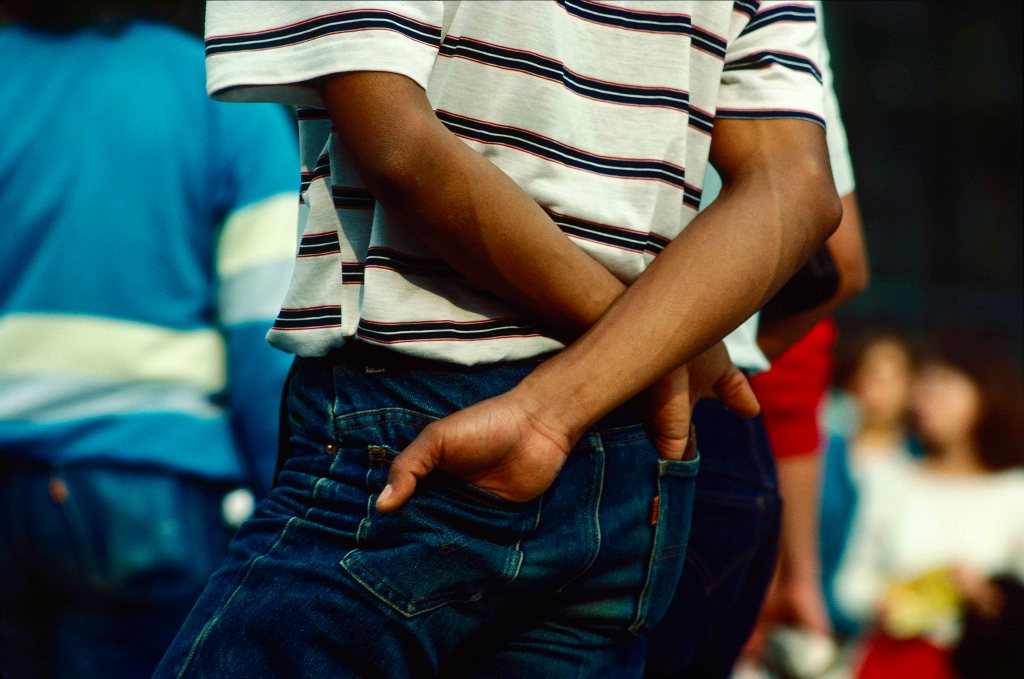
Place Georges Pompidou
Yet another person’s back, but I hope that in its description of stance and clothing, it says something about how a young South Asian man, who was accompanied by friends, relaxes as he looks out over the plaza. In a famous analysis, Henri Lefebvre wrote about which people had ‘the right to the city’—who could live there, who could enter its public spaces without harassment from the authorities, who felt that they belonged in its streets. This image may be obscure in its social import, but I want to think that he and his companions felt that the place was, for that time, theirs.
[1] See Louis Chevalier, The Assassination of Paris, trans. David P. Jordan, The University of Chicago Press, Chicago 1994.
 Julian Stallabrass
Leave a comment