August 1984
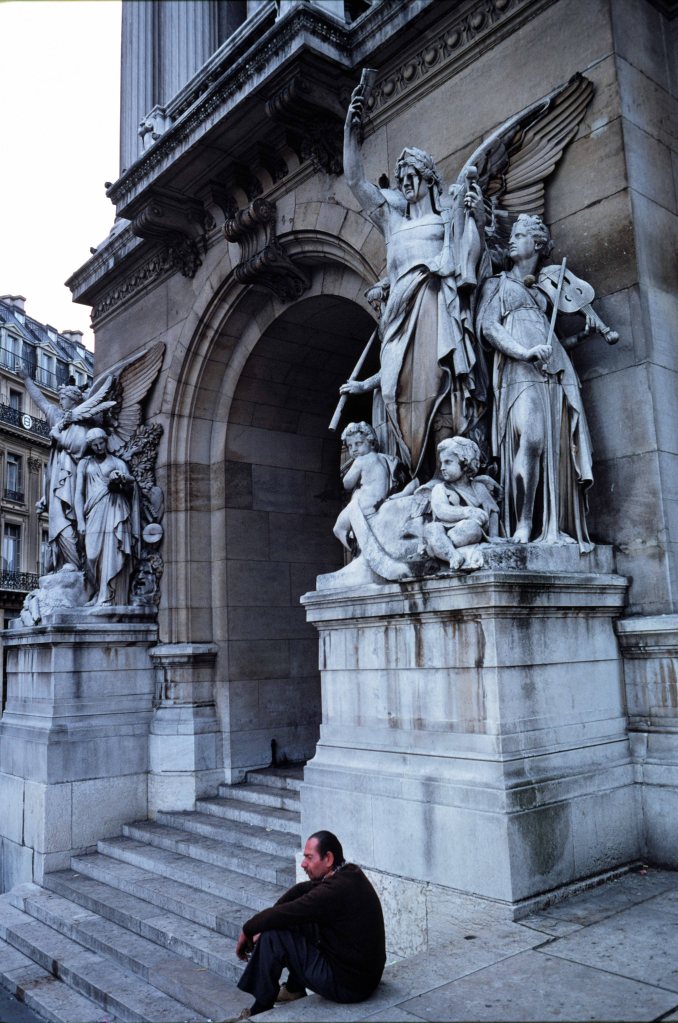
Opera Garnier, Paris: Harmony, Poetry, Music (left), Instrumental Music (right)
This photo, taken at one entrance to the Opera Garnier, a building widely seen as the ultimate cultural manifestation of the regime of Napoleon III, shows two sculptural groups that make strenuous efforts at expressing the glory of the new empire—and its civilised arts—as an exile of one of its colonies sits pensively at their feet.
Such photographs taken in Paris at this time mark the beginnings of my interest in what I was to later call Actually Existing Sculpture, in which I explored the life of sculpture in the contemporary world. From monument to figurine, the project shows sculpture as it is ignored, used, abused, as it sits in odd juxtapositions with its surroundings, and as it is copied, mass-produced, sold and distributed.
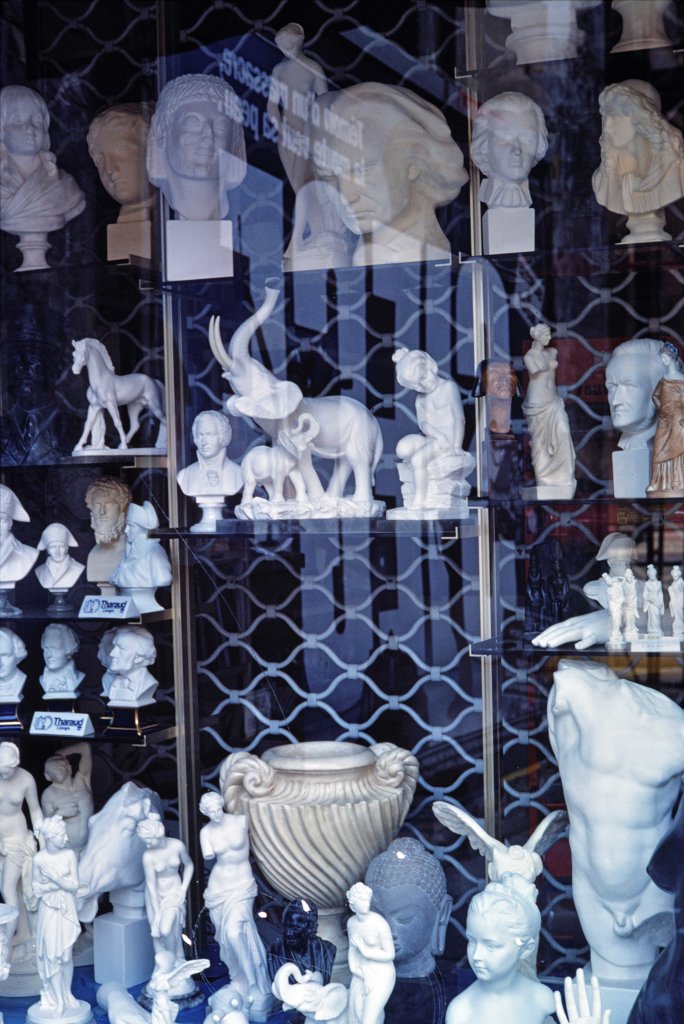
Rue des Archives, Marais
The first very wealthy person I met—a businessman who was a friend of my parents, a small, slightly rotund man—kept on his desk a large marble bust of the first Napoleon, whose campaigns he could discuss at length. The memory is a little key to imagining the physical and emotional surroundings awaiting these shop-window busts of great men and reproductions of the most famous works of the classical tradition.
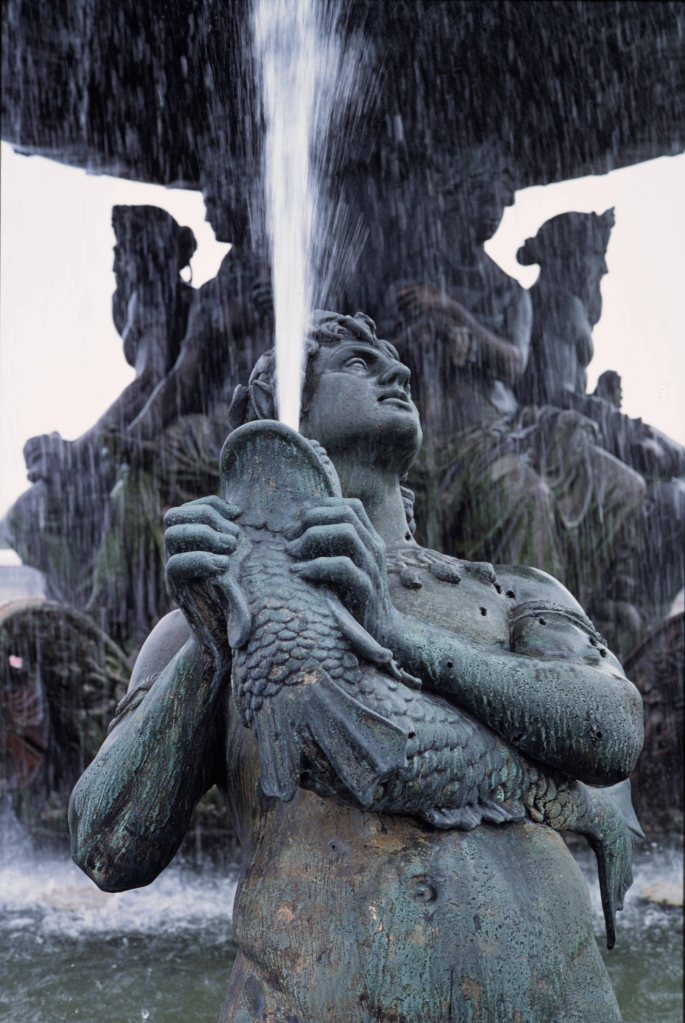
Place de la Concorde
In nineteenth-century Paris, prominent efforts were made to ennoble commerce—often viewed as suspiciously instrumental, grubby and corrupting—through allegorical figures of the ancient world. In the fountains of the Place de la Concorde, maritime and river trade are glorified with gods, tritons and nymphs as the spouting water evokes, presumably, the flow of capital and the cascade of profit.
In the Paris of the 1980s, commerce—particularly the uninterrupted flow of traffic—regularly trumped splendour. The Place de la Concorde contained a busy roundabout which, as a pedestrian, it was nearly impossible to cross; a notoriously jam-packed roundabout also encircled the Arc de Triomphe.
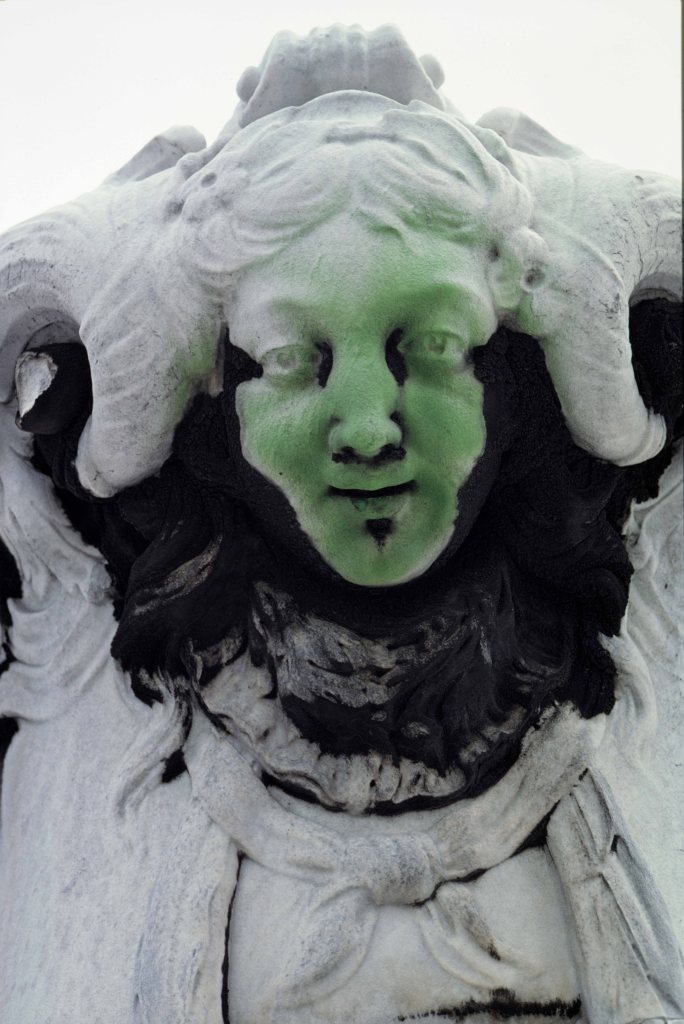
Similarly, the Pont Alexandre III, a turn-of-the-century monument to France’s alliance (against Germany) with the most backward autocracy in Europe, Russia, was an urban motorway, and pollution tarred its elaborate marble surfaces to poignant effect.
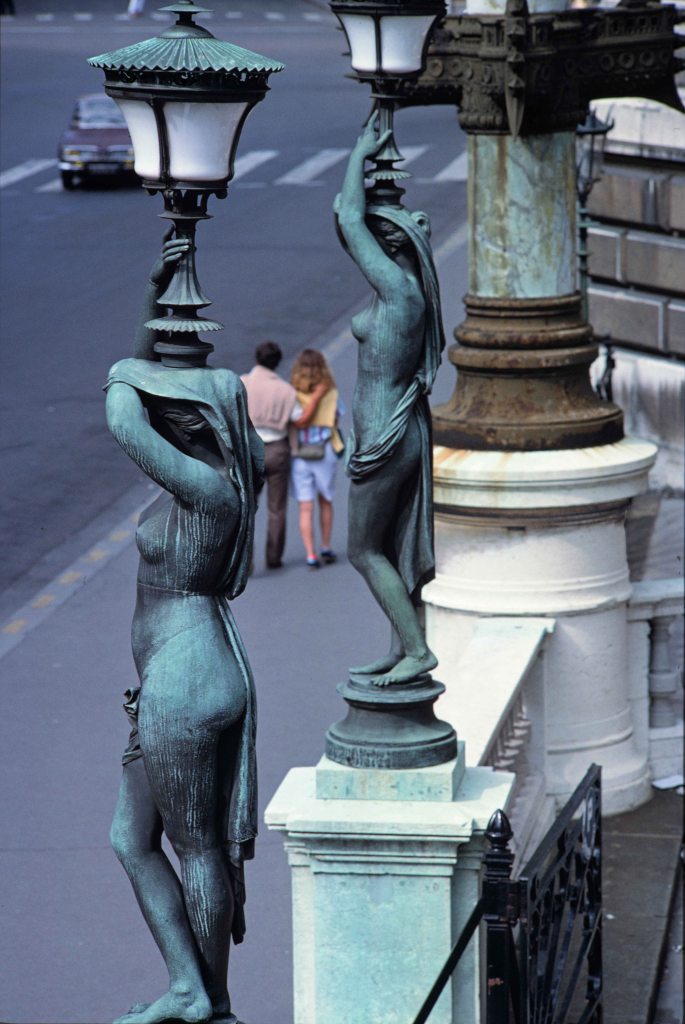
Opera Garnier
The sculptural emanations of the old orders, carved and cast in durable form, surviving the cataclysmic events on which their regimes were wrecked, persist into the present, and have been cast up on a modern shore to which they are radically unsuited, so that each one comments tartly upon its other.
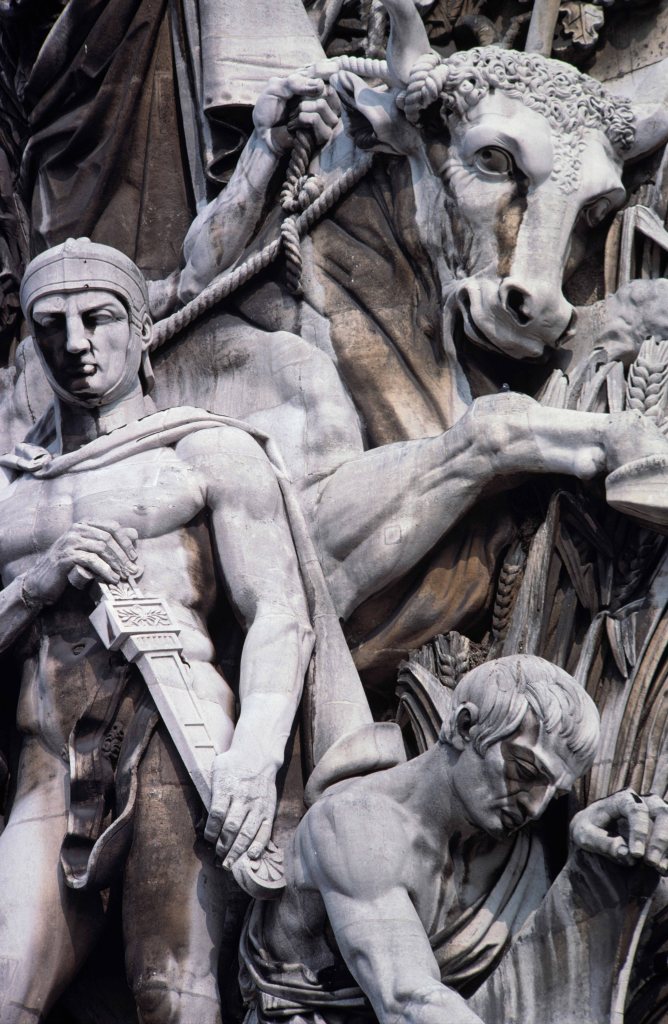
Antoine Etex, Peace, Arc de Triomphe
Throughout the nineteenth century, which these sculptures span, different versions of classicism were invoked to dignify their present. At the Arc de Triomphe, meant to celebrate Napoleon’s triumphs and those who had been sacrificed to them, but put on hold for as long as the restored Bourbon monarchy lasted, it is Roman imperial might—a stern, though here tainted—model of domination.
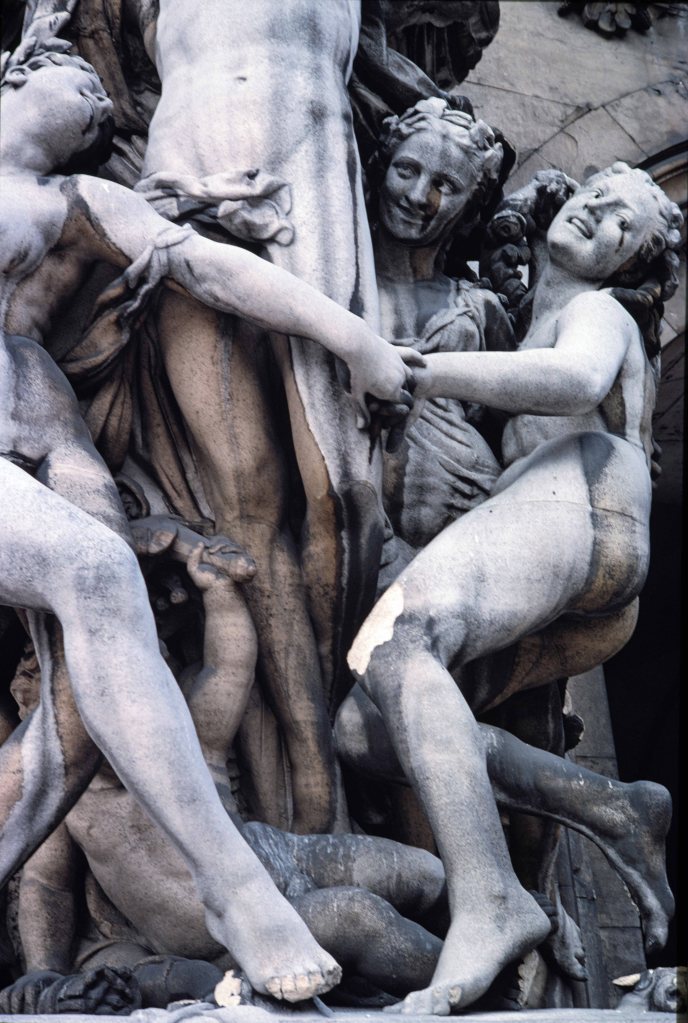
Jean-Baptiste Carpeaux, The Dance, 1869, Opera Garnier
Under Napoleon III, as brilliantly described by Zola in his Rougon-Macquart cycle of novels, and particularly in The Kill, money-making, religiosity, hypocrisy and sexual profligacy co-existed in a poisoned hothouse atmosphere, luxuriously if oppressively over-decorated, as which the sheen of its opulent surfaces exudes the perfume of corruption.
Carpeaux’s The Dance, another decoration of the Opera, occupies one end of this nexus in its frankly unrestrained expression of sexualised joy. A more ordered and suppressed representation was more conventional, and many thought that the figures of the dancing bacchantes were obscene—the sculpture was even attacked. The original had been removed to the Louvre in the 1960s to protect it from the polluted acidic air, and its replica here stood neglected, stained and damaged.
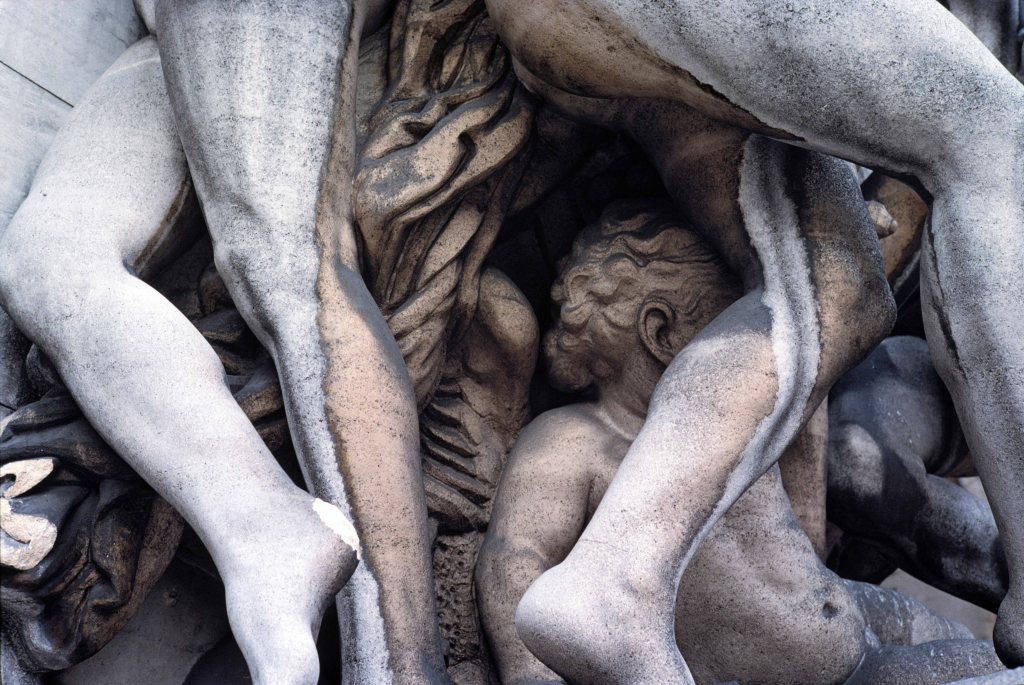
Its Cupid figure, at apparent danger of being trampled by the dancers, holds up a puppet of a leering jester, invoking the peril that love will lead to madness.
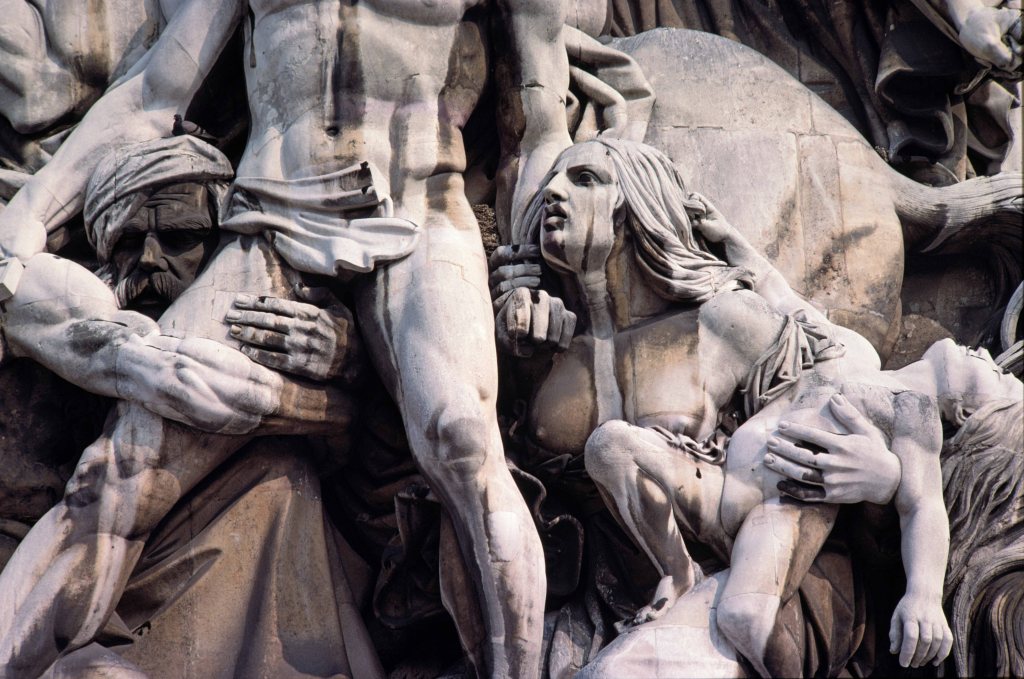
Antoine Etex, Resistance, Arc de Triomphe
In each of these would-be expressions of the magnificence of successive regimes, glorification is coupled, more or less explicitly, with its shadow, violent oppression. In Antoine Etex’s Peace, the sword is sheathed but not, one senses, for long. In his Resistance, the warrior is restrained by his dependents, but they must fail in their efforts to prevent him going to war. More generally, the Goths must be trampled by the Roman French, the wild tamed, the barbarous civilised.
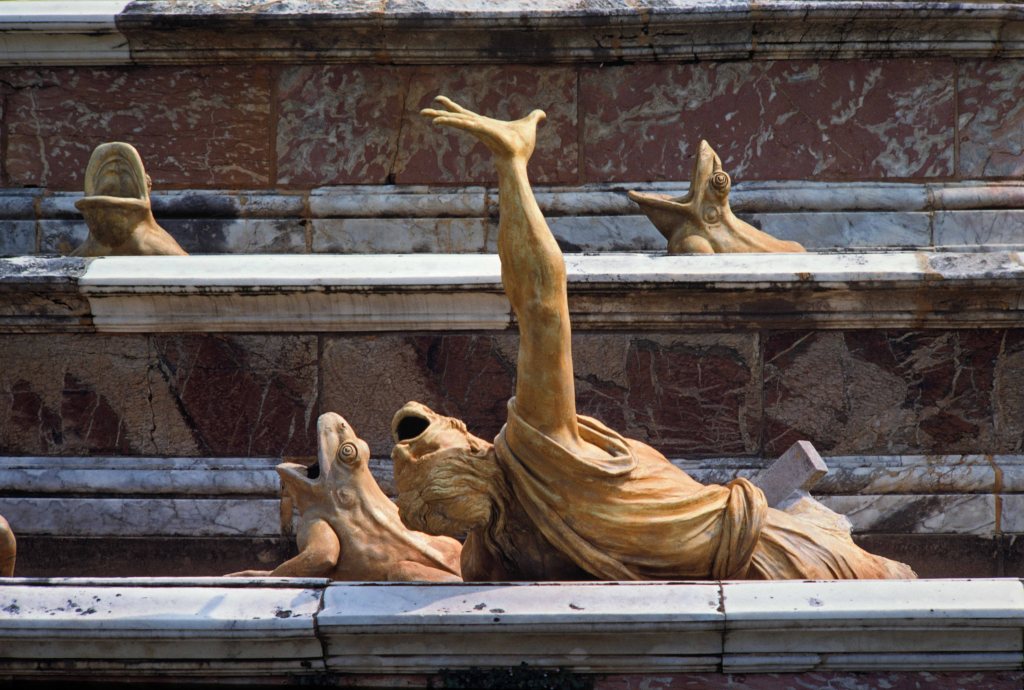
In Versailles, the matter is expressed even more plainly. In Latona’s fountain, following a story from Ovid, peasants who have disrespected their betters are turned into frogs.
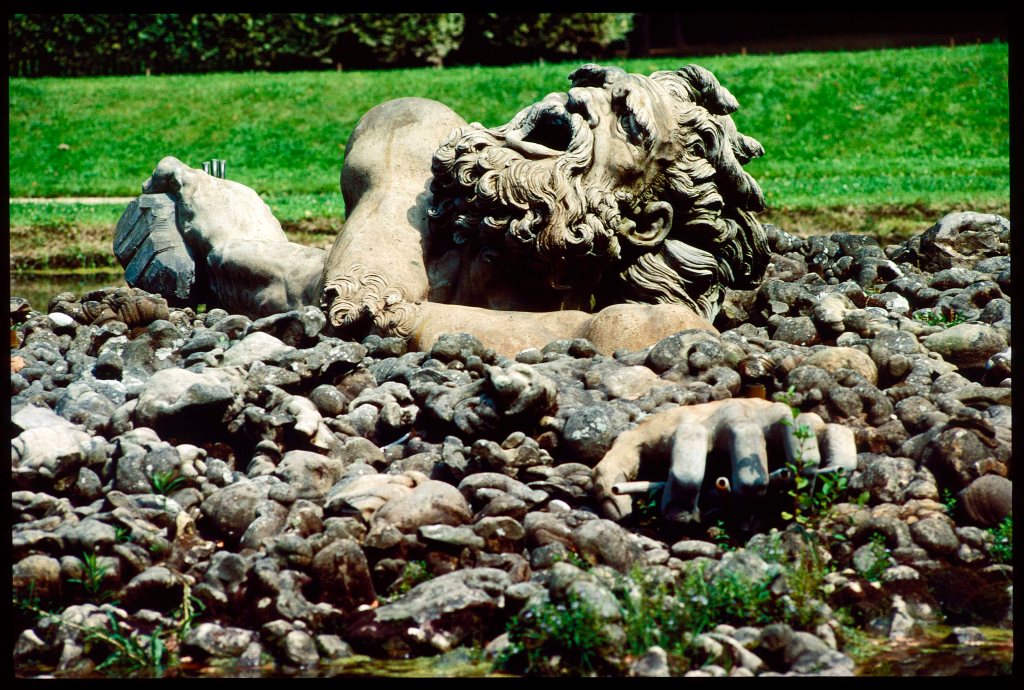
Fountain in the Enceladus Grove
And those who would dare challenge the might of the Gods—and, by extension, royalty—are buried under rocks. Gilded glory there is, aplenty, but never far distant the threat of violence, and the inevitable threat of those who would resist the natural order.
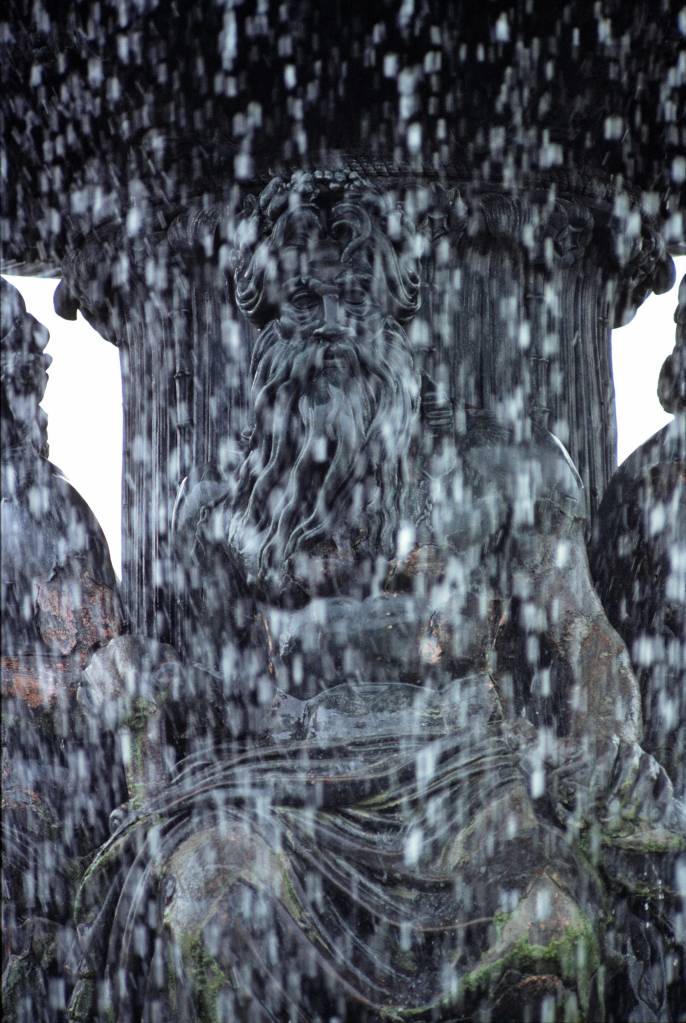
Place de la Concorde, fountain to maritime trade
In these photographs, I tried to estrange the sculpture, with unusual framing and juxtaposition, to cause for example the obstruction of one element by another.
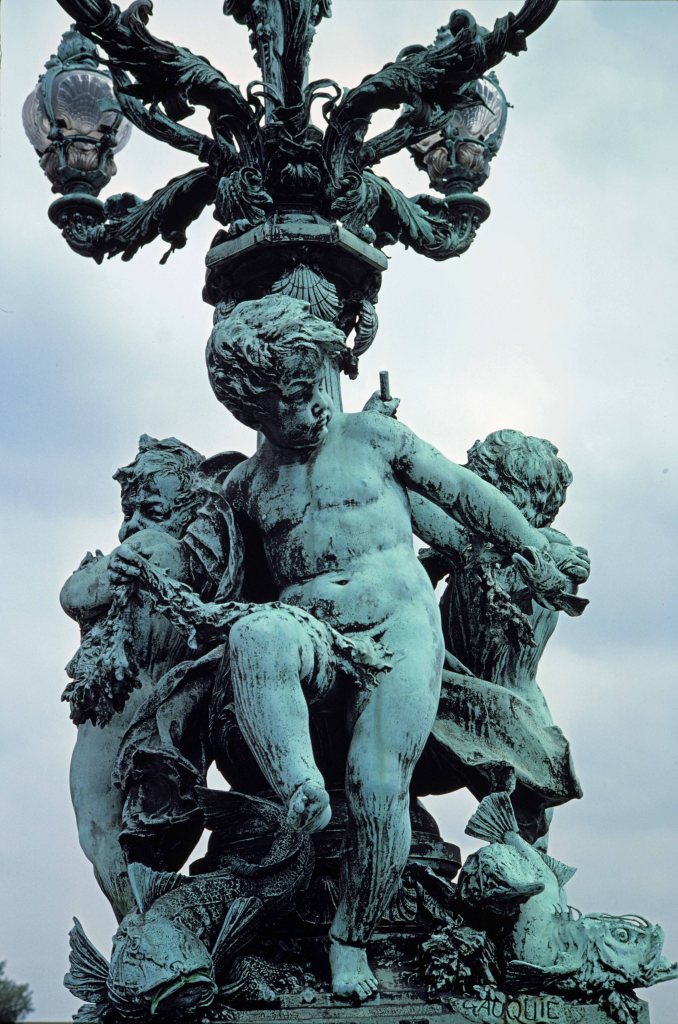
Pont Alexandre III, lamp
I also sought to focus upon its damaged surfaces, and the contingent circumstances of its surroundings.
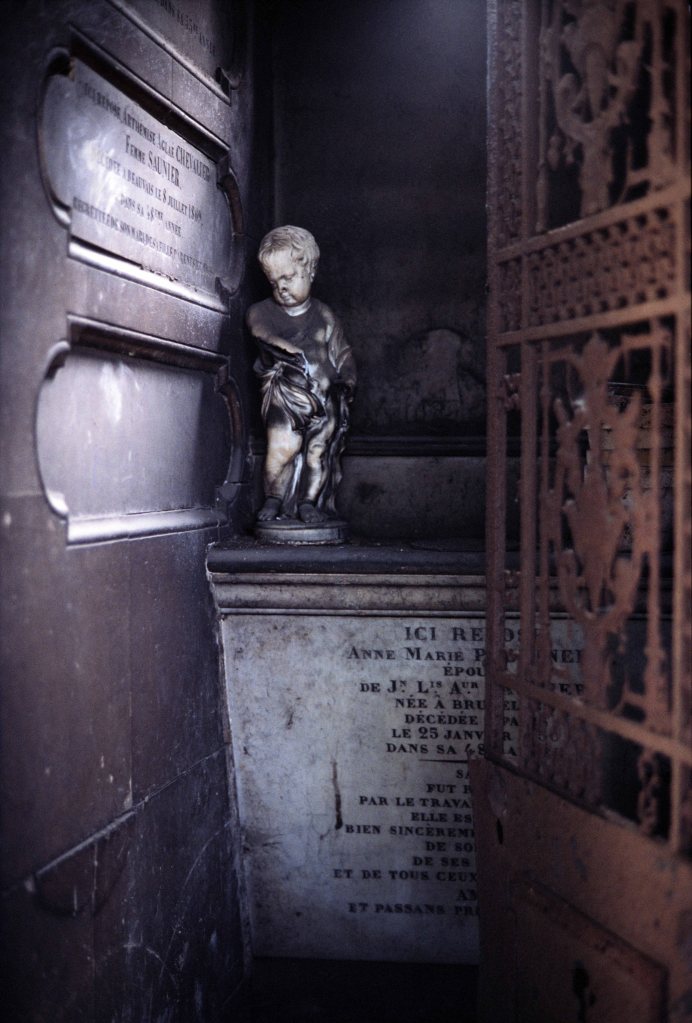
Montmartre Cemetery
And through the fragmentation that photography necessarily produces with its framing, my own allegories of decline, damage and pollution, to indicate the passing of the old illusions about power, and to suggest how they mutate into the present.
 Julian Stallabrass
Leave a comment