July 1984
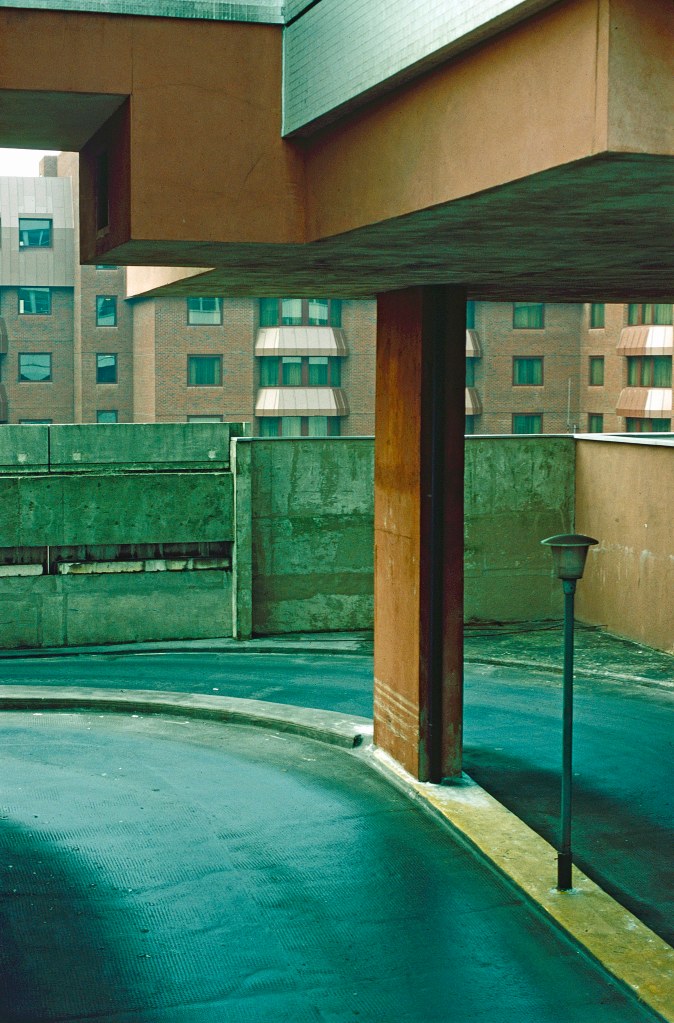
March 1984
Among Martin Parr’s collection of boring postcards, there is a view of a shopping centre in Reading. It struck a deep chord in me when I first saw it, since I lived and went to school there, and viewed from bus windows on many a journey the unfolding panorama of stained concrete, crash barriers, traffic jams, litter and chewing-gum stains.
If Reading is boring, it was made so by powerful, corrupt commercial and municipal forces which shaped and reshaped the place to serve their narrow interests. The old lady who had worked at my school, and who I visited through the years, and who had lived in the town since her youth, was housebound; on a very rare trip to the town centre, she was shocked to find that in the streets, which she had thought would be intimately familiar to her, she recognised hardly anything. The physical and environmental props of recollection had been torn down, so that the latent memories that dwelt in her mind, awaiting their cues, remained unawakened.
May 1984
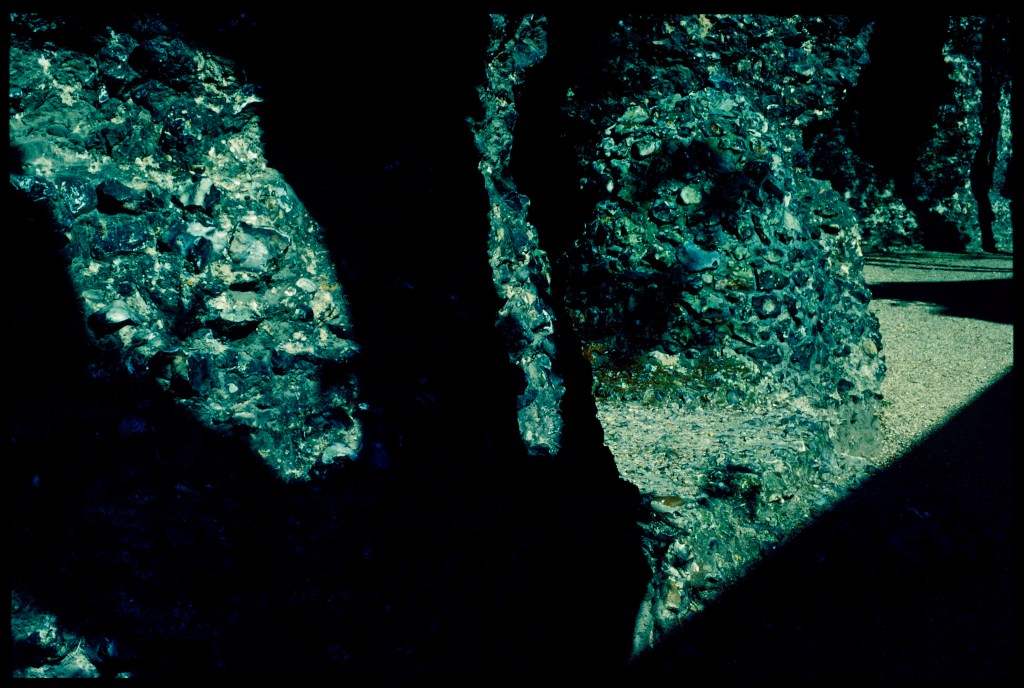
It was not the first such erasure, of course. Over a huge area, amid shopping centres, chain stores, office buildings and noisy roads, there is a spare scattering of ancient flint walls, darkly stained with centuries of pollution—the remains of the grand Abbey destroyed by Henry VIII.
May 1984
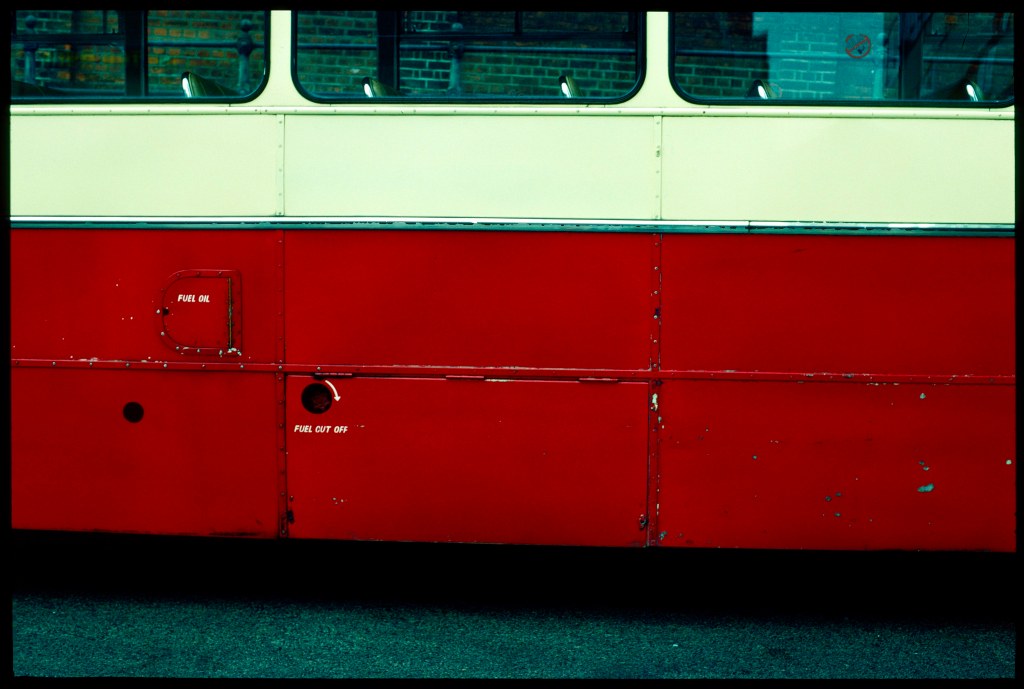
This photograph of a Reading bus brings back the crude, dilapidated, diesel-filled beasts that were in use during my childhood. Their dull and grubby interiors, decorated with ‘No Spitting’ notices, were frequently of a piece with the view through the glass. As a boy, as my bus would spend what felt like hours idling at its stop, I would lean my head against the windowpane, feeling the rhythm made by the tiny bumps of each piston explosion. This juddering of pane on scalp was sometimes complemented later in the journey by the joy (for us children on the upper deck), as the bus swept so close to trees that their branches would clatter against the windows. The joy, near the end of our long commute, of unruly nature, modest speed, and mild threat.
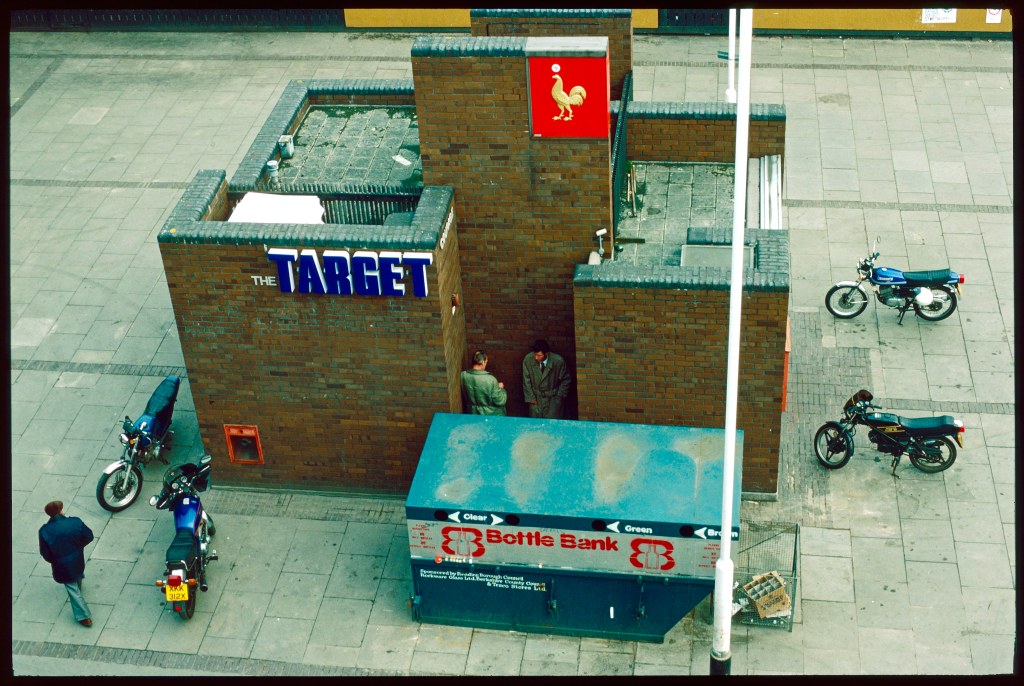
March 1984
The locus of my feelings about Reading were centred on the concrete underground bus station where, given the unreliability of its services, I spent much time. In its low, bare, dark and grimy space, patinated with the exhalations of its vehicles, pollution tainted each breath. This and the area around the nearby railway station were ill-articulated and tawdry concrete spaces, bordered by dull, run-down office blocks. As the Thatcherite boom in the south of England made its unsustainable way along the M4, these would become replaced by equally charmless and unimaginative blocks which sought to distinguish themselves from the old with a few faint gestures towards postmodern style.
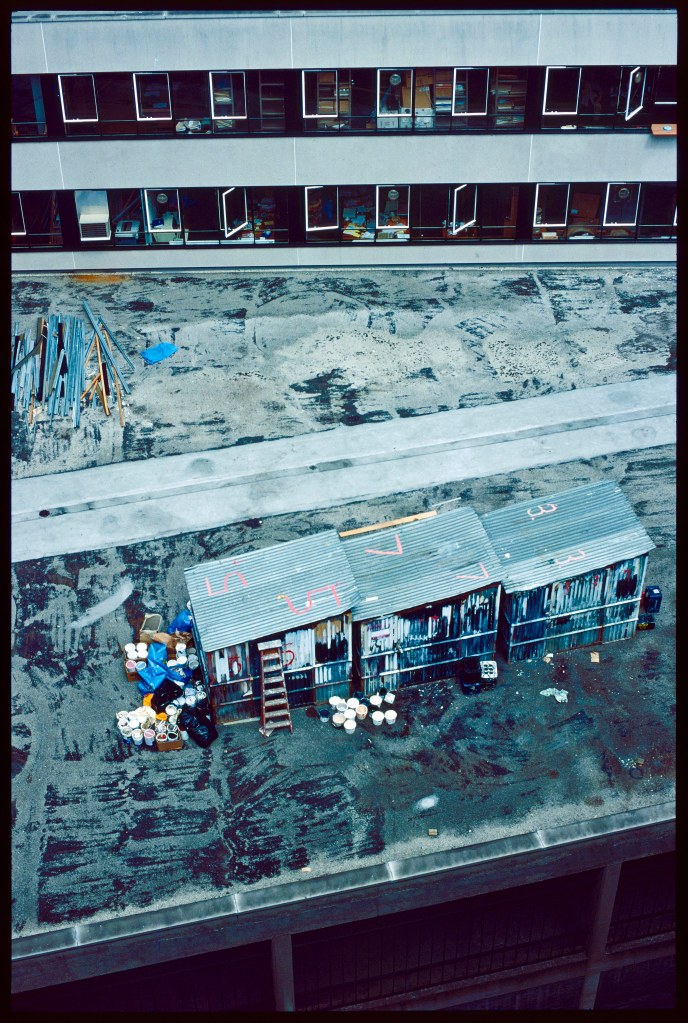
In 1984, revisiting these areas, so familiar from childhood, I was struck by how difficult it was to photograph my home town. It was as if the photographic imagination had been buried under the weight, not so much of distinct memories, as by the general miasma of the long hours spread over years of gloomy waiting and idling in traffic.
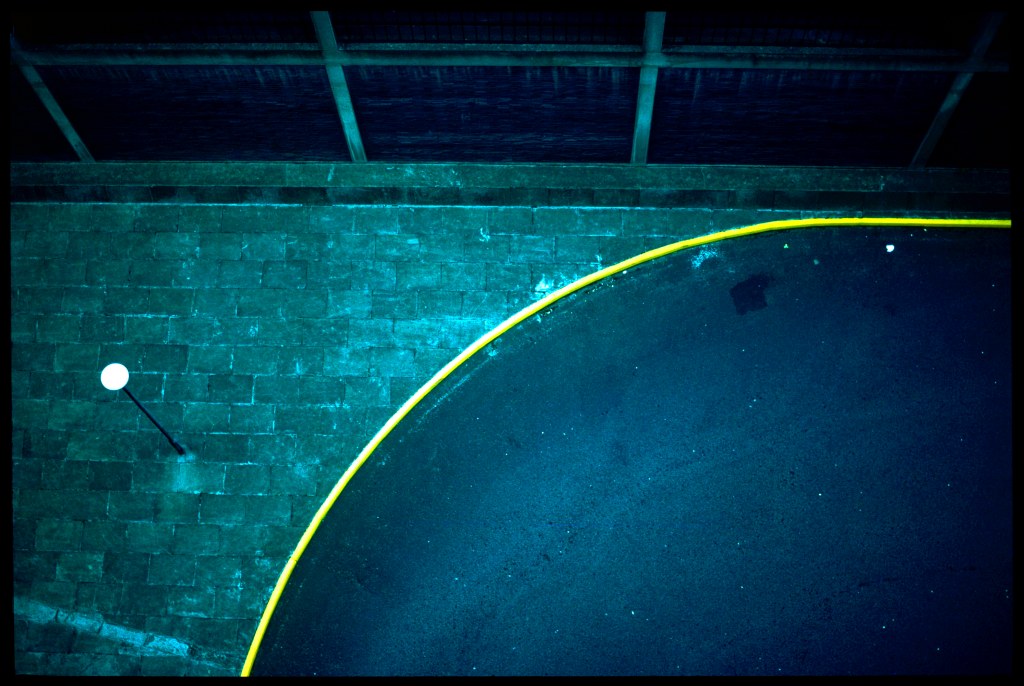
May 1984
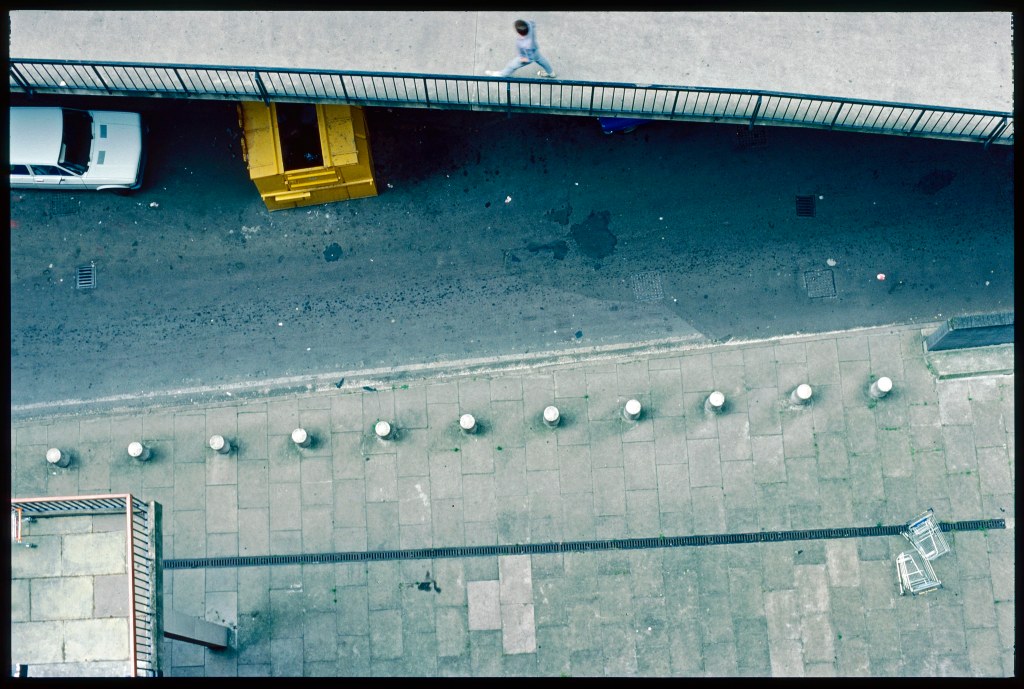
I have not looked at these images since they were taken. My response to the difficulty was to often shoot from above (from the roof of the Butts shopping centre, among other places) and to lean upon a strict compositional geometry—to use the means of modernism to depict the shabby and alienating environment of its remains.
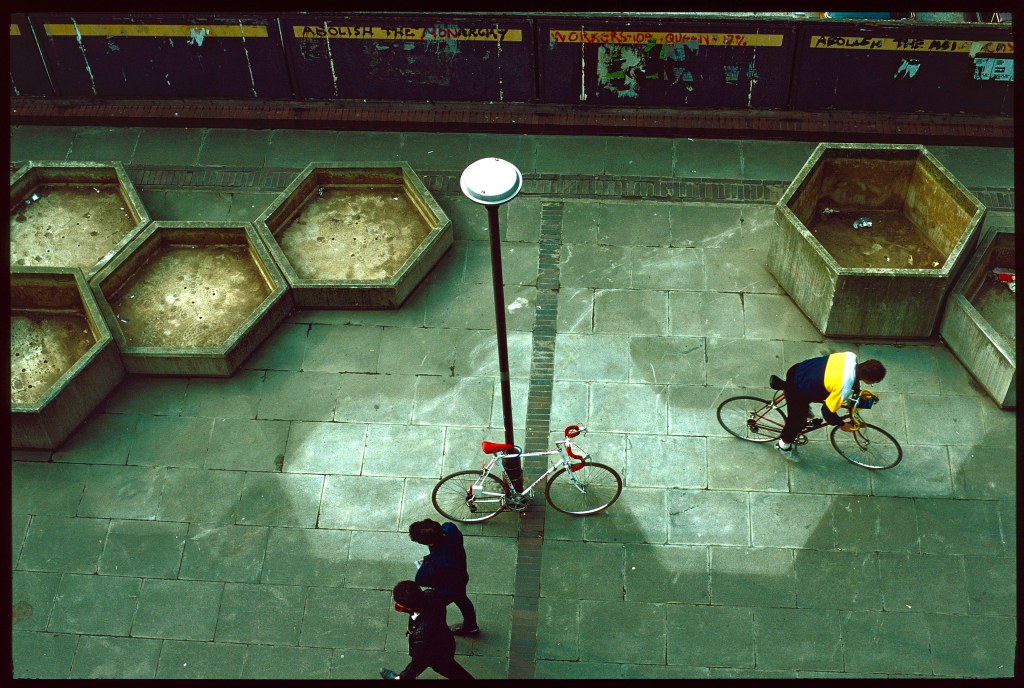
March 1984
Beyond that conscious tactic, though, it seems to me now that the images are saturated with the emotional tenor of the past, of the long exposure of a childish and adolescent mind to Reading’s sludgy capitalist boredom which said clearly to its inhabitants, and especially to users of public transport: this is what you are worth.
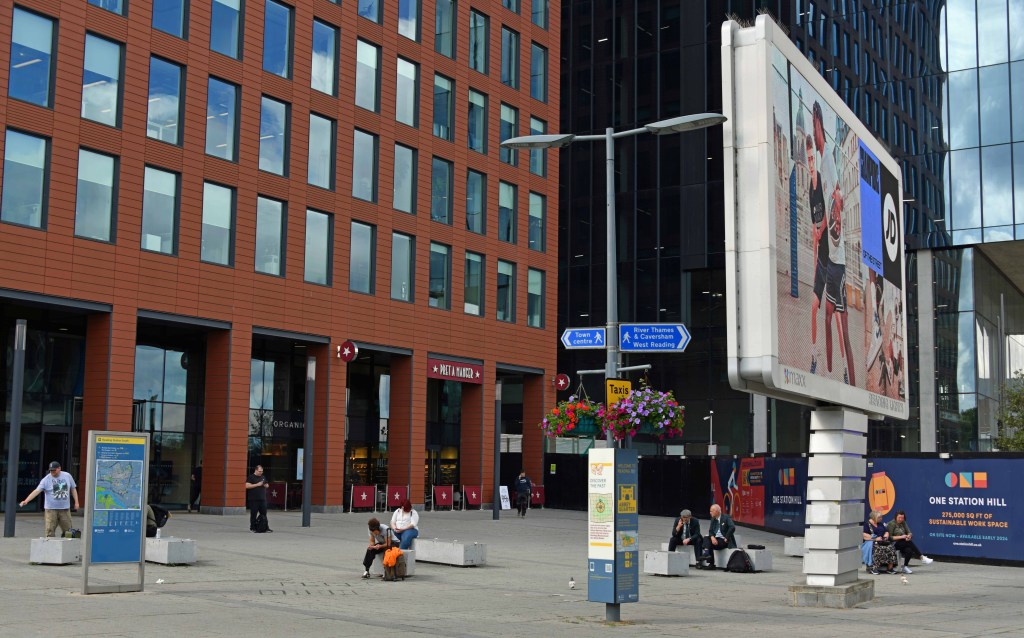
Station Hill development, July 2024
That area between the bus and train stations has been erased once again, and the physical stays of my memory have been effaced just as surely as the old lady’s—remaining only in a few photographs. I certainly don’t mourn its passing, but the new development of the Station Hill area, while incomplete, is a familiar configuration of high-end flats, office blocks and ‘retail outlets’. What can be seen of it so far is an extreme demonstration of how weak local power—caught between powerful business interests and the draining of its resources by another Tory regime—produces another arbitrarily drawn, bare concrete space, devoid of vegetation and, despite the pallid attempts at branding, any distinct character. The main concerns seem to be to ensure that the concrete benches are too uncomfortable to encourage loitering (let alone sleeping), and on a gigantic screen to inflict advertising on passersby.
A feature of Parr’s book is that the modern scenes which dominate it, with their parade of ring roads, bypasses, motorways, car parks, and concrete municipal amenities were not always boring, and were indeed marks of civic pride, reconstruction and a new future. They have become boring (at best) as that future lapsed into failure. No oracle is needed to predict the fate of this new development. Perhaps already someone is using the scene to make a postcard.
 Julian Stallabrass
Leave a comment