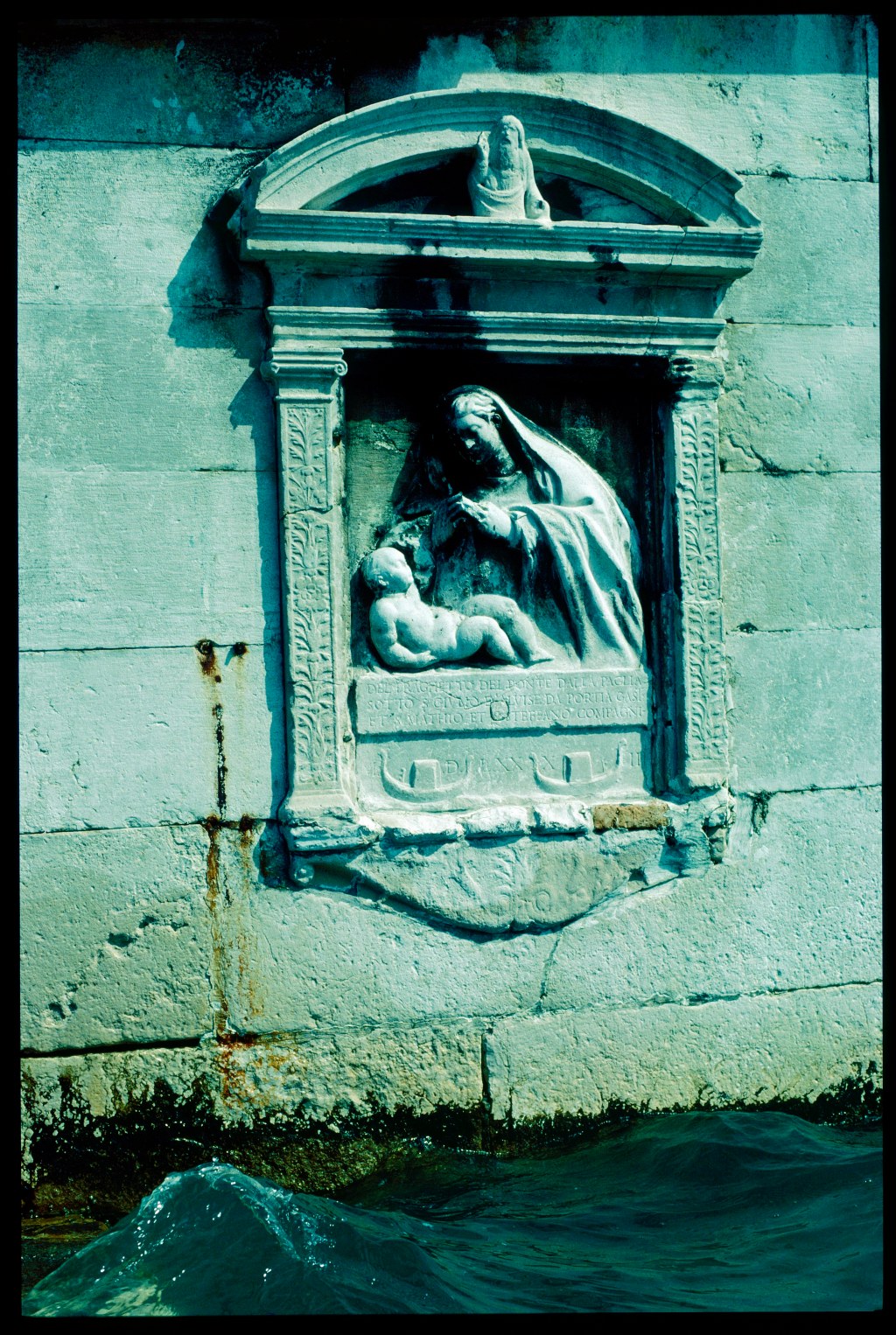
June 1984
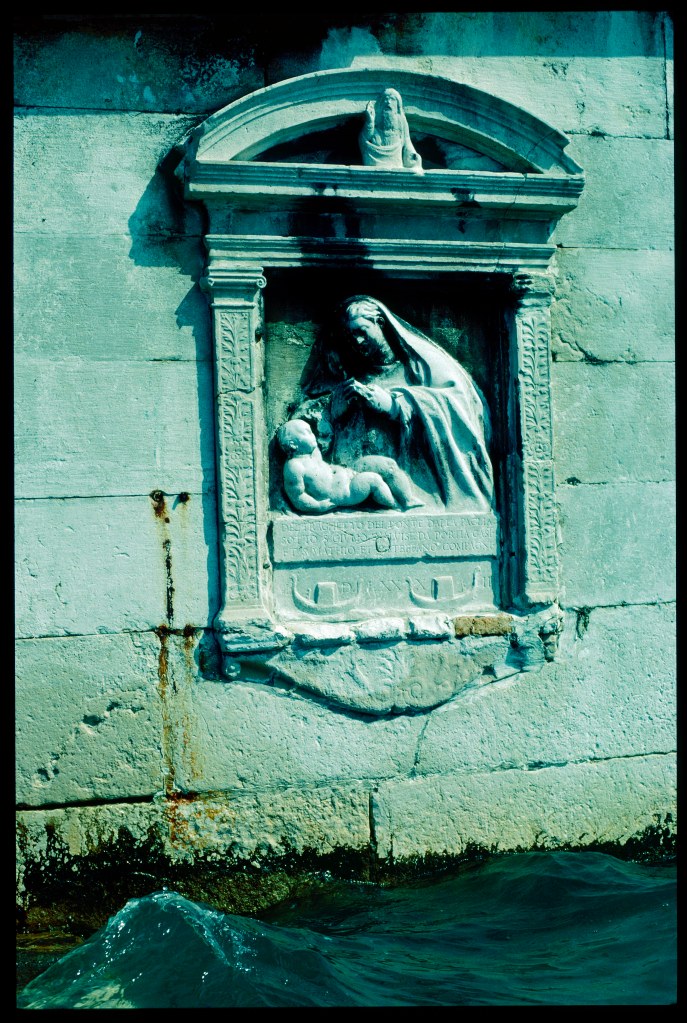
Piazzetta San Marco
Under sunshine, the city forms a hallucinatory vision on the glittering water, a cavalcade of rich colour and variegated surface, of shadow, brilliance, and dancing reflection. It is equally an obdurate labyrinth, improbable in its creation and survival, and the marvellous screen onto which travellers have projected their imaginings of vice and virtue, glory and degeneracy, high culture and low taste.
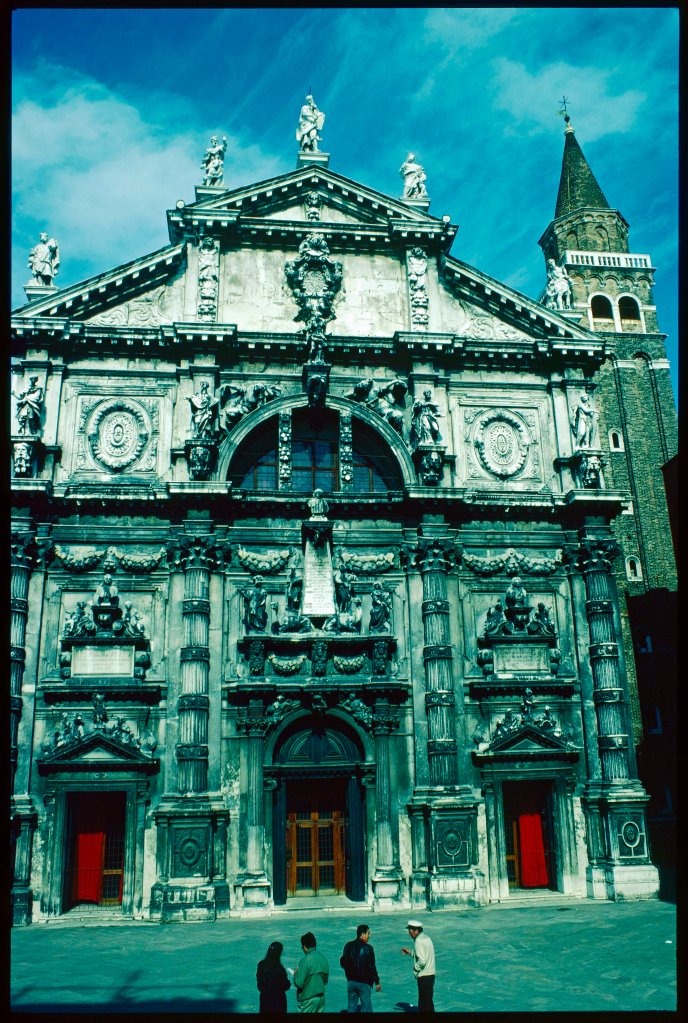
The church of San Moisè
Among them, John Ruskin, obsessed and endlessly tendentious in his colossal labour to document the remains of Gothic and Byzantine Venice—in writings, drawings, watercolours, casts, and by buying or commissioning photographs—before what he took to be its impending destruction. In 1849, he found the city occupied by a hostile empire, which had no compunction about turning palaces into barracks or building fortifications on ancient sites. So the place became for him a gigantic allegory for the fall that became inevitable once the glorification of God had been displaced by the pride of Man, and for the ruin caused by imperial over-reach, avarice and the reign of commerce. That lesson, of course, was directed homewards as a dire warning about British imperial hubris. The church of San Moisè, seen here, was for Ruskin one of the worst examples of that fall—a ‘grossly debased’ ‘manifestation of insolent atheism’.
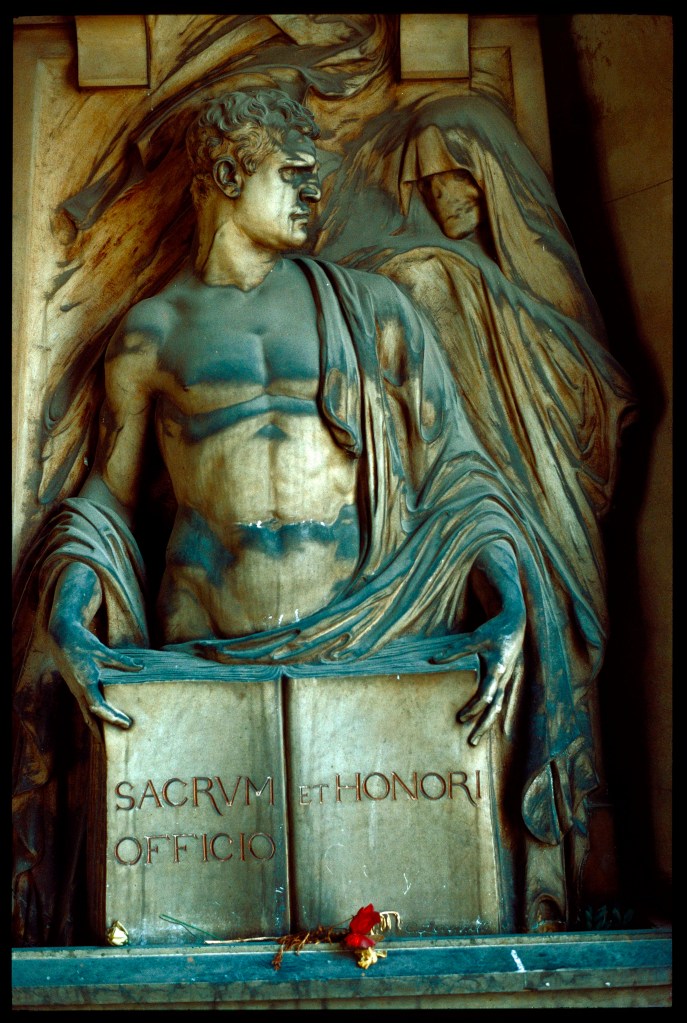
Grave in the Cimiterio di San Michele
Or, fifty years later, for that dandy and extreme romantic nationalist, Gabriele d’Annunzio, later an inventor and propagator of fascism, the city, far from being the melancholy spectacle of irreversible decline and decadence, was the living embodiment of Italian genius at the moment of its nascent revivification, a locus of the ancient classical spirit, perceived by the dominating hero of The Flame, in frequent episodes of an ecstatic, sensual marrying of power and beauty:
‘All the dreams of domination, of pleasure and glory, that Venice had first cradled, then stifled, in her marble arms, seemed to arise from the foundations of the palace, to enter from the open balconies, palpitating like a people revivified under the arch of that rich and heavy ceiling […]’
In the new era, characterised by the decline of Northern energies, as personified in the figure of the dying Wagner in Venice, the superior man, channelling that spirit, will sculpt the vulgar masses to his will. As they follow his lead, Italy’s imperial might will be reborn.
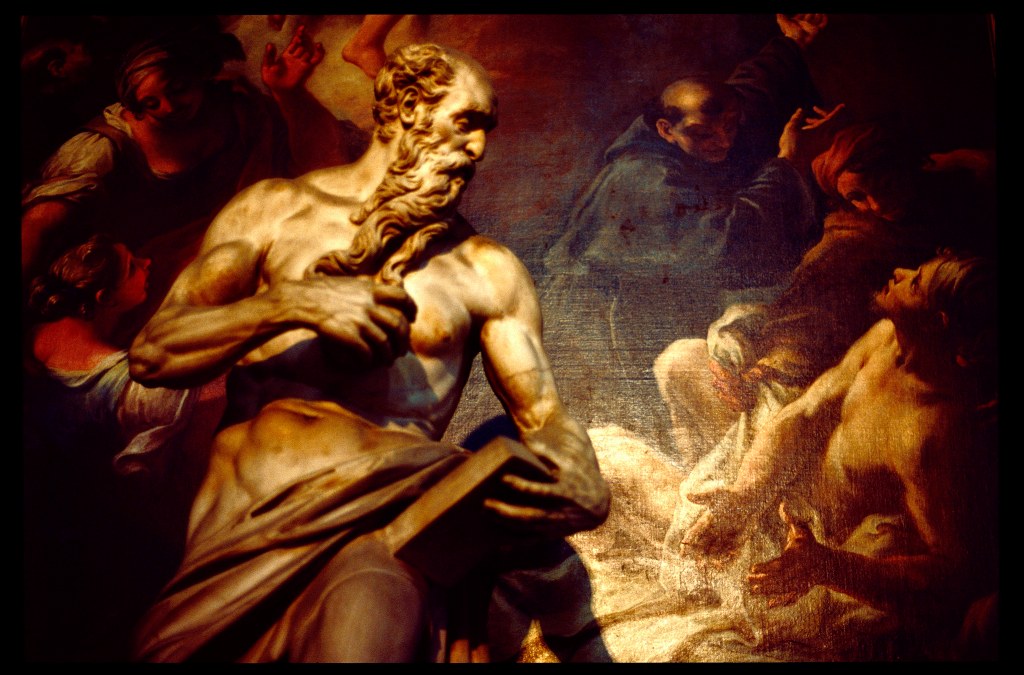
Basilica San Maria Gloriosa dei Frari
I was in no position to make such projections, having little knowledge of the city beyond its general touristic allure, and some reading of Braudel’s outstanding history of the Mediterranean world. And then, at least ideally, photography is the reverse of projection, being instead an admission of a place’s light, in all its momentary contingency, into the little black chamber. The night before going, making an ill-advised dance move, I had badly twisted my ankle, so I spent the next week limping slowly and in continual pain around the city. I remember sipping lemonade at a café on the corner of some small canal, far from the tourist areas of the city, ankle throbbing; but it is remarkable how detached my memory of those long, arduous walks is from the images that I made there, as if they inhabited separate existences.
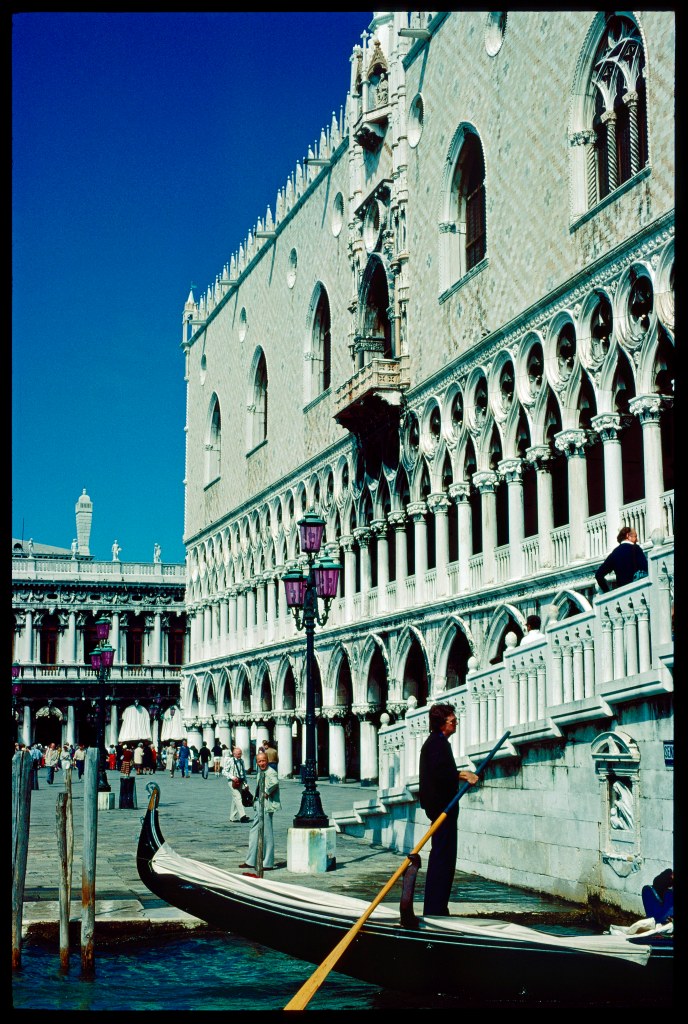
The Doges’ Palace
Looking back at these images, most of them seem to fall into a few genres, which may well be the result of my own projection. There are variants of tourist snaps, naturally, of which I made few.
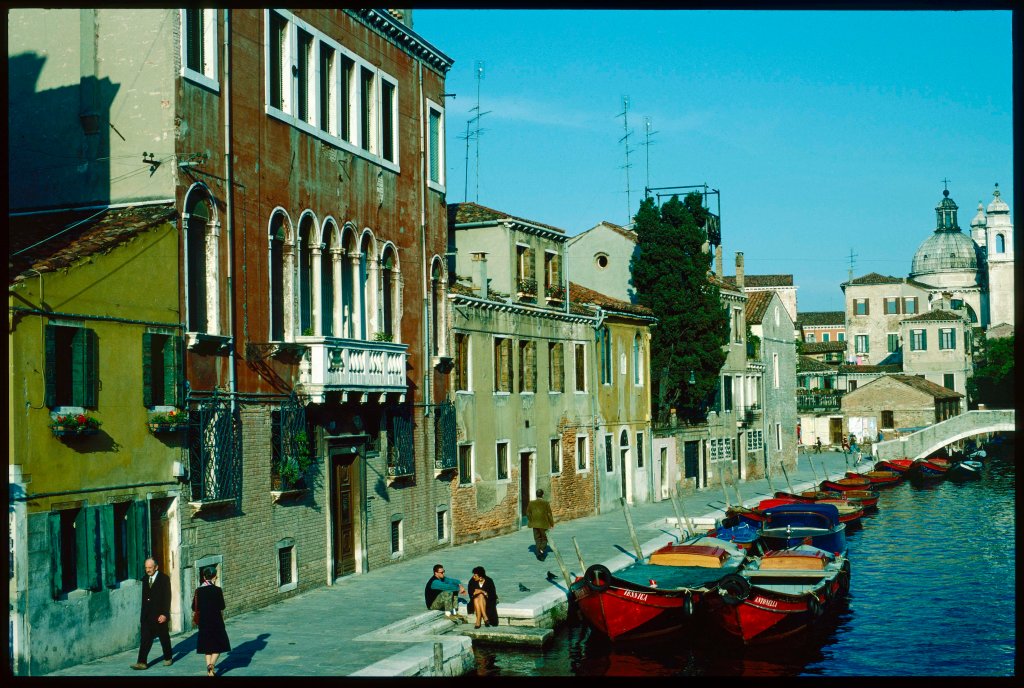
Fondamenta Trevisan
More often, though, I was driven by the crowds around the major sites, and the intensive commercialisation of the streets nearby, into quieter places.
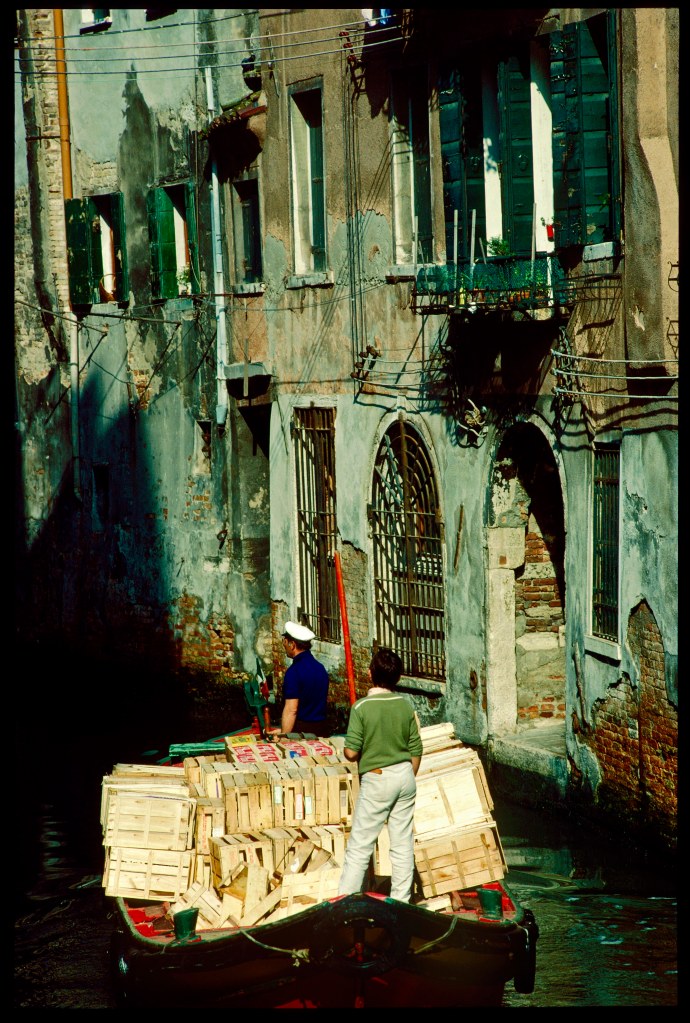
From the Ponte de Fuseri
In the ordering cut of the frame, the composition of elements, and technical adjustments, amateur photographers seek a harmonious arrangement in which the real and the ideal come into alignment. Such photographs imply that this alignment can be found in the world, not merely in pictures. (I later analysed this activity in my book, Gargantua.)
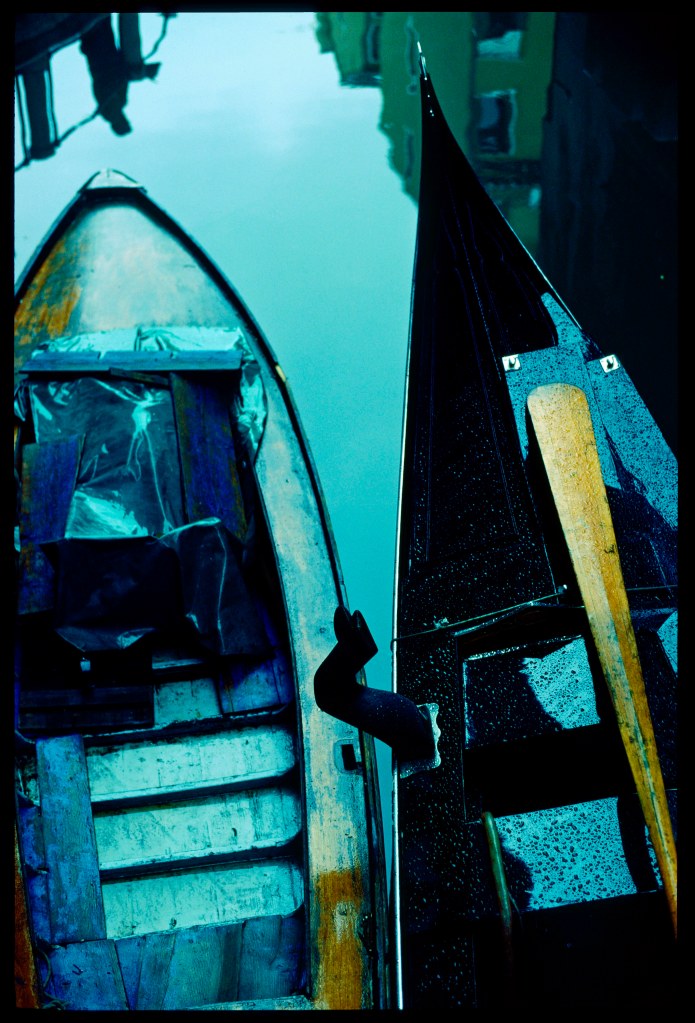
From the Ponte del Cavaletto
While I was critical of that way of making photographs, disarmed as I was by the novelty of the city, some of what I made there does fit that model. This image, with its reflected figure and juxtaposition of surfaces, is just the sort of conjunction of elements that Amateur Photographer or Creative Camera would have urged its readers to discern and capture. These magazines propagated a strange interplay between an ideal of free creativity and detailed rule-making to encourage the making of images that would settle comfortably into standard genres.
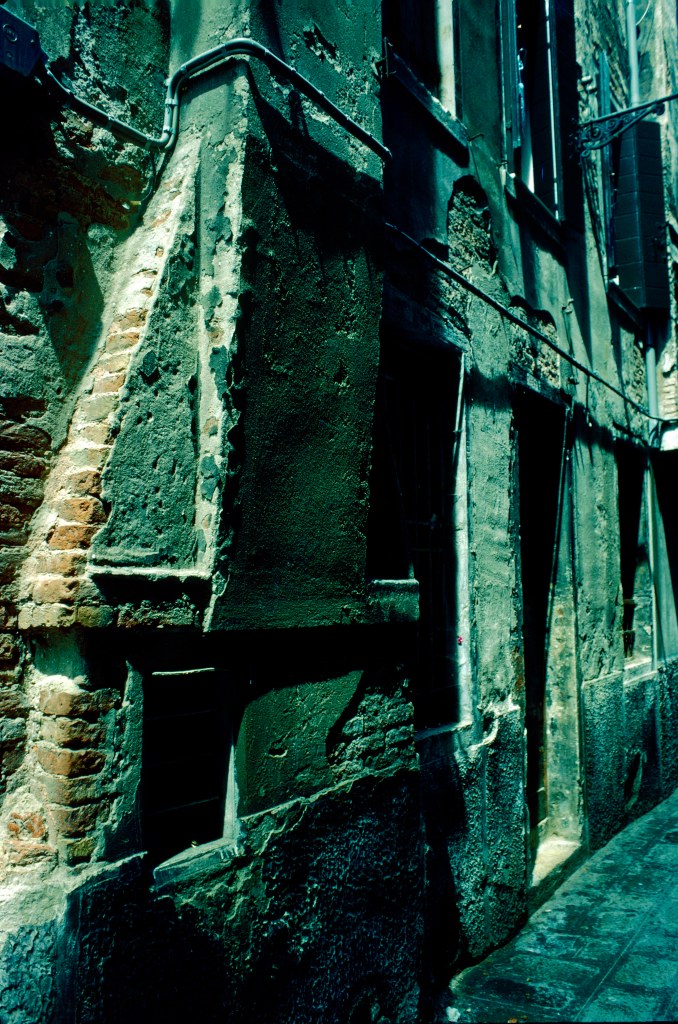
Calle de Avocati
More often, I turned those forms of arrangement to recording the textures of age and decay, of mouldering walls, sometimes seen under oblique light which dramatised their flaws. These are akin to those depictions of aged faces and hands, seen under similar light, and also beloved by the amateur magazines, from which conventional lessons about mortality or wisdom may be drawn.
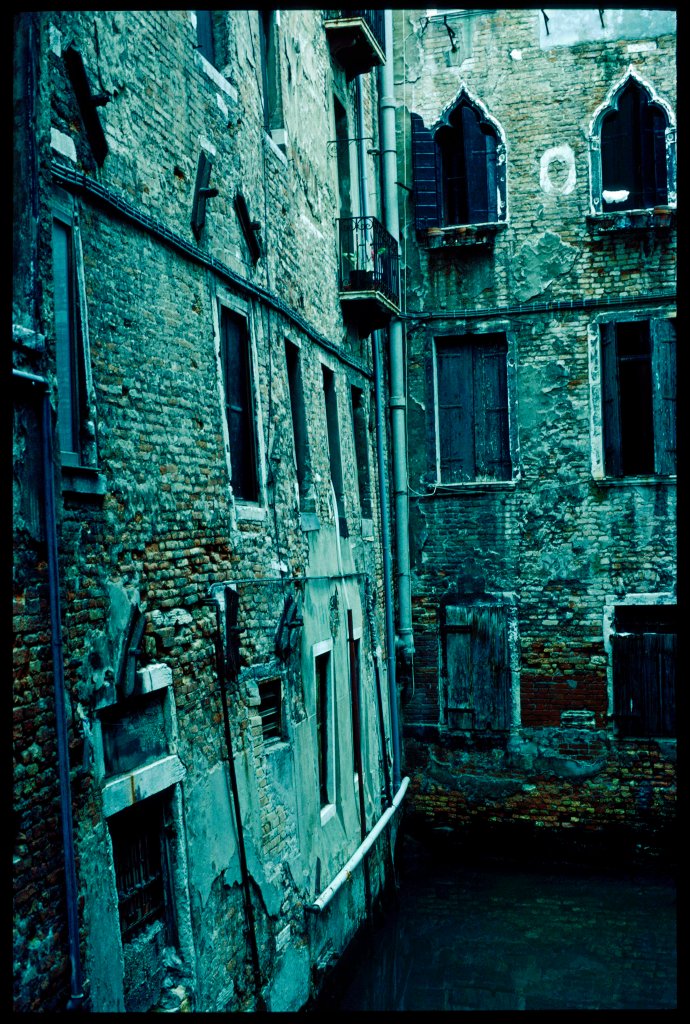
Calle Fiubera
In city corners, as bounded by the frame, miniature worlds are created which do take on an air of allegory—one about decline, ruin and vanity—of the kind that Ruskin and many other travellers to Venice would have found very familiar.
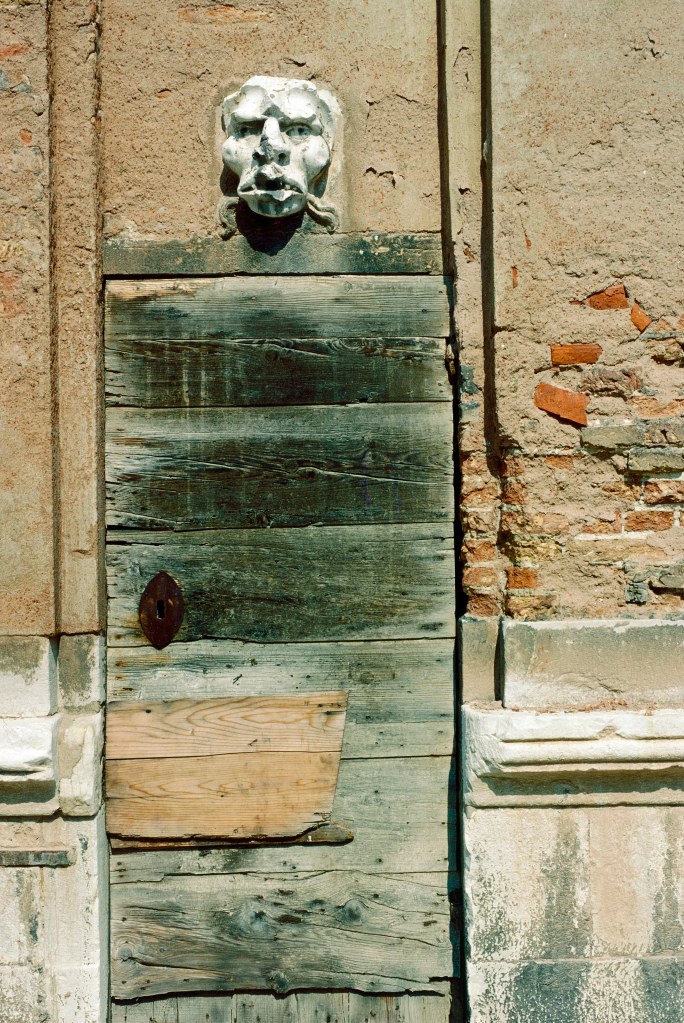
Fondamenta Sangiantaffetti
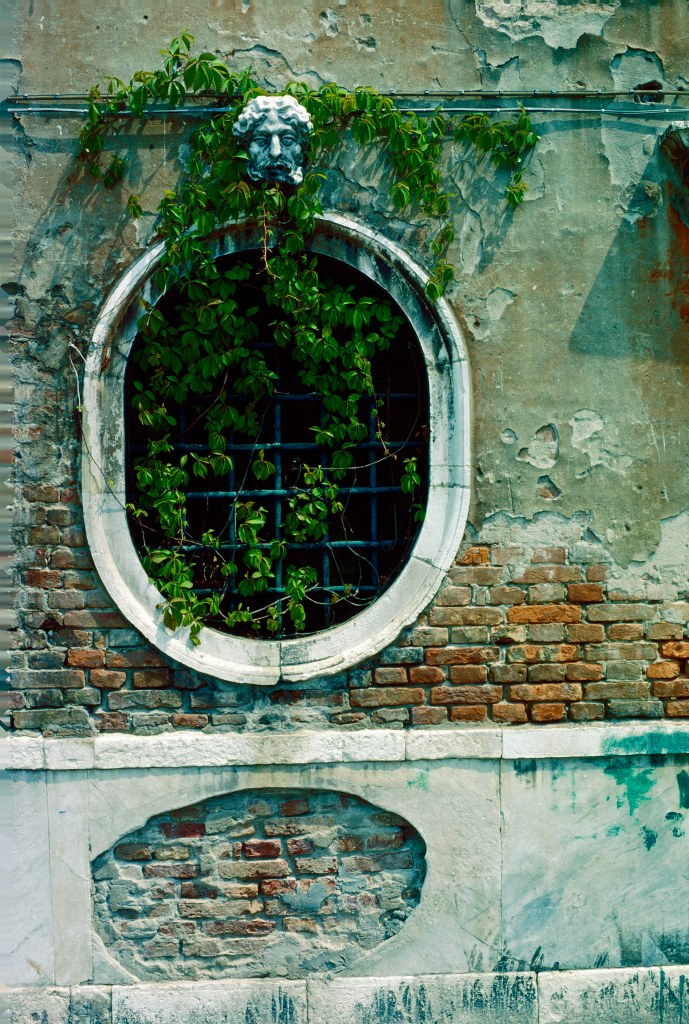
Campo San Margarita
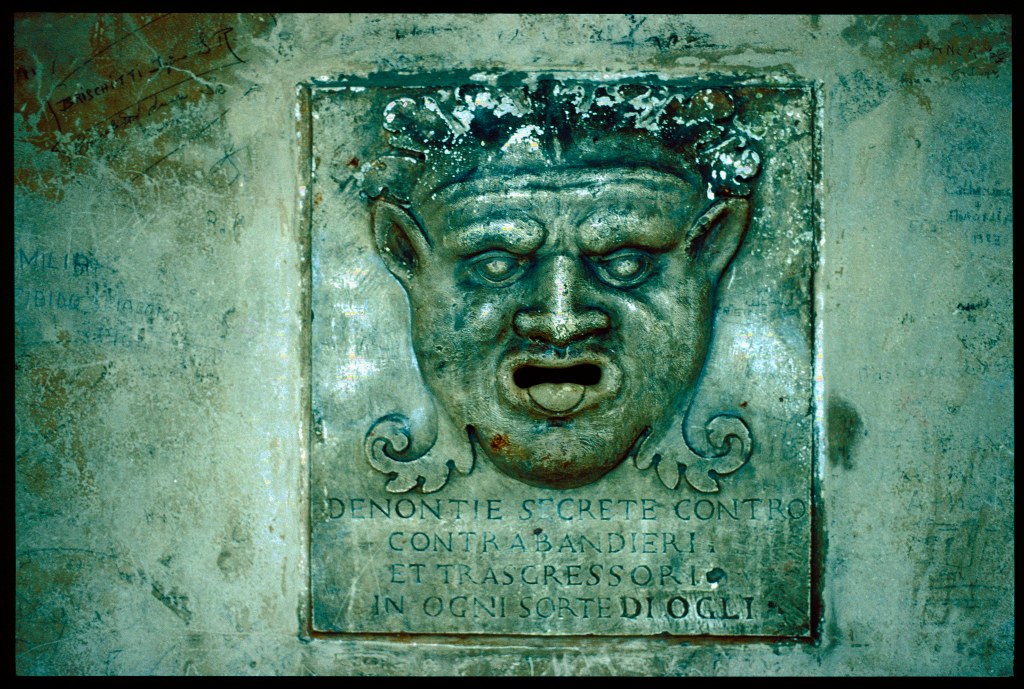
Letter-drop for the anonymous denunciation of smugglers, Piazza San Marco
This was particularly so of those photographs which took fragments of sculpture, set amid aging surfaces, or are in the process of becoming over-grown, or are juxtaposed with graffiti.
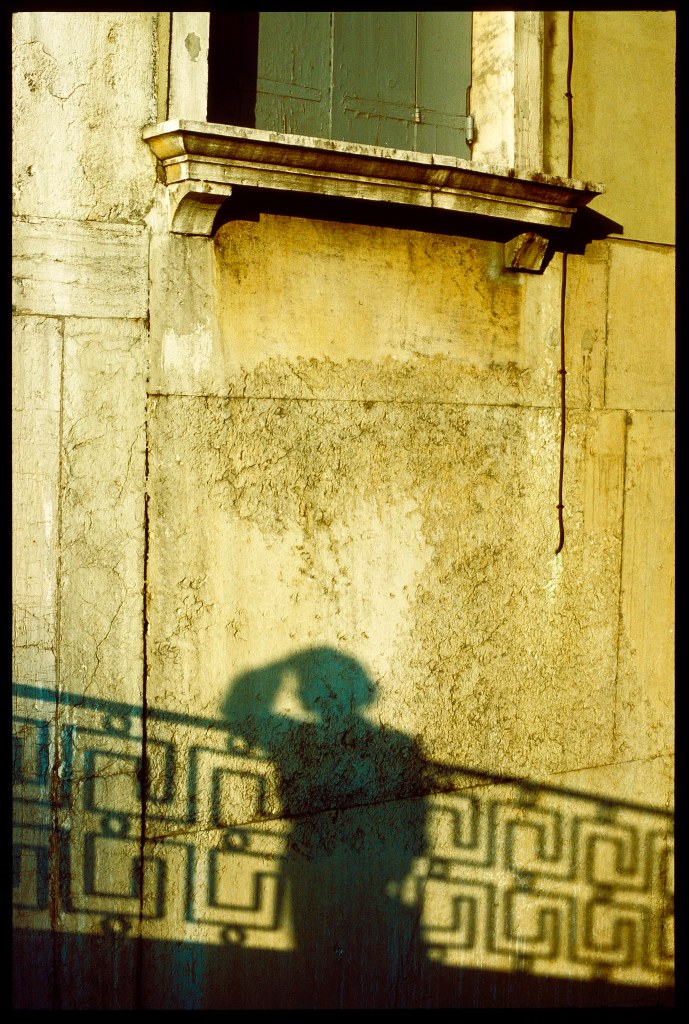
Riva del Ferro
In Gargantua, I was also to write about the relatively low level of social integration among amateur photographers, many of whom were youngish males, out to salve with images their experience of alienation. Their fragments, cut from the world, ideally presented a transparently readable and conservative affirmation of a reality that had been forced into making sense.
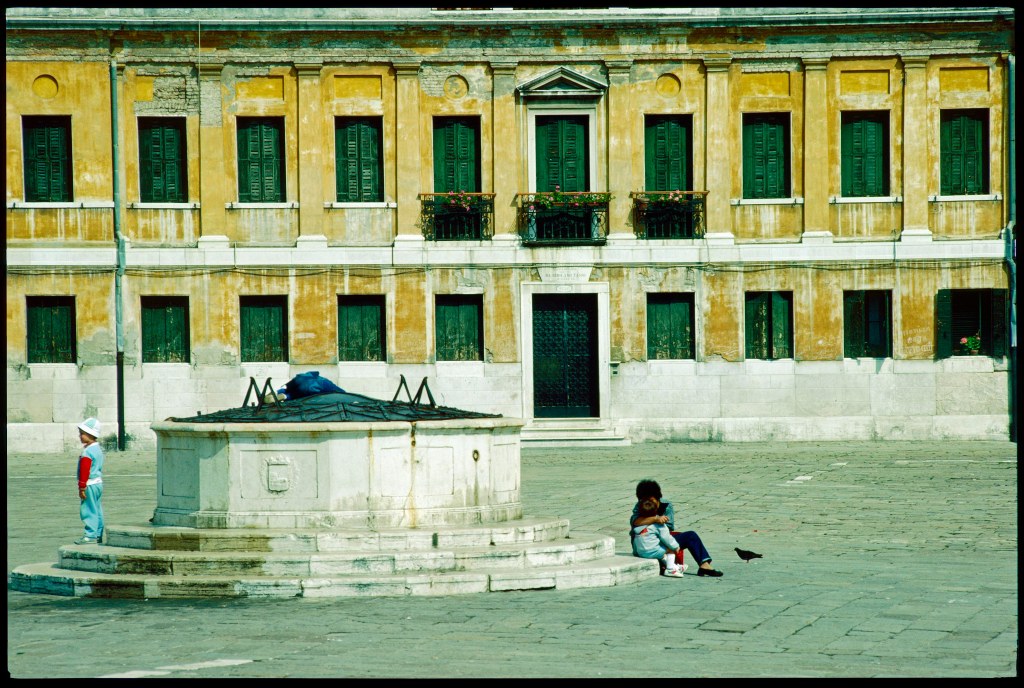
Campo San Polo
Campo San Polo
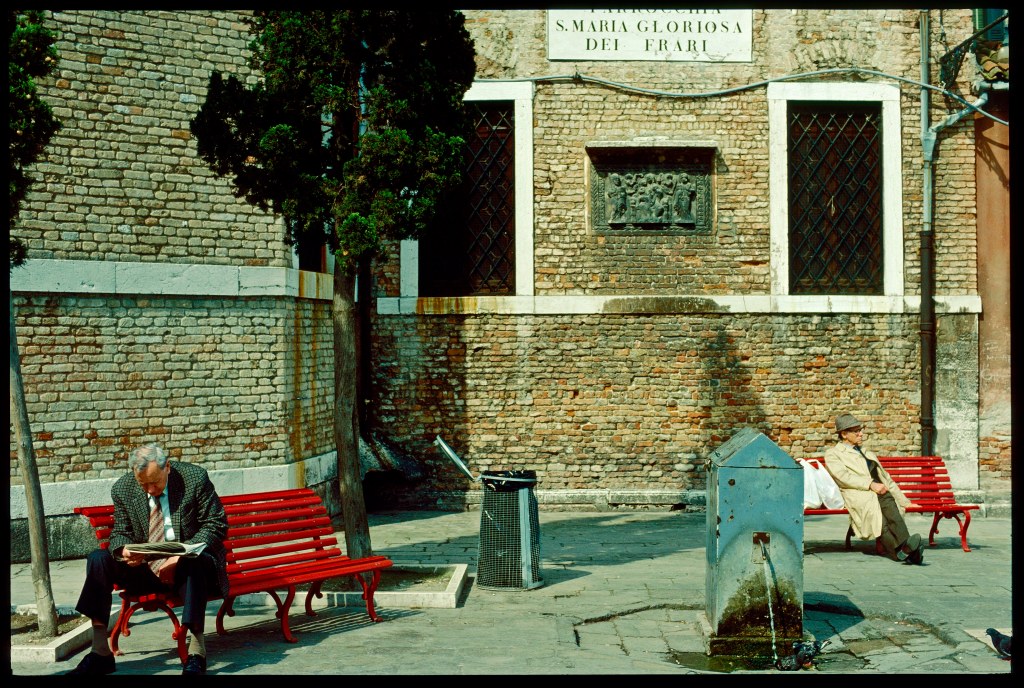
Yet Venice, beyond the main tourist routes, did not appear to be an alienated place. Instead, it offered an image of a rich social life that had not been violently suppressed, as in other towns and cities, by the reign of traffic. The squares were the theatres of a communal life in which each watched over one another, where children would play in the evenings, where locals would eat, chat and doze, and where the elderly would sun themselves or read.
Fondamenta Nani
Riva dei Sette Martini
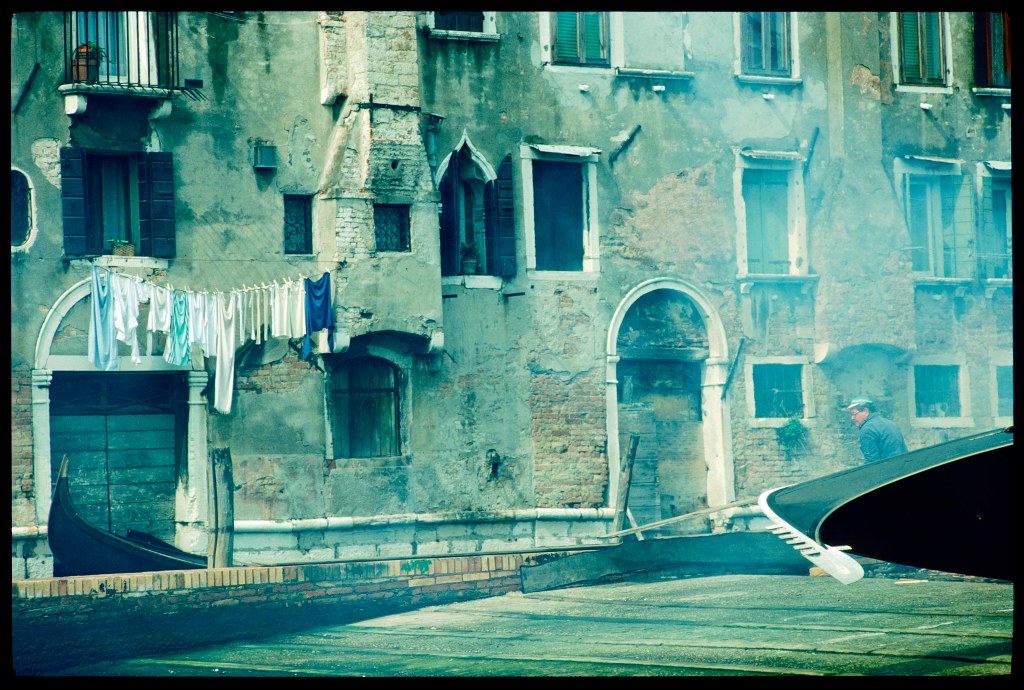
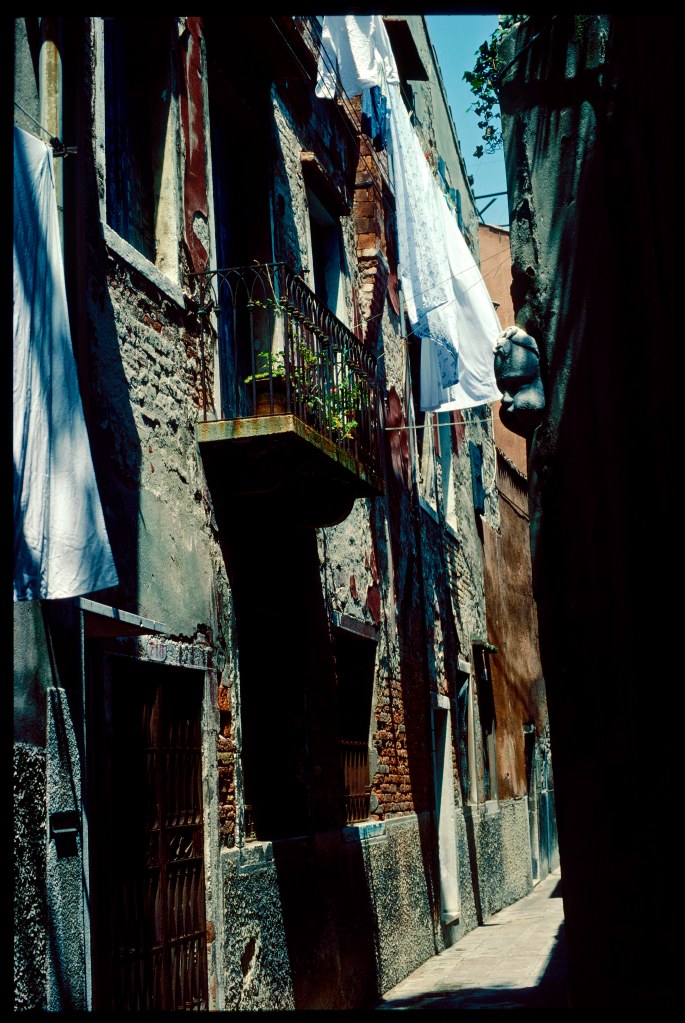
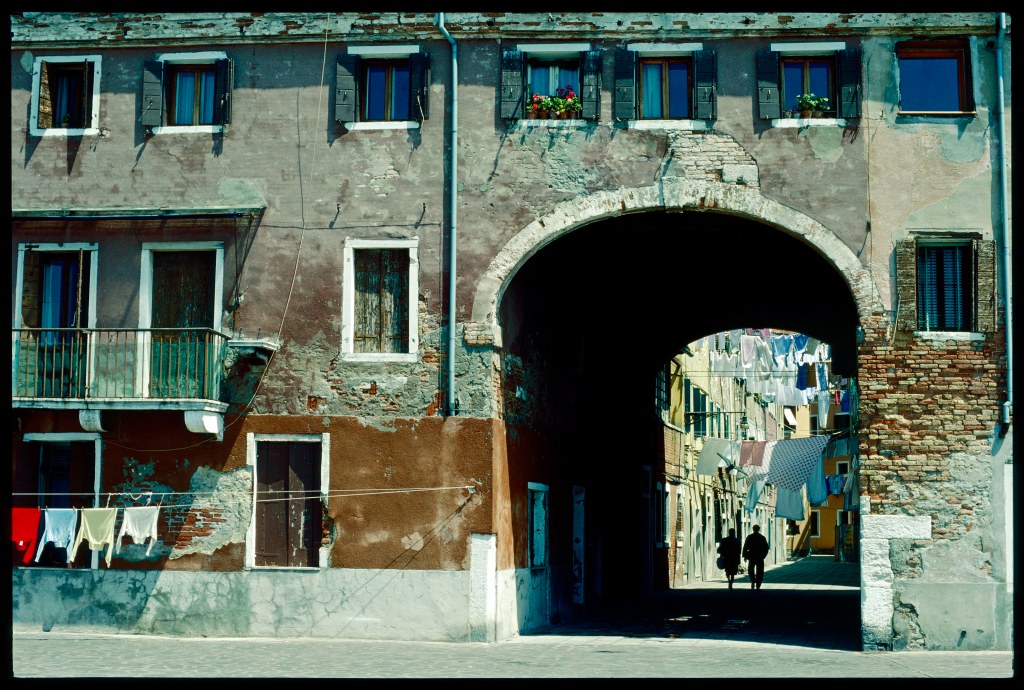
The city in those neighbourhoods was fuller then than now of the signs of domestic and working life, as workshops opened onto the street and laundry dried almost everywhere in the sun.
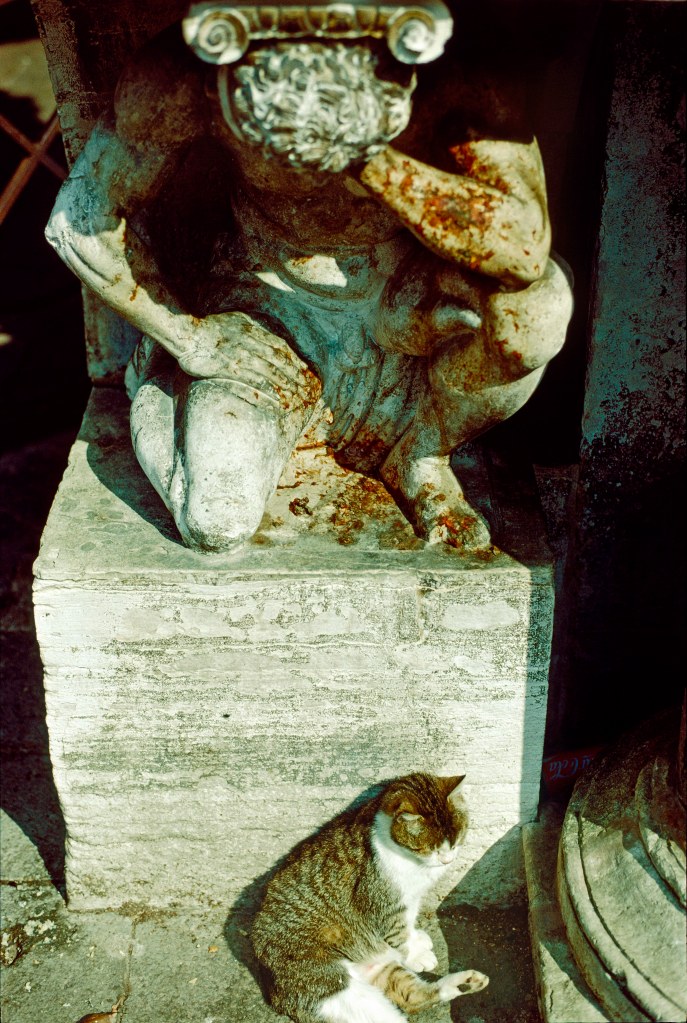
Rialto Market
It was full of cats, too, domestic and feral, that played, fed and slept alongside the people. (Their numbers have been steadily reduced over decades by a sterilisation programme and by deportation to other islands.) Even so, these photographs also fall into the genre of social documentation, from a distance which is both physical and cultural, of the largely opaque lives of others.
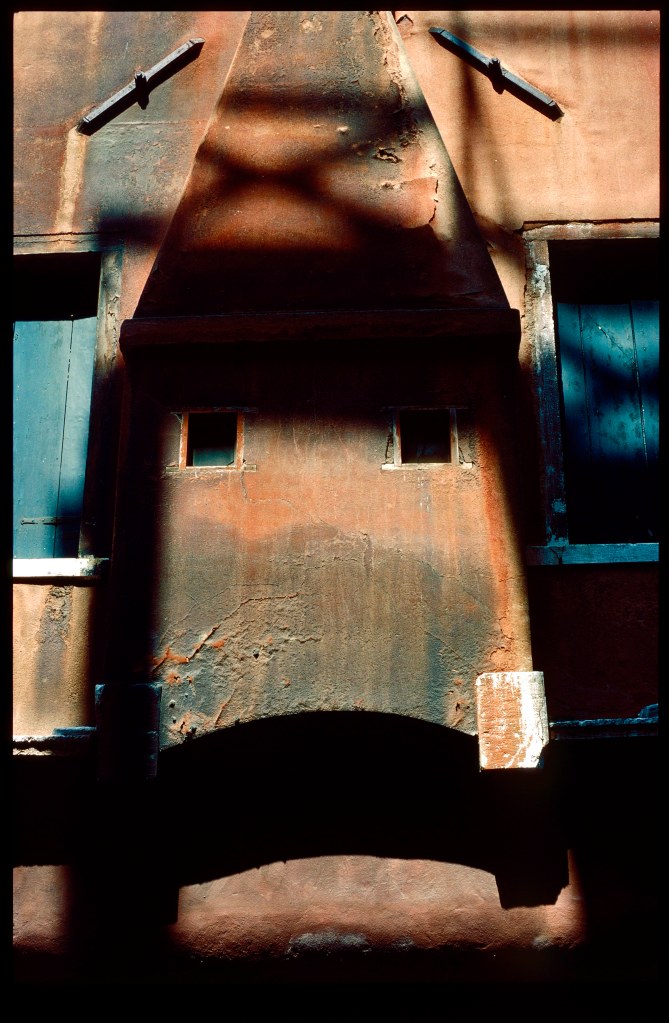
Rio Mocenigo
A few of my photographs do not occupy such genres quite so readily: there is the strangely facial character of the play of light and shadow across the façade of a house.
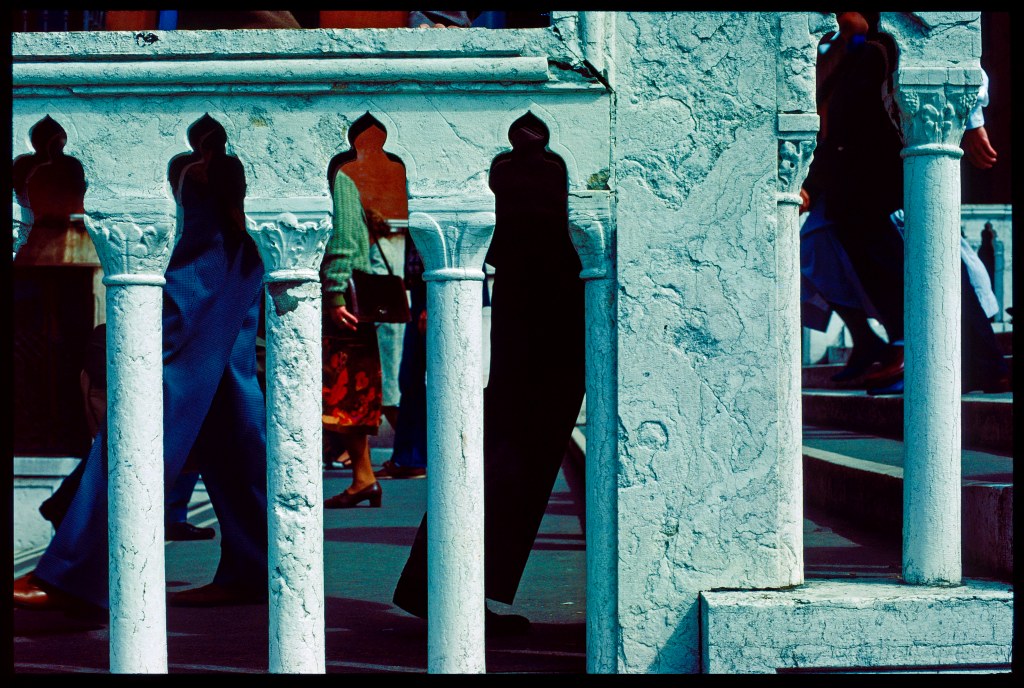
Ponte del Vin
Or the framing of passersby against the balustrade of an ancient bridge, close to San Marco.
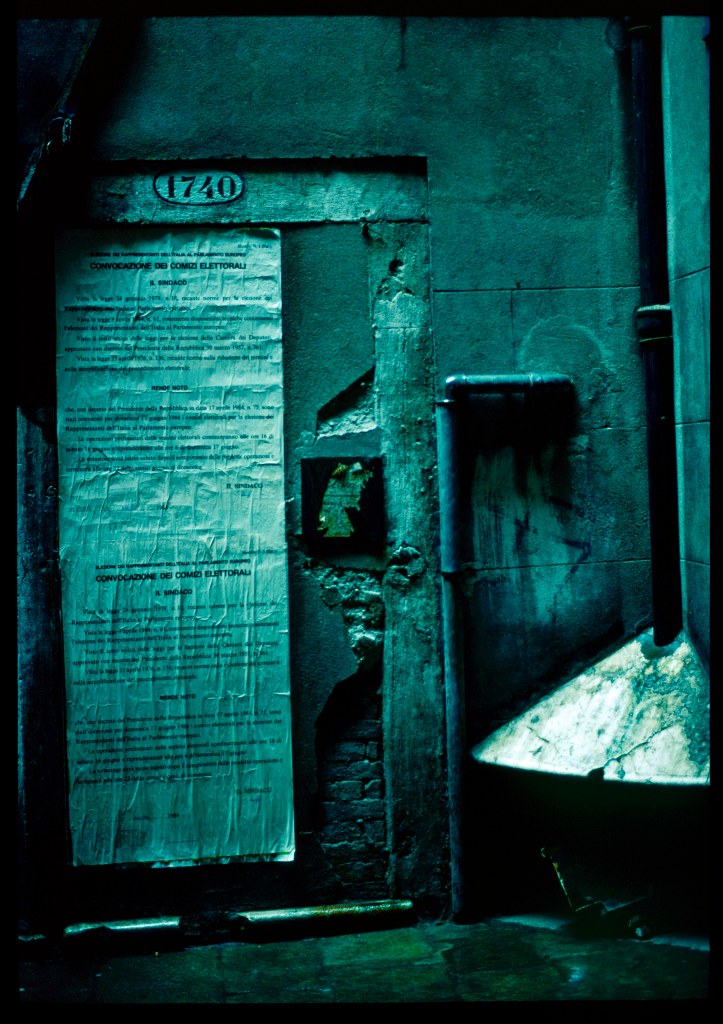
Sotoportego del Spiron d’Oro
Or the dark corner in which a wrinkled, grimy municipal notice is seen alongside crudely installed drainpipes. Even here, though, allegory and personification haunt such images, and perhaps inescapably so, since there is a deep affinity between photography and allegory, marked by captioning, the cut of the frame, the fragment, and the collection of souvenirs. So, if other memories—of heat, taste, sound and pain—are detached from this visual world, that is a large part of the point: to collect, catalogue and caption controllable images.
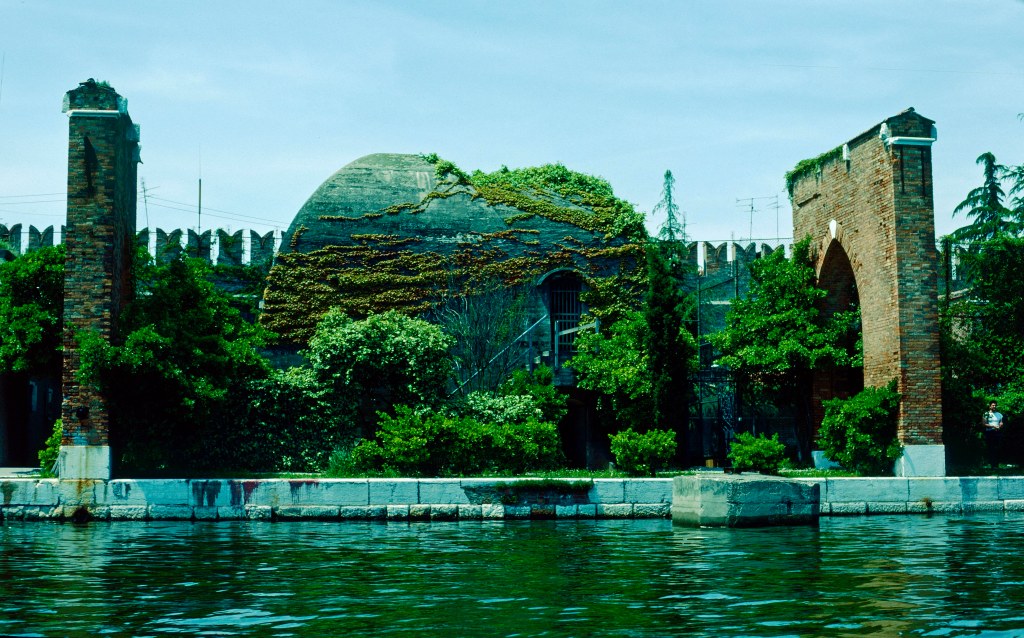
The Arsenale military base from the closed Vaporetto No. 5
What did I read about the city in Braudel, and then carried there? There is much in his monumental book about violence, about the seizure and fortification of territories (for largely commercial reasons) under the steady ‘vigilance’ of the Arsenale; about the enormous divides between the aristocracy and the rich, on one side, and the pauperised masses, on the other, who so often took to brigandage and piracy that they threatened the very existence of the state. Also of systematically corrupt governance, of the political and cultural domination of traders and merchants by the aristocracy, which they yearned to enter—and could do when they had amassed sufficient bribes.
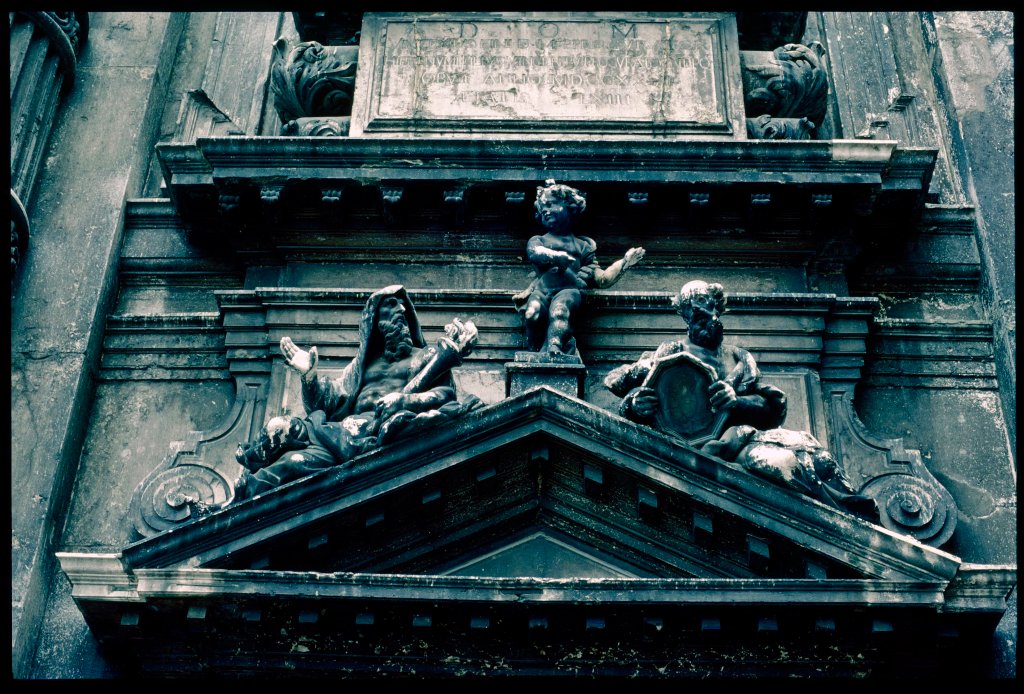
The church of San Moisè
And the use of art, architecture and decoration for the projection of power, religious and temporal, designed to overwhelm the viewer with its splendour and magnificence. In making the reactionary religious propaganda of the Baroque, in an effort of colossal scale, complexity and reach, artists laboured under detailed instruction from friars and theologians.
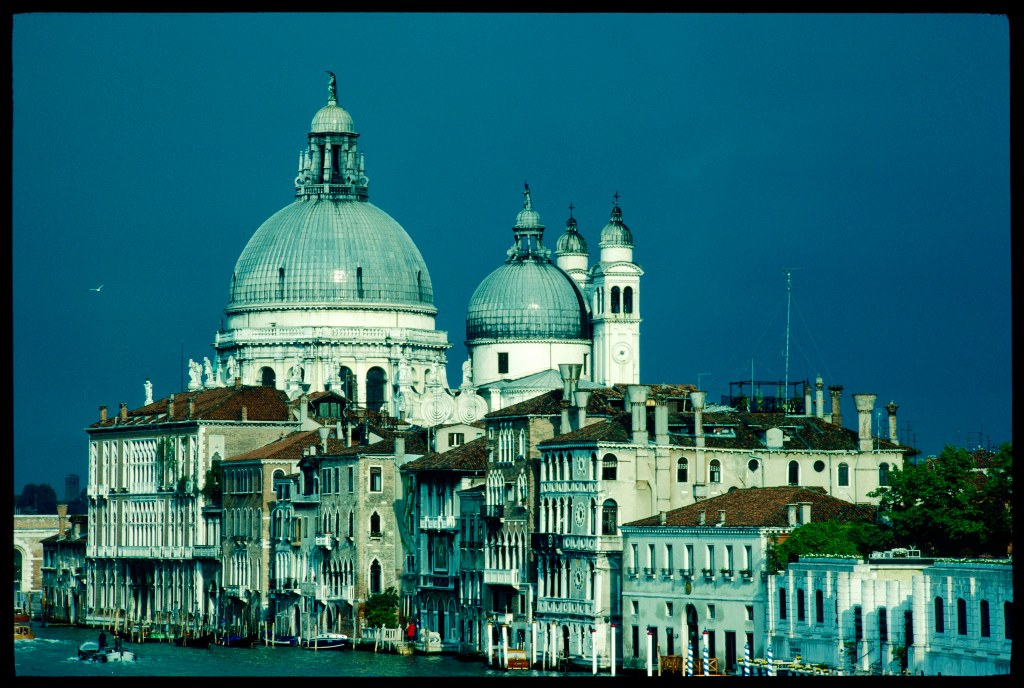
From Ponte Academia
And further, that the assemblage of treasures, which d’Annunzio gloried in, were largely the products of the twilight of Venetian power, as a glut of money, that could no longer find investment, was sunk into conspicuous expenditure. As Braudel put it: ‘Perhaps the extravagance of a civilisation is a sign of its economic failure.’ (Braudel’s insights here were to be developed into a systematic theory in an extraordinary book by Giovanni Arrighi, The Long Twentieth Century: Money, Power and the Origins of our Times.)
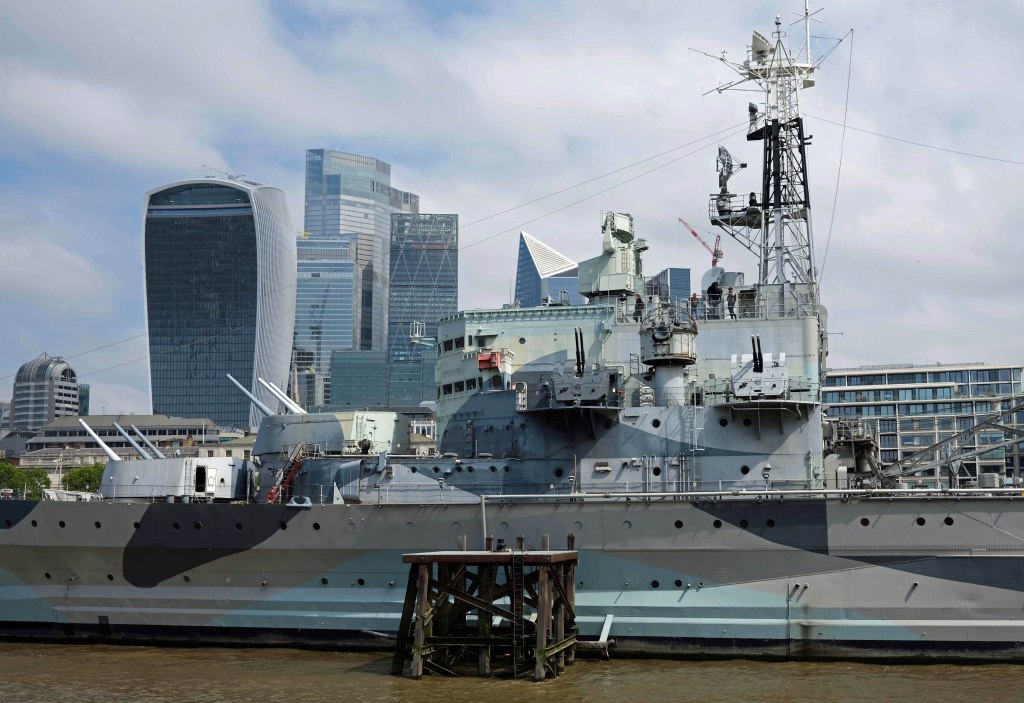
HMS Belfast and the City, June 2023
Looking across the Thames towards the City, forty years later, a military relic is seen against the competitive display of architectural grandeur beyond; perhaps, after all (though leaving religion to one side), some backwash from Venice’s fate can be felt here.
 Julian Stallabrass
Leave a comment