April 1984
As a child, my parents took me each August to St Ives in Cornwall, where my grandmother lived in a modern block of flats overlooking the beach. Every day at tea-time, I would climb up the hot concrete steps to her flat (outside of which an ancient, portly cat nested in the hollow of a Barbara Hepworth sculpture) to prattle to my granny, drink tea with her and eat biscuits. Every day, I would count the thin copper bracelets which she wore on each wrinkled wrist, five on one, four on the other, the touch of her skin as cold against my fingers as the metal.
We continued to go there each summer, even after my grandmother had died. She had been friendly with the potter Bernard Leach, who lived in the same block of flats. I can still bring to mind a childhood vision of him, a man stooped with age who sat outside taking the sun, and wearing a suit—if my memory is accurate—brown against the whitewashed walls, and with a pipe eternally jutting from the right side of his mouth.
As I grew up, my love of drawing led me towards an interest in fine art. Remnants of the artists’ colony were still present in the few that had hung on there, long out of the season of fashion, in the studios and galleries, and even, in a surprising way, in the number of painters making cheap, quick pictures for tourists who were aware of the town’s artistic reputation. Subject matter was to the fore in these paintings of the Cornish landscape, fishing boats and gulls, or more unusually some historical scene—of perhaps galleons moored in calm seas at sunset.
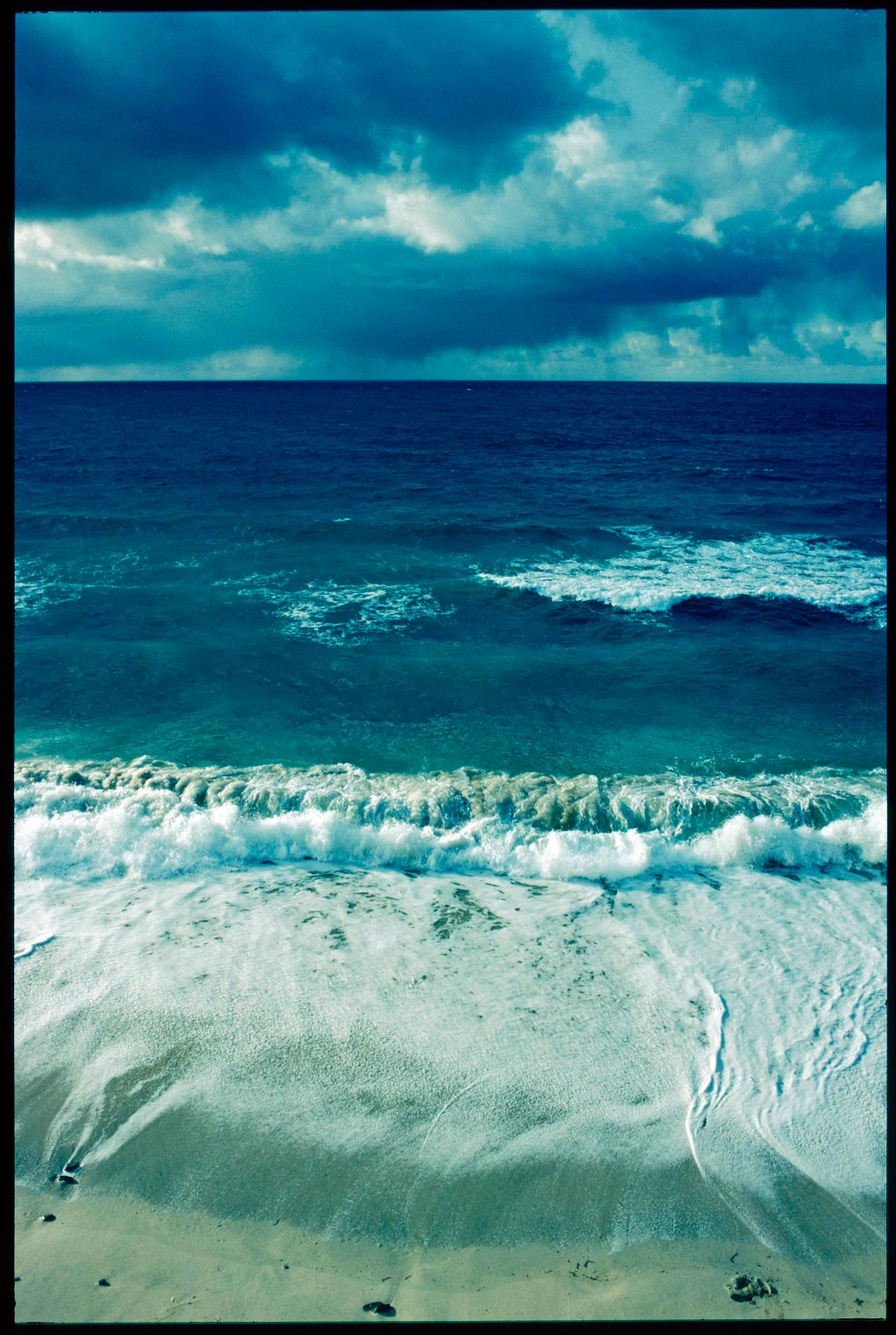
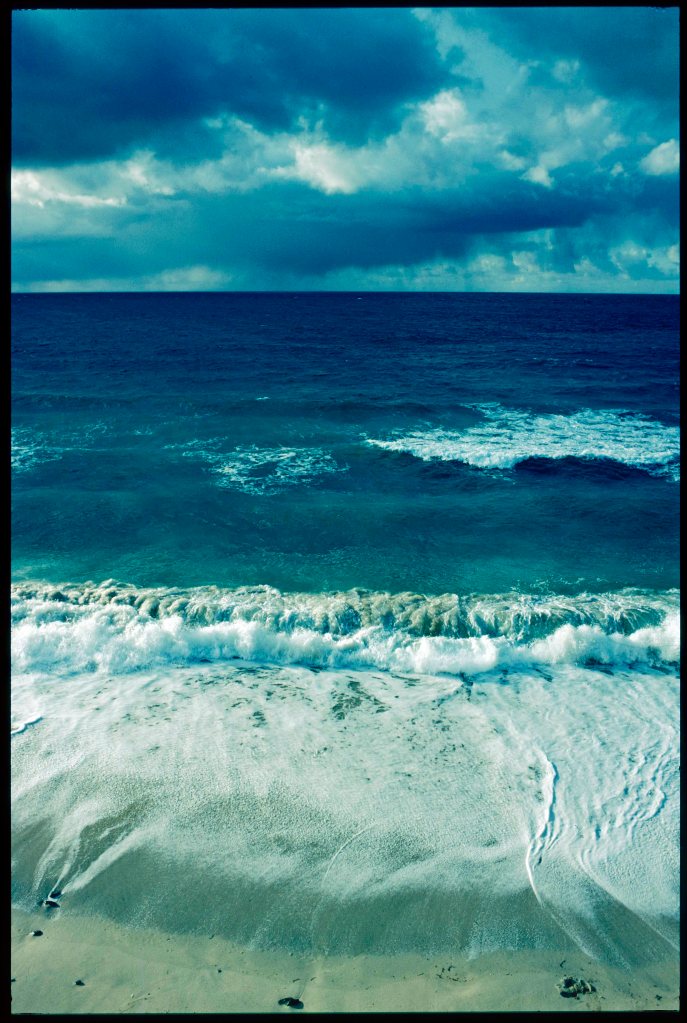
Later still, when I went back to St Ives with a camera, I thought I could see the colours and lines of paintings by Ben Nicholson or Willie Barns-Graham in rocks and stones. I tried to make abstract compositions within the 35mm frame, freezing a particular configuration of rock, sand, water and light so that it made sense for me. I was captured, not just by the act of framing these scenes, but by the delayed wonder of holding the resulting slides up to the light, some weeks later, the film transforming present rays into past upon the retina, so that vanished moments sprang into strange life—fixed and high contrast—a little more and less than real.
I was held, too, by the camera’s strange rendering of time which highlights the combination of an instant and a place under a singular and transient light—in the patterns made, for instance, by a thin sheet of water being blown across the sand. Different lengths of moment may be held within the same image, for the camera can freeze water into pin-sharp droplets at 1/8000th second, or at longer exposures let it flow like long strands of hair, but either way, in a frozen architecture, the mobile and immobile meet.
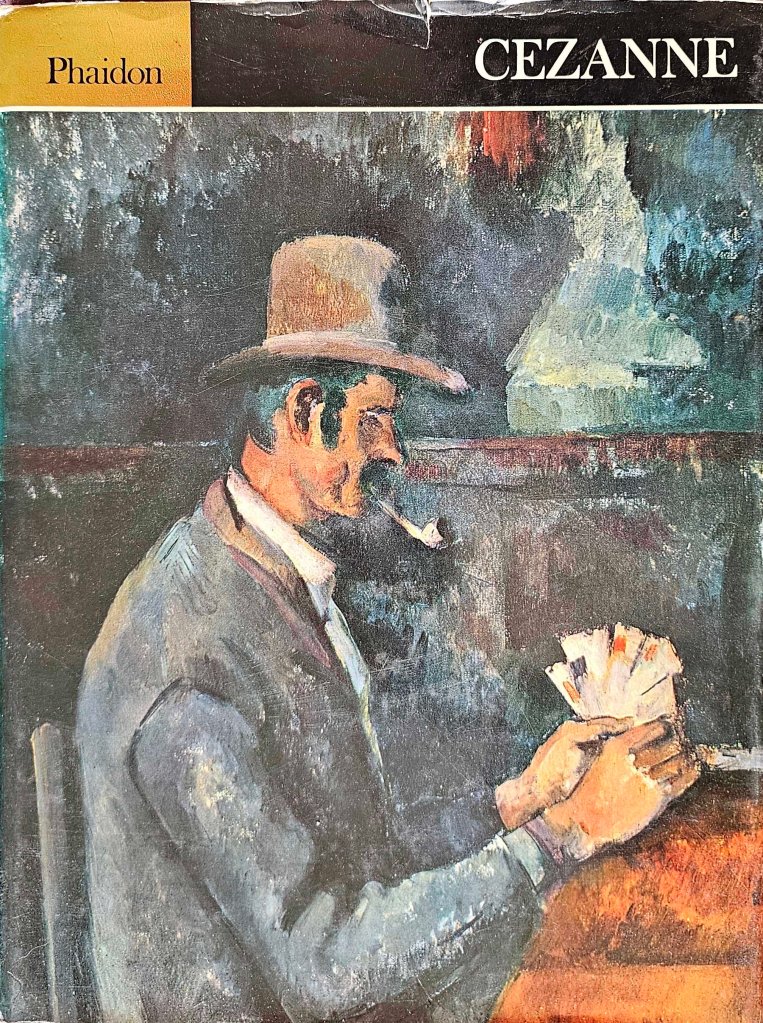
F. Novotny, Cézanne, Phaidon, London 1971.
St Ives was a wartime refuge for many artists, including Hepworth, Ben Nicholson and Naum Gabo, and some stayed long after the war had ended, held by the artistic community, the landscape, and the distinctive light (caused by the sea acting as a gigantic reflector on three sides of the town). I have an old Tate catalogue of Nicholson’s work, bought in April 1984, and re-reading it brings back memories of the deep confusion which much art caused in me at that time. The only art book my parents owned was a slim Phaidon monograph about Cézanne, and I remember looking at the poorly reproduced colour images, feeling unmoored in my ignorance, and also that there was something of deep significance to be grasped in those pages that was wholly beyond me.
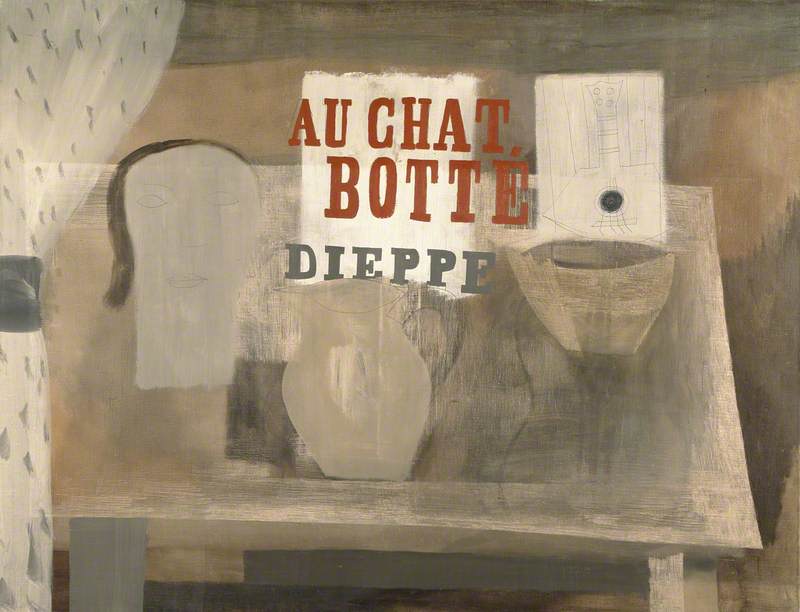
Ben Nicholson, 1932 (Au Chatte Botté), 1932
Similarly, with Nicholson, I remember my puzzlement in trying to read his painting, Au Chatte Botté (Puss in Boots), as reproduced in the Tate catalogue. The artist wrote that the painting is an ‘imaginative idea’ connected to the mysteries of the French language, childhood fairy tales and the subconscious appreciation of significant formal arrangements.[1] The catalogue text by Charles Harrison, then a formalist, while clear and finely written, opened up more dilemmas than it solved, with its assumptions about the value and importance of that form and how it should be judged. What was I meant to make of Nicholson’s ‘mysterious poetry’, ‘inviolable and most purely realised form’, or the danger of lapsing from ‘the superior reality of art’ into mere decoration or frivolity?
Still, Nicholson’s later reliefs—unlike the pure white ones of the 1930s—seemed to have an affinity with the landscape of St Ives, and what both the artist and Harrison said about deep-set colour, not a thin layer coating a surface, but a colour that runs through a substance, and could be cut into, also echoed with the forms and colours of rocks broken by the sea or by children. (Such views draw on those of Adrian Stokes—another St Ives resident—in his book Colour and Form (1937), which I have argued is relevant to documentary slide photography.)
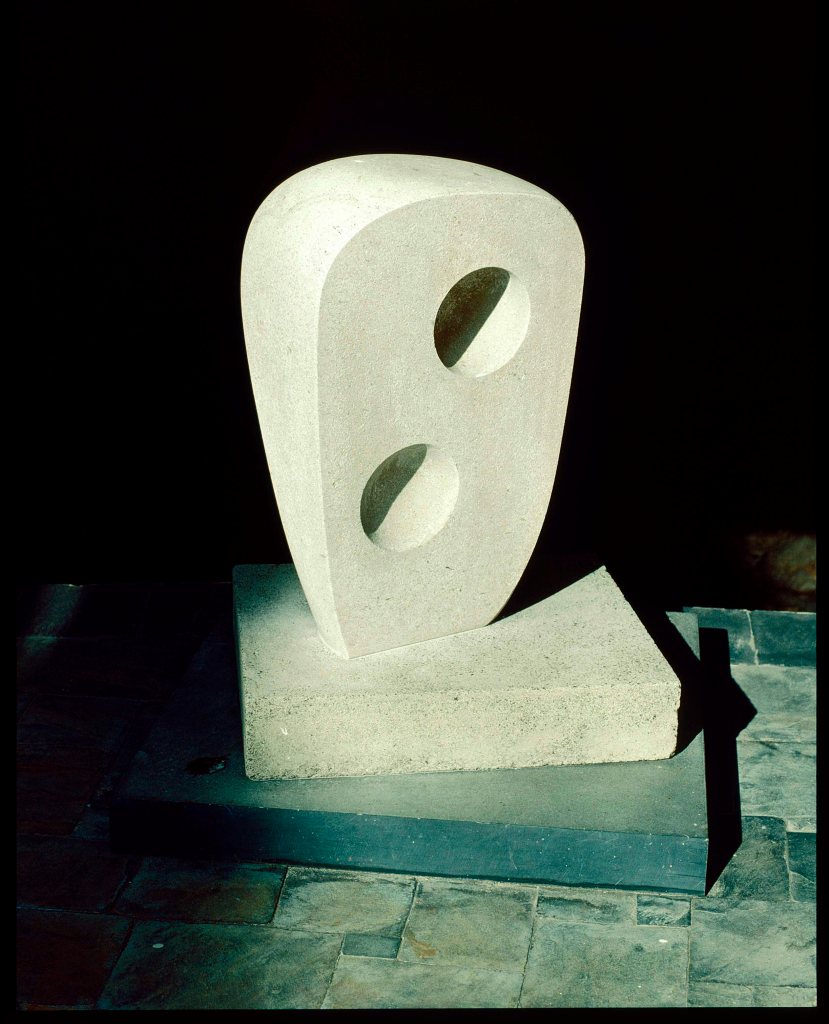
Barbara Hepworth, Single Form with Two Hollows, 1965, Roman Stone
The presence and legacy of the St Ives artists could also be felt in the work displayed under skylights at the modernist Penwith Gallery, and for me since childhood in the Hepworths situated in the flats, including a meticulously pure piece of stone that marks the entrance to the underground garages, and is associated with my revulsion at the grimy darkness and acrid tang of that concrete space, with its polluting metal inhabitants, standing in stark contrast to the vivid light and clean air above.
Present too, although I did not know it then, in the people around us, in the games we took part in with other kids from the flats, playing with such intense ardour that we would continue to the point of complete exhaustion, breathless and exhilarated. Among the players, Hepworth and Nicholson’s grandchildren. Sand fights, occasionally, although they were forbidden, grains in mouth and eyes; and more often the frantic conquest and defence of a squat concrete box containing drainage equipment that projected above the beach from the flats which, in our minds, became a castle.
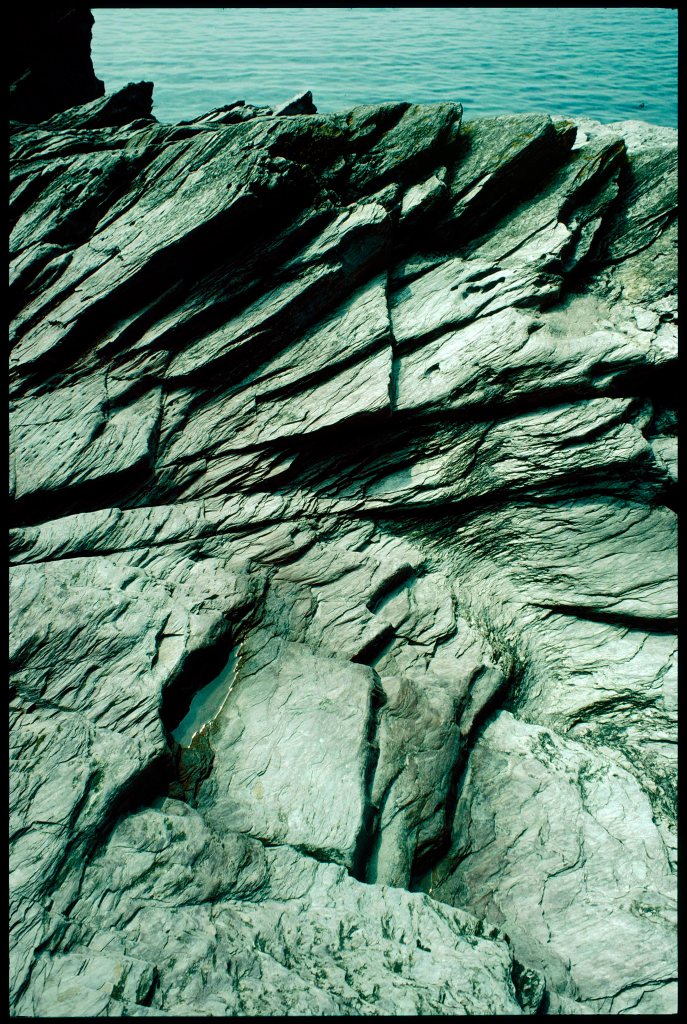
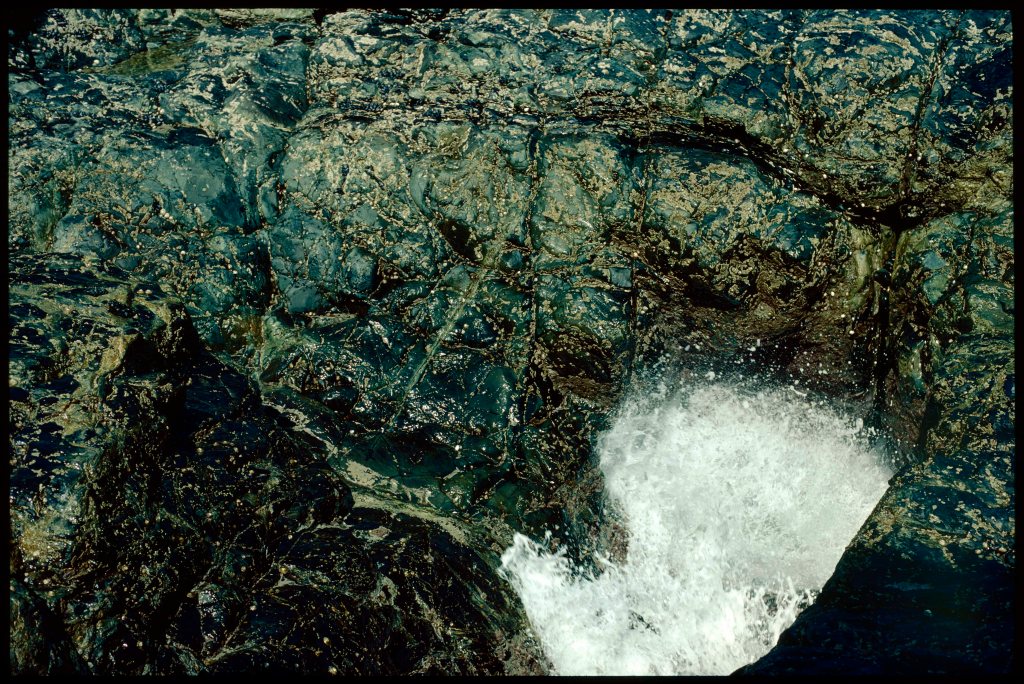
Setting aside the mysteries—or, put less sympathetically, the contradictions—of the ideology of formalism, I tried to reach some insight by making photographs as much as reading. This view of rocks and the sea at Plymouth, novel to me, was coldly composed in a process of subtraction, an attempt to control obdurate contingency by framing, focus and exposure.
Whitney Davis’ acute analysis of the involuted theories of modernist formalism shows how they start from their endpoint, generating ‘a closed, circular confirmation of the formalist’s own observations’. They are reliant on subterranean rhetorical connections to various subjectivities: to speculations about artistic intention, which might (if proven correct) break open the charmed but vapid circle; to the exercise of taste and judgement by the critic; and to the formation of the viewer.
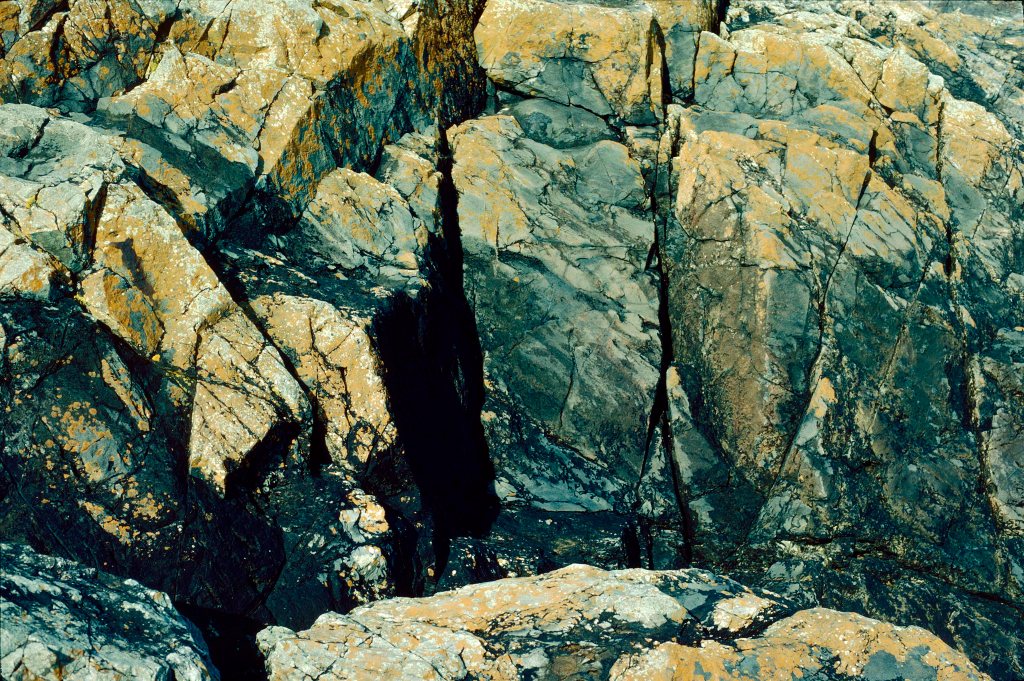
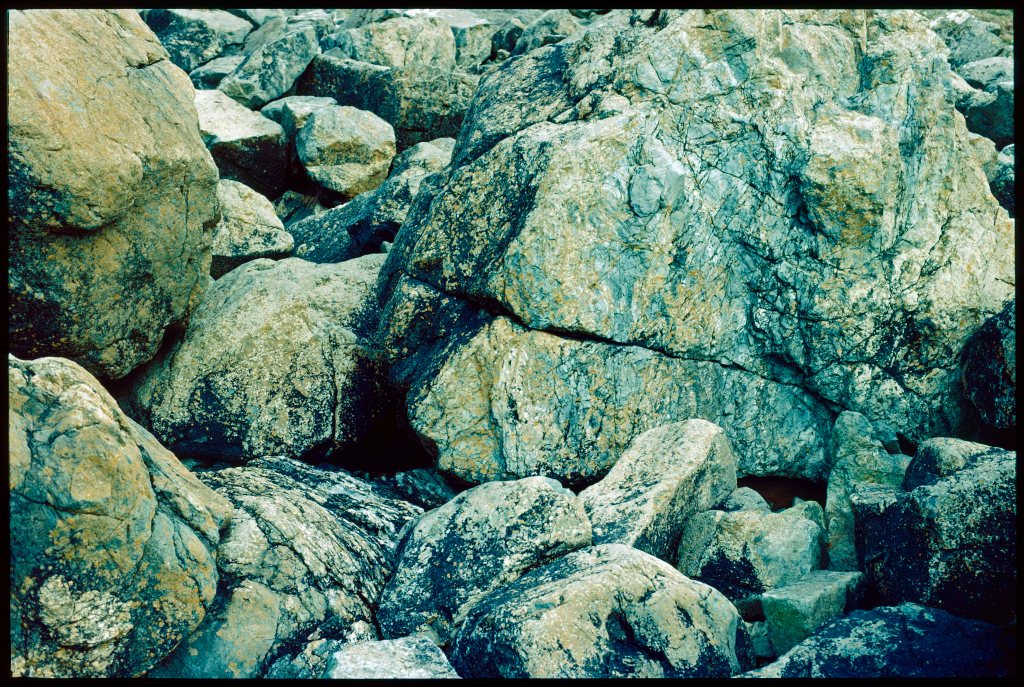
The photos of these rocks around the Island—a headland narrowly connected to the town and topped with a tiny chapel—are quite different from the Plymouth image, because they exemplify that deep connection between formalism and subjectivity. While a stroll around the path that skirts the Island might take ten minutes, the jumble of rocks beneath was—for child and then photographer—a complex realm of what seemed to be infinite variety, forming a sequence of environments that, as you climbed from one sunken enclave to another, bound by rock walls, the sky and the sea, sealed out all human trace. These rocks, here brought into a compositional order, were also the site of childhood play, climbing and rockpool fishing, and bound up with the feel of salt air and summer sun, with warm and cold stone surfaces, their abrasion of feet and hands, their fixity as limbs were braced against them while climbing, the occasional alarm at their unexpected rotational movement under foot and hand.
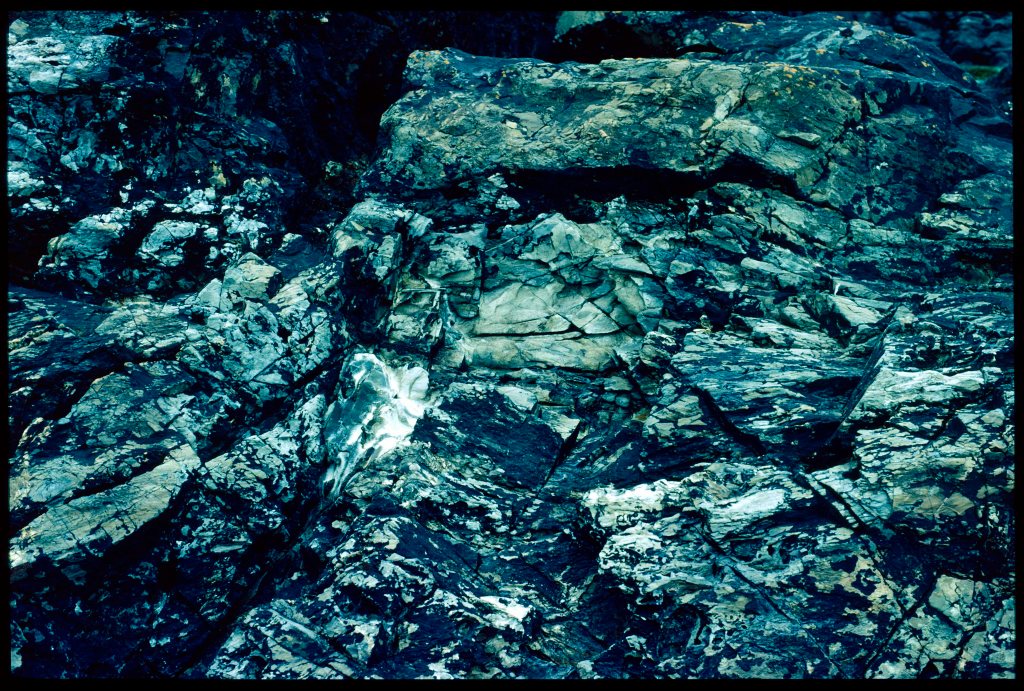
Our long summers, over years in which we repeated those same activities, were collated in the mind in a fusion of colour, temperature, roughness and smoothness, and the intense surveillance of rockpools for signs of life. A few distinct memories stand out—the brief horror of seeing my brother leap over a wide and deep crevasse which would surely have broken bones if he had fallen; the rare journey far out across the rocks to a place we called ‘hell’s mouth’, which formed a stony frame to a window onto the open sea. Colour and shape were among the qualities that were over the succession of time woven deep into our developing minds, patterned there as we tested our growing bodies against the demands of traversing the rocks.
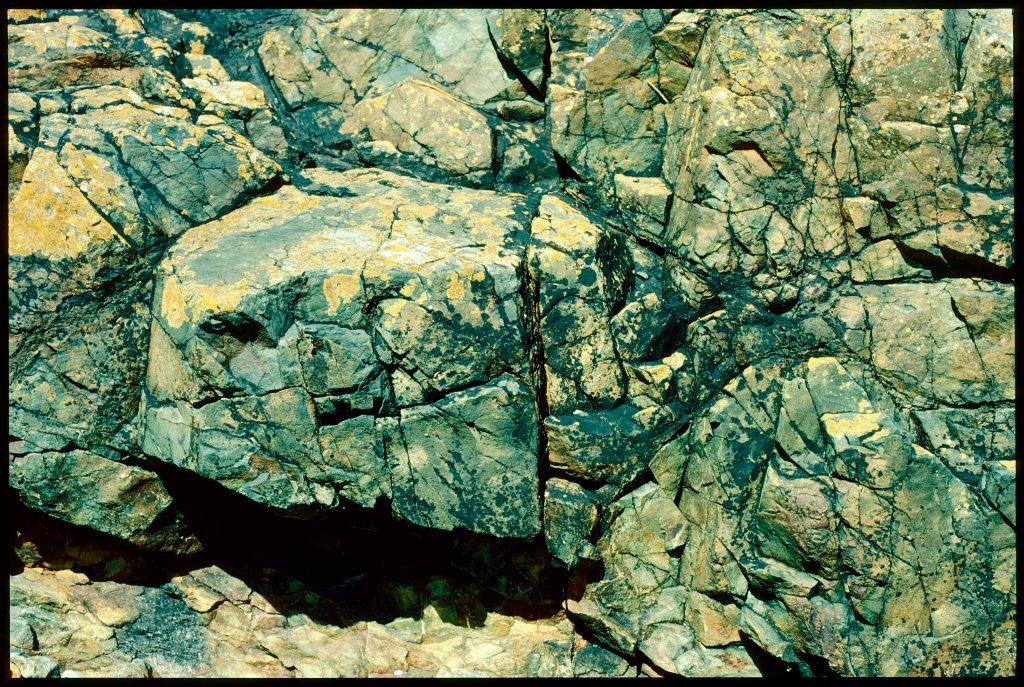
A formalist view of this subject matter meant an ordering of various aspects that could be recorded and regulated, and an exclusion of uncontrollable elements. It opened up the covert instrumentality that lays buried beneath formalism’s surface Kantianism; and it also became clear, eventually, why for an adolescent the enigma of Cézanne’s work (as seen in the poor images of the Phaidon book) was irresolvable: for, when seen in formalist terms, their implied viewer was a fully formed, cultured individual, confident in their taste, knowledge and class, out of whom will issue the faith to judge form as form.
[1] Ben Nicholson, ‘On Abstract Art’, Horizon, vol. 4, no. 22, October 1941, pp. 272-6.

 Julian Stallabrass
Leave a comment