March 1984
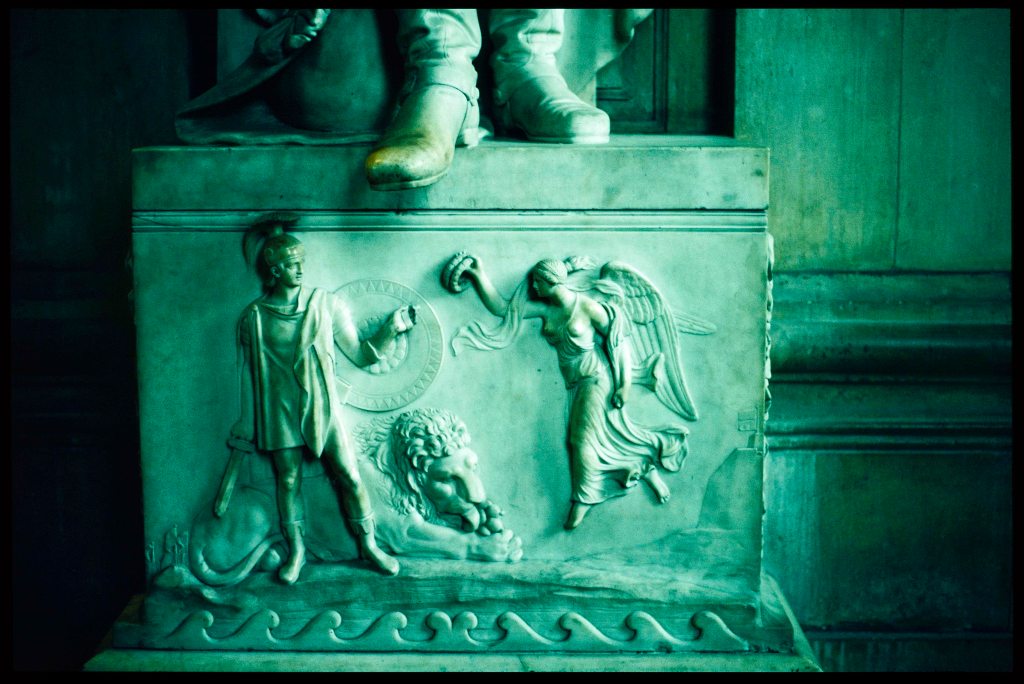
In St Paul’s, under available light, I photographed two military memorials, both carved by Charles Rossi, a successful imperial propagandist who made other similar monuments in the Cathedral.
The first was to General George Eliott, renowned for his successful defence of Gibraltar from Spanish and French forces during the Great Siege between 1779 and 1783. Eliott was ennobled for his victory which extended British global power, while the high drama of the prolonged siege with its various raids, battles and bombardments was magnified in many retellings, and is even given a proto-surreal twist in the wholly unreliable adventures of Baron Munchhausen.
The memorial, though, is a restrained piece of neo-classical glorification. My interest lay in the way in which the heavy military boot protruded beyond the base, looming above the cliched flim-flam below: above a shore lapped by stylised waves, fortified Gibraltar stands to the right, while a hoplite, with a British lion at his feet, receives the laurel crown of victory from the goddess Nike. The boot speaks of a domination that is harder and uglier than the relief admits, although the lion cleaning its paw is also a curious touch–does it lick away enemy blood?
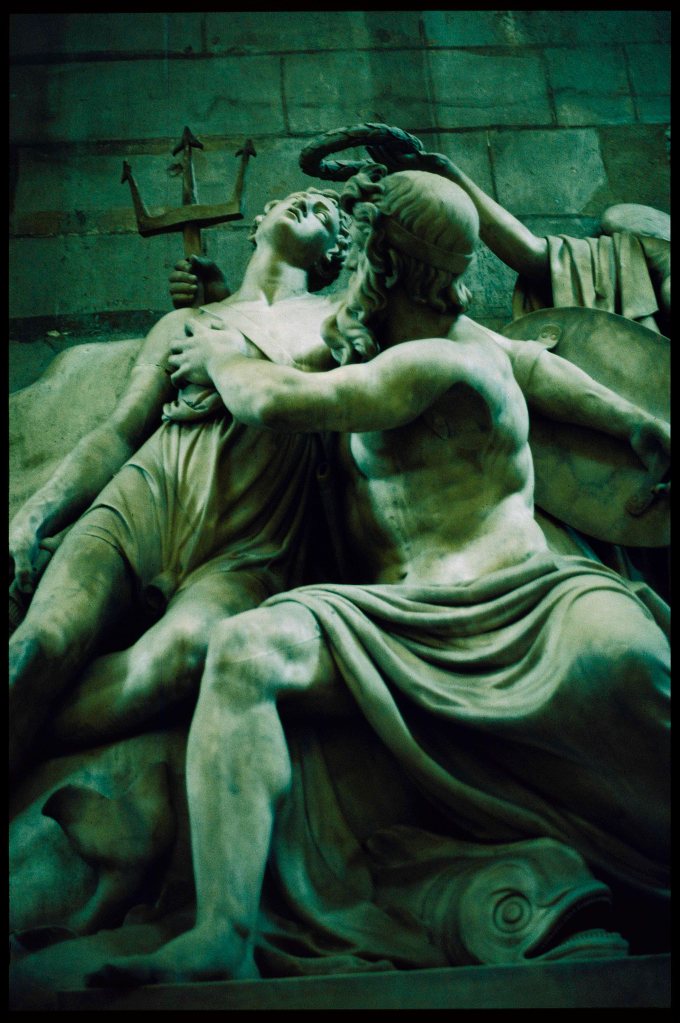
The other is to Captain Robert Faulknor, killed in 1795 during a naval battle with the French in which his brave and innovative tactics assured victory. Given such a martyrdom to Empire, of which British propagandists in marble and paint were overly fond, Rossi contorts his figures to convey the emotions meant to accompany the tragedy. The young warrior, still armed with broken sword and shield, is borne up by Neptune amid the waves, while once again Nike brings her crown.
These monuments summon old and venerable shades, which stand amongst the parade of British greatness that St Paul’s relays along its aisles. The memorials were—and are— carefully maintained and cleaned so as to continue to burnish their subjects and the whole imperial enterprise with what was once seen as the indisputable glories of the classical past.
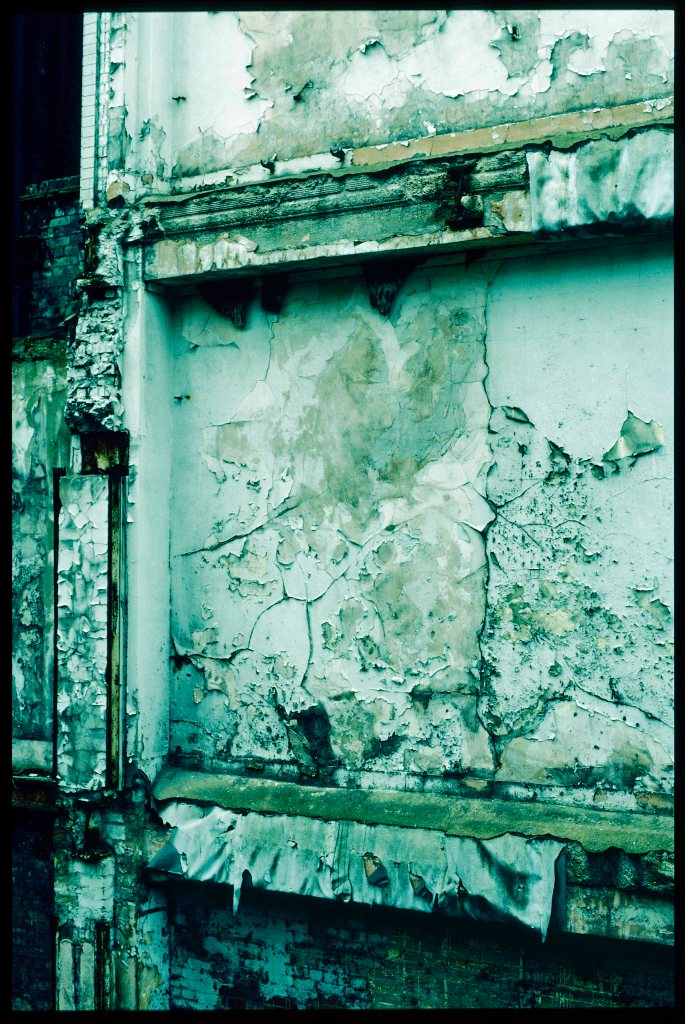
Aldersgate, The City
Polish within but dereliction without. Looking at the surfaces of the City today, cleansed by decades of inflating asset prices, it is hard to remember that run-down and ruined areas lay a short walk from the Cathedral. On one wall, damp and rot created a gloomy palimpsest in brick, plaster, paint, cloth and wood.
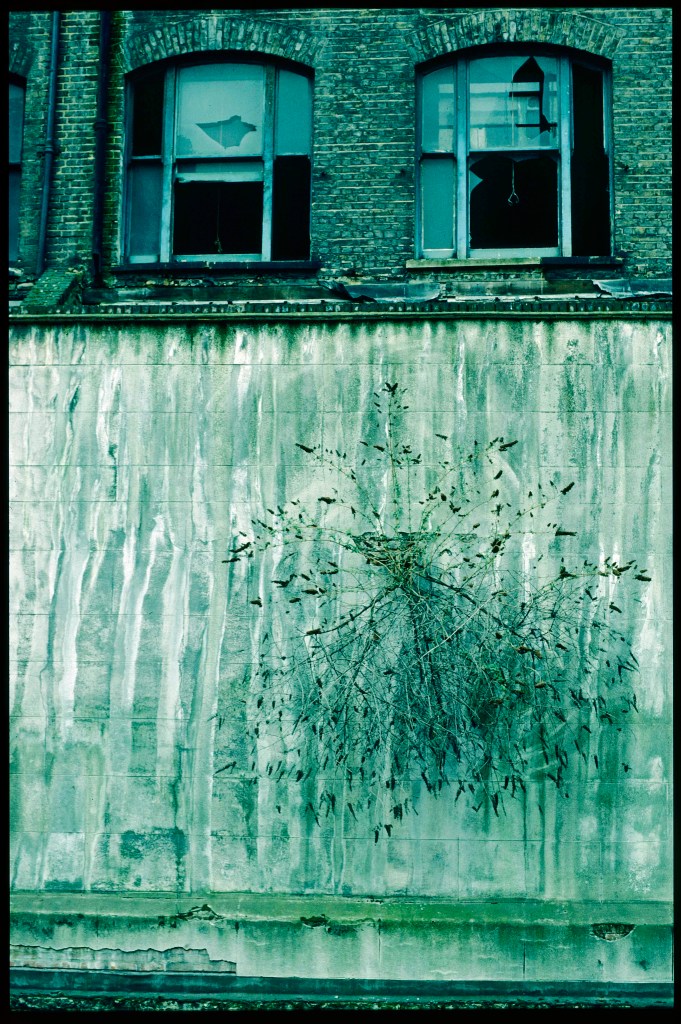
Aldersgate, The City
On another, below windows broken by vandals, vertical marks, a little reminiscent of abstract painting in the manner of Morris Louis, had been left in the grime by rain, and arcs had been scratched into the plaster as the wind blew against the plant that sprang from it. The photograph shows a mix of appearances caused by intentional destruction and the consequences of neglect, each indicating a different form of deliberation, the first motivated by the pleasure of breaking things, the second, most likely, by the lure of future profit.
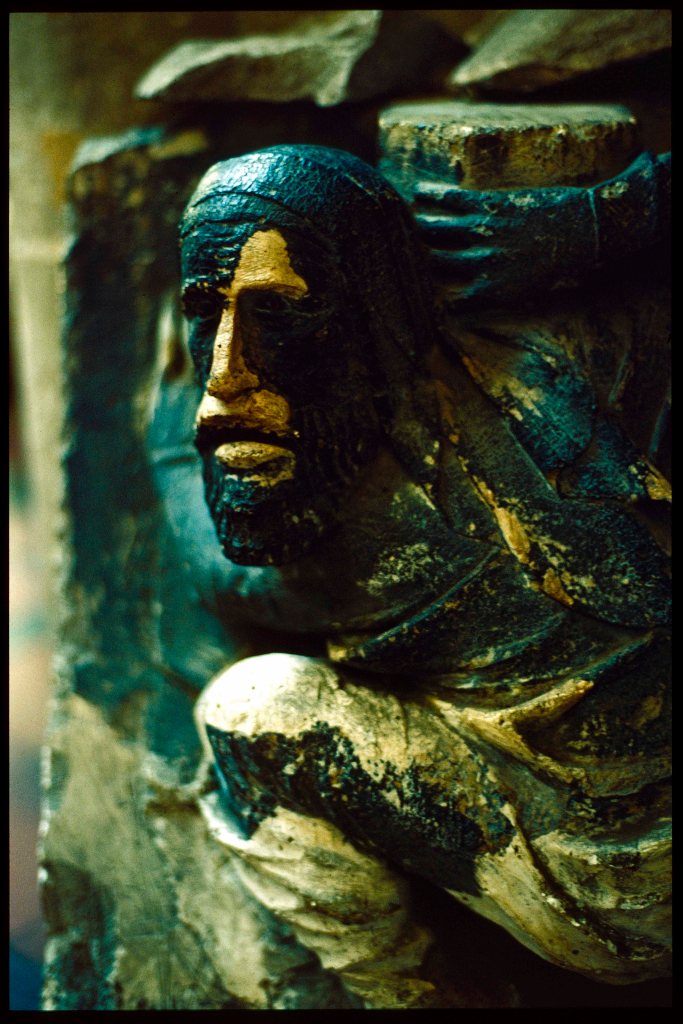
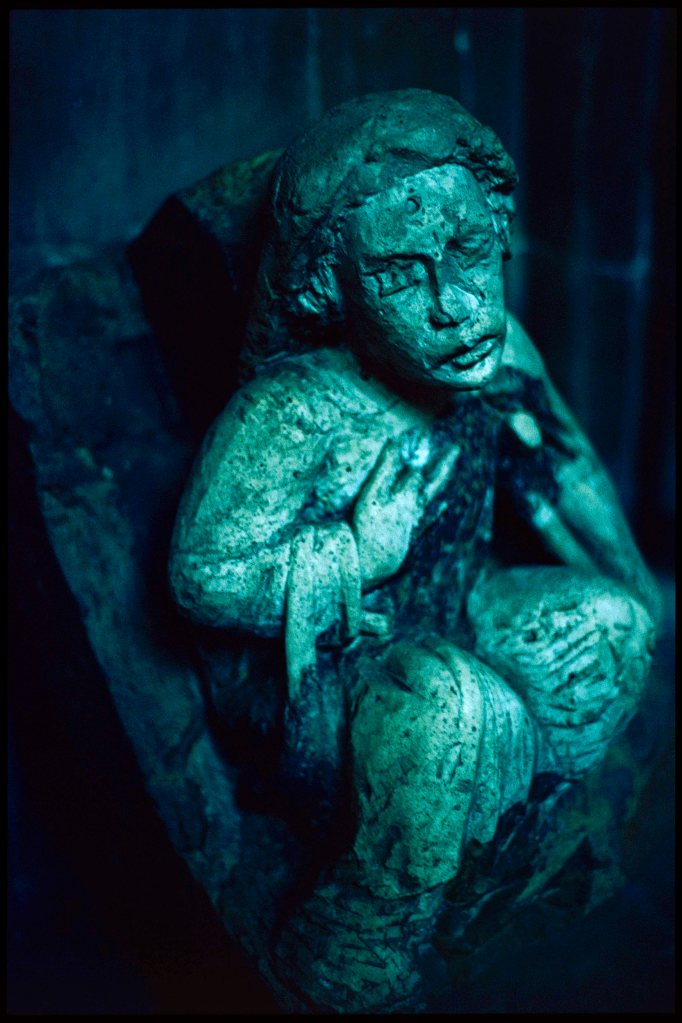
Inside the extraordinary church of St Mary Redcliffe in Bristol can be found a number of carved corbels which once on its exterior façade supported grand statues of kings. These humble figures—which seem twisted in distress, and often clutch at their own bodies as if in emotional or physical pain—then bore the patina of long exposure to handling, weather and pollution. (They have since been thoroughly purged of this surface.) It is, of course, extremely difficult to know about the first effects of these figures on those who saw them, or the intentions of those who carved them: perhaps they welcomed indigents into the church for charity, perhaps their effect was a threatening reminder of the God-given hierarchy, perhaps both. Yet in the bowing of their heads and the strange bending of their bodies, the load that these stones bore physically seems matched by that felt by their depicted subjects.
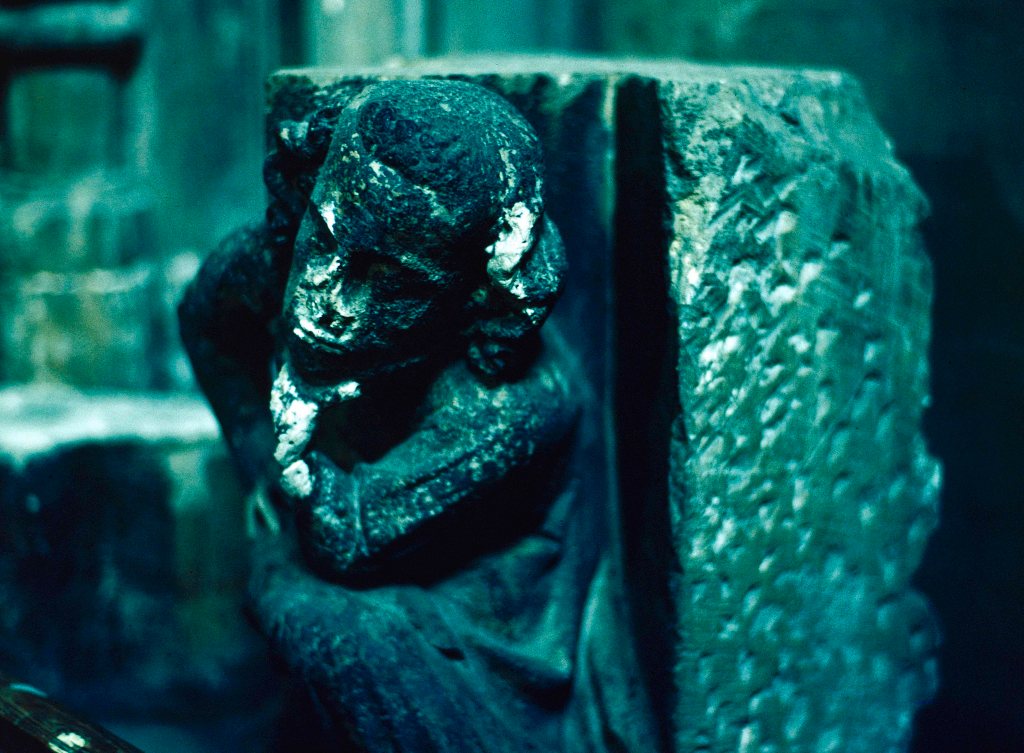
Judged from a technical view concerned with complete and accurate description, it is not a good idea to photograph sculpture under the dim interior light of a church, using a slow film and no tripod, and especially not in this manner, close-up and tightly framed, for all the qualities of narrow depth-of-field, camera shake, under-exposure and reciprocity failure (previously described) will make themselves felt.
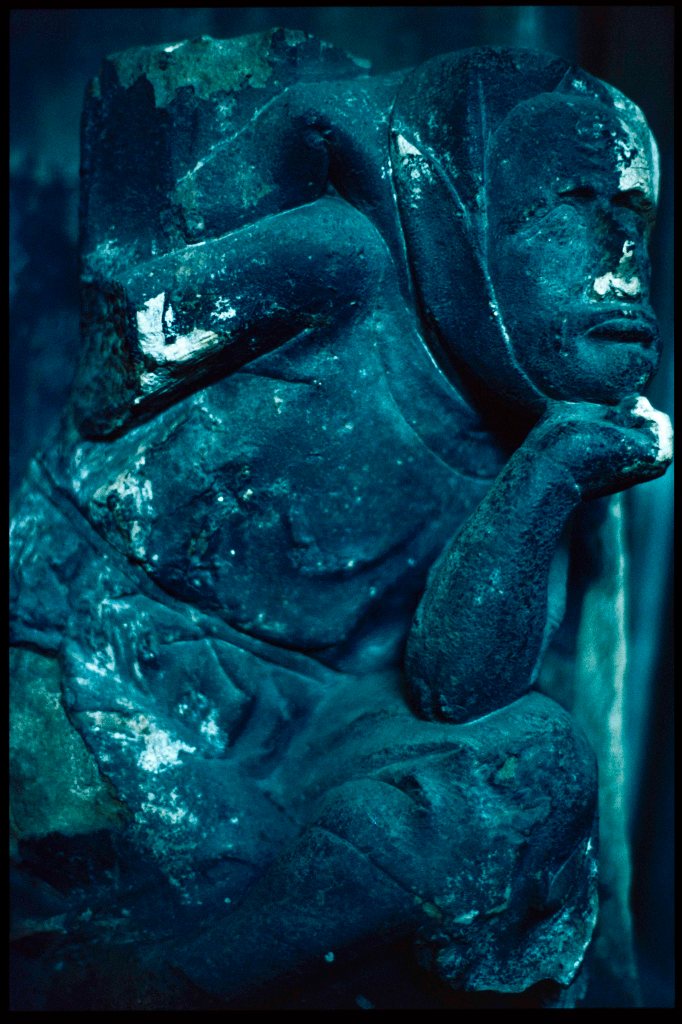
The carvings have been subject to various human attentions. Certain areas have been worn smooth by the touch of many hands, while, during the iconoclasm, their faces were attacked. Religious motives for the assault on images were bound up with protests against social ostentation, especially when directed at the memorials to the rich by people who knew that no mark would be left of their own passing.[1] As with many acts of iconoclasm, the corbel sculptures were not entirely destroyed, but left as damaged presences, a new set of images which spoke forcefully of the new order.
It seems to my eyes now that in these photographs there is a congruence between their technical qualities and their subject matter. The dark encrustations of the ancient carvings are set against their blurred and tenebrous backgrounds, and light seems to struggle out of the figures towards the lens, as the figures themselves struggle to hold up the weight of kings.
[1] See the chapter on iconoclasm in Christopher Hill’s book, Milton and the English Revolution.
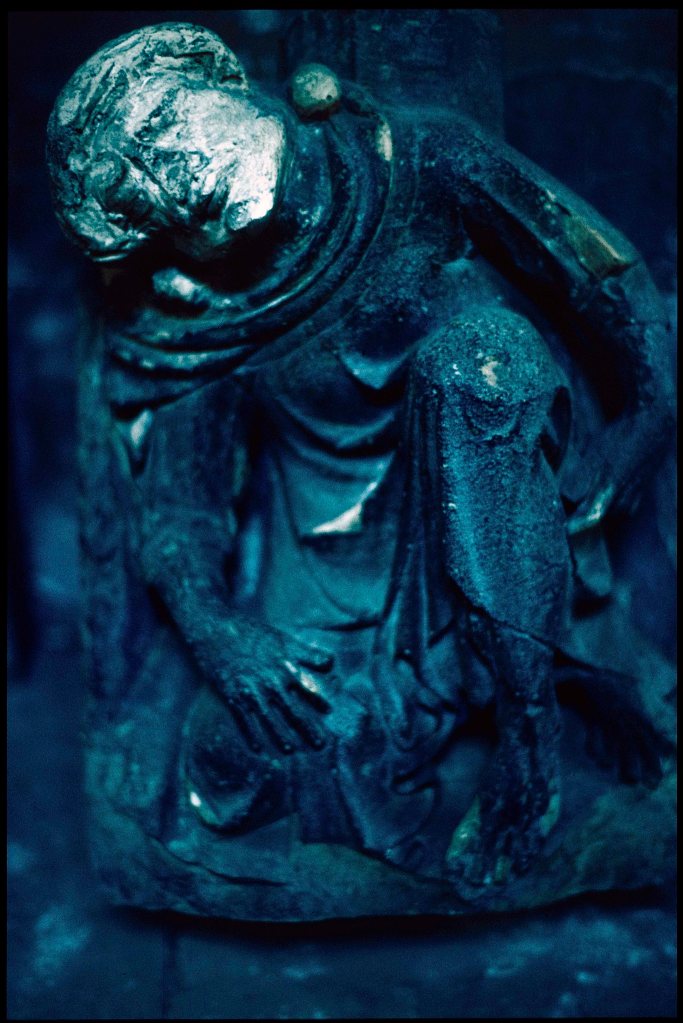
It is a similar effect to that described by Junichirō Tanizaki in his remarkable book In Praise of Shadows, in which he lauds the qualities of the dim light that penetrates beneath the deep eaves of traditional Japanese houses. Under this light, old artefacts—whether lacquer or gold or pottery, particularly those that have gained a patina through frequent handling—shine delicately out of the darkness with what Tanizaki calls the ‘glow of grime’. The deposits of grease and soot, and the effects of weathering conspire with the shadows to animate the sheen of the past, while in large rooms where the darkness seems illimitable, the presence of spectres is felt.
Tanizaki’s book is written from an elite point of view, although a melancholy and embattled one, in which the old hierarchies of race and gender, and their aesthetics of shadow are banished by plate-glass windows, stark white walls and electric light.
The corbel figures have been freed of the burden of the kings that for centuries bore down on them, but if their contorted poses and resigned expressions speak to us now, as they did forty years ago, it is partly because that is not so for us, and indeed the weight of our ‘betters’ steadily continues to increase.
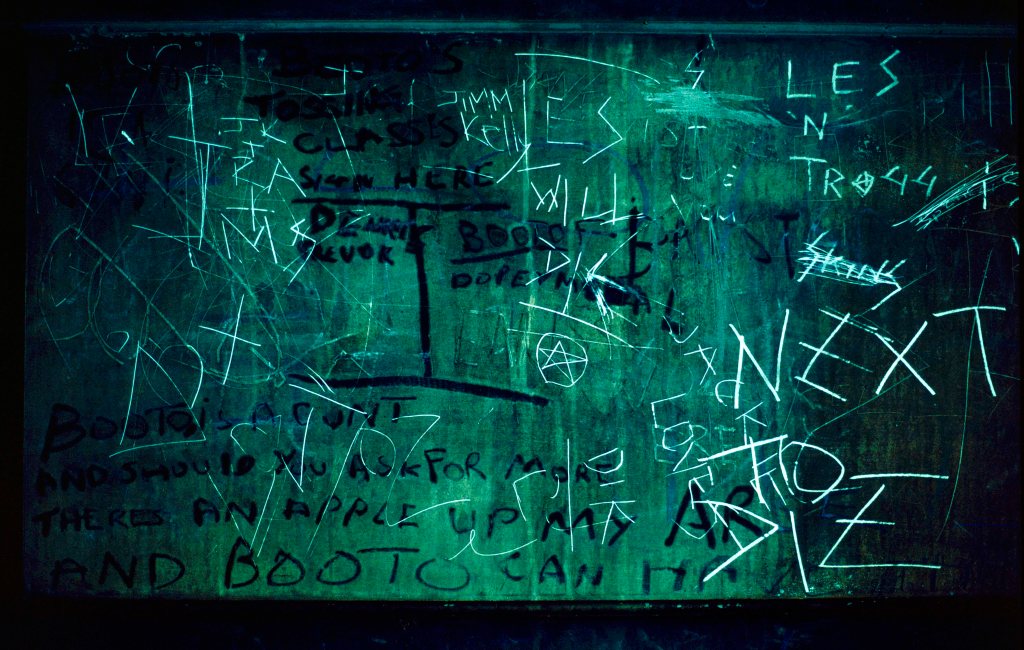
In Abney Park Cemetery, inside the crypt of a very wealthy family, the tombs had been defaced. As in Civil War iconoclasm, pleasure is taken in destruction and the violation of the once-powerful and the once-sacred. As in St Mary Redcliffe, light struggles out of the darkness to reach the lens as the limits of the film, when the camera is hand-held, are approached. And once again—in contrast to marble forms seen under the stately, even light of high windows—the shades gather, the presences of those who do not leave official marks and resort to the demotic and the obscene.
 Julian Stallabrass
Leave a comment