November 1983
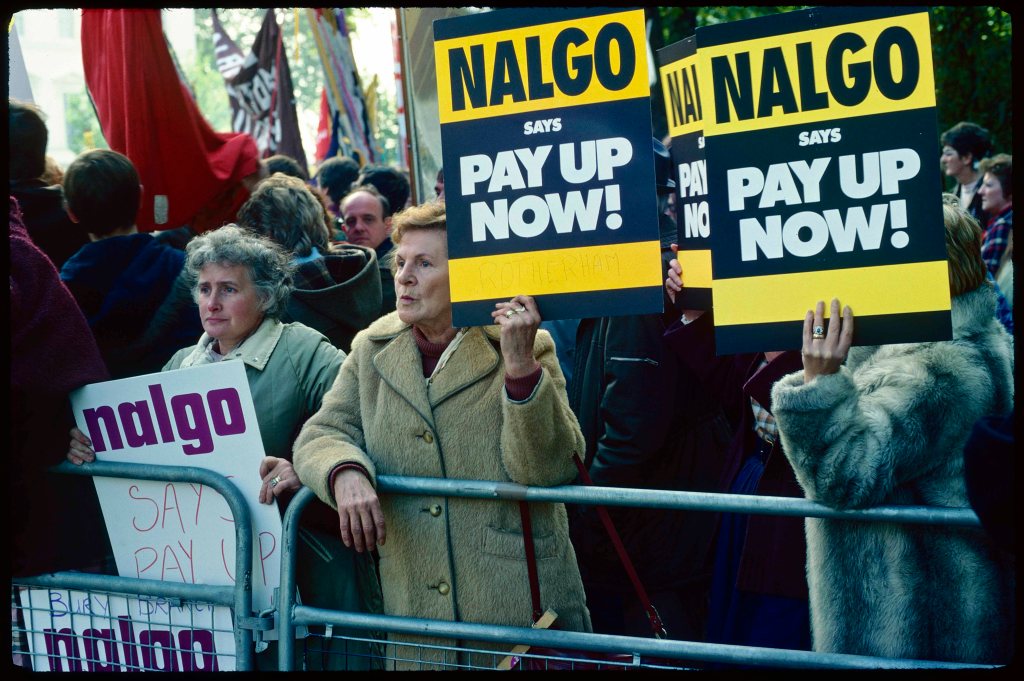
October 1983
A night in late November, one of violent struggle, has come to stand as a dark harbinger of the fate of the union movement under Thatcher’s regime. I had taken a job as a residential social worker in Hackney but, soon after I arrived, a strike over wages was called, and life became a round of meetings, pickets and protests.
Among these was a call for members to picket the newspaper plant of the Messenger Group, owned by Eddy Shah, a friend of Thatcher’s, who was the first employer to put her new anti-union legislation to use. He wanted to break up the National Graphical Association (NGA) closed shop at his plant, introducing non-union labour, while threatening the jobs of many print-workers. Shah had also used another new law which outlawed secondary picketing—the practice of workers assisting their comrades during a strike by disrupting the operations of associated businesses, such as suppliers. An essential tool in defanging the labour movement, it isolated workers in the unequal struggle with employers by outlawing solidarity. In support of the print workers, a few of us took the long night journey to an industrial estate in Warrington to prevent the newspapers, produced by strike-breakers, going out. I took some photos there.
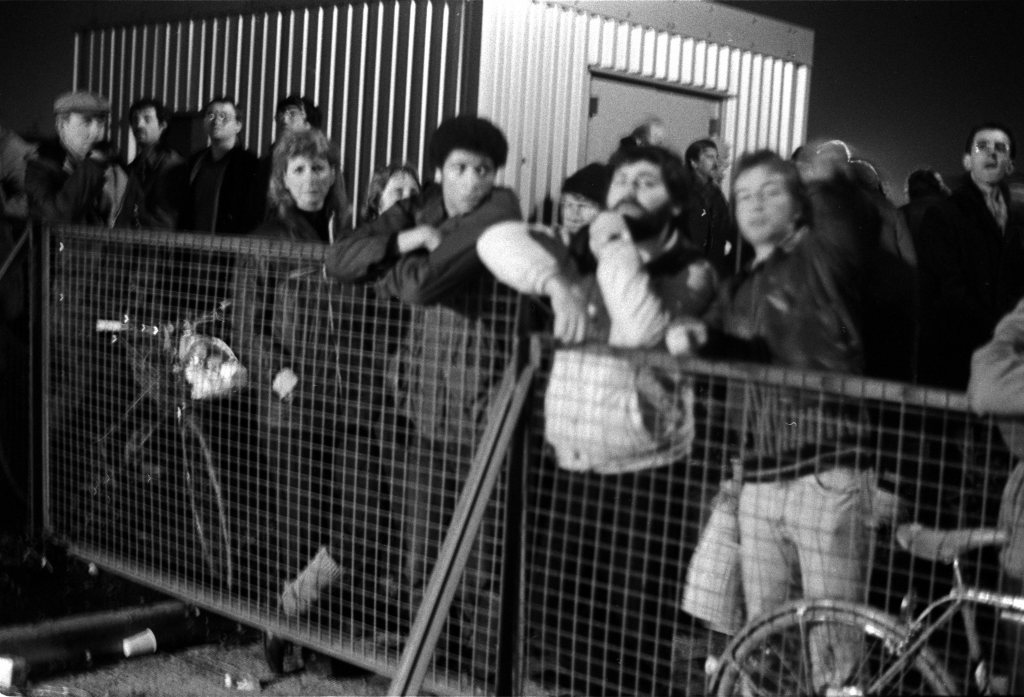
The quality of these images is not at all what I was looking for. I had first made photos at night in Oxford, trying to capture the forbidding statues that stood against the walls of New College cloisters. Using a tripod and letting the meter read the scene, I was surprised to get results that showed the figures under a milky, even light, as if the sun had become entirely diffused by fog. It was a lesson that the light-meters of the time would average any scene to a medium grey, unless set differently. Then, in Hackney, I had begun to experiment with night photography in colour, which had to be hand-held since, in those streets, I could not risk the visibility that came with taking out a tripod. The results were for the most part, put charitably, impressionistic.
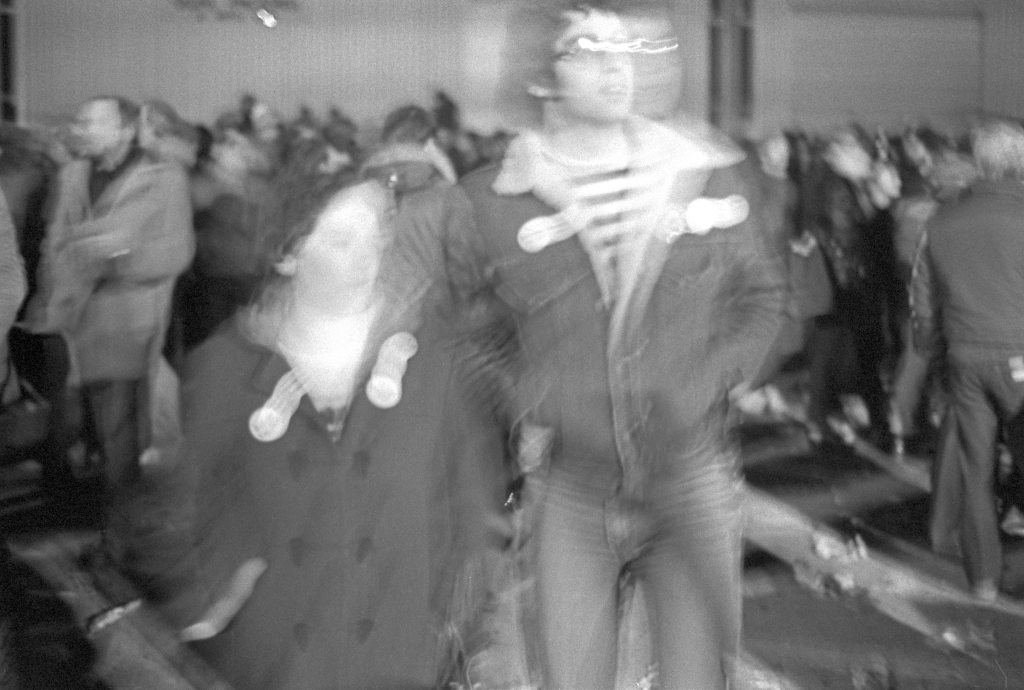
In Warrington, I used Ilford HP5, a 400-speed black-and-white film. This was nothing like fast enough, and I was not using flash. Yet these poor photographs seem to be among the few images made of what went on that night, although the events were recorded in a more detailed and descriptive way by a professional photojournalist, Peter Arkell.
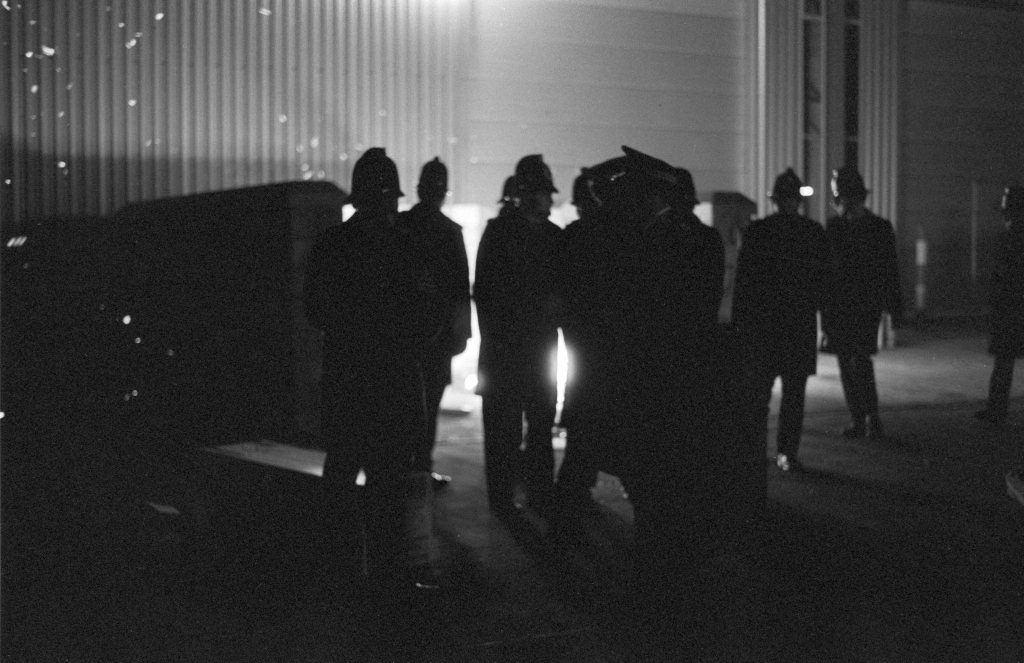
I cannot fully rely upon my memories of that night, I realise, as I lean on my images and on other accounts. It was dark—lit episodically by streetlights and fires—chaotic and violent. In the early part of the night, I remember, optimism among the protesters soared as group after group of new supporters arrived, often bearing union banners, which gave the scene the air of an ancient mustering of troops.
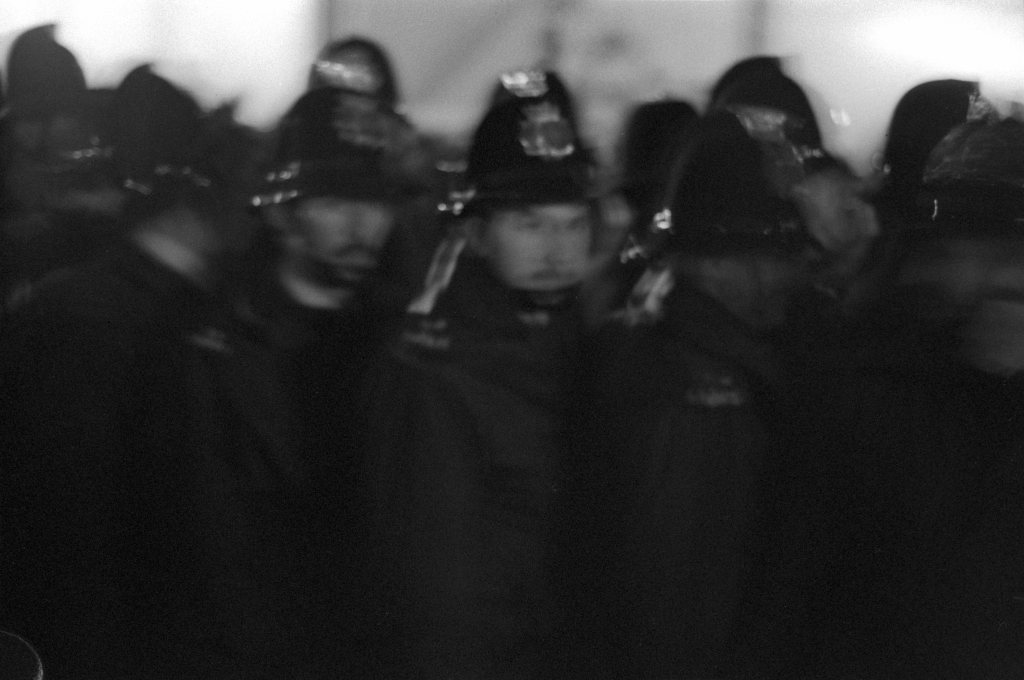
For hours, the police simply attempted to hold in place the thousands who had gathered, and we were crushed tightly together as the two forces pushed against each other. I had put my spectacles in a pocket for safe keeping and later found them pulverised. At the front of the mass of protestors, face-to-face with the police, one of them said to me: ‘I bet you don’t have a job’. I did, but it showed how the Thatcherite tabloid poison was at work, stigmatising those it had made destitute. Organised labour would later be declared, in an infamous phrase, ‘the enemy within’.
Some protesters were singled out by the police, snatched from the crowd, and pulled through their lines. It happened to me, suddenly flung into a gap behind the police ranks, equally suddenly relieved of the crush, staring out in disorientation at a few grinning officers. Looking nothing like a dangerous radical, I suppose, I was pushed back. I was lucky—some of those captured this way were arrested and tied up in a long process of costly court proceedings far from home before harsh sentencing. Most were taken out of sight and beaten up. (See the accounts here.)
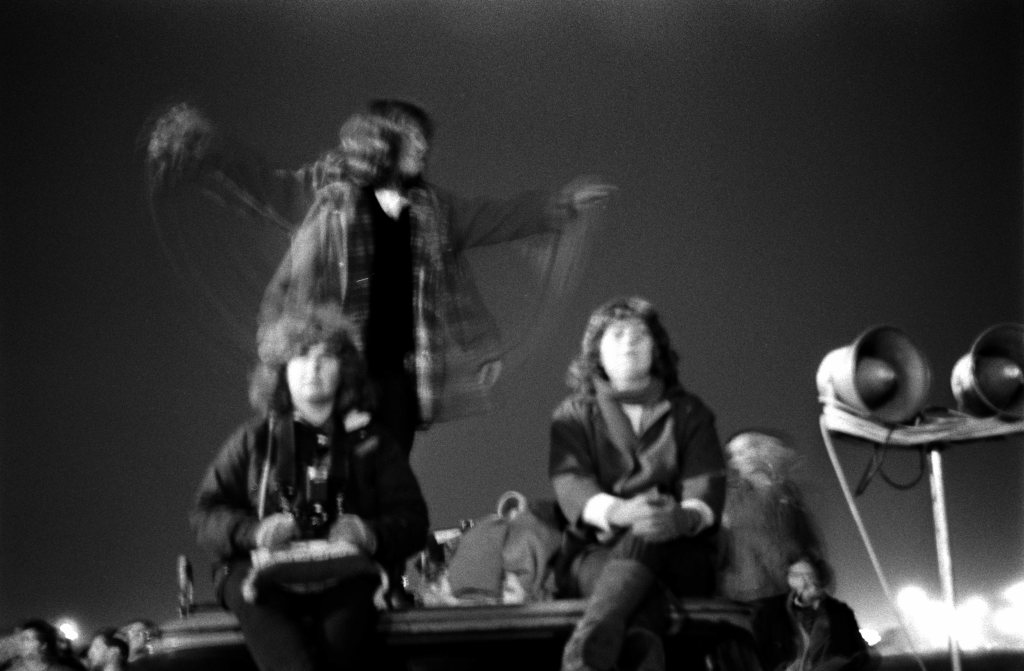
The police wanted violence. An NGA van (you see people sitting and standing on top of it here) was directing the picket over loud speakers, attempting to keep things peaceful while maintaining the blockade. A squad was sent in to seize the organisers, and to vandalise the equipment to put it beyond use. A comrade who had left his camera there—out of harm’s way, he thought—found it smashed to pieces.
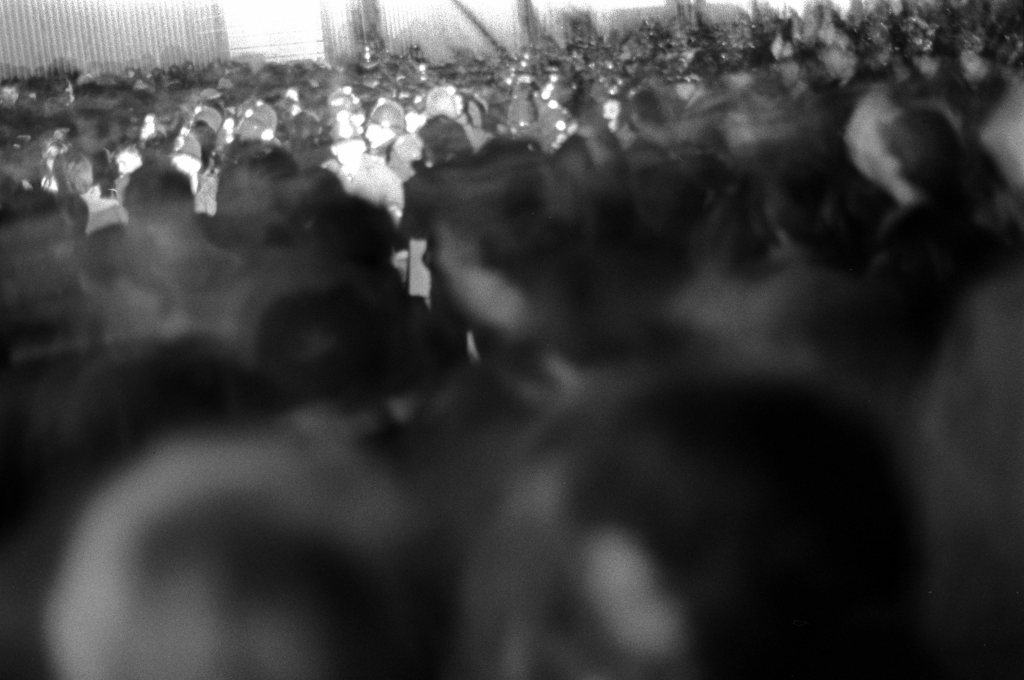
Later, police in wedge formations forced their way through the crush, dividing the thousands of protesters into smaller groups. Specialist riot police came next, beating their batons on their shields to intimidate the crowd. Their skills in breaking heads had been honed during the urban riots in Brixton and Toxteth, and they cleared the road for the newspaper lorries. A riot was what the police wanted to provoke, and they got it by assaulting protestors, some of whom responded by throwing bottles and bricks. The Tory press—and some of the liberal press, which had a strong interest in breaking the print unions—repeated the standard line faithfully, in which Shah stood as the lonely hero, facing down the thugs. (For material written by the print workers and their supporters, see the links at the May Day Rooms.)
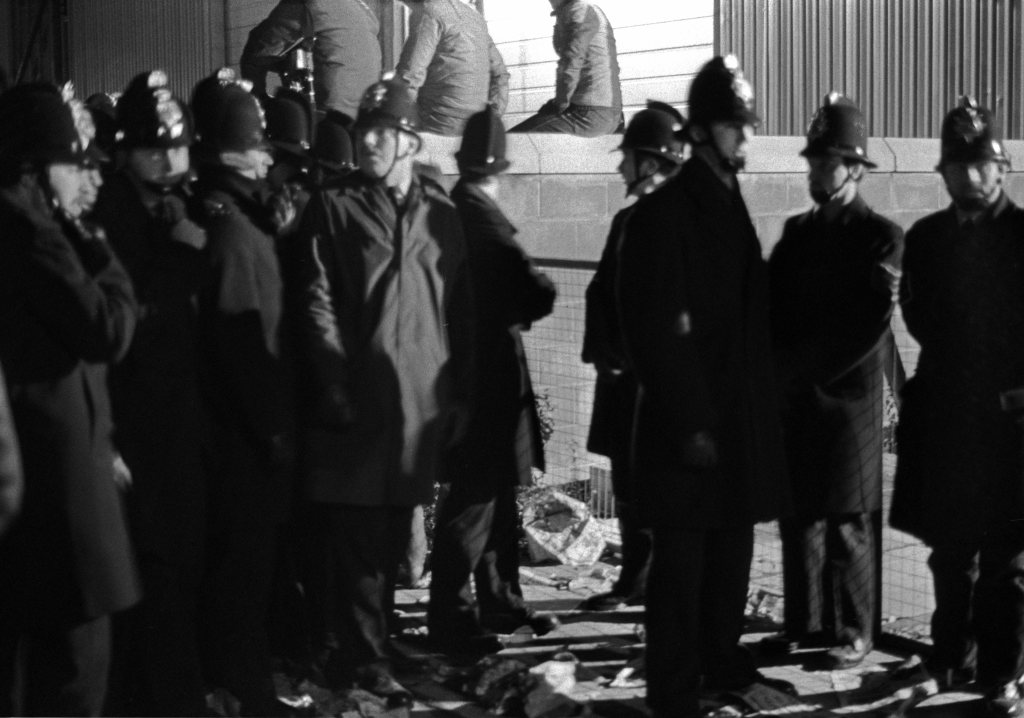
All of this was merely the hard, physical point of the concerted break-up of union power, which would culminate in the Miners’ Strike. The NGA, for its violations of the new laws, faced escalating fines and the threat of having all of its assets confiscated. It was abandoned by a fearful TUC.
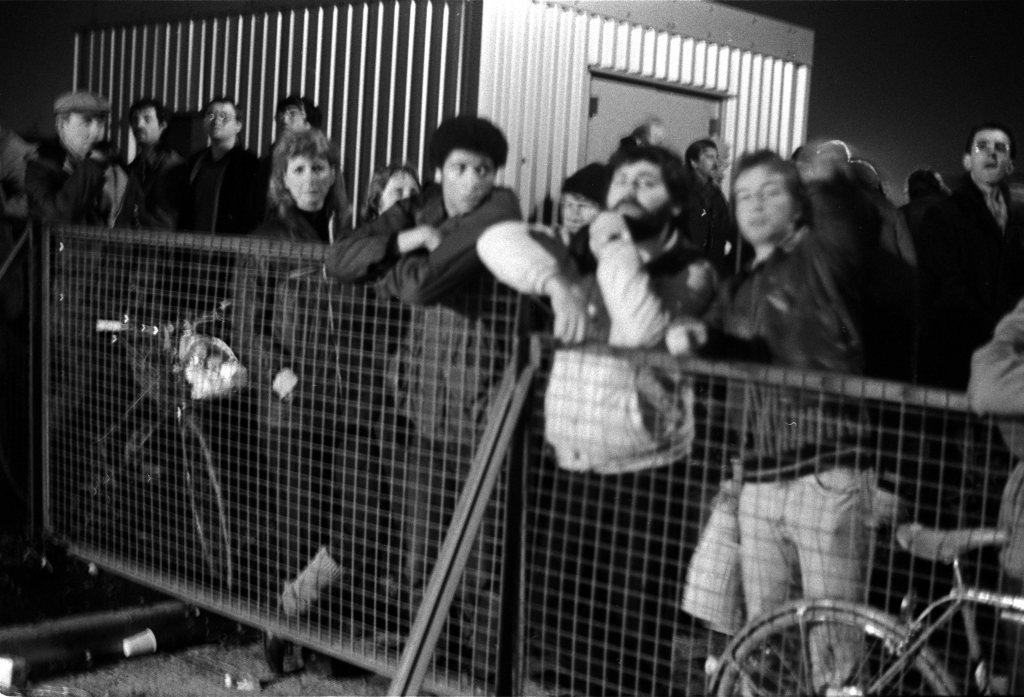
I remember my deep disappointment on first seeing these photographs, with their camera shake and movement blur. I like them a bit more now. The spectral appearance of some of these fighters for workers’ rights and livelihoods seems apposite. So does the frantic waving of a woman on top of the doomed van. This view, though, is one of retrospect, a register of and mourning for defeat—one which may be viewed with suspicion (see Enzo Traverso’s remarkable book on left melancholia).
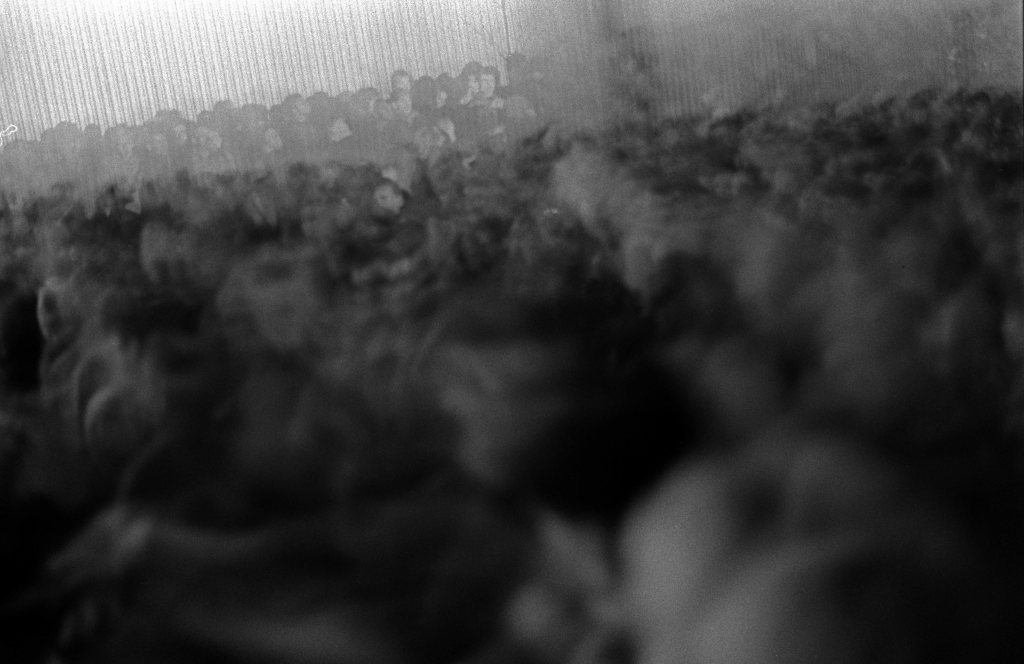
The photos do though, at least for me, express the dense crush, the confusion, the darkness, and the sinister presence of the agents of the law. And in their blurriness, they also say something about the frailties of memory.

 Julian Stallabrass
Leave a comment