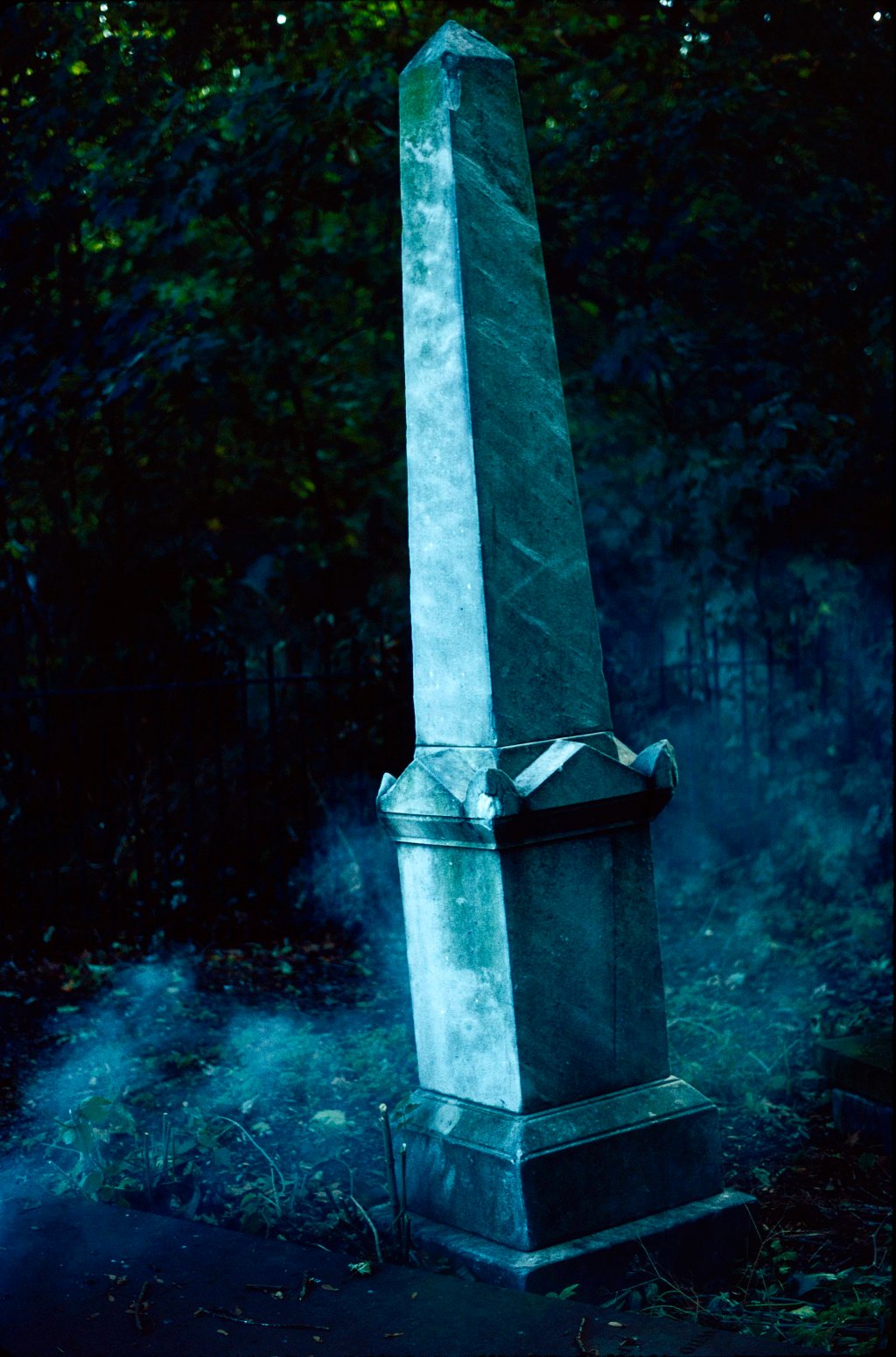
October 1983
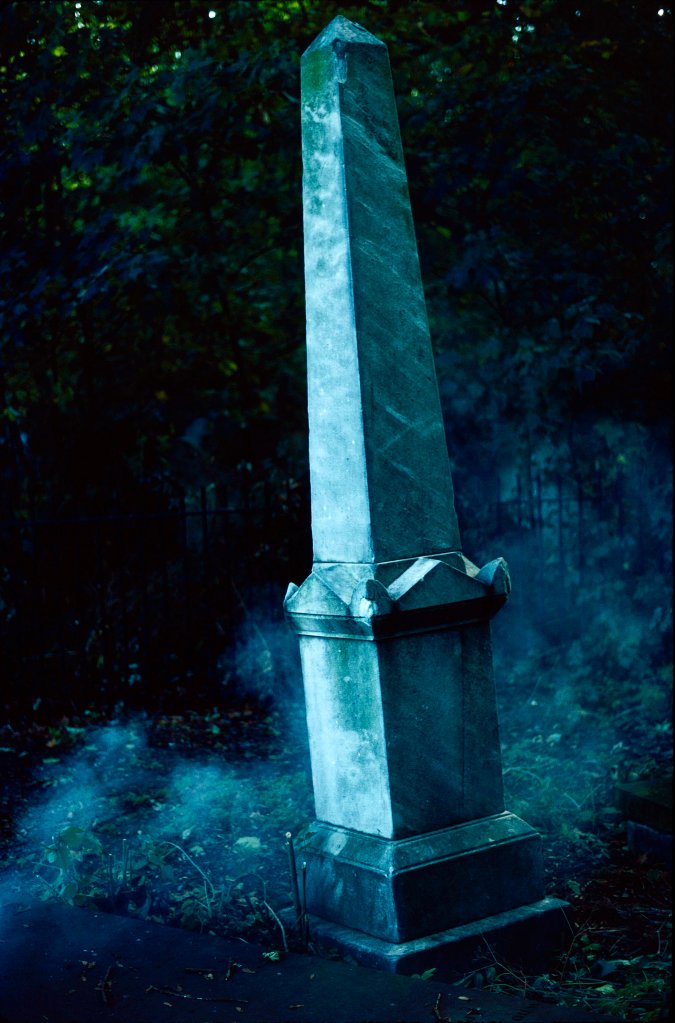
Tower Hamlets Cemetery
I was asked to make prints from some old glass plates. They showed groups of Welsh folk, lined up formally but smiling for the camera, on outings and picnics, or in front of their workplaces. All but the youngest children in them were now dead, I supposed. The corners of the images were rounded like the top of headstones; organisms feed on plates and stones alike, cracking their surfaces, slowly effacing graven designs and spectral silver images. Light, which makes latent photographic images in the first place, a physical force battering objects with its waves and particles, and aging the living, over time makes all images latent once again, so that on gravestones they can only be traced with a finger. I once asked an expert on such matters what I should do to best preserve slides: ‘Never project them’, he said.
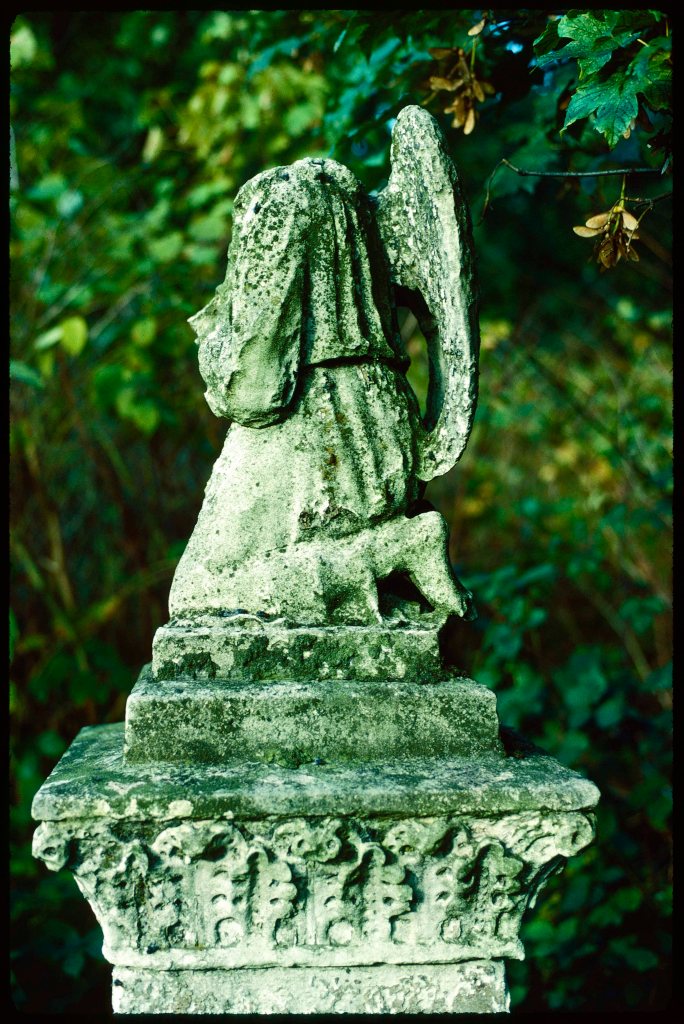
Nearby my workplace in north London, there was a Victorian graveyard, Abney Park Cemetery, where I would sometimes go to take pictures. Back then, it had been seemingly abandoned to the ministrations of nature and the locals. Stumbling amongst its undergrowth, feet traced the ground as it stirred, drawing in and disgorging matter from below. Vandals knocked the heads off stone angels, overturned obelisks, broke open slabs to reveal dark gashes of indeterminate matter and release subterranean air, and scrawled Satanist graffiti on the slats of benches.
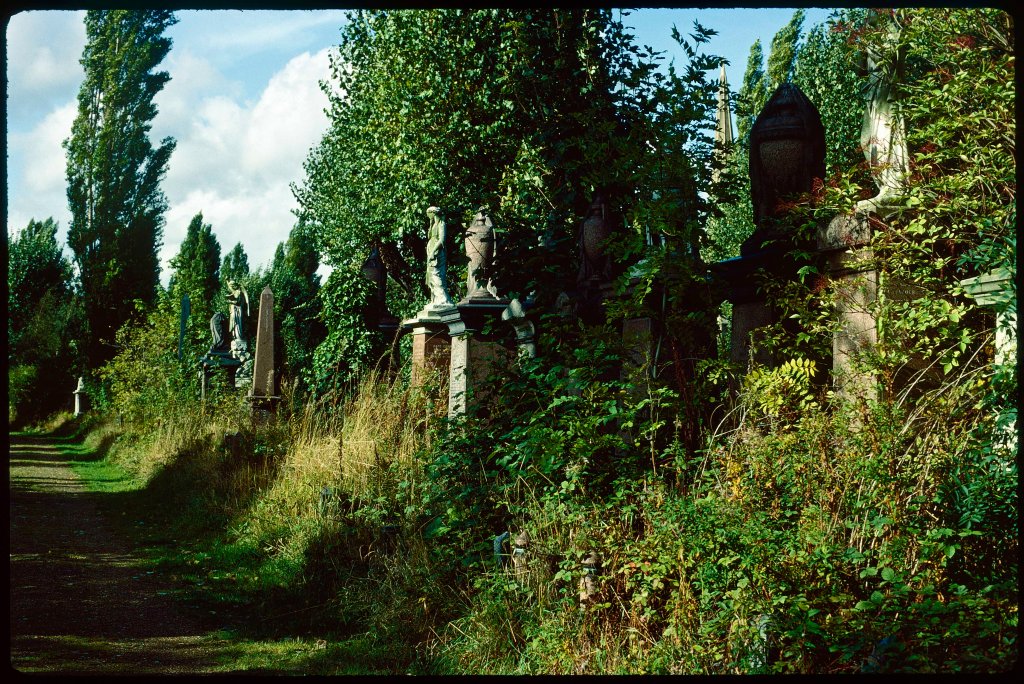
Yet the place was alluring—the colours and textures of weathered stone, the growth of season upon season leaving their marks one over the other, the breezes which set the whole into animation, while its birds constantly sang, its old people tottered along the paths and laid cut flowers, soon faded and bedraggled, and tended graves, fending off entropy and decay.
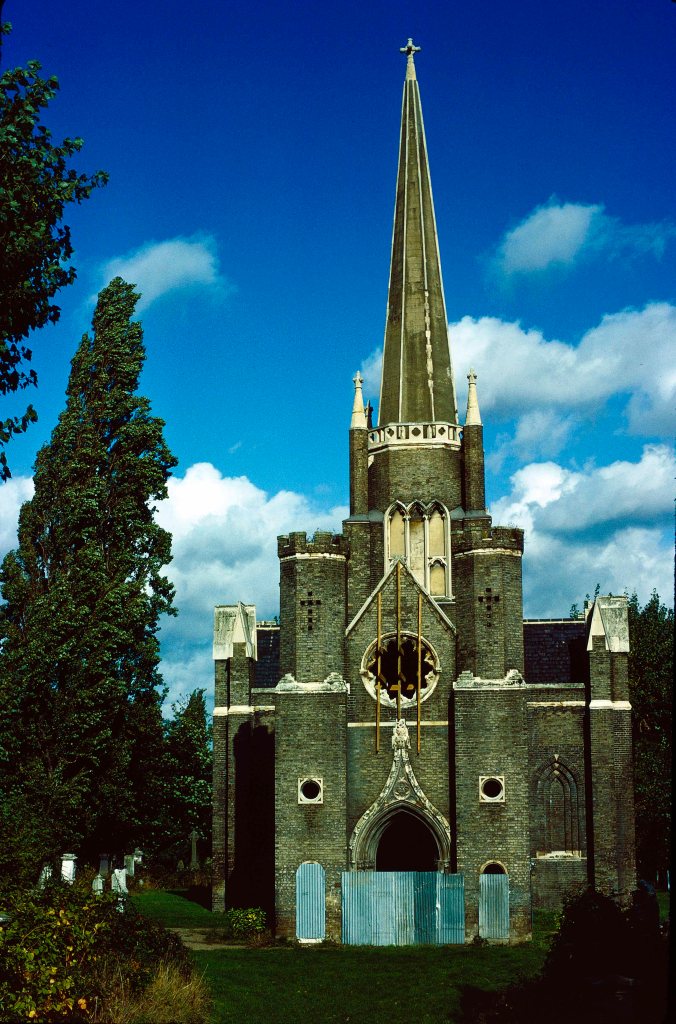
At the centre of this curious tangle of mementoes (which were, by turns, modest and pompous), damaged and overturned by the enraged actions of youth, and the slow vandalism of plants, stood an abandoned chapel, its entrances blocked up but soon enough torn open. As eyes adjusted to the deep darkness within, a large single chamber could be seen, each corner softened with the silt of pigeon droppings. Crude sexual graffiti were etched on its walls, much of it barely readable—above the shattered altar, ‘Diana Sucks Cunt’, did I read that right? Against my first expectation, given the stories I had been told, this was not a place even the self-styled Satanists spent much time in, for it was too dark and too grim, with its sheen of excrement and its high dark walls of brick, prematurely ancient, exuding damp.
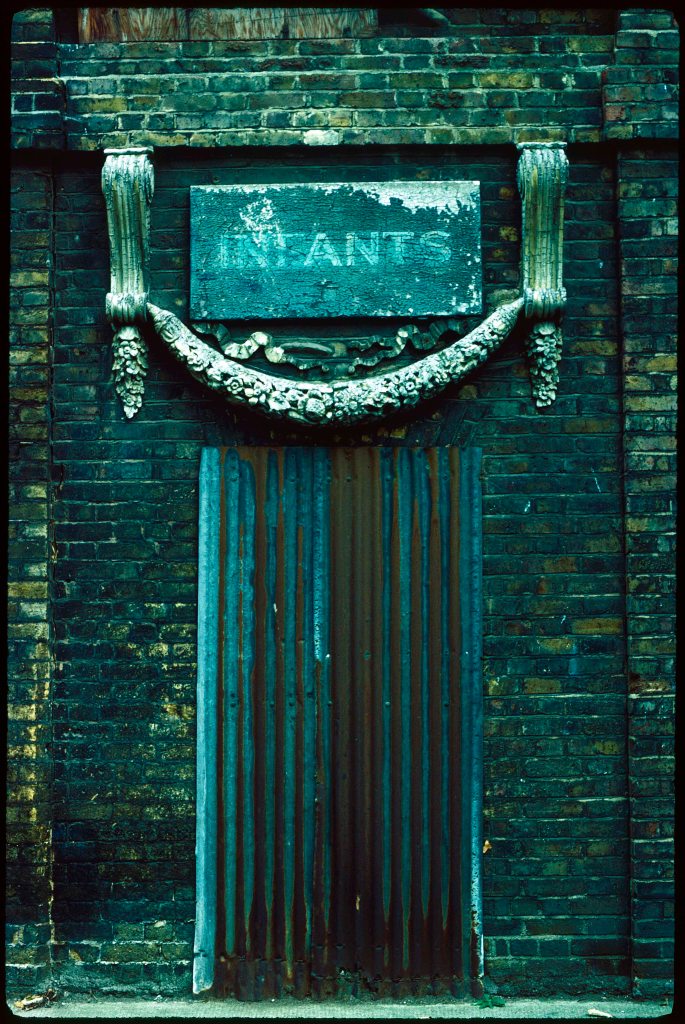
Wapping
For those who now live in the Alpha City, a focus of global property speculation, a playground of dirty money, with its polished commercial, retail and residential enclaves of bland new buildings and polite planting, the London of forty years ago would seem an alien place. Its population was declining as many white people, even those of modest means, fled the increasingly derelict, dangerous and darkening inner city. Living on the edge of Hackney, the streets were threatening, and I took to carrying my camera, slung over a shoulder under my coat, hidden and hard to snatch.
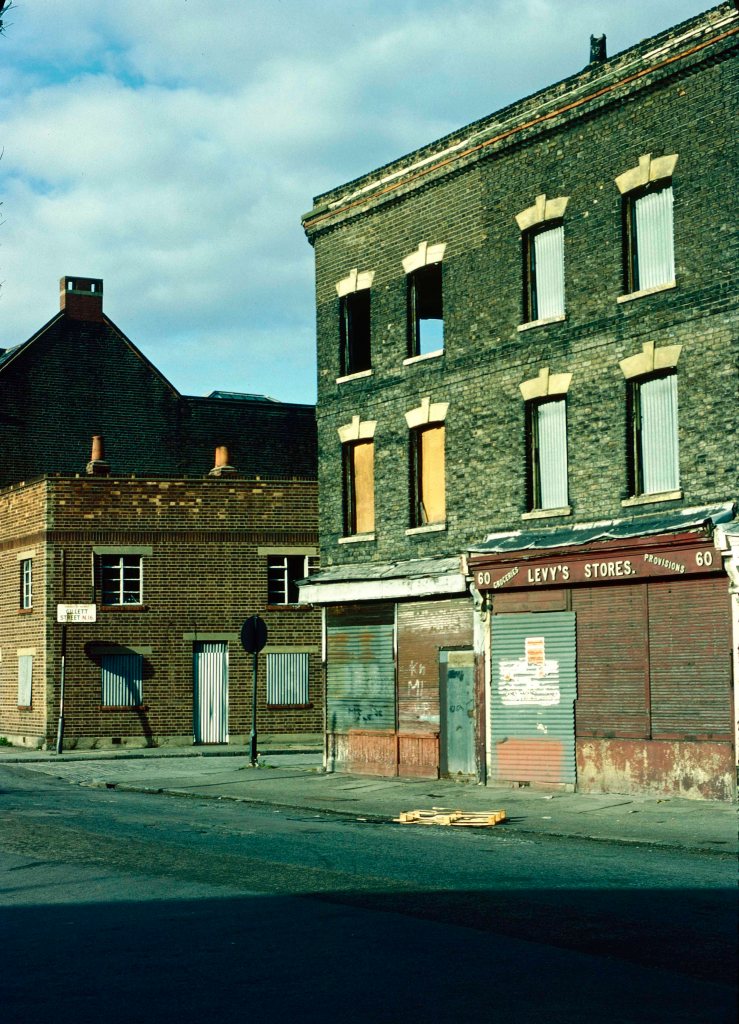
Boelyn Road, Dalston, Hackney
London, it seemed, was creaking with age in the autumn air. The scenes that Don McCullin and others had photographed in the 1960s and 1970s of blasted areas, given over to the homeless who warmed themselves at open fires in its deserted squares, were not far distant. As winter advanced, the city’s Gothic character—more invidious Victorian fantasy—advanced too, particularly for those raised on the horror film that mined that near past, in which occasionally the apparently self-possessed, religious and cultivated gentlemen of the era were plagued by the horrors of their service to Empire. (The Ghoul is a particularly clear instance.)
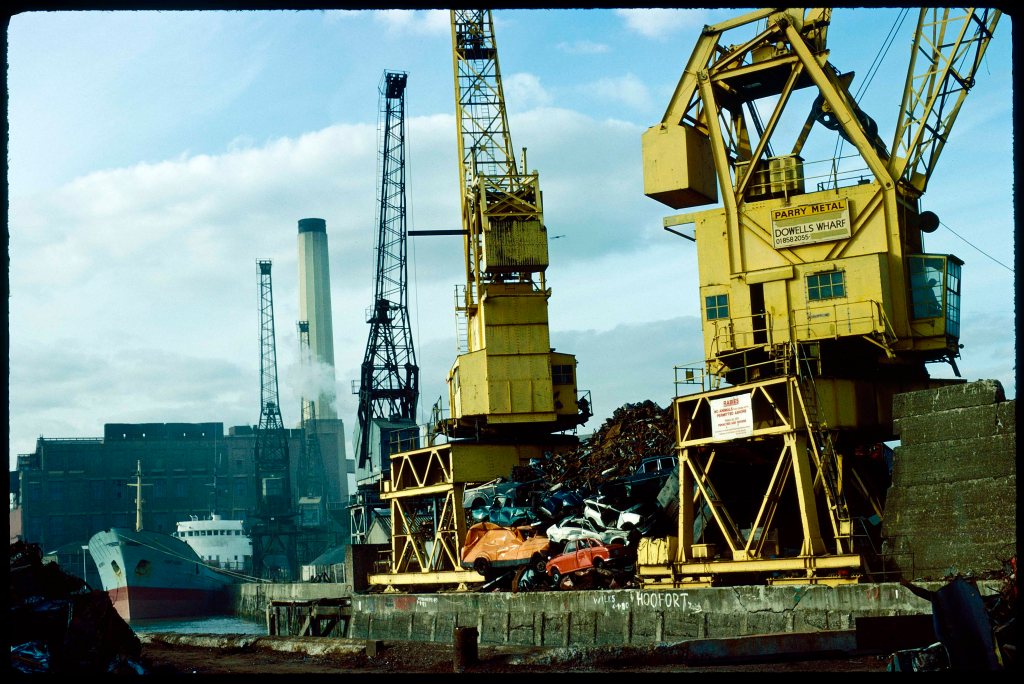
Creek Road, Deptford
From what is now a heavily gentrified Hackney to the doomed if still active docks, London seemed mouldering and rubbish-strewn, violent and polluted, stagnant and haunted, as the weight of its past, the stock of its former dark glory, was beaten by the autumn sun.
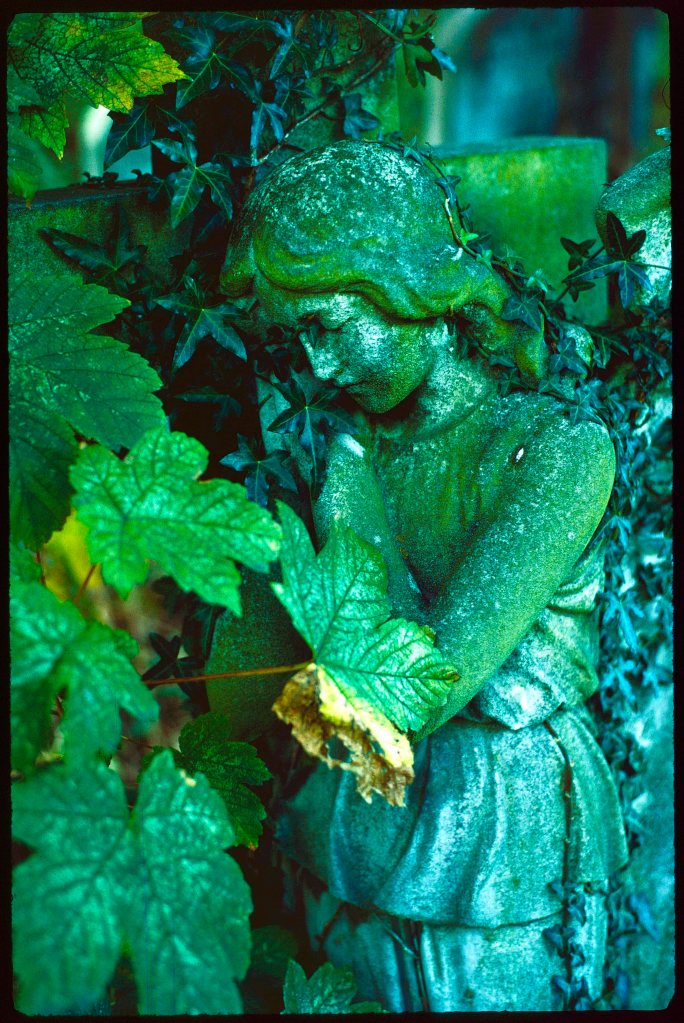
Abney Park Cemetery was a shelter from all of that, insulated from the worst of the pollution and noise. Yet it offered a disturbing calm, since its borders, despite their high walls and gates, were porous, as the graveyard, too, was eroded, grown over and violated, and threatened to unearth its dead. A dialectical enclave, feeding of its surroundings, which it incorporated into itself, and excreted in the thoughts, moods and actions of its mourners, vandals and wanderers.
 Julian Stallabrass
Leave a comment