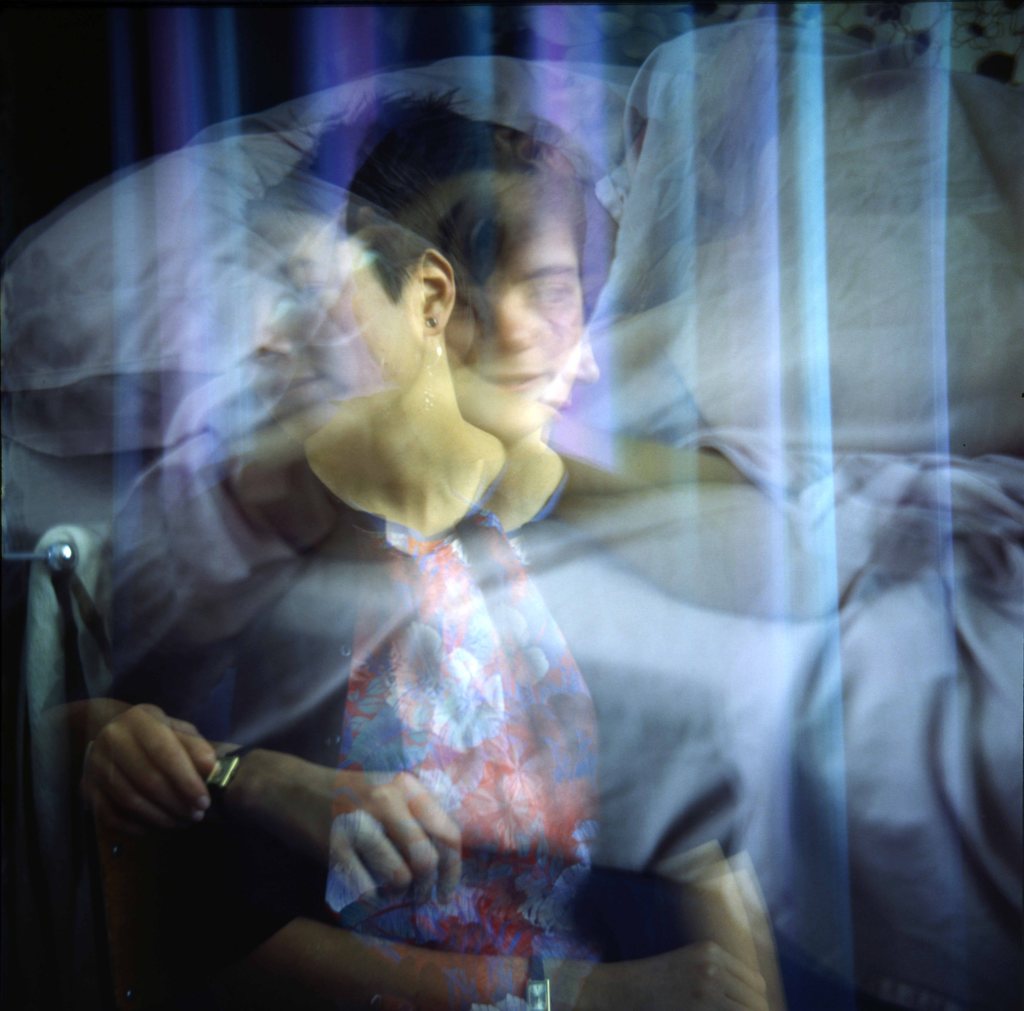
If, as in the previous post, the rehearsal of memory is like a multiple exposure, this project is at least quadruple. There is the initial moment when the framed scene is imprinted on mind and film alike. There is, secondly, its springing back to life, a week or so later, when the slide if lifted to the light. Thirdly, about twenty-five years ago in the circumstances described by the text below, I made a sustained effort at a retrospective rehearsal of my photography. And finally, there is this current attempt to resuscitate images and memories, forty years on. The following text is an introduction taken from that third exposure, which was intended to be a book, and became in various forms a slide show for various exhibitions. It raises for me now a disturbingly sharp view onto the characteristics and failures of memory, especially given my stated belief then that photography can help hold onto what is worth saving: I can no longer be sure of the identity of the woman in the text—which would have seemed incredible, I am sure, to my former self. And the reason is that the consolidated imprint of that time at the Imperial War Museum has been entirely subsumed by its written version.[1] It is an instance in which writing takes on the role that photography is often accused of—corrupting, impoverishing and replacing memory:
The latent image that formed the basis for the following text was first imprinted on my mind at a time of illness and enforced idleness. Suffering from pneumonia, and running a high fever for weeks, the heat of the blood had scrambled memories, dreams, thoughts and imaginings so that they became present all at once, like images etched on overlapping panes of glass. At any moment, it was hard to be sure what was memory, what fantasy. Though the fever brought confusion, at other times, as fevers do, it offered a crisp, unaccustomed clarity. Illness brought remote memories rushing into the present, collapsing time to create a still picture of a life in an exposure of a few weeks—36 days to be exact.
The resulting image was developed slowly, and fixed, its form made definitive by the selection of pictures. Anchored by a series of dreams directly or indirectly about photography, the text and picture sequences fall into six sections, in which entries and images are pasted together, collage fashion, to make a narrative. While each concrete episode in the sequence is the truth, as well as I can recall and tell it, the construction of that sequence, its ordering, its mixing of events, thoughts, dreams and imaginings is a fabrication, an attempt to make sense of those episodes with relation to a wider context. Like memories, these elements are drawn together in a sequence to give the appearance of order and to create a meaning. Like the pictures, the texts are fragments, glimpses into a certain place and time. Like the pictures, they are pieces of the past seen from the present (at least from the present of the time of writing). Like many photographs, they are shards of resistance to time, nails hammered into the present in an attempt to batten down what is thought worth saving in the face of the ongoing present that continually tears up everything in its path—photographs too, of course, eventually—and tosses them into the hurricane.
My time lately has been spent between various glass screens, some of them fending off the elements, others boredom. There are the large windows of this room through which from my bed I can see the tops of trees and oblong sections of skies; slow, regular change from light to dark and back in subdued colours. Everything out there is indirect. I judge the wind from the play of the leaves, and the cold from the hard grey of the sky, and (when I unsteadily rise) the way that passers-by and even the vegetation seem to gather themselves in against it. And there are TV screens in different rooms with their rapid succession of garish colours spinning story after story, in which each action leads directly to another until they are neatly finished. Immediately one story closes, leaving no questions unanswered, no wrong unrighted, another begins.
The fever played with me, throwing me in and out of sleep in a moment and suspending me for long hours between the two in vivid half-dreams. My awakenings were disoriented, a little fearful at not knowing immediately what hour it was, even what day it was, or where I was. At night I would keep the curtains drawn back, since I hated waking alone, eyes open but seeing nothing, feeling the darkness spreading about me without limit. Sometimes the moon would shine into the room. One night I awoke—or thought I did—and propped myself up to see the moonlight fall across the rumpled duvet. The clouds parted and suddenly in the irregular folds, I saw revealed a battlefield at night, vast, marked by trenches, with wire and emplacements, silent, and silvered, its mud turned to ivory.
Raised weakly on one elbow, I viewed the bed’s battlefield from far above, a light-headed observation balloon. The further you are from an object the stiller it becomes, the tinier its movements, the slower the film and the smaller the aperture needed to fix it without blur. That scene under the moon took on a dense calm, compact with all the complex lineaments of mass violence, leashed until dawn. Now I don’t remember how it ended, whether I slept or awoke, or whether the vision just faded out. But, I thought in the morning, the arrival of that apparition of past death at my suburban bedside did not seem a good omen.
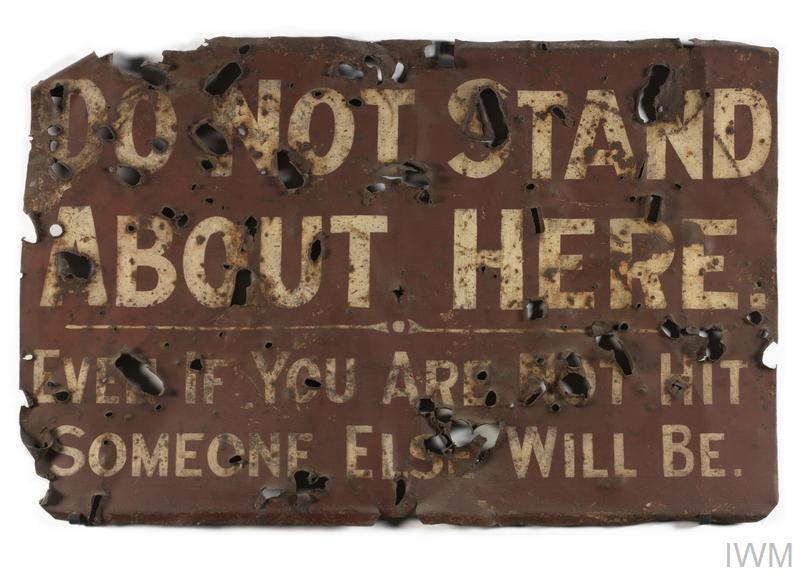
Later it made me remember a moment which simultaneously fills me with a certain shame and a sense of wonder at the tricks feelings play; I was standing in the basement of the Imperial War Museum, with a woman I was half in love with, and about whose attitude to me I was still uncertain. We were looking at the metal signs taken from First World War battlefields. What poignancy they had—all those familiar names from London and other towns, mapped over that unearthly and unprecedented landscape, and how many projectiles had pierced them. There was one I noticed in particular; it was hard to make out the writing, so punctured was it:
Do Not Stand About Here
Even If You Are Not Hit
Someone Else Will Be
I drew her towards it, and we stood looking at it in complete silence, the air thick with sentiment. I could feel more than see the rise and fall of her breathing, and what I felt before that sign (like a photographic plate, it bore the scars of the war directly and, like a photograph, a fragmentary image, it brought a dizzying vision of the whole four-year swamp of suffering before the mind) was textured with my desire for her, spurred on by my admiration at her evident emotion, an act of imagining, and there ran through me, a tremor, the most inappropriate desire to seize her there and then.
It seems cliched to be haunted by the horror of that war—and there are good reasons to be suspicious of its fashionable resonance; it was a war in which, most unusually, the casualty rate among officers was higher than that among the lower ranks; struggling in the mud was an army of poets, apparently, and innocent, doomed attractions. And, I wonder, is it just reading, always reading, that brings these visions to me in which memory is kneaded with fiction?
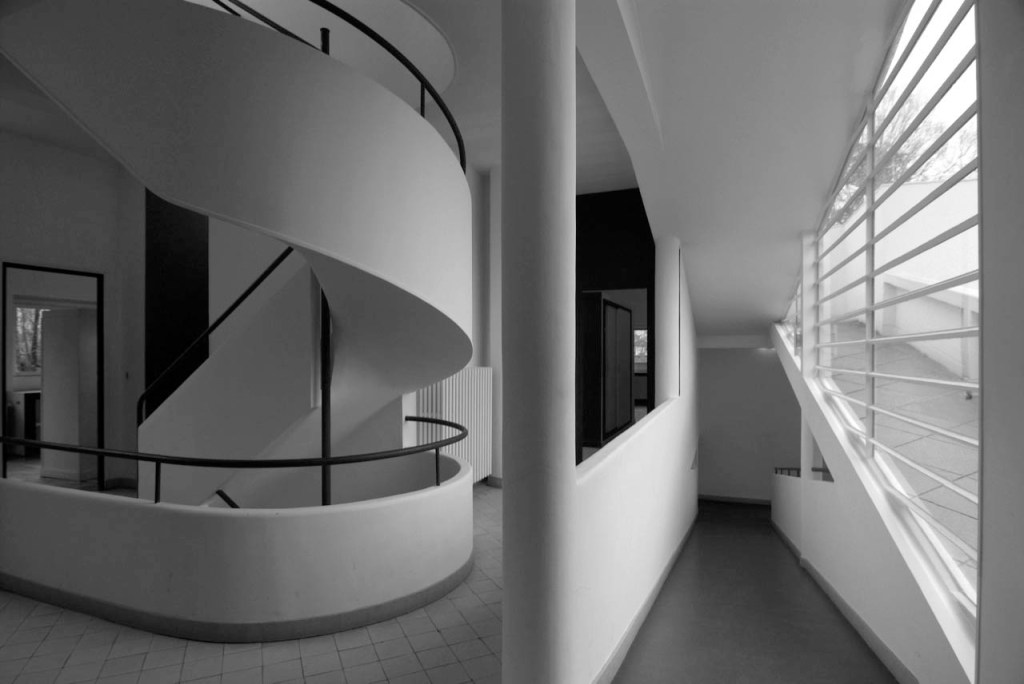
From that crazed collage of cloth and metal, earth and flesh came dreams of wholeness, light and geometry, of smooth expanses of glass and white enamel which made perfect and transparent sense, and would encourage (if not impose) perfect order upon the minds of their onlookers and inhabitants. And those dreams were thought of, for a brief span of years, as awakenings.
The dreamers that came after the war, their critics charged, made buildings which looked like hospitals—rooms for healing in. Their order seems happy enough to me just now, yearning for a body that doesn’t play tricks with the mind, that allows you to walk across a room without giddiness and draw breath without pain, that permits an orderly succession of sleeping and waking, rather than this hallucinatory soup. Let the body once more become transparent to the mind; let the mind be a lodger within it, dwelling in the pristine internal geometry of its spaces, regarding the world with calm detachment from its plate-glass windows.
[1] I have since written about the formation of memory with relation to photography in my book, Killing for Show: Photography, War and the Media in Vietnam and Iraq, 2020. A version of that part of the book can be found at https://newleftreview.org/issues/ii105/articles/julian-stallabrass-memory-and-ico (NLR site), and in a free version here.
 Julian Stallabrass
Leave a comment