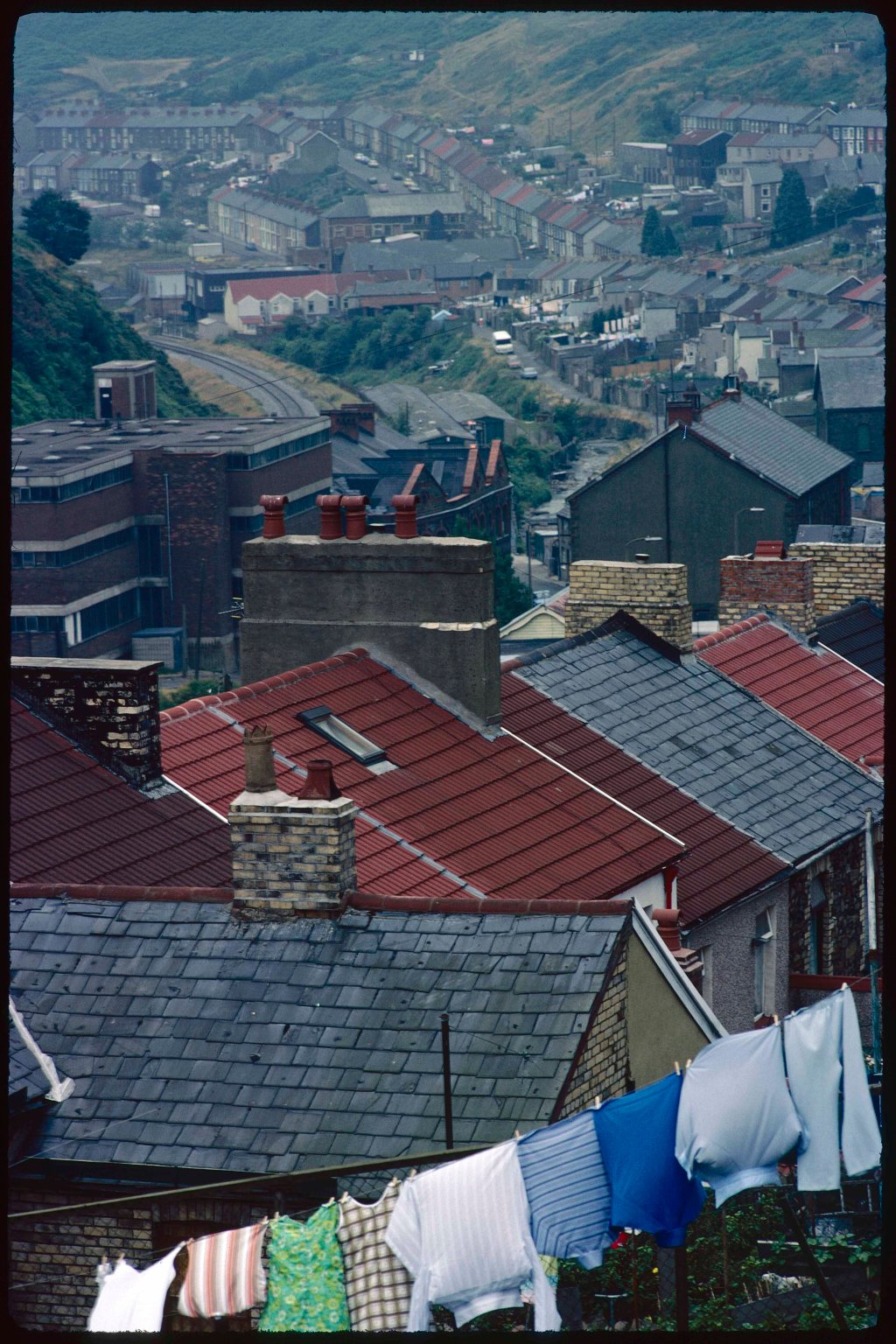
August 1983
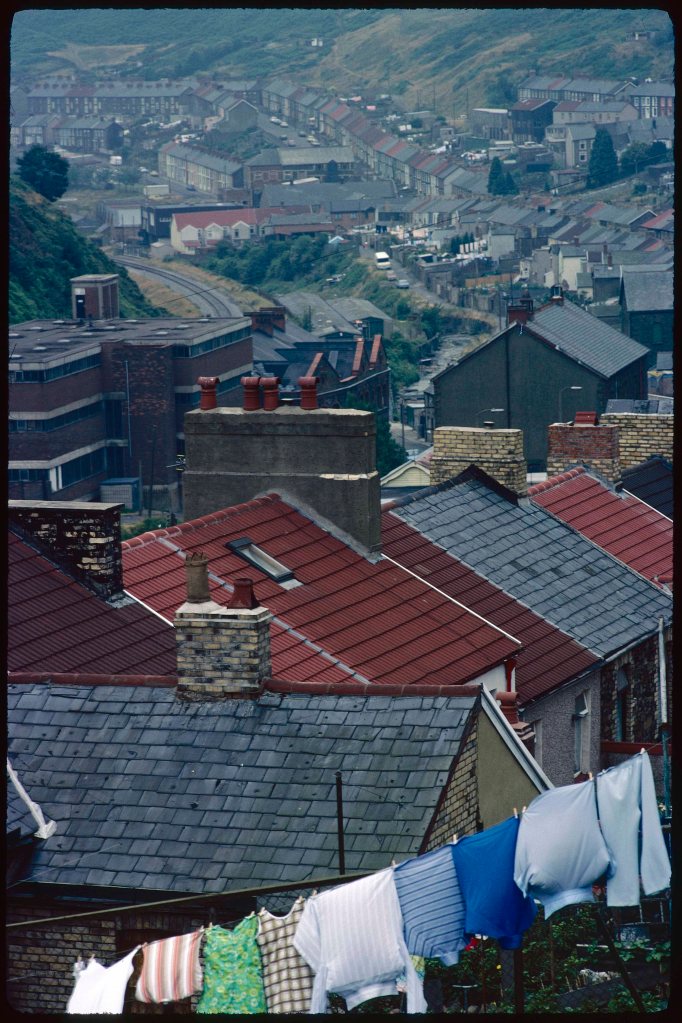
It comes near the time when I would leave South Wales, having spent a year there working as a volunteer in a children’s home and a special school. While I have been touching on various aspects of my experience and the circumstances of the place through photography, in preparing to leave—as it were, once again—I cannot but think of all that remained unphotographed or was unphotographable.
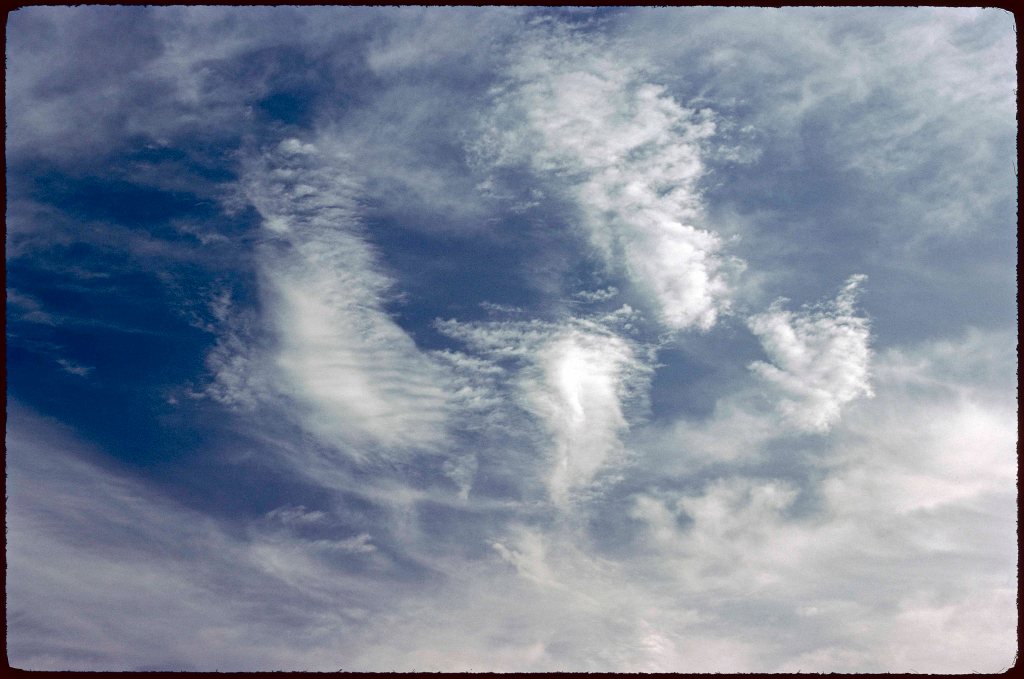
At the school, social workers and teachers would trade stories in the staff room. Despite spending many hours there, I now only have a vague impression of the place, strung between the pegs of two firmer memories. One is of a dramatic moment when the sun burst through clouds after heavy rain, its distinct rays banding the sky; ‘it’s like the second coming out there’, remarked one of the teachers. The other of how in the immediate wake of the news of my grandfather’s death, the mundane furnishings and décor of the room seemed suddenly distinct, sharp and unsettling. Like the double exposures that I was starting to play with at this time, the two impressions—held apart in my rational mind—are emotionally superimposed.
One social worker told us that on a home visit he had walked into a living room to find a gigantic hold in the wall, and brick, plaster and dust strewn across the floor. The father explained that he had taken a sledgehammer to the wall to knock through two rooms but had not got around to finishing it ‘yet’. The family had been living amongst the rubble for weeks.
Another home visit story: a social worker was astonished to see a mother breast-feeding a large child who turned out to be four years old. Masking her surprise, they chat about other matters, while the child feeds continually, until it seems as if enough rapport has been established to broach the topic: ‘don’t you think that it might be worth weaning the child?’ At which said child turns from her breast, fixes the social worker with a glare, and shouts: ‘Fuck off!’
I am telling this as accurately as I can remember but the tale, like pebbles smoothed by the sea, has doubtless been polished by many re-tellings, and not just my own. As Borges and Adolfo Bioy-Casares has one of their characters write in a story about just that polishing of stories through repetition: ‘To live for memory, forgetting almost all’.
May 1983
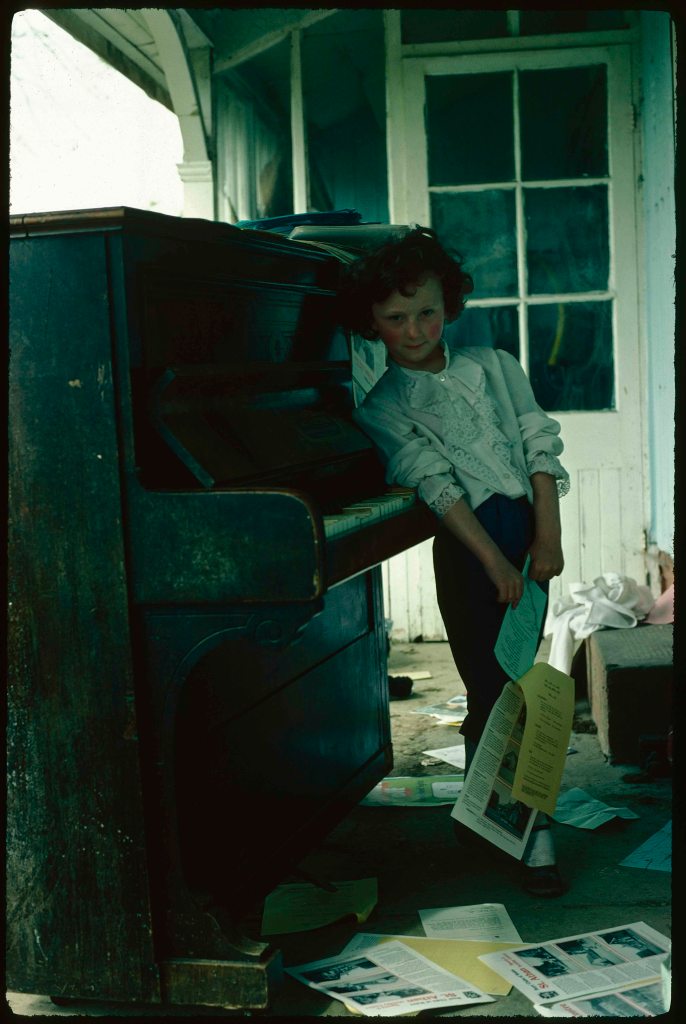
Of things photographable but unphotograped, on a trip around the valleys to collect kids for a weekend seaside holiday, organised by a local charity, the bus pulled up outside a house that looked derelict: part of it had been burned by fire, the windows were patched with board, the front door hung off its hinges. While used to the dereliction of parts of the area, I thought that surely no one lived there. Out came two small boys.
They were identical twins around ten years old but short for their age with the pinched look that comes from malnutrition. The ripe, sweet smell of bodies long unwashed rose from them, and I remember having to loan them my toothbrush. While they had a reputation for being uncooperative and taciturn, I realised that they would never respond to the common shout of ‘twins!’, but would always do so if called by their individual names. They were quiet, wary and watchful, and kept close to one another. Starved of attention, let alone affection, they were sponges for the slight portion doled out that weekend. I have a photograph—which I cannot, of course, show—of them looking sweetly into the lens, their close similarity reinforced by the matching cagouls supplied by the charity. (The image of the child above was taken on one of those trips, and I feel free to show it because I recall nothing about her beyond this photograph, and she was not in the care system.)
Well, children have long been neglected, projects left unfinished, and inertia given its way, but much of this, it seemed to me then, was exacerbated by the entropic force of recession, the closing down of possibilities, and the resultant draining of energies as the Thatcherite pall settled over the valleys, a leaden miasma bearing down on will, thought and feeling.
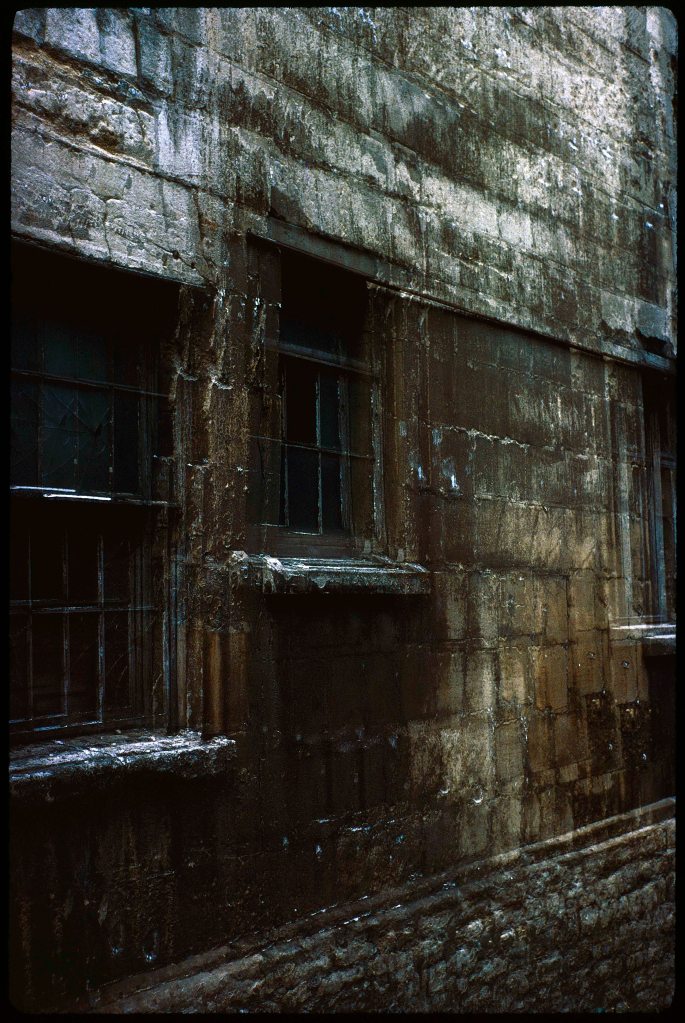
There was another child at the home who I got to know well, C—, a slender boy with fair hair, shy and charming at once, who had managed to keep an air of gentleness about him, even in care. Once, he asked me to go with him to see his father who lived in one of a stick of old houses perched high up the side of the valley. The house as we entered it was extraordinarily dark (much too dark, incidentally, for the films of the day to cut through—not that I would have felt at liberty to take any photographs), and we quickly went out into the back yard, where large numbers of pigeons were kept in cages, and the grey valley swooped steeply away over fences, plots, roofs.
Returning, the darkness of that house held the impression of a vast, slow accretion of clutter amid a deep, ancient patina of grime. As my eyes adjusted, the interior slowly revealed itself, below the framed prints of proud racing pigeons with puffed-out breasts and pristine plumage. This was a long time ago, now, and my memory may be at fault, but I still have an image of C—’s father sunk in an armchair in the gloom, not rising, although he had not seen his son in months, the white belly of his capacious vest faintly glowing. The house, its contents and its inhabitant absorbed the light, drawing it in with such force that it could not escape. Time there seemed hardly to advance, as if we were in a place with gravity so powerful that the clocks no longer had the power to raise their hands, or us to raise our teacups.
If you’ve ever held a pigeon, you’ll know how unexpectedly light they are, like polystyrene. The clean grey of their feathers, their flight, their soaring, their careful breeding over generations into fine, bolstered aerodynamic shape and fitness were at odds with the house in which their pictures hung. They were the father’s aspiration, though while we were there, he could raise neither strength nor will to pull himself from his chair.
And what of C—’s aspiration? Charming and gentle though he was, C— bore grudges (and who can blame him, abandoned child?) and would take these out by setting fire to buildings; while I was living in the valley, he burnt down first a scout hut and then part of the school where I worked. He was imprisoned in a youth detention centre for that last, coming back a little quieter and more withdrawn, a little altered for the worse.
Only now does it occur to me that the flames’ flickering quickness, intensity and heat, and the rapid, total transformation that they wrought, was in his mind set against the dark immobility of the place that should have been his home.
 Julian Stallabrass
Leave a comment