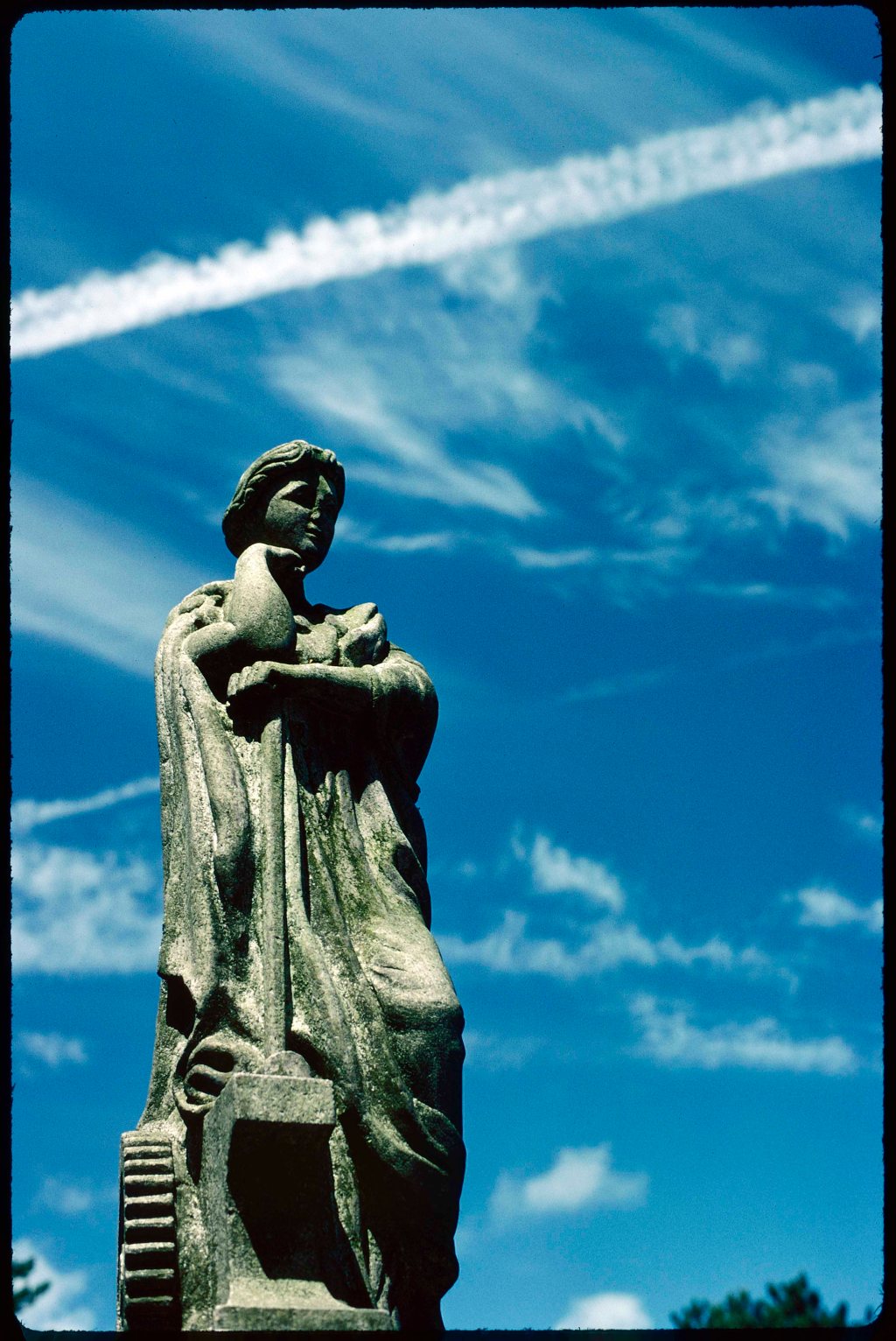
July 1983
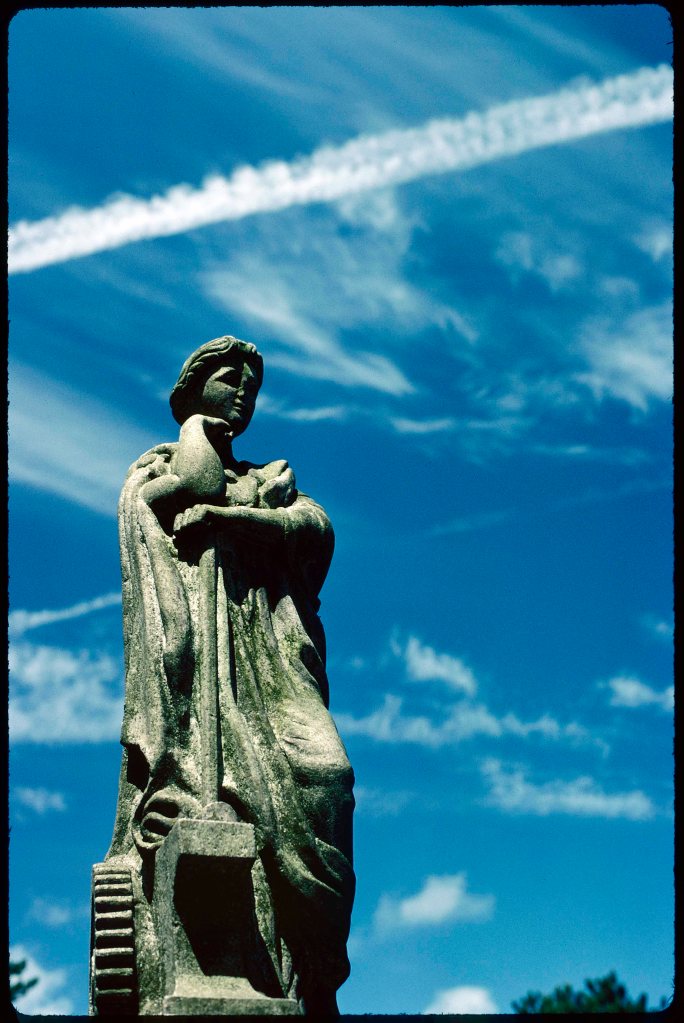
In that Victorian amenity, Aberdare Park, with its boating lake and bizarre cast-iron fountain, there also stands on a head-high plinth this allegorical figure of Industry. The detailed listing that I kept of my photographs at the time records that the image was made with a polarising filter, which darkened the sky so that the clouds and the contrails stand out more starkly. Wanted to highlight the contrast between the modestly sized figure—a tentative bid for significance and grandeur—and the polluted trail left above her by the technology of an era entirely alien to such earnest female idealisations (which, even in 1905 when the statue was erected, were on the verge of obsolescence).
In a famous phrase, a character in Victor Hugo’s Notre Dame de Paris, says about the printed book and the cathedral: ‘Ceci tuera cela’ (this will kill that). And so it was here: rapid global transport and communications infrastructure enabled the Thatcherite wrecking of the mining industry. With her flowing robes, cogwheel, hammer and anvil, the figure seems to have an affinity with some trades-union images, which similarly idealised industrial labour, occasionally in the guise of goddesses and muses. (For a fine account, see Eric Hobsbawm’s essay on working-class imagery, reprinted in his book, Worlds of Labour, in which he tracks the fading presence of female figures in favour of male as liberal movements gave way to proletarian.)
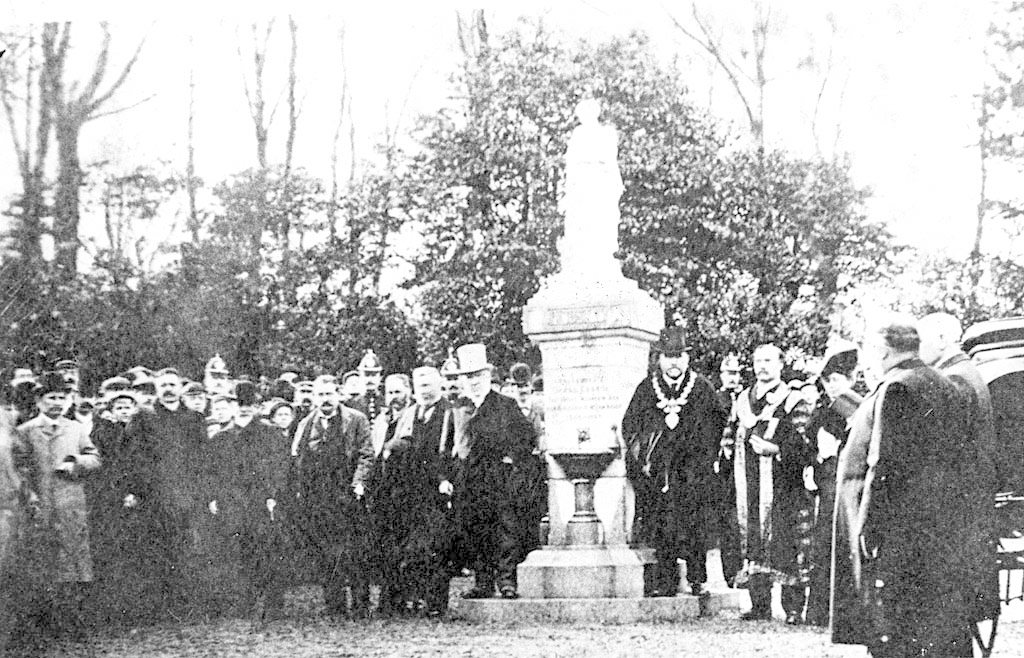
A curious photograph of the statue’s unveiling gives the lie to that association, as we see various ceremonially dressed bigwigs and portly bourgeois gentlemen lined up at her base. The established order displays their little gesture of cultural largesse, a small statue and a drinking fountain. They are protected by a heavy police presence, and may well have felt that they needed it, for in the years leading up to the First World War, labour militancy rose to levels that posed a systemic threat to the British state and capitalism.
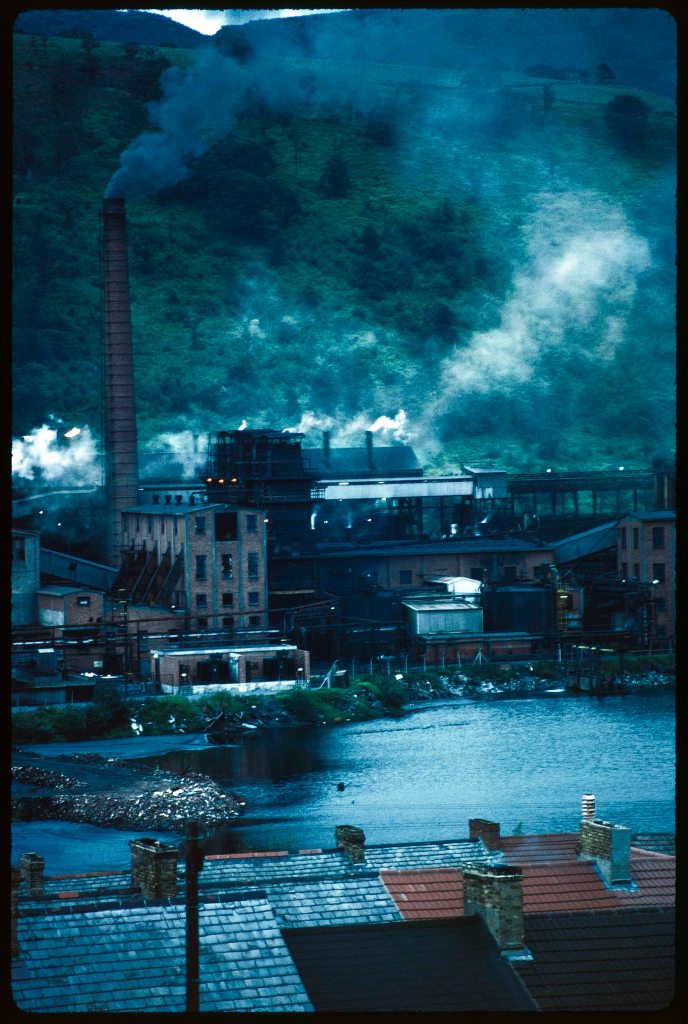
Phurnacite plant at Abercwmboi at dusk
In the 1990s when I worked as the assistant editor of New Left Review, my photograph was used for the cover of a special issue entirely given over to Robert Brenner’s remarkable essay, ‘The Economics of Global Turbulence’. (It later appeared in book form.) Given its intellectual sweep and analytical power, reading work by Brenner, let alone editing it, can be an extraordinary and sometimes daunting experience. Here he sought to explain the long period of lacklustre growth, wage suppression and high unemployment which had persisted globally since the early 1970s through an analysis of competition between global industrial blocs. Along the way, he demolished the usual right-wing diagnosis that it was workers’ greed that had enfeebled industry, and that the destruction of trades union power was the solution. Brenner argued that endemic over-production had caused the long downturn, as older industrial plant was superseded by modern competitors but nevertheless remained operational because such huge sunk investment value could not simply be scrapped. Old competed with new, pouring goods into over-saturated markets, driving down prices and profits, and causing its owners to bear down on the costs that they could most control, workers’ wages and benefits. Turbulence and globalisation in the contrail, then, and the fate of outmoded industry in the crudely carved and retrospectively plaintive air of the stone figure.
A quarter of a century on, this essay speaks strongly into the present in which growth has continued to decline, to become in many places barely detectable, in which wages are continually cut in real terms, and in the UK where, in a development unprecedented since the Industrial Revolution, labour productivity has gone into reverse.
The effects of Brenner’s long downturn, then barely a decade old, were scrawled across the valleys in derelict factories, mines and homes, and in the many bankrupt small businesses. I photographed that month a series of shop fronts:
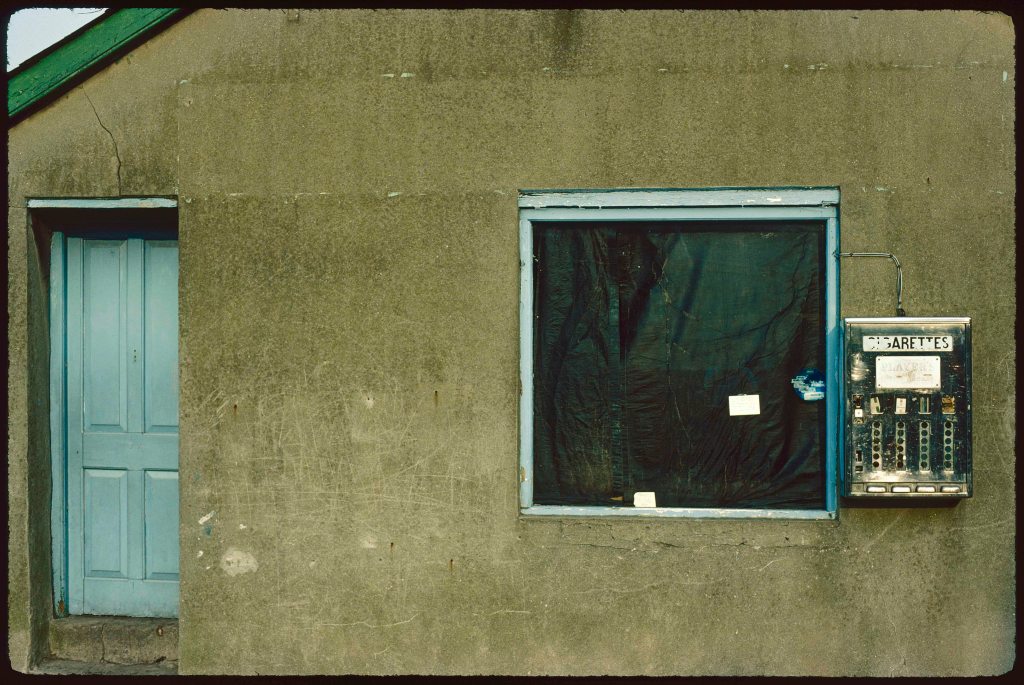
Outside one stands a cigarette machine—a sure way of getting smokes to underage customers (who complained bitterly that vending packets only had 18 rather than 20 to a pack). The scratches on the wall trace the boredom of kids carving briefly bright lines into the plaster with penknives and compasses.
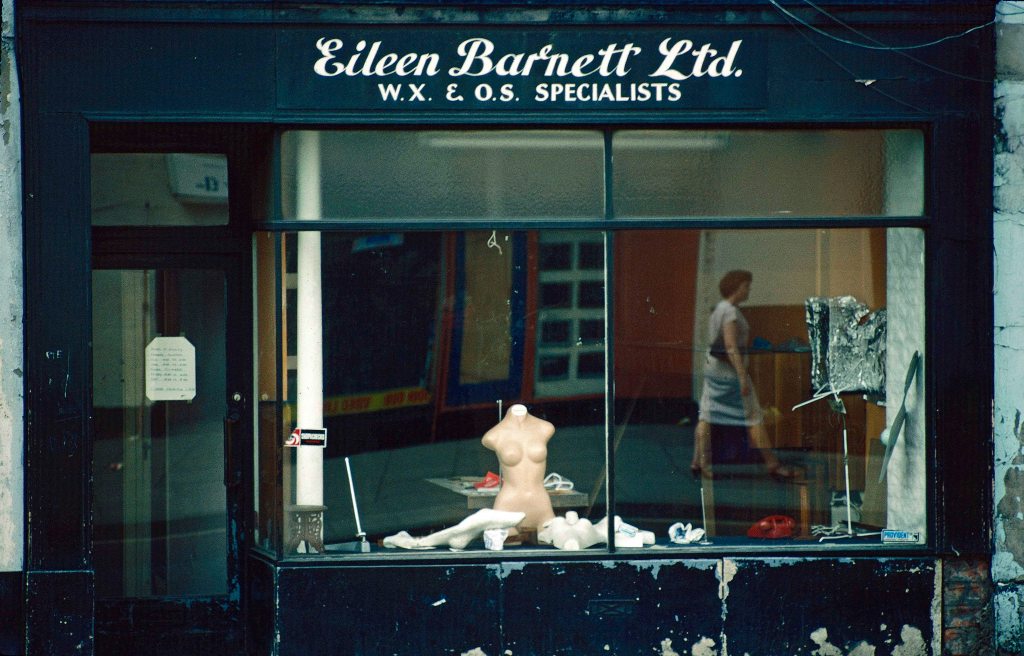
Women’s clothing shop, Abedare.
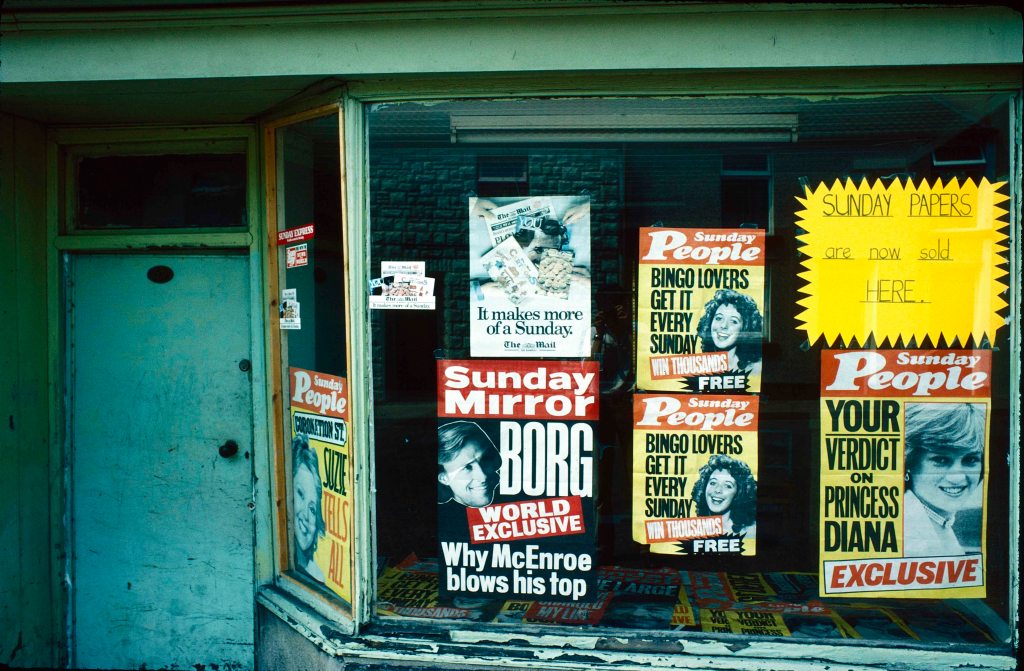
Newsagent’s window, Aberaman
The polarising filter does more than darken blue skies: it can reduce haze, reflections and glare, revealing what lies behind glass or water, and it can deepen the saturation of colours. It would have removed much of the reflection from the glass in these last two images, lessening the concatenation of scenes by peering through the windows. Paired with Kodachrome, it can increase the apparent impress of an image in a manner akin to Adrian Stokes’ ‘surface colour’, the palpable, depth- and knowledge-filled experience of colour that he opposed to the illusory attractions of lustre, reflection and dazzling highlight (see Colour and Form, 1937, in Lawrence Gowing, ed., The Critical Writings of Adrian Stokes, Volume II 1937-58, Thames and Hudson, London 1978). Yet using Kodachrome hand-held (in many of the places where I photographed, I wanted to stay mobile without being encumbered by a tripod), polarising filters come at a cost: like dark glasses, they cut down the light, and could only be used in strong sun.
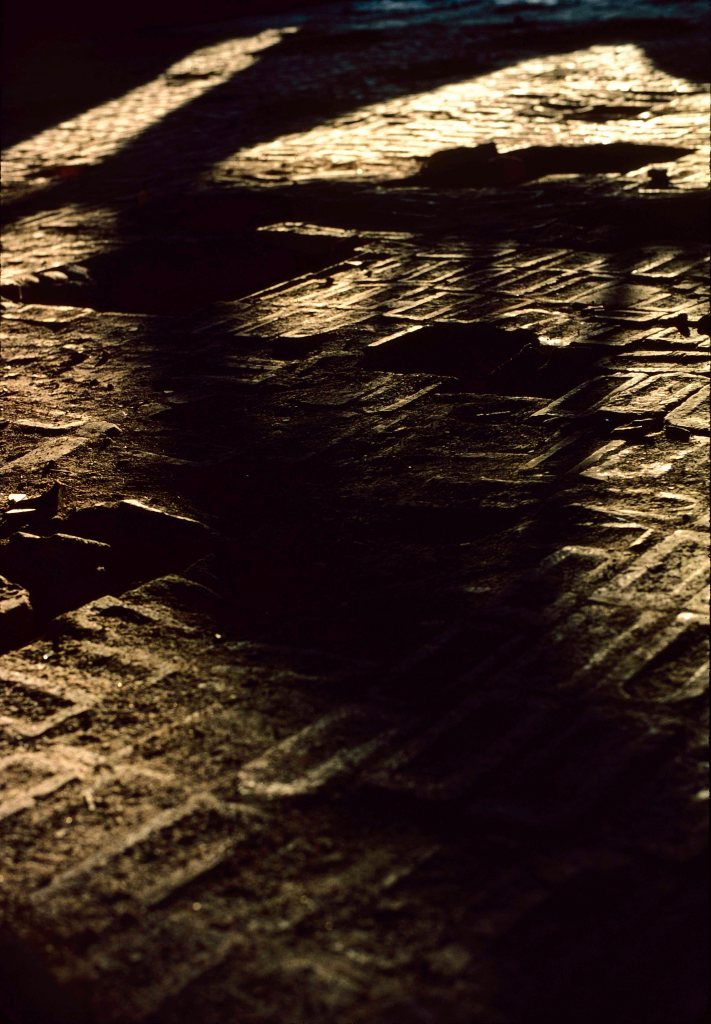
More commonly, I traded off depth of focus for the qualities of slow film, as in this photograph of the abandoned brick factory’s upper floor. It was buckling with age and I trod upon it haltingly, inching along, testing its firmness. Still present in my memory—whether accurately or through projection on seeing this photograph, I cannot say—are the sound and feel of brick and grit underfoot. If Stokes is to be believed, this must be seen as a deeply imperfect image, in which the incidents of light and colour slip uncontrolled into deep and unrevealing shadow and blinding highlight, and colour’s potential to produce a glowing, humanist, epistemological illumination is lost. For me, now, it evokes photographic exploration at a specific technological moment, long passed, of testing perceptual and filmic limits, applied to an industrial artefact by a young and mostly ignorant photographer who was slowly and unsurely feeling his way. It may then stand as an allegory, too, or at least a fragment of one.
 Julian Stallabrass
Leave a comment