December 1982
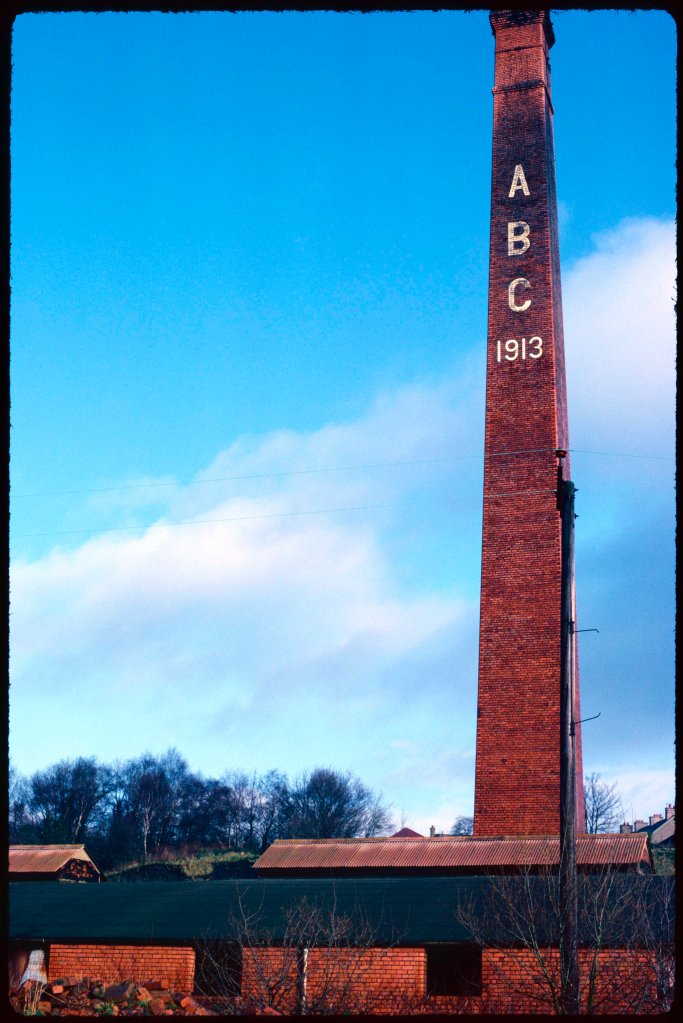
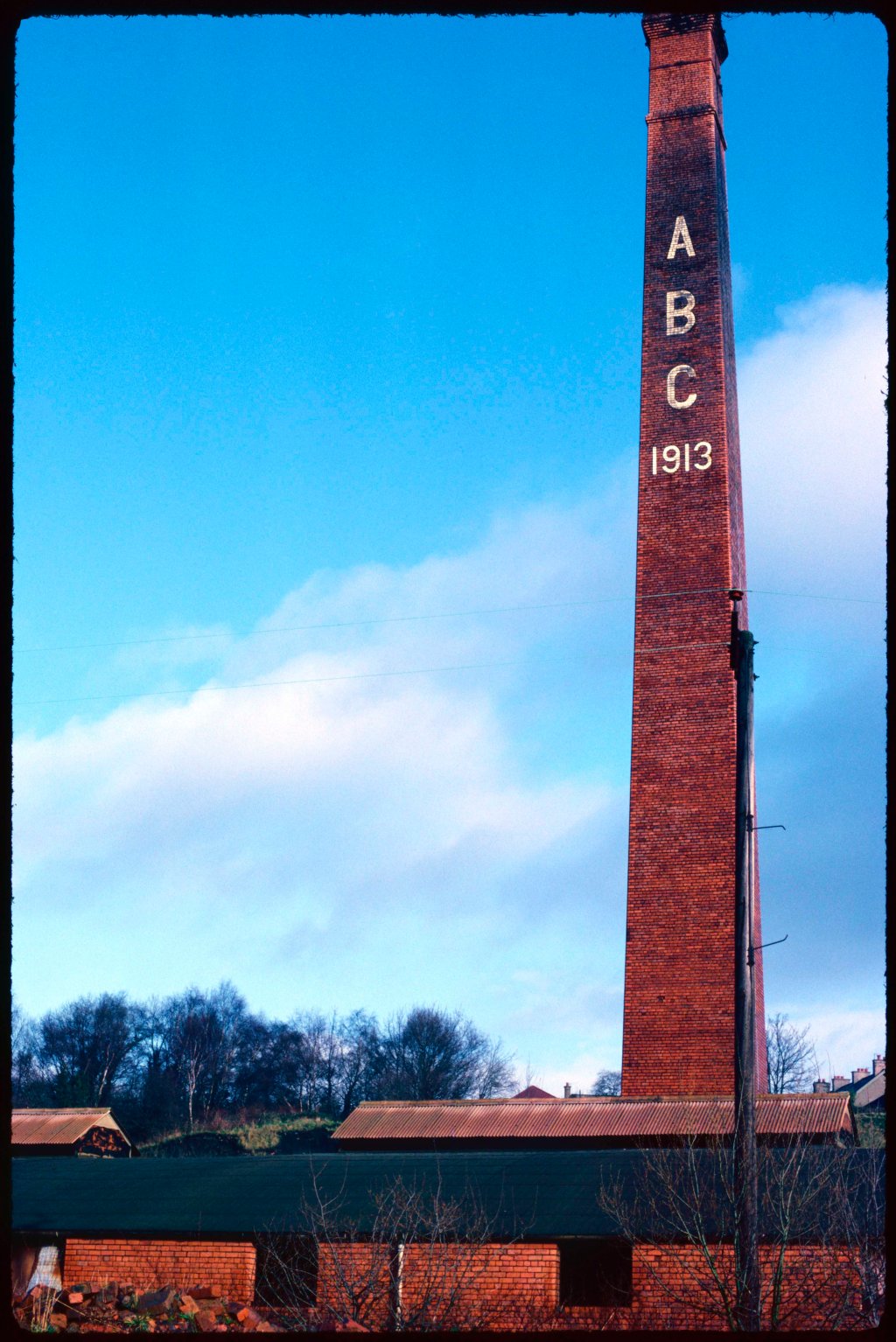
On my various wanderings around and about Aberdare that winter, I came across the town’s brick factory, which had recently closed down. Its tall and slender tower announced it: ABC. A complex of buildings sited in a hollow a little way out of town, unlike many other industrial remains, it was easy to get in and out off. Kids went there to play. Over time, and with the factory’s plentiful ammunition, they had broken each of its many hundred glass panes. And, like the woods around a nearby council estate, stripped for firewood to keep the cold and damp out of its poorly insulated houses, the factory had been systematically worked through to remove any scrap of valuable metal.
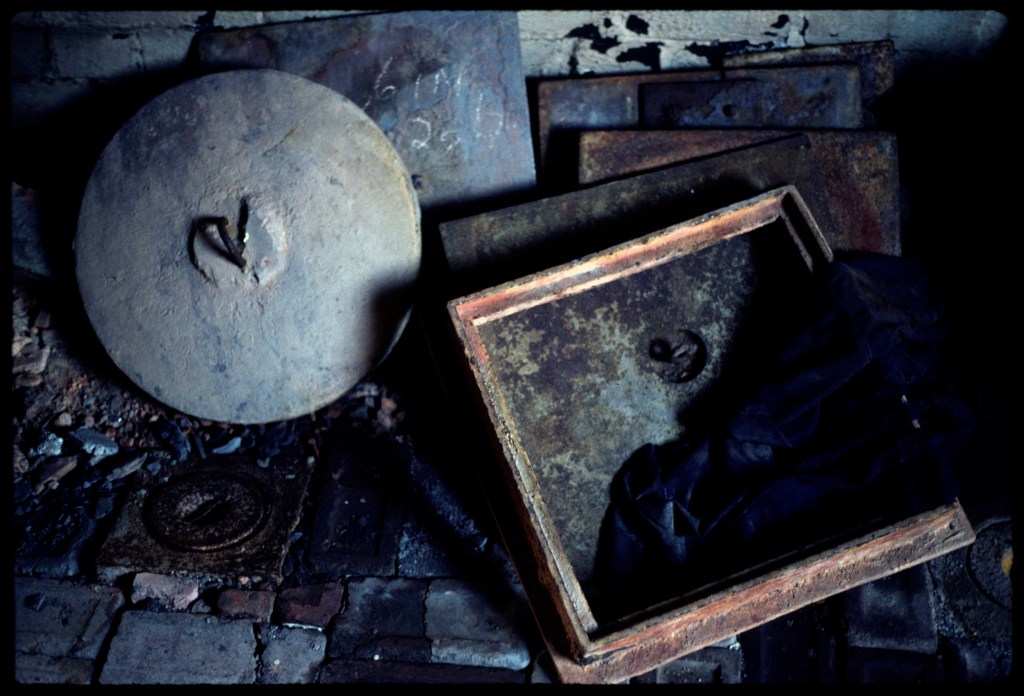
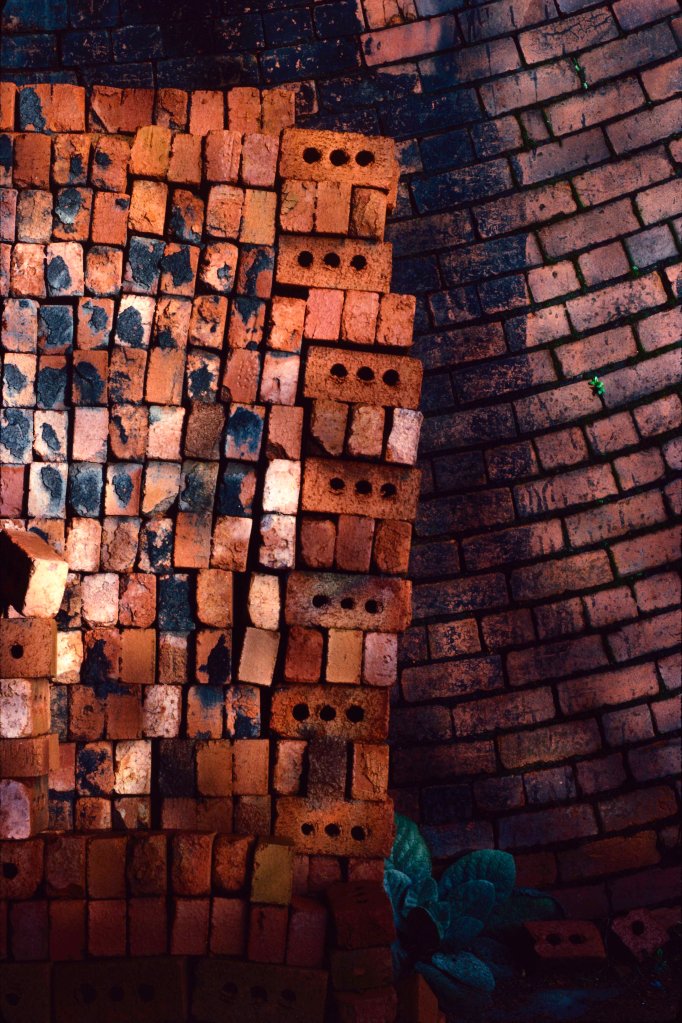
For me, the old brick factory was not only an abandoned workplace but a spectre of modernism, in which the clean monochrome industrial forms of, say, Albert Renger-Patzsch, Charles Sheeler or Sunil Janah, were remade in colour and disuse. Each brick of the thousands scattered whole or broken about the ground, or piled or heaped up was stamped ABC (for Aberdare Brick Company). The place was a complex composition of mouldering colour, the golden red of the bricks in the rare, low sunshine, the green of the plants seizing the building with their growth, the yellow and blue of old paint on walls, the rusting of barrels, the fading blues and greys of discarded overalls.
With its spectrum of aged and weathered surfaces, and when inside the low and uneven light, as rays cut through broken, blackened windows and holes in the roof, it also offered a photographic training ground. Slow film met darkness, abrupt contrasts in illumination, and an interplay of the remaining organisational and productive order of the place as it collided with erosion, destruction and the ingress of plants and birds. It only occurred to me later that, in this place, I learned various photographic and political ABCs.
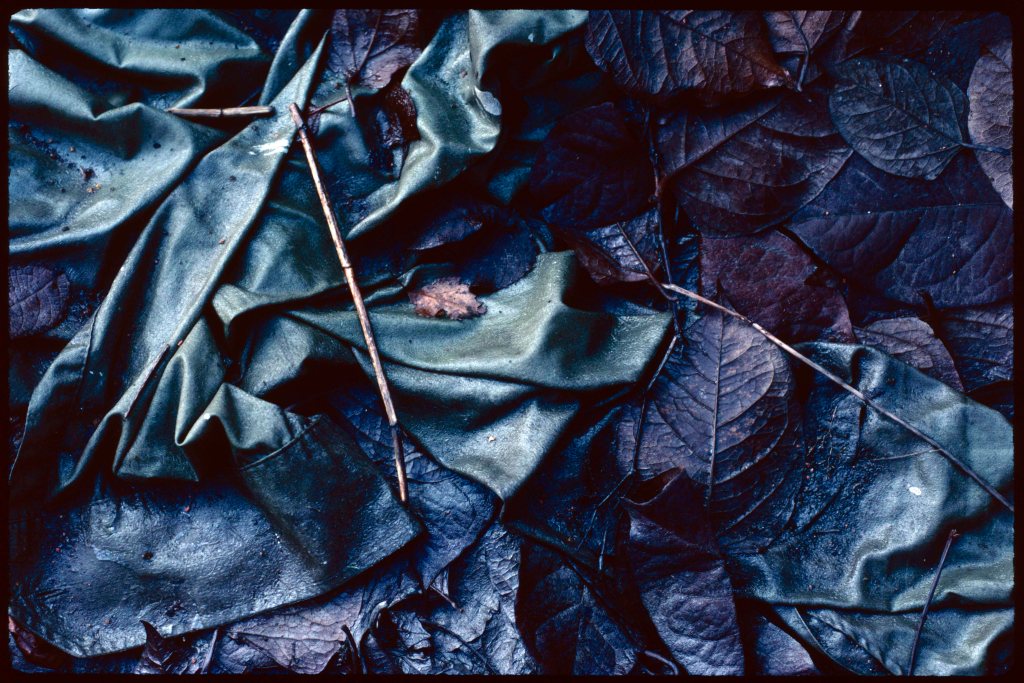
The detachment necessary to bring some formal coherence to that dialectic of order and contingency has a sliver of instrumental cruelty to it, as Adorno long ago diagnosed as an integral component of art. It is seen plainly in work which parasitically seizes on the expiring, drawing its last breath into itself as life. Yet portraying the factory in photographs was, I thought, a way of drawing attention to the lives that had sustained it, and a way to tell of their passing. Besides, no one else seemed to be doing it, so those places were mouldering and collapsing out of sight, no sooner discarded than forgotten. Living in a town at the heart of that decay, I never saw another photographer do what I was doing, and it seemed important that someone should.
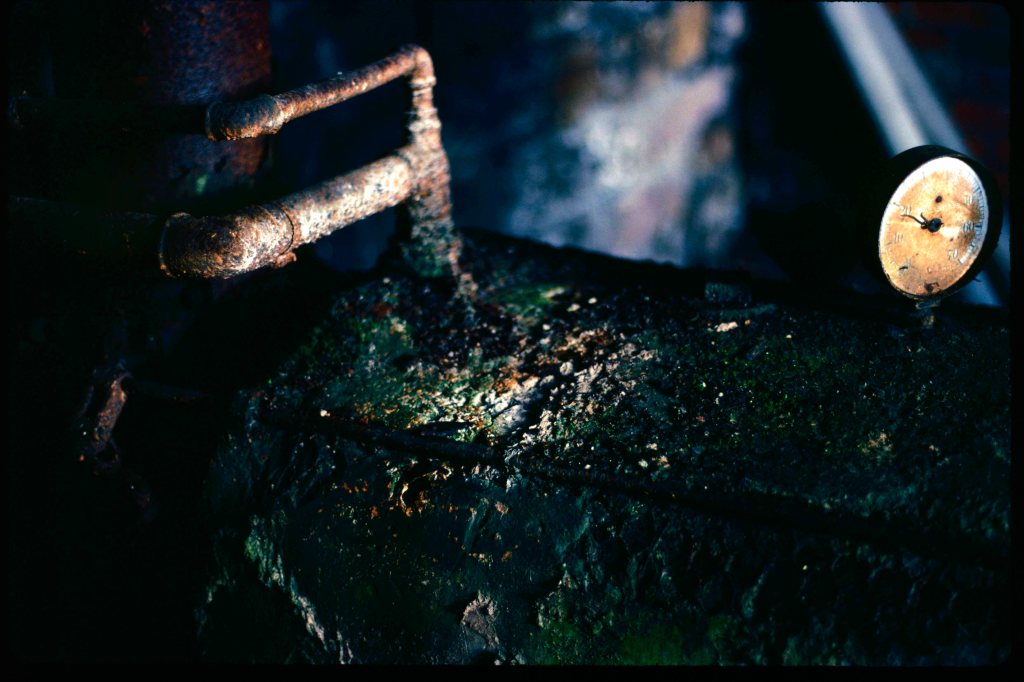
So I would visit the brick factory often, treading carefully over the uneven and buckling floors, which I thought might be unsafe, spooked at the noises of the place, entering each room with their broken roofs sending patches of light over discarded fragments of factory life. The place was a panoramic image, constructed out of its product, standing like the undisturbed ashes of an object consumed by fire.
Often I photographed there hand-held, wanting mobility and a quick means of escape, and with slow film and low light, blur crept into some images. Once, though, I went to the factory with a tripod, and was photographing in its main hall when faintly then louder, I heard a woman’s voice, crying out for help. I left the camera and went towards the sound—outside, up some decaying steps, closer and closer until I reached a corner of the building, and knew that around it I would find whatever awaited. I had picked up a heavy metal pipe as a weapon; I could hear a man’s voice now, and hers still crying, begging him to stop. I then thought that if I turned the corner, pipe in hand, there would certainly be violence, so I laid it down in the hope of talking.
So I stepped out, and there was a young man, a teenager, pinning a girl of similar age to the ground, his knees on her arms, as she struggled. I told him quietly to stop, and he did talk alright, leaping up, and shouting wildly: ‘It’s none of your business; she’s my girlfriend; my brother has just killed himself.’ He first pulled a knife, and then starting to lob bricks at me. I wasn’t about to close with that knife, so when the bricks started to fly, I flew, too—running as fast as I could to the nearest house which had a phone, and calling the police. They found him there still, he had not harmed her, and the things that he had said were true. Not long before, entering the bedroom that he shared with his brother, he had found him there hanging.
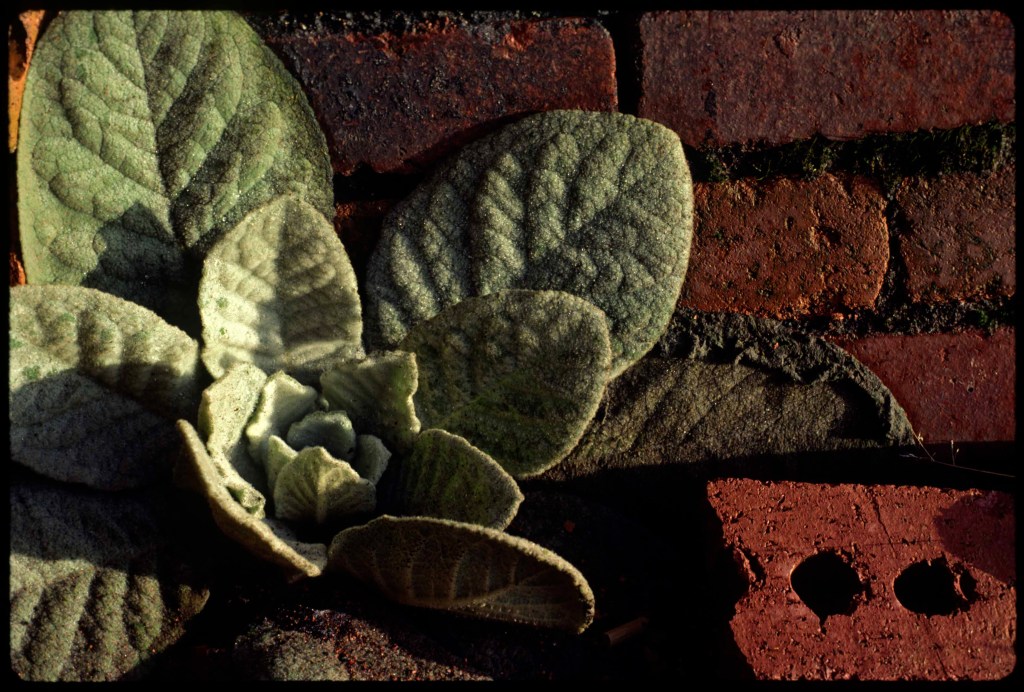
There is an effect that you can see in some of these photographs in which long exposures shift the colour balance of a film, usually towards cyan: it is called reciprocity failure, a telling term. Was the boy right about it not being my business? Not obviously the violence towards his girlfriend but my being in that place and making photographs, and having the illusion that lives could be elucidated through representing the visual fabric of such buildings? Perhaps, when run up against the tragedies that stalked the valley—children abandoned by their parents, mutilating themselves or seeking oblivion by sniffing petrol—those places could only stand as registers of the beginnings of a terrible and persistent collapse.

 Julian Stallabrass
Leave a comment