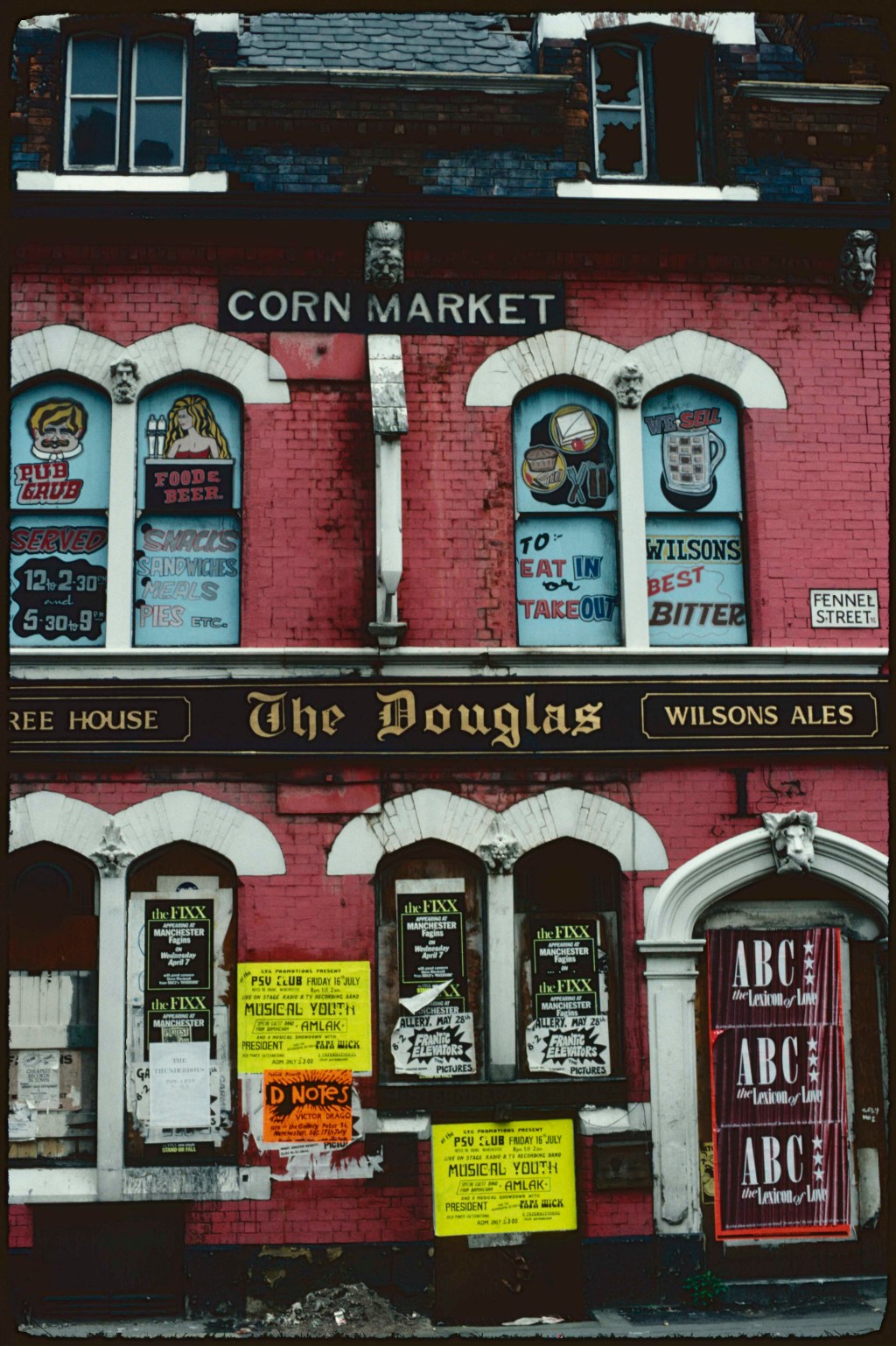
July 1982
When I first read about the kinship between photography and melancholia, it struck a chord. I remember that as an adolescent I made a deliberate attempt, in the interests of self-preservation, to turn my destructive inward-looking mental forces outwards. First to the detailed observation of the things about me, and later having picked up a camera more or less by accident (drawing attracted me more then) finding its indiscriminate recording and transformation of the world well-suited to my ongoing campaign against myself. The outer world became fiercely illuminated with the arc lights of consciousness but that light emanated from within an enclosure which remained light-tight, except to flood itself intermittently with focused rays from the outer world.
The association seemed to be about more than the well-trodden idea that what will age and pass away has been frozen pictorially. It was to do with control and classification. In photographing skies during the early days of the pandemic when they were newly and briefly cleansed of some of their polluting veil, I started to think about the difficulties of framing such a boundless subject, writing:
‘It is harder to frame the sky than any other subject except the open sea. The decision of where to place the viewing rectangle […] is much easier in places of human habitation and cultivated land because the frame has an affinity with the social and physical geometry of the subject. Frames lie, as if naturally, across buildings and the earth—fences, hedges, walls, boundary-marking tree-lines, gates, railings, and the many small architectural signs that mark off one property from another, for example in a row of terraced houses or shops. If photography and the bourgeoisie grew up together, the physical, social and psychological form of property relations—an enclosure of land and emotions—were woven into both.’ (Corona Equivalents)
The photograph is, of course, a two-dimensional rendition of a three-dimensional scene (close one eye, novices are advised, to better preview the photographic effect) yet the technology’s integration of perspective, and the mind’s work on its images pitches the results, like fractal structures, somewhere between dimensions. They are both picture-like and box-like. In looking at some of my photos of this time which carefully attempt to place material boxes, as it were, into pictorial ones, I remember John Berger’s famous comparison of the general run of perspectival Western painting to safes guarding valuables: ‘its model is not so much a framed window open on to the world as a safe let into the wall, a safe in which the visible has been deposited.’ (Ways of Seeing)
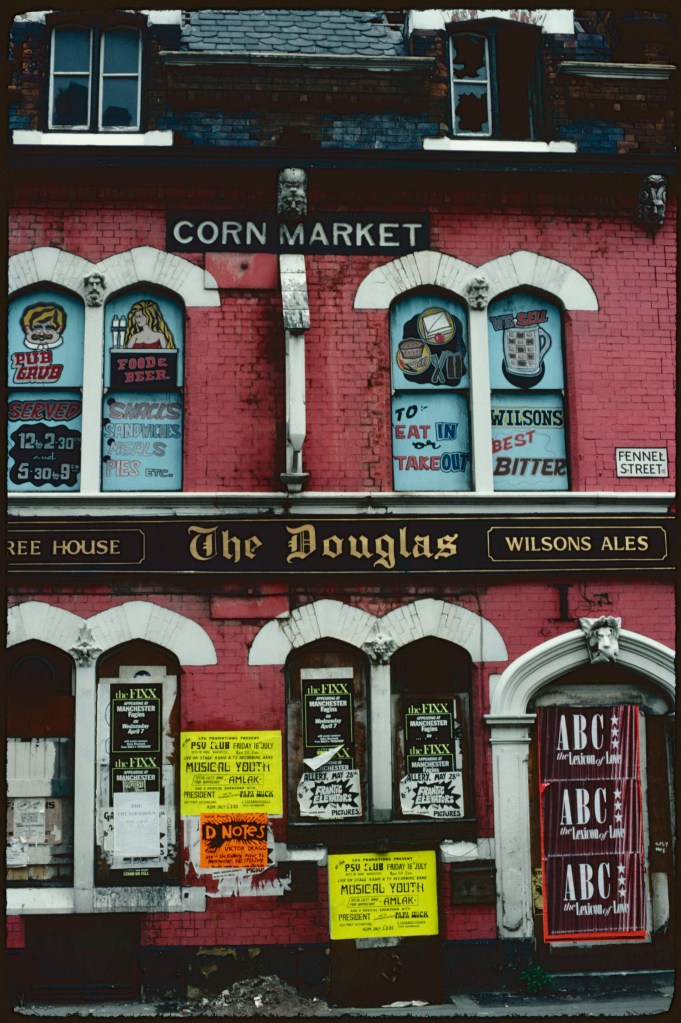
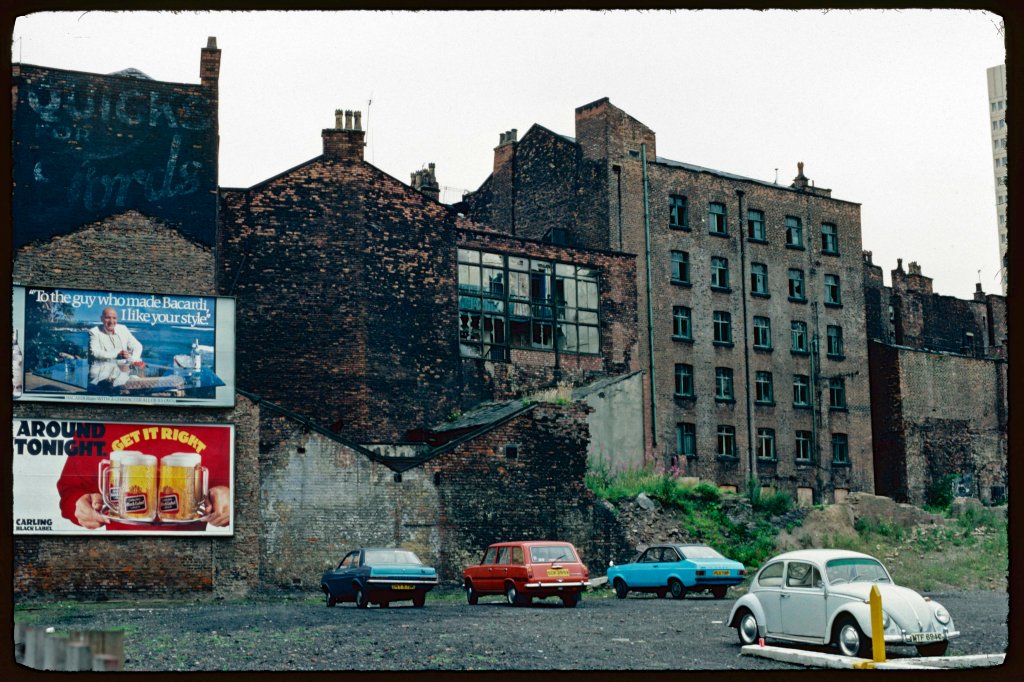
In this month, I visited Manchester and saw writ large the Thatcherite devastation that I touched on in the previous post. The central station—now an exhibition and conference centre—was a vast, shattered and in places burnt-out ruin. I couldn’t find a way to photograph it successfully, or indeed the wider ruination of much of the city. Berger’s run-of-the-mill painters piled up riches in their safes—estates, mansions, wives with dowries and their offspring, fine foodstuffs, jewels and high fashion—whereas these photographs tried to do the same for what had been laid to waste. Less extreme than the boundlessness of skies, the extensive dilapidation of the city broke out of boxes and categories in a creeping entropy that rotted material and mental structures alike.
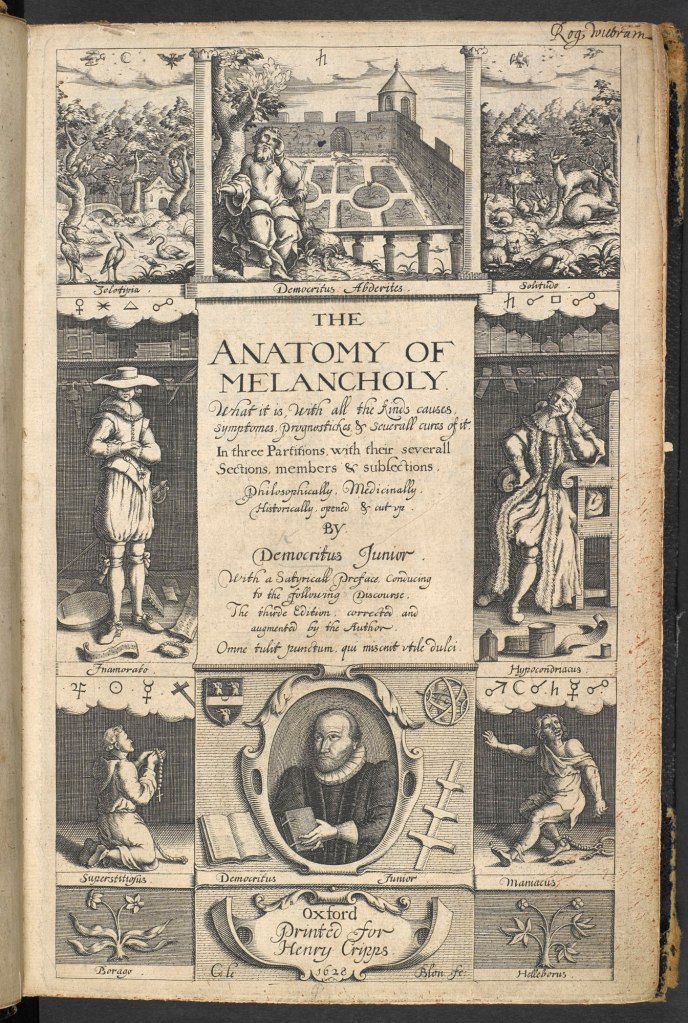
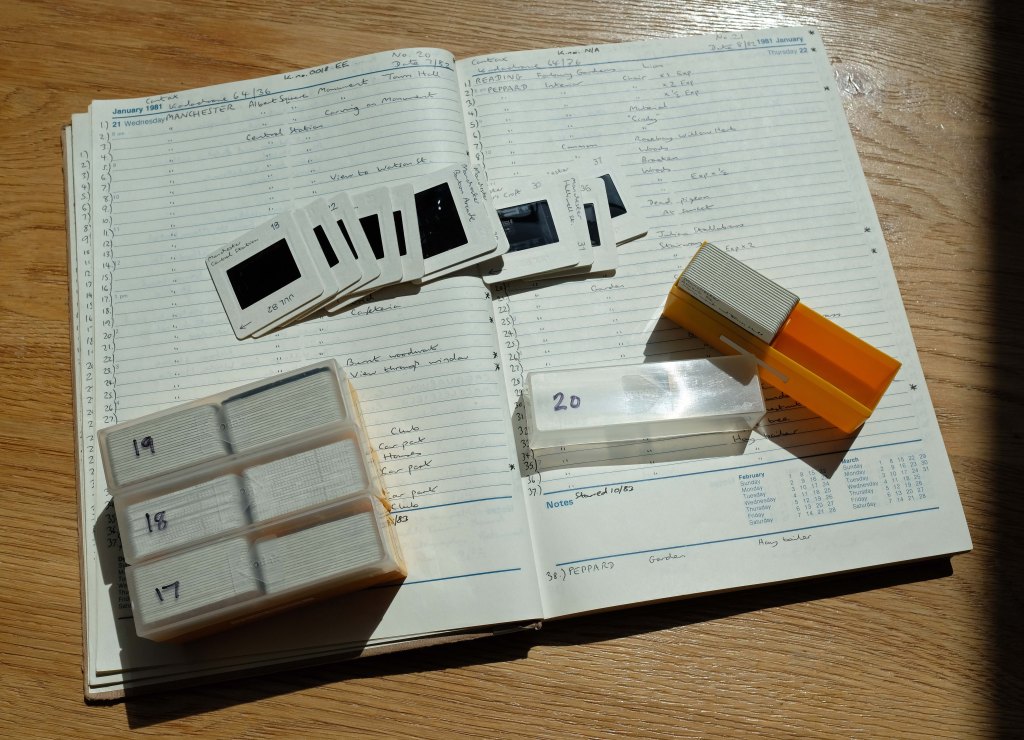
Robert Burton’s 1621 book, The Anatomy of Melancholy, that gigantic, eccentric, capacious amassing and ordering of the current knowledge on the condition echoes with the photographic collecting of images: the gleaning of fragments from the world, the framing and labelling of slide mounts (Kodachrome mounts were cardboard then, giving the image a fibrously soft border), the slide boxes, the numbering and cataloguing. Burton writes of the study of fine pictures as a temporary salve for melancholia, and even briefly of the camera obscura, although he states that generally ‘glass’ is used to create illusion and deception, which stand as an analogy for the distorting mental effects of the malady itself.
While the book predates the fascination with picturesque ruins and their moral lessons, Burton does write of the transience of grand cities and great empires, of the destruction of the might of Alexander, the Egyptians and the Greeks. From Mount Taygetus one may see:
‘[…] so many delicate and brave built cities with such cost and exquisite cunning, so neatly set out in Peloponnesus, he should perceive them now ruinous and overthrown, burnt, waste, desolate, and laid level with the ground.’
In Burton, melancholia is not conquered but deferred by endless study, courted and governed in a turning outwards, a cataloguing and classifying focus on the illness and its causes. For me, it would be turned—eventually with more photographic control—towards the melancholic subject of modern ruins. A Quixotic attempt is made to encompass a gigantic corpus—for Burton in wanderings through every published source; for me and many other photographers into long treks through the environment in an attempt to diagnose its coherence through visual fragments. Both projects are liable to collapse into entropic chaos. Burton insistently attempts to categorise types of melancholia, but across the huge number of his sources the various schema to detect its many manifestations produce a dizzying effect, and he admits that the range of symptoms may be infinite. While he does approach diagnoses and even cures:
‘What physicians say of distinct species in their books it much matters not, since that in their patients’ bodies they are commonly mixed. In such obscurity, therefore, variety and confused mixture of symptoms, causes, how difficult a thing is it to treat of several kinds apart; to make any certainty or distinction among so many casualties, distractions, when seldom two men shall be like effected per omnia? ’Tis hard, I confess, yet nevertheless I will adventure through the midst of these perplexities, and, led by the clue or thread of the best writers, extricate myself out of a labyrinth of doubts and errors, and so proceed to the causes.’
So, too, the photographer may be lost in the dense forest of structures and signs. Yet, the melancholic disorientation is not merely existential or to do with (seventeenth-century!) information glut, but contingent and political. In his brilliant analysis of left-wing melancholia, Enzo Traverso describes the galvanising and directing force of periods of insurgency, as set against the enervating weight of periods of reaction when the prospects for successful resistance seem remote: ‘withdrawn into the present, deprived of a prognostic structure’, internalising defeat, Marxism takes on a ‘melancholic tonality’ in which it attempts to overcome ‘the trauma of a suffered collapse’. He argues that ‘Its art lies in organizing pessimism […] to recognise a defeat without capitulating in front of the enemy, with the awareness that a new start will inescapably take new forms, unknown paths.’ Yet from the bleakness of our dangerous and reactionary present, my fear is that this retrospective view onto the disorienting thicket of the past may produce only more of the same.

 Julian Stallabrass
Leave a comment