May 1982
Looking through these old slides, what leaps out is less that the occasional image showing some coherence than the frequency and variety of failures. Sometimes—although less than I had feared when I first started looking back—these are compositional. I had for years before starting photography been drawing, attending life classes, and looking at artists’ drawings, which probably helped. And some of my drawings before photography had a photographic air.
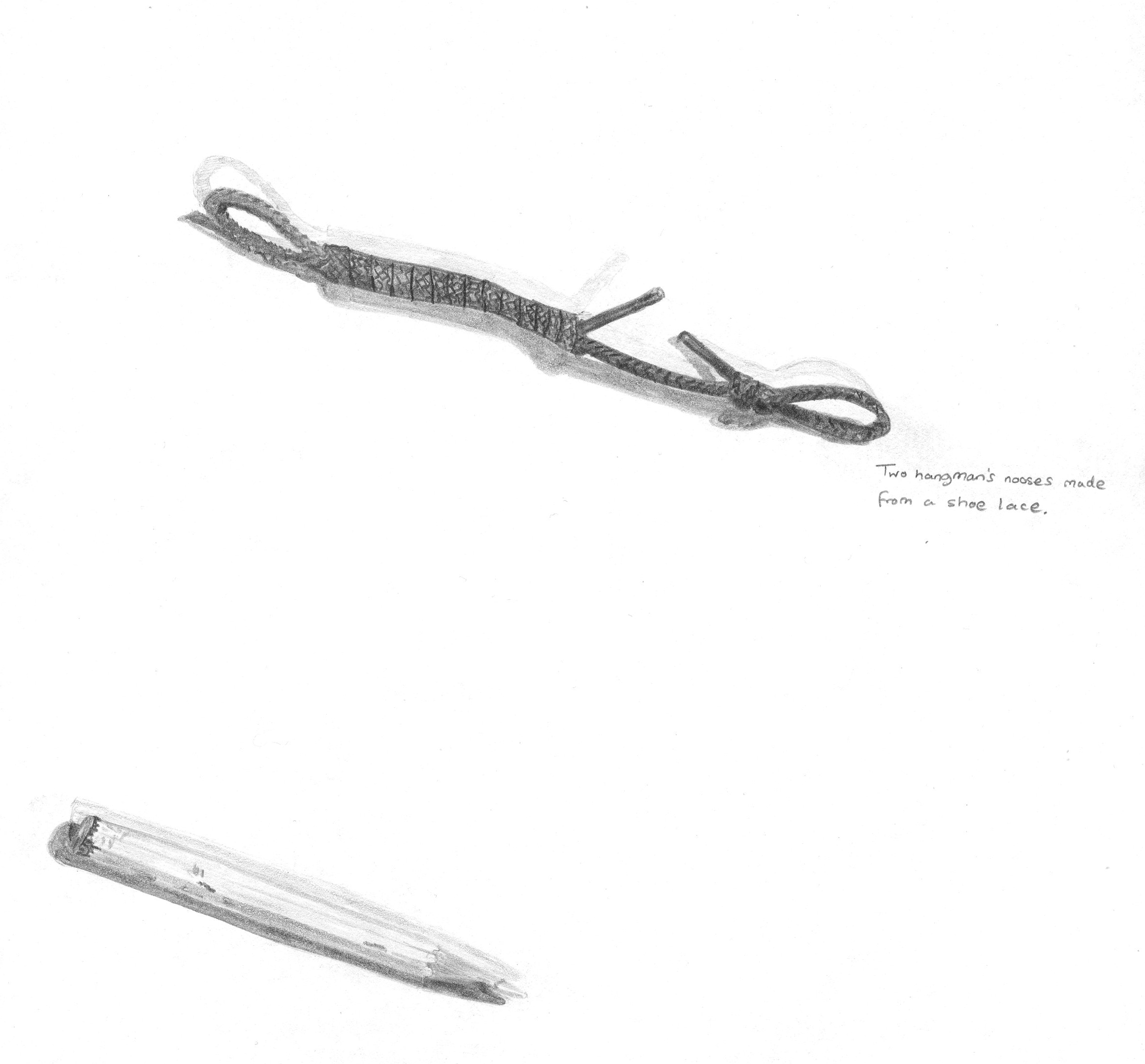
As I learned to handle Kodachrome, unpleasant surprises were frequent as the boxes of slides came back about a week after the film was posted for processing. It did not, I found out, handle grey skies very well, unless you exposed for them and silhouetted the ground; otherwise, they were rendered a dirty white. With slow Kodachrome 25, except in bright light, the band of focus was narrow.
Discovering this, I first tried to use the minimum aperture on my lens (f16) to increase what would fall into focus, risking camera movement over long exposures, and not realising that I was losing sharpness through diffraction. With all Kodachrome, exposure had to be precise, especially because over-exposed areas looked pallid and ugly. Better to let the shadows darken to its dense and beautiful blacks.
The photographic magazines which I unwisely looked to for technical advice offered an overwhelming amount of detail about a plethora of specific situations but were much weaker in explaining basic principles—for instance that meters exposed for a medium grey so that they would overexpose a darker than average scene and underexpose a lighter than average one.
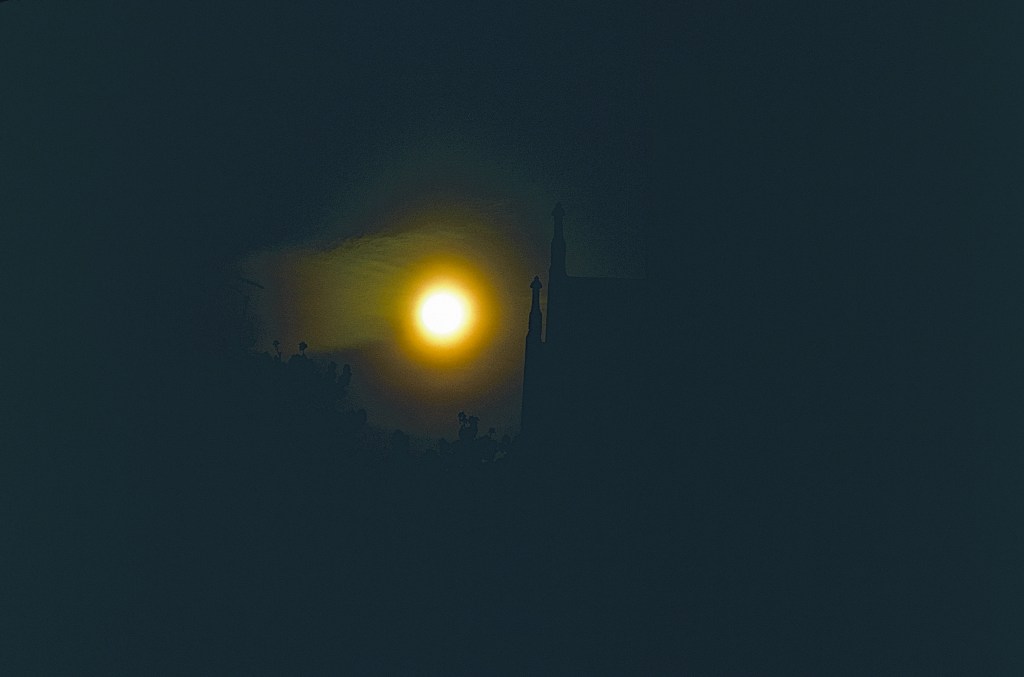
So in this image—to take an extreme example—the presence of the sun flooded the meter with light and plunged all around it into darkness. It was a revelation when, a few years later, I read Ansel Adams on his zone system, laying out the fine adjustments to exposure that each particular scene demanded, and which in street photography would have to be judged by eye. (I should say here that slide scanners struggle to render such faulty slides, particularly with Kodachrome, so the originals are a bit brighter, sharper and more detailed than what you see here.)
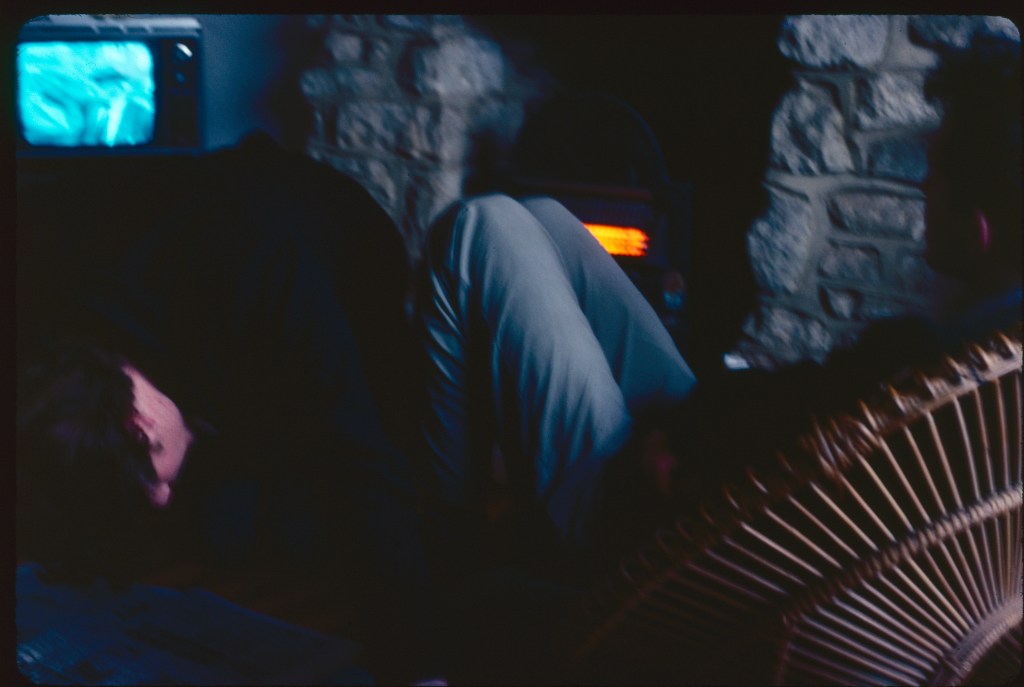
I learned by trial and error, shooting Kodachrome 25 indoors without flash, as in this image of my friends watching TV in a very chilly rented cottage on the Cowley marshes. The photo is murky, and has very little depth of field, but it says something of those days in rented accommodation, where life often seemed confined between black-and-white TV screens and proximity to the gas or electric fire.
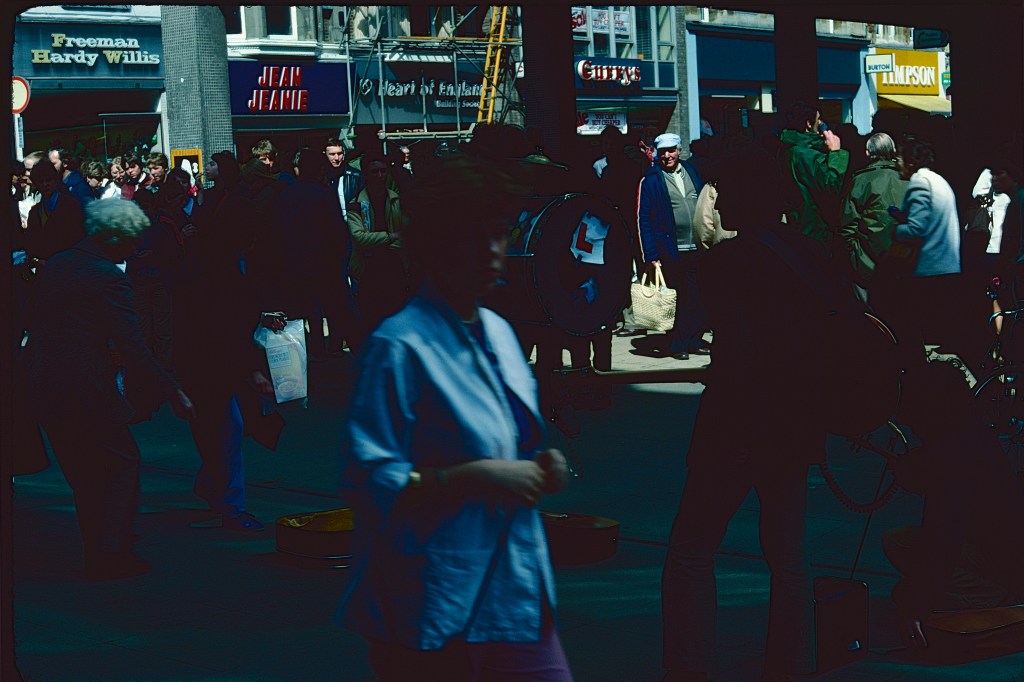
This was also the time that I started shyly to make pictures in the street. As a friend said at the time, I took a large number of images of people’s backs (one example I captioned at the time read ‘Bonn Square: crowd watching a fight’—on the slide there is no fight in evidence, but backs, yes). I had bought a little book of Cartier-Bresson photographs which seemed to me then both strangely stylised, as if the world had become deformed by the pressure of his vision and will, and also unlike any photos that I had ever seen: it seemed incredible that the medium—then a matter of chemicals, glass and clockwork—could do what he had made it do.
It takes a great deal of skill to use Kodachrome for street and documentary photography (I would later come to appreciate Larry Burrows, Raghubir Singh and Susan Meiselas, among others, for just that skill) and I certainly did not have it. This was a scene near the Westgate shopping centre in Oxford in which again I have underexposed, not realised how narrow the depth of focus would be, how the shop signs would glare out as the brightest elements in full sun, or how the walking figure closest to the camera would become blurred.
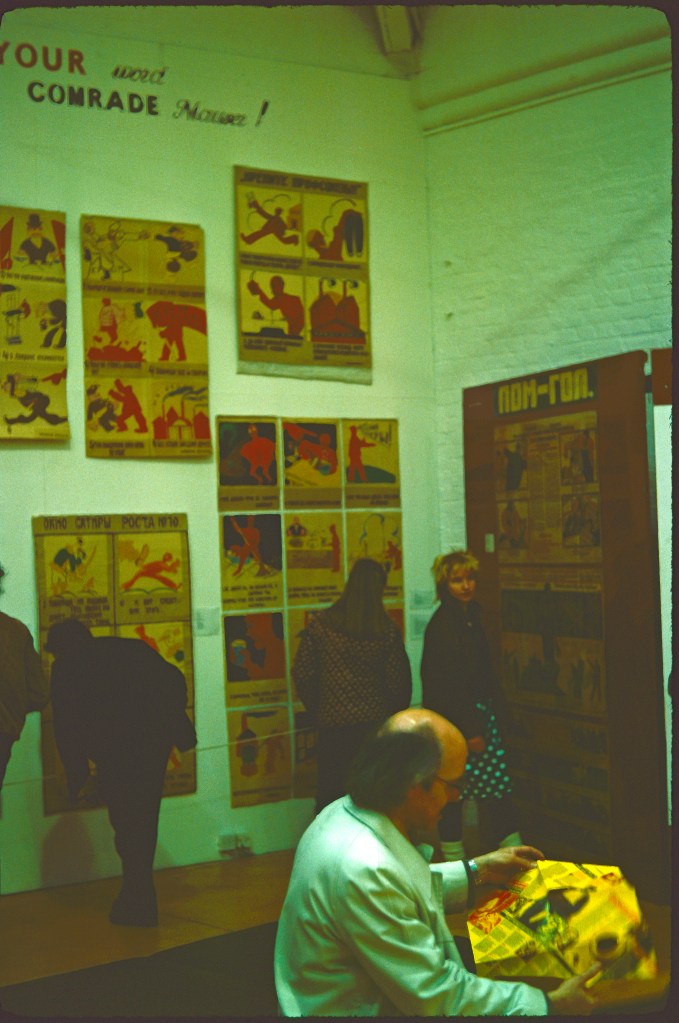
I also tried to use the film indoors under mixed lighting, not understanding anything about colour casts. (This image, incidentally, was taken in a remarkable exhibition curated by David Elliott at the Oxford Museum of Modern Art, Mayakovsky: Twenty Years of Work, a remaking of a 1930 retrospective that the artist had staged, and a revelatory exposure to avant-garde Soviet culture.) And I even tried to use it at night, as in this image taken at a fair, struggling to hand-hold the camera over a very long exposure.
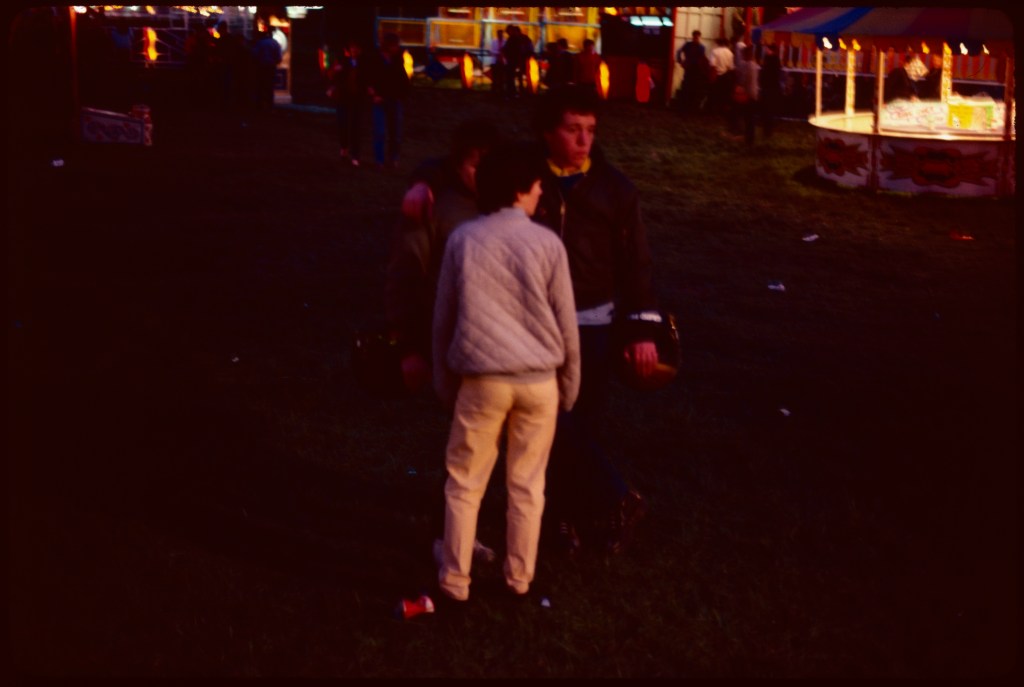
In a short essay written in 2014, I expressed some doubts about the digital generation’s enthusiasm for analogue qualities and errors. But in looking back on this catalogue of my own errors, some of them seem telling of more than my incompetence: the image of the Mayakovsky show, to start with the easiest one in which to unearth some subterranean virtue, may be visually horrible but at least it exists: I cannot find other images of the exhibition as installed online (though presumably they reside somewhere in the archives of what is now Modern Art Oxford). More generally there may be seen an affinity, perhaps a sentimental one, between analogue faults and the frailties exposed by time: of the sun making darkness visible on a certain moment forty years ago; or of Spring leaves picked out in isolated sharpness in a graveyard around the same time. If the people are dominated by garish signs in Oxford’s shopping district, that too still carries a charge into the present, although the look cast back at the camera by a man in a cap, standing as if spot-lit amidst the deep shadows, suggests alertness beyond the consumer pursuit. Finally the blurry youths at the night-time fair appear now as retrospective symbols of transience and precarity, material and temporal.

 Julian Stallabrass
Leave a comment